HTAN ist einer der führenden Hersteller von industriellen Scharnieren, Griffen und Verschlüssen in China.


Mirror polishing should not be specified as a default finish for every industrial stainless steel hinge. In some projects, it improves cleanability, visual consistency, and corrosion-related surface performance. In others, it increases processing cost without creating enough practical benefit. The right decision depends on the service environment, hygiene requirements, hinge visibility, maintenance capability, and total lifecycle cost.
mirror polishing is usually worth considering for hygienic equipment, highly visible premium hardware, and selected high-corrosion applications where smoother surfaces support cleaning and reduce contamination retention. It is usually unnecessary for standard indoor cabinets, hidden hinge locations, and abrasive outdoor equipment where brushed or passivated finishes often provide a better balance of durability, appearance, and cost.
This article explains what mirror polishing actually means, what it improves, when it is worth the extra processing cost, and when alternative finishes are more practical. For broader background on material selection, you can first review our stainless steel hinge overview.
What Is Mirror Polishing?
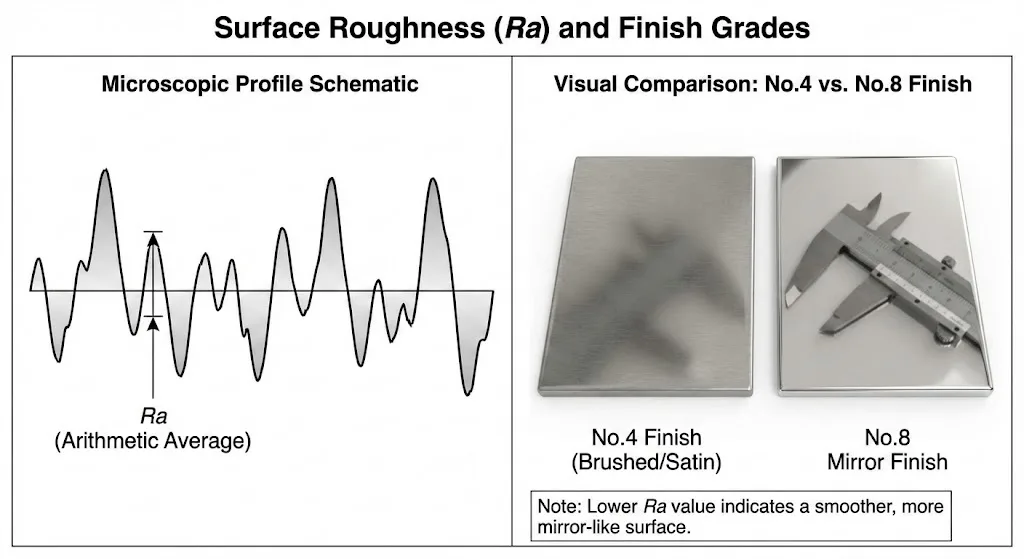
Mirror polishing usually refers to a highly refined stainless steel surface, often associated with No.8 or 8K finish terminology. In engineering practice, the decision should not be based only on how shiny the hinge looks. The more meaningful metric is surface roughness, commonly expressed as Ra. A true mirror finish is accepted through measurable surface quality, not visual brightness alone.
In practical hinge selection, this means mirror polishing is not just a decorative finish. It is a surface condition that can affect residue retention, cleaning behavior, and the way the part performs in visible or hygiene-sensitive applications.
What Mirror Polishing Can Improve
Cleaning and Hygiene Performance
A smoother stainless steel surface tends to trap less residue and is generally easier to wipe clean. This is one reason mirror-polished or similarly refined finishes are more relevant in food equipment, pharmaceutical devices, and cleanroom-related hardware than in ordinary industrial cabinets.
Where hygienic design matters, procurement specifications often focus on measurable roughness limits and validation requirements rather than appearance alone. That is why finish selection should be tied to actual cleaning standards, not just premium visual expectations. If your project also needs stronger corrosion-oriented material judgment, compare this with our 304 vs. 316 outdoor stainless hinge selection guide.
Surface Consistency and Appearance
Mirror polishing gives the hinge a more refined and premium appearance. This can matter when the hinge is visible on high-end equipment, branded enclosures, or polished stainless assemblies where visual consistency is part of the product value.
Reduced Surface Retention
Smoother surfaces can reduce the number of microscopic grooves where chlorides, dirt, or residues may remain. This can help reduce the likelihood of localized pitting initiation, but it does not replace correct alloy selection. In chloride-heavy environments, material chemistry still matters more than finish quality alone.
Lower Surface Friction in Limited Cases
Mirror polishing may slightly improve surface smoothness and reduce local friction peaks, but hinge wear still depends more on pivot design, hardness, pin material, lubrication strategy, and assembly tolerance. In other words, polishing can help, but it does not solve poor hinge engineering.
Why Many Industrial Hinges Do Not Need Mirror Polishing
Standard Indoor Cabinets Usually Do Not Benefit Enough
For most indoor electrical cabinets, control boxes, or equipment housings, mirror polishing is often more of an aesthetic upgrade than a functional necessity. If the environment is dry, the hinge is not highly visible, and the enclosure does not have hygienic cleaning requirements, brushed finish or passivation is usually more cost-effective.
Hidden or Low-Visibility Hinges Rarely Justify It
If the hinge is mounted inside the enclosure or not visible during normal use, mirror polishing usually creates little practical return. In those cases, corrosion stability, passivation quality, and fit accuracy matter more than reflective appearance.
Abrasive Environments Damage Mirror Finishes Quickly
Engineering machinery, outdoor equipment, and high-dust or sand-exposed installations can scratch mirror-polished surfaces quickly. Once scratched, the finish loses much of its visual advantage and may require more upkeep than a more practical brushed or passivated surface.
For harsh-use corrosion decisions, it also helps to review our corrosion-resistant hinge guide for industrial applications, because many outdoor hinge problems are driven more by environment and alloy choice than by decorative polishing level.
Mirror Finishes Require More Upkeep
Mirror surfaces show fingerprints, streaks, and scratches more clearly than brushed or matte finishes. In high-touch industrial environments, this can increase cleaning frequency and make the hinge look worn sooner, even if the base material is still performing well.
When Mirror Polishing Makes Sense
Food, Pharma, and Cleanroom Equipment
This is one of the clearest use cases. When cleanability, low surface retention, and validated hygiene performance matter, a highly refined finish can be justified. In these projects, finish selection should be linked to measurable Ra targets, passivation requirements, and inspection records.
Visible Premium Stainless Equipment
Mirror polishing can be appropriate where the hinge remains visible and is part of the finished equipment appearance. High-end devices, branded enclosures, or decorative industrial stainless assemblies may justify the extra process cost when appearance is part of the product specification.
Selected High-Corrosion Projects
In some marine or chloride-heavy environments, a smoother finish can help reduce local retention sites that contribute to pitting initiation. But the key point is this: finish quality is secondary to alloy choice. In most serious chloride environments, selecting the right stainless grade is still the first decision, and polishing comes after that.
When a Brushed or Passivated Finish Is Better
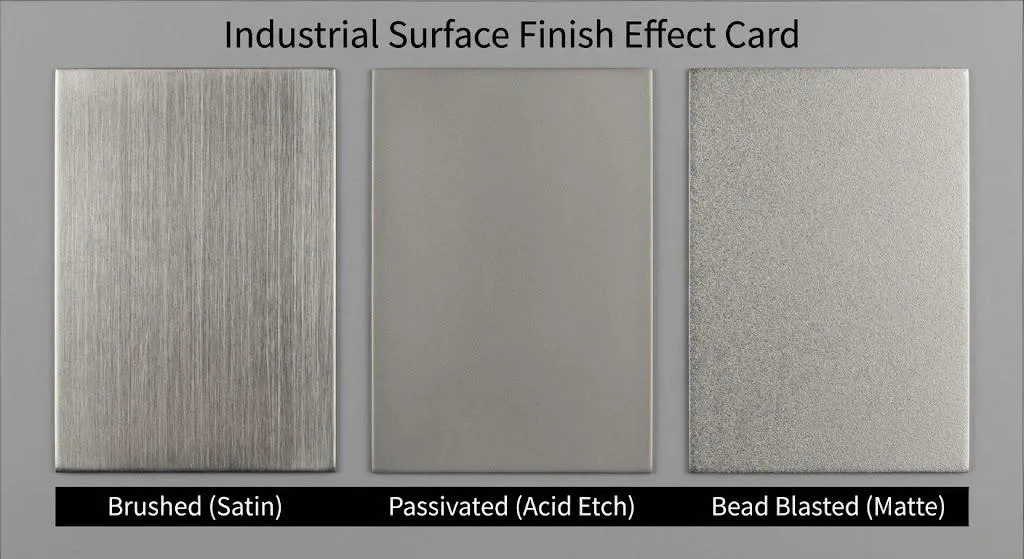
Brushed Finish for Most Visible Industrial Hinges
A brushed finish is often the most practical choice for visible industrial stainless hinges. It keeps a more uniform appearance, hides minor scratches better than mirror finish, and usually costs less while still offering a professional look.
Passivation for Engineering Robustness
For many cabinet, enclosure, and machinery applications, passivation provides stronger practical value than mirror polishing. It improves corrosion stability without turning the hinge into a high-maintenance reflective component. This is especially relevant for welded or machined hinge parts.
Matte or Low-Reflection Finishes for Operator Equipment
Operator-facing devices, surveillance equipment, optical systems, and machinery near lighting glare often benefit more from low-reflection finishes than from mirror surfaces. In these cases, appearance control and usability outweigh decorative brightness.
Practical Application Grading
Class A: Strongly Recommended
Use mirror polishing when the hinge is part of food machinery, pharmaceutical equipment, cleanroom systems, or highly visible premium stainless assemblies where cleanability and finish consistency are real requirements.
Class B: Possible with Clear Justification
Use it selectively in coastal or chloride-exposed projects after confirming the right base alloy and corrosion strategy. Mirror finish can support performance, but it should not be used as a substitute for correct material specification.
Class C: Usually Not Needed
For standard indoor electrical cabinets, industrial enclosures, and hidden hinge locations, brushed or passivated finishes are usually the better choice. They normally meet life, corrosion, and budget targets without the extra cost and upkeep of mirror polishing.
Class D: Generally Not Recommended
For abrasive engineering machinery, dirty field equipment, and heavy outdoor use with frequent impact or sand exposure, mirror polishing is rarely the best option. These environments usually benefit more from durable engineering finishes and stronger structural protection.
Engineering Decision Workflow
Step 1: Define the Environment
Clarify whether the hinge will operate indoors, outdoors, in chloride exposure, in hygienic cleaning zones, or in abrasive machinery service. Finish selection should follow the real environment, not habit or appearance alone.
Step 2: Confirm Whether the Hinge Is Visible
If the hinge is hidden inside the enclosure, mirror polishing rarely creates meaningful value. If the hinge is visible and part of the product appearance, the case for mirror finish becomes stronger.
Step 3: Check Cleaning and Hygiene Needs
Where hygienic validation matters, define measurable finish requirements such as roughness limits and inspection methods. Do not rely on the word “mirror” alone as a quality requirement.
Step 4: Compare Lifecycle Cost, Not Just Unit Price
Include maintenance workload, scratch visibility, replacement risk, cleaning demands, and the actual cost of downtime. Mirror polishing only makes sense when it improves long-term project value enough to justify the additional processing cost.
Step 5: Validate the Full Surface Process
Do not assess mirror polishing by appearance alone. Confirm the full process, including cleaning, contamination control, and passivation where required. In many industrial projects, the process discipline matters as much as the finish label itself.
FAQ
Q1: Do standard industrial cabinets need mirror-polished stainless hinges?
Usually not. For most indoor cabinets and enclosure doors, brushed or passivated finishes are more practical and cost-effective unless appearance or hygiene requirements clearly justify mirror finish.
Q2: Does mirror polishing improve corrosion resistance by itself?
It can help reduce local retention sites on the surface, but it is not the main corrosion defense. Alloy selection and proper post-processing remain more important than finish brightness alone.
Q3: Is mirror finish always better than brushed finish for visible hinges?
No. Mirror finish looks more premium, but brushed finish usually hides scratches better and often performs better in practical industrial use where touch, impact, and maintenance are frequent.
Q4: What finish is better for machinery and abrasive outdoor use?
In many cases, a more practical engineering finish such as brushed or passivated stainless is a better choice than mirror finish, especially where scratch damage and maintenance burden are important concerns. For machine-oriented applications, you can also explore our Scharniere aus rostfreiem Stahl für Maschinenführungen.
Q5: When is mirror polishing most worth the money?
It is most justified when the hinge is visible, hygiene-sensitive, or part of a premium stainless assembly where cleanability and finish quality are essential project requirements rather than optional upgrades.
Schlussfolgerung
An industrial stainless steel hinge does not automatically need mirror polishing. In many projects, mirror finish is a specialized choice rather than a standard requirement. It makes sense when hygiene, cleanability, or highly visible premium appearance justify the additional process cost. For ordinary cabinets, hidden hinges, and abrasive machinery use, brushed or passivated finishes are often the better engineering decision.
The right question is not “Is mirror polishing better?” but “Does this project gain enough real functional value from mirror polishing to justify it?” Once you evaluate visibility, environment, hygiene, and maintenance together, the answer usually becomes much clearer.

Anson Li
文章: 511VERBUNDENE POSTEN
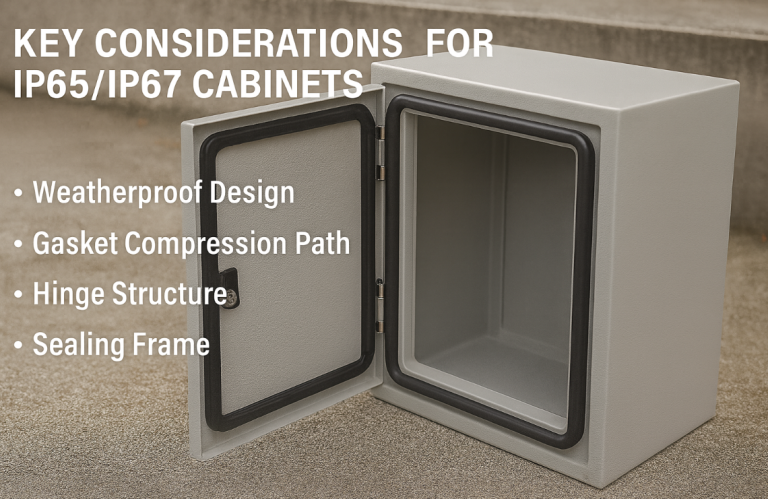
Entwerfen für Dichtungen: Ein tiefer Einblick in die Auswahl von Scharnieren für IP65/IP67-Schränke
Ein umfassender Leitfaden zum Thema Deckelverschluss: Vom Prinzip zur Anwendung
Cam Locks für Außenschränke: Anwendungen und Vorteile
-768x768-1.png)
Dreh-Drehmoment-Scharnier für Industriegehäuse
Laptop Torque Hinge Key Anforderungen und umfassender Leitfaden