HTAN ist einer der führenden Hersteller von industriellen Scharnieren, Griffen und Verschlüssen in China.


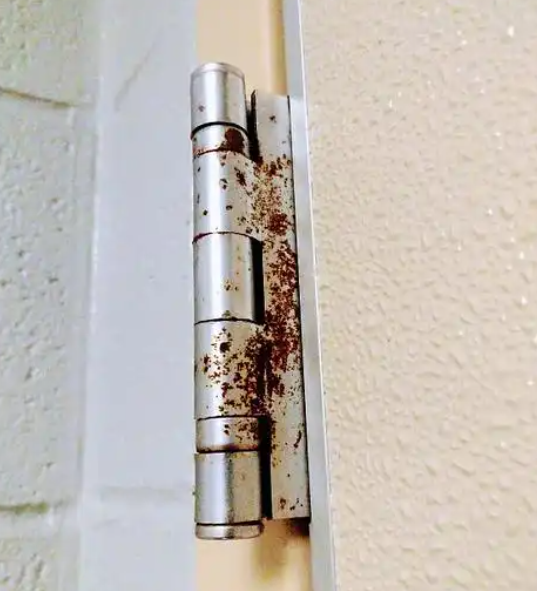
In chemical plants, marine engineering, sewage treatment systems, food processing lines, and outdoor equipment enclosures, metal Scharniere are often exposed to high humidity, salt spray, acidic or alkaline media, cleaning chemicals, rainwater, and repeated temperature changes. Under these conditions, ordinary hinges are prone to corrosion, jamming, deformation, or structural weakening. Once corrosion begins to affect hinge movement and load capacity, cabinet doors, access panels, and protective covers can no longer operate safely or reliably.
This is why corrosion-resistant hinges are essential in industrial equipment and outdoor applications. The right hinge selection improves service life, reduces maintenance frequency, and lowers the risk of downtime caused by seized or failed hardware. If your project also involves higher door weight or structural demand, it is worth comparing options in our Schwerlastscharniere range before finalizing the specification.
This guide explains why hinges corrode, which materials and surface treatments perform best, how different industrial environments affect hinge selection, what structural details improve corrosion resistance, and how to maintain hinges for longer life. It is written for engineers, equipment designers, procurement teams, and maintenance personnel who need a more practical framework for corrosion-resistant hinge selection.
Why Industrial Environments Need Corrosion-Resistant Hinges
Common Types of Corrosive Environments
- Marine environments: High salt spray and continuous humidity accelerate oxidation and metal surface attack.
- Chemical workshops: Acidic and alkaline vapors, solvents, and splashes can directly damage hinge materials and coatings.
- Food and pharmaceutical workshops: Repeated cleaning, water vapor, and detergents increase corrosion and hygiene demands.
- Outdoor power cabinets: Rainwater infiltration, condensation, and temperature cycling create constant corrosion risk.
- Agricultural and field equipment: Fertilizers, pesticides, mud, and outdoor weathering create mixed corrosion conditions.
Corrosion Mechanism and Impact
Corrosion usually begins when the protective surface of the hinge is damaged or when the base material is not suitable for the environment. Moisture, chloride salts, temperature changes, and chemicals can break down protective layers and expose the metal underneath. Over time, this reduces hinge strength, increases rotational resistance, and weakens fastener retention.
- Luftfeuchtigkeit: Rainwater or humid air accelerates oxidation, especially on unprotected carbon steel.
- Salt: Coastal areas and winter de-icing environments increase chloride attack and surface pitting.
- Temperature changes: Expansion and contraction can damage coatings and expose the base metal.
- Chemical contamination: Acids, alkalis, and industrial residues can directly attack hinge materials.
How Corrosion Damages Hinges
- Functional failure: Rust and deposits increase friction and cause jerky or seized rotation.
- Structural weakening: Corrosion reduces load-bearing ability and can lead to cracking, deformation, or sudden panel drop.
- Safety risk: Failed hinges can compromise cabinet closure, enclosure protection, and operator safety.
- Higher maintenance cost: Corroded hinges often require earlier replacement and more frequent servicing.
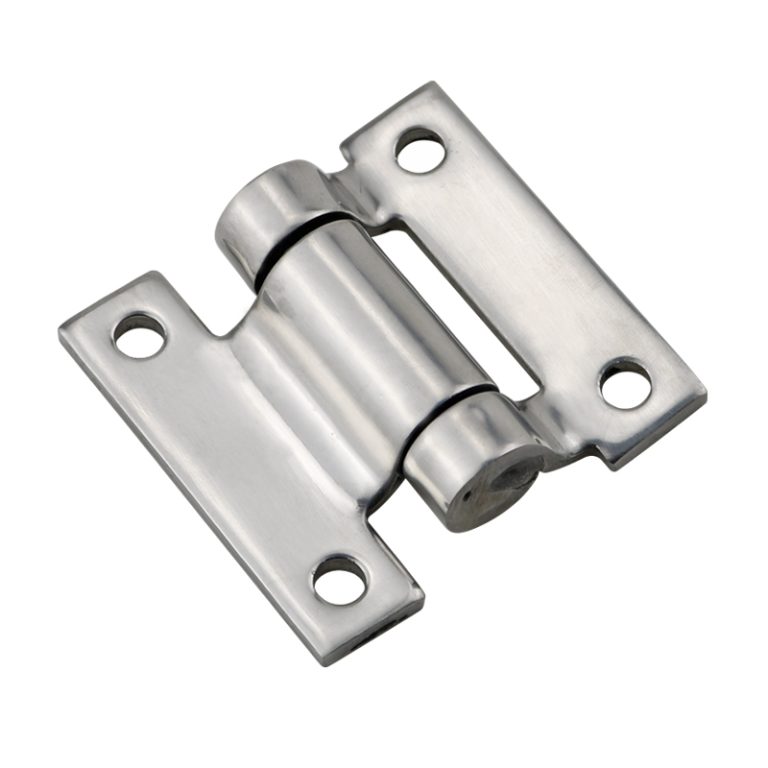
Corrosion Resistance Comparison of Common Hinge Materials
| Material | Korrosionsbeständigkeit | Wichtigste Vorteile | Wichtigste Beschränkungen | Typical Environment |
|---|---|---|---|---|
| Edelstahl 316 | Sehr hoch | Strong resistance to chlorides and harsh humidity | Higher cost than 304 | Marine, chemical, washdown, coastal equipment |
| 304 Edelstahl | Hoch | Good balance of corrosion resistance and cost | Less suitable for long-term heavy salt spray exposure | General industrial and outdoor applications |
| Aluminium-Legierung | Mäßig | Lightweight and easy to process | Lower strength and weaker acid/alkali resistance | Light equipment housings and electronics |
| Technische Kunststoffe | Moderate to high | Rust-free and electrically insulating | Limited load capacity and possible aging | Medical devices, food equipment, light-duty systems |
| Verzinkter Stahl | Low to moderate | Low initial cost | Rapid corrosion after coating damage | Dry indoor environments only |
For many industrial buyers, the main decision is between 304 and 316 stainless steel. As a general rule, 304 is suitable for many standard industrial and outdoor applications, while 316 is preferred in chloride-heavy, chemical, marine, and washdown environments. For broader stainless material context, see our Führung aus rostfreiem Stahl 304.
Materials and Technologies for Corrosion-Resistant Hinges
Surface Treatment Process Comparison
| Prozess | Typical Cost Level | Corrosion Protection Level | Best Fit Materials |
|---|---|---|---|
| Elektrophoretische Beschichtung | Mittel | Good for outdoor steel parts | Stahl, Aluminiumlegierung |
| Dacromet-Beschichtung | Hoch | Strong protection in harsh outdoor environments | High-strength steel |
| Eloxieren | Low to medium | Improves oxidation resistance and surface hardness | Aluminiumlegierung |
| PTFE-based coating | Hoch | Very good chemical and corrosion resistance | Stainless steel and selected specialty alloys |
| Powder coating | Mittel | Useful additional barrier layer for suitable applications | Steel and selected outdoor hardware |
Optimierung des Designs
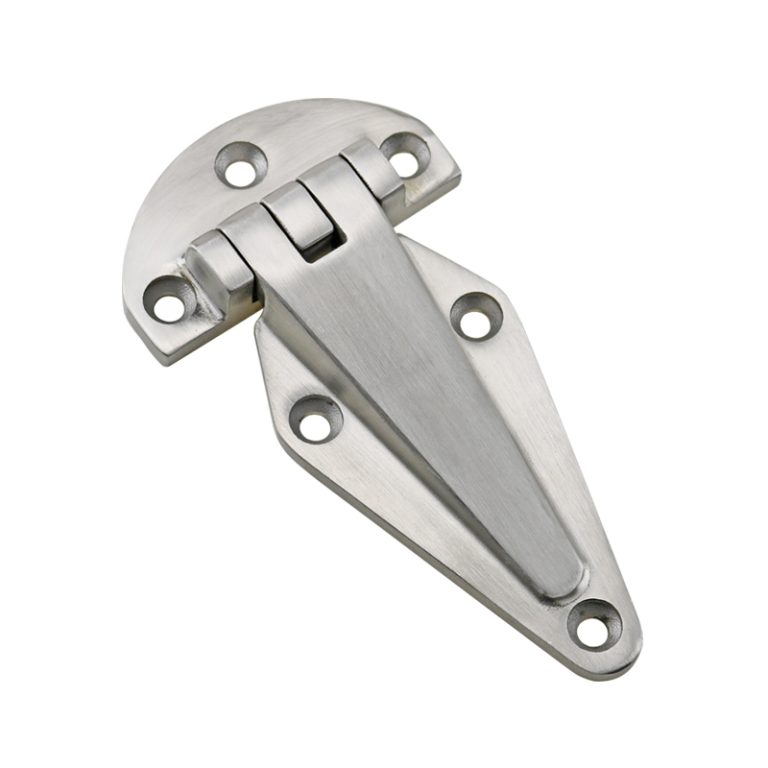
- Sealing structure: Internal seals or grease grooves help block water and contamination from entering the moving parts.
- Drainage holes: Reduce standing water and lower the risk of trapped moisture.
- Concealed pivot design: Helps prevent corrosive media from accumulating around the rotation point.
- Non-contact or protected bearings: Reduce metal-to-metal wear and improve long-term movement stability.
- One-piece construction: Fewer joints and gaps can reduce corrosion initiation points.
Influence of Installation Method
- Common mistake: Exposed or poorly sealed screws allow water intrusion and accelerate rust around the mounting area.
- Better practice: Use corrosion-resistant fasteners and sealing gaskets where water ingress is likely.
- Panel interface matters: Even a high-grade hinge can fail early if it is installed into a poorly protected mounting zone.
Typical Industrial Scenarios for Corrosion-Resistant Hinge Selection
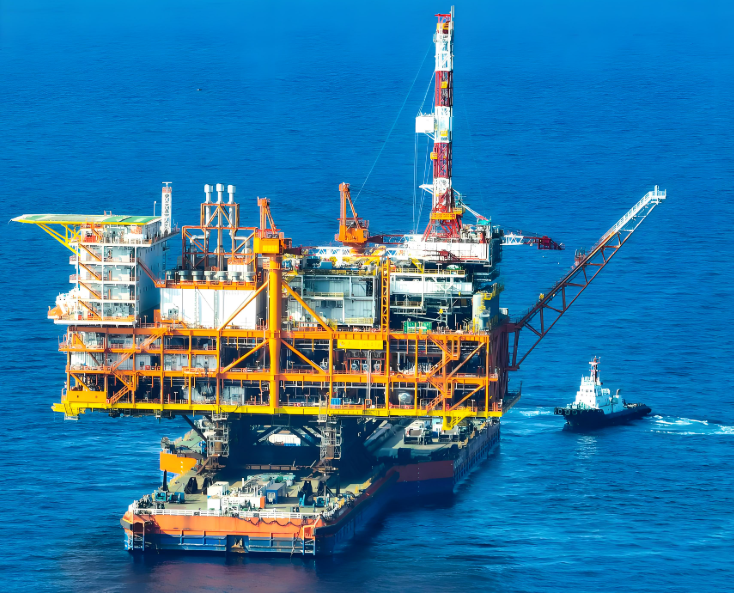
Coastal Equipment and Offshore Platforms
- Recommended material: 316 stainless steel, especially on higher-load outdoor doors and access panels.
- Key requirement: Strong salt spray resistance and proper sealing around mounting points.
- Selection note: Avoid mixed-metal combinations that may worsen galvanic corrosion.
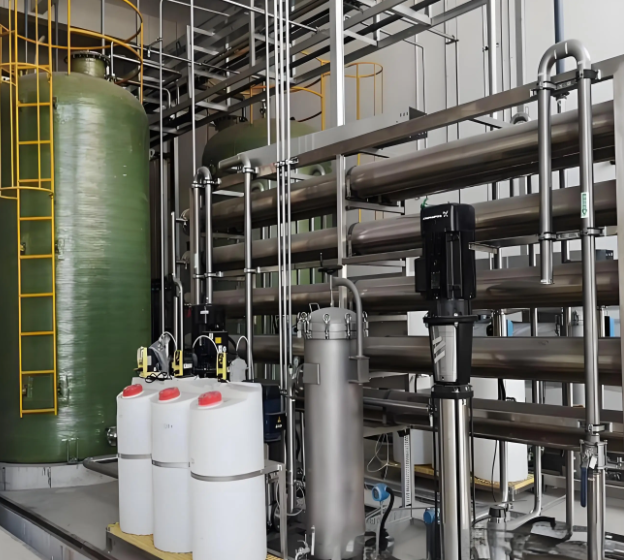
Chemical Acid and Alkali Environments
- Recommended direction: Corrosion-resistant stainless steel or hybrid designs matched to the exact chemical exposure.
- Design point: Full-cover and sealed structures help reduce liquid ingress into the rotating area.
- Selection note: Material compatibility with actual chemicals matters more than general corrosion ratings alone.
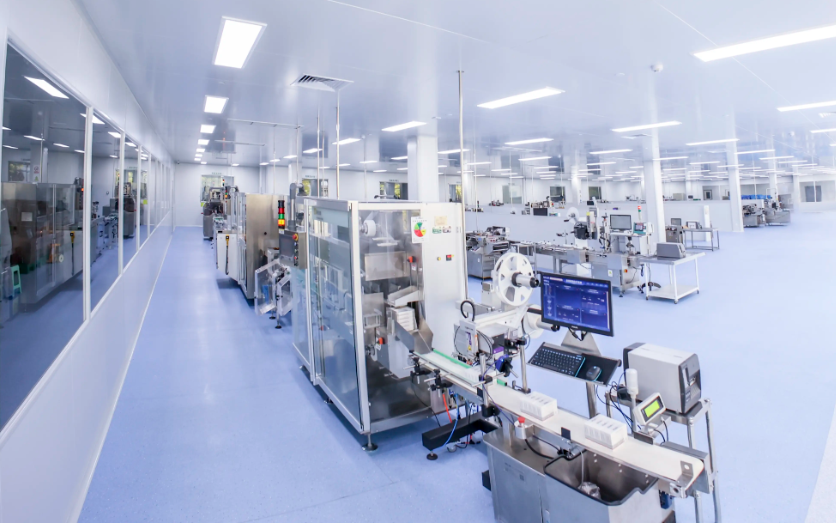
Food and Pharmaceutical Workshops
- Recommended material: Stainless steel with good cleanability and reliable resistance to washdown and detergents.
- Design point: Smooth surfaces and low-contamination geometry are important.
- Selection note: In hygiene-sensitive applications, finish quality can be as important as base material.
Landwirtschaftliche Maschinen
Agricultural equipment often experiences mixed corrosion from fertilizers, pesticides, mud, rainwater, and outdoor storage. Hinges used on protective covers and field-access panels should be chosen not only for corrosion resistance but also for their ability to handle dirt, vibration, and repeated opening in uncontrolled environments.
Architectural and Outdoor Gate Hardware
Gate hinges, equipment room doors, and exposed building-access hardware face rain, wind load, and temperature cycling over long periods. In these applications, designers should combine corrosion resistance with adequate structural strength rather than focusing on rust resistance alone.
How to Choose the Right Corrosion-Resistant Hinges
1. Environmental Analysis
- What is the actual humidity level and temperature fluctuation?
- Is the environment exposed to salt spray, acid, alkali, detergents, or industrial chemicals?
- Will the hinge be used outdoors, indoors, or in a washdown zone?
2. Mechanical Requirements
- What is the door or panel weight?
- How often will the hinge be opened each day?
- Does the application require high structural stability, or frequent access and fast removal?
3. Maintenance and Access Needs
- Will the hinge be lubricated regularly or should it be as low-maintenance as possible?
- Does the design benefit from sealed movement areas or self-lubricating features?
- Are exposed hinges easier to inspect and maintain than concealed ones in the real installation?
4. Compliance and Documentation
- Does the project require environmental or material compliance documentation?
- Are there application-specific standards related to hygiene, chemical exposure, or enclosure performance?
- Can the supplier provide material and surface-treatment information?
5. Cost Tradeoffs
- Does the initial budget allow a higher-grade corrosion-resistant material?
- Would a lower-cost hinge create higher maintenance or replacement cost later?
- Is lifecycle cost more important than unit price in this installation?
Testing and Standards
Testing data can help engineers compare hinge durability more objectively, especially in outdoor or corrosive settings. However, results should always be interpreted in context rather than treated as a simple one-number answer.
Salt Spray vs. Cyclic Corrosion Testing
- Salt spray testing: Uses continuous salt fog exposure to compare corrosion resistance in a controlled way. It is useful for material and coating comparison.
- Cyclic corrosion testing: Alternates between wet, dry, and corrosive phases to simulate more realistic outdoor conditions. It is often more representative of real service environments.
For outdoor hinge selection, cyclic corrosion performance can be more informative than salt spray hours alone, because real-world corrosion usually involves alternating moisture, drying, and contamination rather than constant exposure.
Wartung und Pflege
Recommendations for Longer Life
- Clean hinge surfaces periodically to remove salt, dust, and chemical residue.
- Use a suitable lubricant where the hinge design requires periodic maintenance.
- Check mounting screws and surrounding hardware for looseness or coating damage.
- Inspect drainage and sealing areas so water does not remain trapped around the hinge.
Häufige Missverständnisse
- Assuming all stainless steel grades perform equally in every corrosive environment.
- Ignoring drainage design and allowing water to accumulate inside the hinge area.
- Damaging the protective surface during cleaning or installation.
- Using a corrosion-resistant hinge body with poor-quality fasteners that corrode first.
Corrosion-Resistant Hinge Selection Checklist
- Umwelt: Salt spray, acid/alkali, humidity, detergent, or outdoor exposure?
- Material: 304, 316, alloy, coated steel, or engineering plastic?
- Struktur: Open, sealed, drainable, or protected bearing design?
- Load: Light cover, medium cabinet door, or heavy access panel?
- Frequency: Low-cycle inspection door or high-frequency operational access?
- Wartung: Lubricated service part or lower-maintenance hinge design?
- Supplier data: Material details, coating information, and relevant test data available?
FAQ
Q1: What is the most corrosion-resistant practical hinge material?
For many industrial and outdoor applications, 316 stainless steel is one of the most practical high-performance choices. In more extreme or specialized environments, other materials may be considered, but selection should always be tied to the actual chemical and mechanical conditions.
Q2: How can I extend the life of industrial hinges?
Choose a hinge material that matches the environment, prevent water accumulation, clean contamination regularly, avoid overloading, and maintain the hinge according to the actual service conditions.
Q3: What are the main indicators for corrosion-resistant hinge selection?
The most important factors are corrosion resistance, mechanical strength, environmental suitability, structural design, and lifecycle cost.
Q4: How can hinge performance be protected under extreme temperatures?
Select materials and internal components that remain stable at the expected temperature range, and avoid designs that trap moisture or rely on unsuitable polymer parts in demanding conditions.
Q5: How can I reduce maintenance costs?
Reduce hidden corrosion points, specify the right material from the start, choose appropriate surface treatment, and avoid using under-protected hinges in environments that exceed their intended duty.
Schlussfolgerung
In highly corrosive environments, hinge selection is directly tied to equipment safety, maintenance efficiency, and long-term operating stability. The most reliable solution usually comes from matching the material, coating, structural details, and installation method to the real service conditions instead of choosing by price alone.
For many industrial projects, the right corrosion-resistant hinge is the one that combines adequate structural strength with realistic resistance to moisture, salt, chemicals, and cleaning routines. When the environment is understood correctly and the hinge is maintained properly, service life can be extended significantly and downtime risk can be reduced.
For application-specific recommendations, browse our corrosion-resistant hinge-related product options or Kontakt zu unserem Ingenieurteam for project support.

Anson Li
文章: 511VERBUNDENE POSTEN
Der vollständige Leitfaden für verdeckte Scharniere: Typen, Auswahl und Wartung
Beschaffung von industriellen Kunststoffgriffen: Ein Leitfaden zur direkten Beschaffung und Kostensenkung
Ergonomischer Industriehandgriff: Design, Materialien und Anwendungen
Die Auswahl der richtigen Paddelverschlüsse für Industriegehäuse: Ein vollständiger Leitfaden
Technischer Leitfaden: Warum Edelstahl 304 der Standard für industrielle Scharnierstifte ist