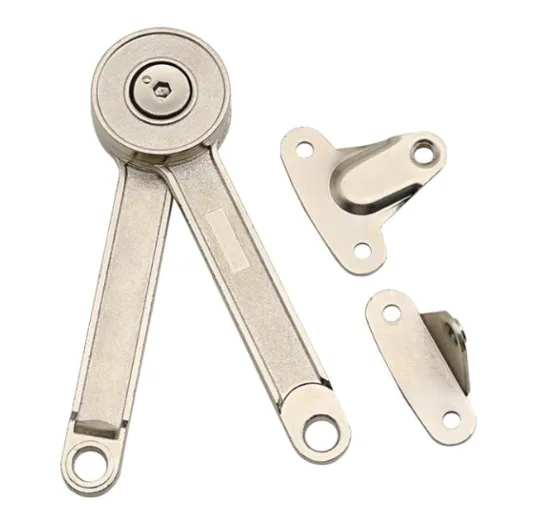
HTAN es uno de los principales fabricantes de bisagras, manillas y pestillos industriales de China.


Una bisagra descuidada puede condenar a un costoso armario para servidores. Si la bisagra se hunde, la puerta se deforma, falla el sellado y disminuye la seguridad. En las plantas más duras, cada detalle cuenta: una bisagra es la unión entre la puerta y el marco, y su importancia va mucho más allá de su tamaño. Bisagras ocultas se asientan por completo en el interior del armario. Ocultan todos los herrajes cuando la puerta está cerrada, ofreciendo un exterior liso e ininterrumpido. En la industria moderna, esta bisagra oculta es fundamental para un diseño elegante, además de una alta seguridad y una protección robusta. Sin embargo, el mercado está inundado de opciones: docenas de materiales, clasificaciones y características. ¿Cómo pueden los ingenieros o compradores elegir con seguridad? Esta guía presenta un método de selección sistemático de siete puntos. Trataremos cada factor clave en detalle, con ejemplos de casos reales, para que pueda elegir la bisagra oculta exacta para asegurar su armario o chasis industrial.
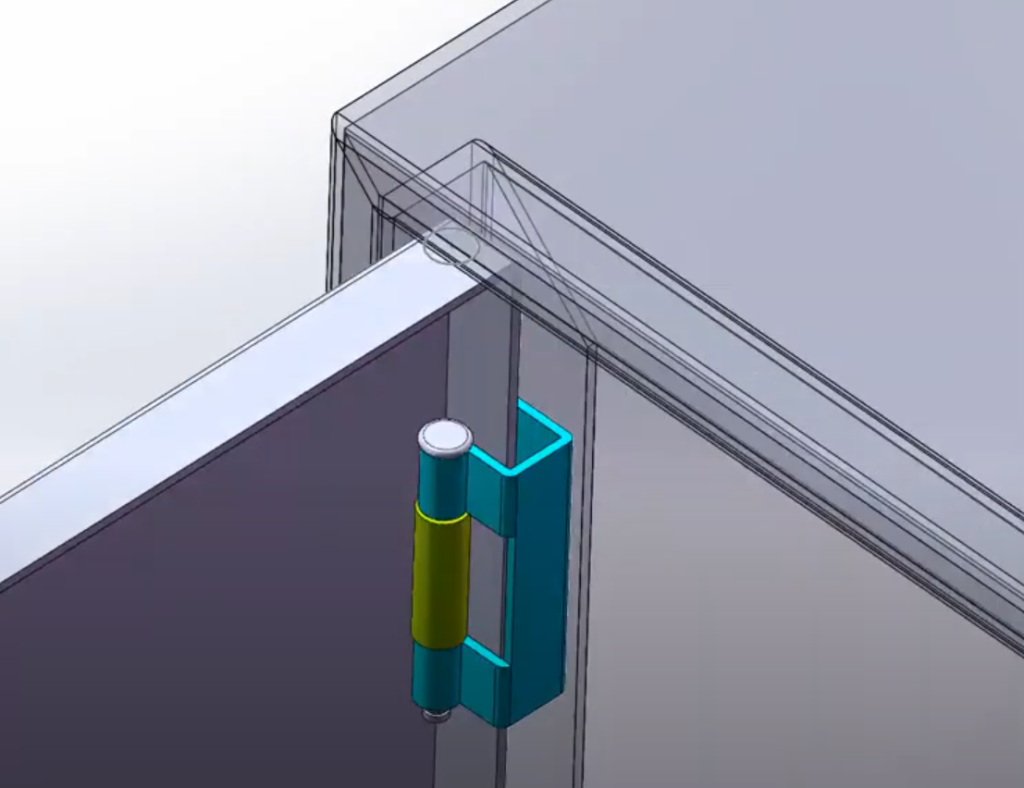
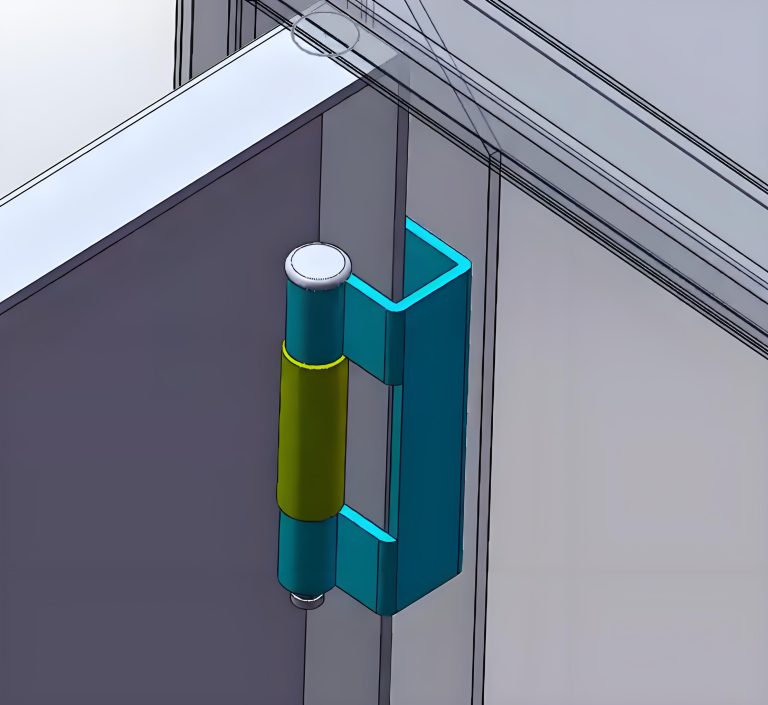
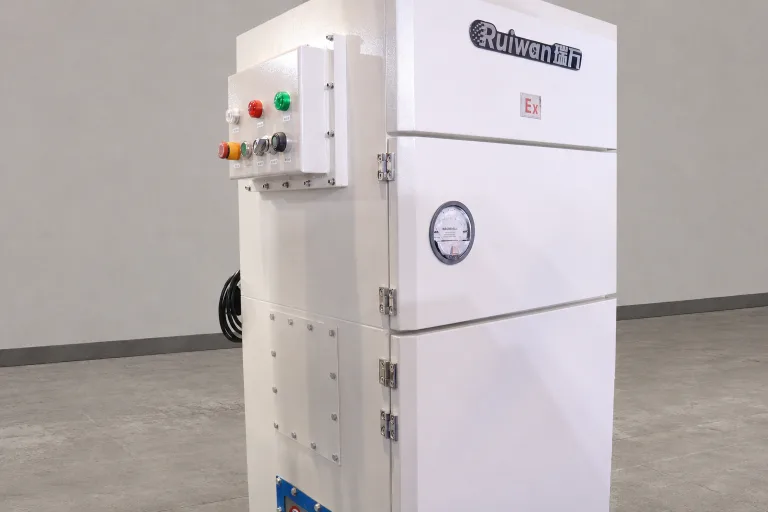
Bisagra oculta dentro de un armario industrial
¿Qué es una bisagra oculta y por qué es la preferida en la industria?
Antes de elegir una bisagra, entienda qué es y qué hace. Una bisagra oculta es simplemente una bisagra que desaparece de la vista cuando se cierra la puerta del armario. Su mecanismo -placas, pasadores y eslabones- está montado en el interior de la puerta y el marco. Este diseño invisible contrasta claramente con las antiguas bisagras expuestas (bisagras a tope o de correa), cuyos pasadores y hojas siempre quedan a la vista. Una bisagra oculta mantiene las superficies externas planas y limpias. La ingeniería que hay detrás suele utilizar múltiples puntos de articulación o brazos. Estos mecanismos multipivotantes permiten un movimiento muy suave y controlado, incluso en puertas pesadas.
Definición:
Una bisagra oculta queda totalmente oculta por la puerta en posición cerrada. El mecanismo pivotante está enterrado en el interior de la pared del armario. Al abrir la puerta, los brazos o eslabones se extienden en una trayectoria precisa, y vuelven a retraerse al cerrar. Muchos diseños cuentan con dos o más puntos de giro. Esto permite que la puerta oscile suavemente sin rozar ninguna junta o marco, incluso hasta 180°. Los cerramientos de alta seguridad suelen utilizar bisagras ocultas de alta resistencia con fijaciones soldadas o atornilladas: todas las piezas están diseñadas para soportar el peso y el movimiento en condiciones difíciles. En resumen, una bisagra oculta no es sólo un pivote; es un sistema de varias piezas fabricado para ofrecer resistencia y un funcionamiento suave.
El diseño oculto ofrece varias ventajas potentes en entornos industriales:
Aspecto elegante:
Sin que se vean los herrajes, los armarios tienen un aspecto moderno y sin juntas. Las bisagras ocultas totalmente superpuestas cubren el marco por completo, dejando poco espacio entre las puertas. Dos armarios uno al lado del otro pueden quedar enrasados. El resultado es un exterior limpio y monolítico que encaja en entornos de alta tecnología. Los paneles de control y bastidores modernos suelen utilizar bisagras ocultas para conseguir este aspecto pulido.
Alta seguridad y antimanipulación:
Una bisagra oculta en el interior significa que no hay tornillos externos ni pasadores expuestos para hacer palanca. Los intrusos no pueden quitar o forzar fácilmente la puerta atacando la bisagra desde fuera. Los ingenieros citan las bisagras ocultas como ideales para armarios de seguridad y cajas de telecomunicaciones exteriores, ya que "impiden la manipulación desde el exterior". En otras palabras, cualquier intento de forzar la puerta debe romper primero la carcasa exterior, no sólo arrancar la bisagra.
Eficiencia espacial:
Las bisagras ocultas permiten que las puertas queden más cerca entre sí y de las paredes. Una puerta que recubre todo el marco puede encontrarse con una unidad adyacente de borde a borde sin dejar ningún hueco. En centros de datos o salas de control donde los bastidores son estrechos, esto ahorra un espacio precioso y hace que la instalación sea compacta. También significa que hay menos piezas salientes con las que chocar.
Sellado y protección mejorados:
Las bisagras ocultas se integran bien con juntas y empaquetaduras. Como suelen permitir que la puerta se eleve o se mueva ligeramente hacia fuera antes de abrirse, evitan el roce con las juntas del marco. Esto protege del desgaste a cualquier junta de goma. Además, la propia bisagra puede diseñarse como parte del sellado IP del cerramiento. Las bisagras ocultas correctamente alineadas ayudan al armario a cumplir los índices de protección contra el polvo y el agua. (De hecho, los técnicos insisten en que la correcta alineación de las bisagras es fundamental para mantener el sellado y la clasificación IP de cualquier junta).
Cada uno de estos puntos es vital en la industria. Una bisagra oculta mejora la estética, sella mejor y ahuyenta a los intrusos. Su complejidad interior es el precio de esas ventajas. Con esta base en mente, las siguientes secciones profundizan en los siete factores clave que todo ingeniero o comprador debe tener en cuenta a la hora de seleccionar una bisagra oculta.
Siete factores clave en la selección de bisagras
Ahora pasamos al meollo de la selección: un examen paso a paso de siete factores críticos. Considérelos una lista de comprobación que va de las necesidades básicas a las más avanzadas. Omita cualquier factor por su cuenta y riesgo: cada uno desempeña un papel en el éxito.
Capacidad de carga: la base de la seguridad
Ante todo, una bisagra debe ser capaz de soportar el peso de la puerta de forma fiable. El fallo de una bisagra supone un grave riesgo para la seguridad: imagínese una puerta de acero de 200 libras que cae sobre equipos o personas. Empiece por calcular el peso. Calcule el peso de la puerta como grosor × anchura × altura × densidad del material. Por ejemplo, si su puerta mide 2 m × 0,5 m × 0,01 m y es de acero dulce (densidad ~7850 kg/m³), su peso es 2×0,5×0,01×7850 ≈ 78,5 kg. Consejo: Utiliza siempre unidades métricas para evitar errores.
A continuación, hay que tener en cuenta el efecto palanca. Una puerta más ancha ejerce más torsión sobre sus bisagras aunque el peso sea el mismo. Una puerta doble o un panel muy ancho pueden combarse más rápidamente que uno estrecho del mismo peso. Por tanto, compruebe siempre las especificaciones de las bisagras, no sólo el peso total, sino también la anchura o el desplazamiento de la puerta. Los fabricantes suelen indicar algo como "soporta 80 kg por par (para puerta de 1,2 m)", que ya tiene en cuenta el tamaño.
Ahora interprete correctamente las clasificaciones del fabricante. Si un par de bisagras está clasificado como "100 kg (2 bisagras)", significa que esas dos pueden soportar 100 kg en total con las dimensiones de puerta probadas. Si su puerta es más pesada o más grande, suba un modelo. La mejor práctica: Elija una bisagra con una capacidad nominal de al menos 20-30% por encima de sus necesidades calculadas. Este margen de seguridad cubre las cargas dinámicas (apertura y cierre con rebote, pequeños impactos) y el desgaste a largo plazo. Por ejemplo, si su cálculo indica 50 kg, elija una bisagra (o par de bisagras) con una capacidad nominal de ~65 kg. Sobredimensionar un poco este aspecto evita futuras sorpresas.
Material y acabado superficial - Garantías de durabilidad
Si se tiene en cuenta el peso, hay que elegir un material fuerte y resistente. Las bisagras están disponibles en varios metales y aleaciones:
Acero inoxidable (por ejemplo SS304 o SS316):
Extremadamente resistentes a la corrosión y fuertes. Ideal para entornos hostiles: exteriores, costeros (niebla salina), procesamiento químico, equipos médicos y alimentarios o cualquier lugar en el que la humedad sea un problema. SS316 tiene incluso mejor resistencia a la oxidación que 304. Utilice bisagras de acero inoxidable cuando la longevidad contra corrosión es vital.
Aleación de zinc:
A menudo se utiliza mediante fundición a presión para bisagras de precio moderado. La aleación de zinc ofrece buena resistencia y permite formas intrincadas. Muchos equipos de interior y electrónicos bisagras para armarios Utilizamos aleación de zinc porque es rentable y sigue siendo resistente a la oxidación tras el chapado. También acepta bien la pintura y el chapado.
Acero (acero al carbono, por ejemplo Q235):
Muy alta resistencia a la tracción, buena para cargas pesadas e impactos. Más pesado y económico. Común en maquinaria de gran tamaño y armarios de gran resistencia (por ejemplo, conmutadores, armarios de grandes generadores). Como el acero liso puede oxidarse, estas bisagras suelen estar galvanizadas, cromadas o recubiertas de polvo para protegerlas.
Aluminio:
Ligeros y con buena resistencia a la corrosión (especialmente anodizados). Se utiliza cuando la reducción de peso es importante (por ejemplo, aviones, equipos de tránsito ferroviario) y las cargas son moderadas. No es tan resistente como el acero, pero su baja densidad puede ser importante para puertas grandes.
No pase por alto el acabado de la superficie. Incluso el material adecuado puede fallar si no se trata. Los acabados típicos son el zincado o el cromado (para ambientes interiores/suaves), el recubrimiento en polvo (pintura horneada para dar color y resistencia a la corrosión) y el recubrimiento electroforético (sellado fino y uniforme utilizado en automoción y electrónica de gama alta). En resumen, adapte el material y el revestimiento de la bisagra a su entorno y confirme siempre las especificaciones del material con el proveedor.
Ángulo de apertura - Satisfacer las necesidades operativas
Tenga en cuenta hasta dónde debe abrirse la puerta. Las bisagras de 90°-120° son comunes para armarios en espacios reducidos: se abren lo suficiente para la mayoría de las tareas de acceso, al tiempo que evitan la colisión con paredes o bastidores adyacentes. Las bisagras de 180° (o más) permiten que la puerta gire completamente hacia atrás: utilícelas cuando necesite espacio libre para montar equipos o acceder a todos los componentes. Elija el ángulo imaginando el espacio de trabajo real y confirmando que la hoja de especificaciones de la bisagra indica el ángulo máximo correcto.
Características adicionales: más comodidad y seguridad
Las bisagras modernas suelen añadir funciones que van más allá del mero giro. Amortiguación (Soft-Close): Un amortiguador integrado frena la puerta al final del cierre: evita portazos, reduce el ruido y el desgaste en salas de control y centros de datos. Con bloqueo o autobloqueo: Se bloquea en determinados ángulos para que los ingenieros puedan abrir un panel pesado con las manos libres. Cierre rápido / extracción sin herramientas: Un pasador desplegable permite levantar la puerta del marco sin desenroscarla, lo que resulta útil para transportar puertas pesadas o cambiar paneles sobre el terreno.
Ajustabilidad tridimensional (3D):
Se trata de una gran opción para puertas industriales pesadas. Una bisagra ajustable en 3D significa que, una vez instalada, puede ajustar con precisión la posición de la puerta en tres ejes (arriba/abajo, izquierda/derecha y dentro/fuera) con unos simples tornillos. Esta precisión es clave para puertas de acero pesadas con juntas: incluso un milímetro de desviación puede hacer que una junta se abombe. Con el ajuste 3D, los instaladores alinean perfectamente la puerta para que encaje limpiamente con el marco. Los expertos del sector subrayan que esta posibilidad de ajuste es esencial para garantizar un ajuste perfecto en puertas pesadas de precisión. Busque siempre esta opción si la alineación es crítica. Para obtener una guía detallada sobre la especificación de bisagras ocultas ajustables 3D para armarios eléctricos, consulte: Selección de bisagras ocultas ajustables en 3D para armarios eléctricos.
Instalación y superposición de puertas - Compatibilidad estructural
La bisagra debe coincidir con la forma en que está construida su puerta y cómo se monta. Tenga en cuenta el estilo de superposición de la puerta: Superposición completa - La puerta cubre por completo el panel lateral del armario, muy popular en equipos de alta tecnología para conseguir un aspecto elegante. Media superposición - dos puertas comparten un tabique central, cada una de las cuales cubre la mitad. Puerta empotrada - Si la puerta queda completamente dentro del marco, a ras de la cara frontal, se requiere una bisagra empotrada que separe la puerta del marco.
Elija el estilo de bisagra que se adapte exactamente a su tipo de puerta. La mayoría de bisagras industriales vienen en pares: la hoja de la puerta y la hoja del marco. Para el método de fijación: Atornillar es el más común para los armarios metálicos: fácil de instalar o sustituir. Para soldar forma una línea de soldadura tan resistente como el metal base: ideal para grandes puertas de seguridad o contenedores en los que no se desean elementos de fijación extraíbles. Elija en función de si necesita capacidad de ajuste en el futuro (tornillos) o la máxima robustez (soldadura).
Requisitos medioambientales: no olvide el contexto
Piensa bien dónde vivirá el armario. Factores clave: Clasificación IP - si el armario tiene una clasificación IP65/67, la bisagra no debe comprometer la estanqueidad; un montaje preciso es fundamental para mantener el contacto de la junta. Corrosión e intemperie - Los armarios de exterior están expuestos a la lluvia, los rayos UV y las oscilaciones de temperatura; las fábricas de interior pueden sufrir salpicaduras de productos químicos o una humedad elevada. Vibración y Choque - las instalaciones móviles (vehículos, barcos, generadores) requieren bisagras robustas, a ser posible soldadas. Temperaturas extremas - Confirme que los amortiguadores y lubricantes funcionan en su rango de temperatura de funcionamiento. CEM y conexión a tierra - en armarios eléctricos, busque bisagras de conexión a tierra o añada cintas de conexión a tierra para garantizar que la puerta permanece unida eléctricamente al marco del armario.
Marca, certificaciones y coste total: la visión a largo plazo
Por último, sopese la calidad y el coste. Busque certificaciones: ISO 9001 (gestión de la calidad), RoHS (sin plomo), Listados UL (para armarios eléctricos). Una bisagra más barata puede corroerse o romperse, provocando tiempos de inactividad, reparaciones o incidentes de seguridad que superan fácilmente el precio de la bisagra. Cuando evalúe a los proveedores, solicite asistencia técnica o modelos 3D con antelación. La "mejor" bisagra es la que satisface todas sus necesidades técnicas y tiene sentido desde el punto de vista económico a lo largo de la vida útil del equipo.
Casos prácticos: Aplicación de las normas
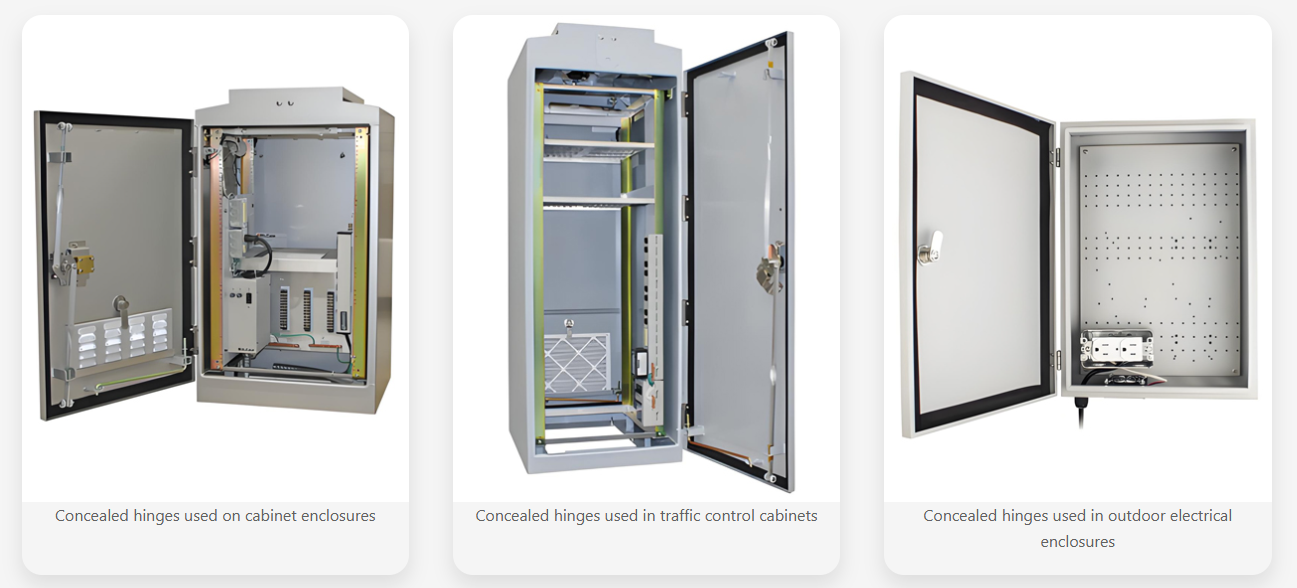
Aplicaciones industriales de las bisagras ocultas (ejemplo de armario de telecomunicaciones)
Caso 1: Armario de telecomunicaciones exterior.
Requisitos: Alta resistencia a la intemperie, resistencia al vandalismo, amplio acceso para mantenimiento, estanqueidad IP54+, bisagras no desmontables desde el exterior.
Solución: Bisagras ocultas de acero inoxidable 316 con placas de gran espesor, apertura de 180°, montaje por soldadura, sin elementos de fijación expuestos. Añada una junta de alta resistencia alrededor de la puerta.
Caso 2: Rack para centro de datos en interior.
Requisitos: Puerta muy pesada, apertura/cierre frecuente, alineación precisa para mantener los sellos de flujo de aire, espacio reducido entre bastidores.
Solución: Bisagra oculta multibrazo para más de 50 kg, apertura de 180°, modelo ajustable en 3D para una alineación perfecta de la puerta, acero cincado para interiores, pasador de cierre rápido para intercambiar servidores. Para conocer los problemas de instalación más comunes y sus soluciones, consulte: ¿La puerta de un armario industrial no cierra? Guía de fijación de bisagras ocultas.
Caso 3: Armario de control de equipos de precisión.
Requisitos: Cierre suave y silencioso, estanqueidad perfecta, evitar la entrada de polvo, puerta de peso moderado, condiciones ambientales interiores.
Solución: Bisagra oculta con amortiguación de cierre suave incorporada, junta de goma alrededor del marco de la puerta, material de aleación de zinc o acero inoxidable, estilo de recubrimiento completo para exterior enrasado, ángulo de 120° suficiente, bisagra metálica para conexión a tierra ESD si es necesario.
Estos ejemplos ilustran el proceso completo: enumere las demandas y, a continuación, haga coincidir los atributos de las bisagras. Observe cómo factores como el material, la resistencia y las funciones se eligen para ajustarse con precisión a cada caso de uso.
Lista de comprobación definitiva y errores comunes
- ¿He calculado el peso de la puerta y par de torsión? No olvides la anchura.
- ¿La capacidad de la bisagra supera mis necesidades en 20-30%?
- ¿El material y el acabado elegidos son adecuados para las condiciones de corrosión y desgaste?
- ¿Cumple el ángulo de apertura los requisitos de acceso?
- ¿Necesito funciones adicionales (cierre suave, bloqueo de apertura, cierre rápido, ajuste 3D)?
- ¿Coincide la bisagra con el estilo de la puerta (encastrada, semiencastrada/encastrada) y el método de montaje?
- ¿He tenido en cuenta las vibraciones, la temperatura, la clasificación IP, la conexión a tierra, etc.?
Errores comunes que hay que evitar: Elegir sólo por el precio; ignorar la anchura de la puerta (efecto palanca); utilizar el mismo modelo de bisagra en todas partes independientemente de las condiciones; saltarse el ajuste 3D final después de la instalación: una bisagra ajustable mal alineada arruina la estanqueidad y desgasta la bisagra prematuramente.
Conclusión
Elegir una bisagra oculta para un armario industrial es una decisión muy importante. Influye en el aspecto del armario, en su seguridad e incluso en la seguridad de sus operaciones. La bisagra adecuada no es solo una pieza; es un elemento clave de la fiabilidad de todo el sistema.
Si analiza metódicamente estos siete factores, se asegurará de que su armario funcione sin problemas durante años. No se limite a la hoja de datos: hable con expertos en bisagras y, si es posible, haga pruebas de montaje. Esa atención al detalle es lo que separa a los equipos ordinarios de los verdaderamente excepcionales y fiables. Consulte la gama completa de HTAN de bisagras ocultas para armarios industriales o contacte con nuestro equipo de ingeniería de apoyo a la selección.