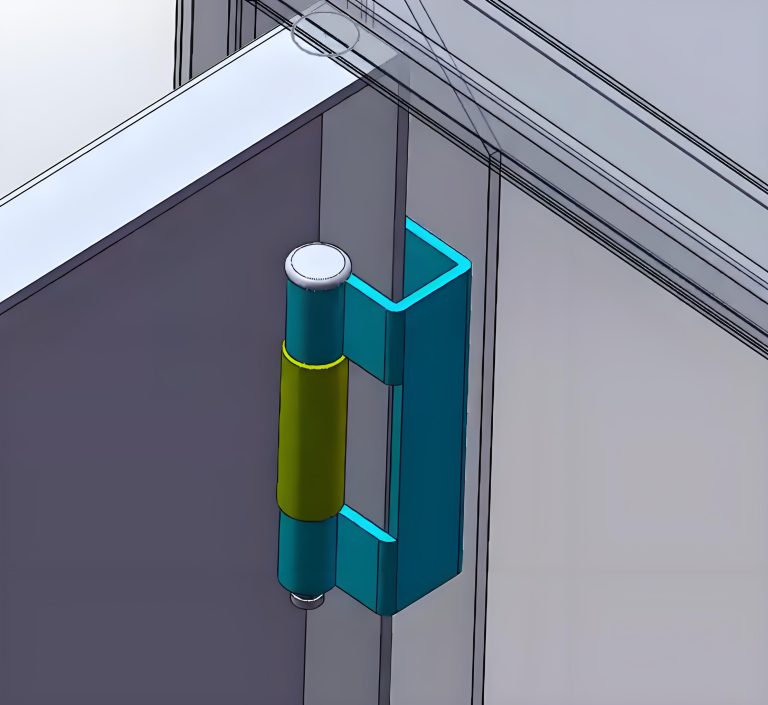
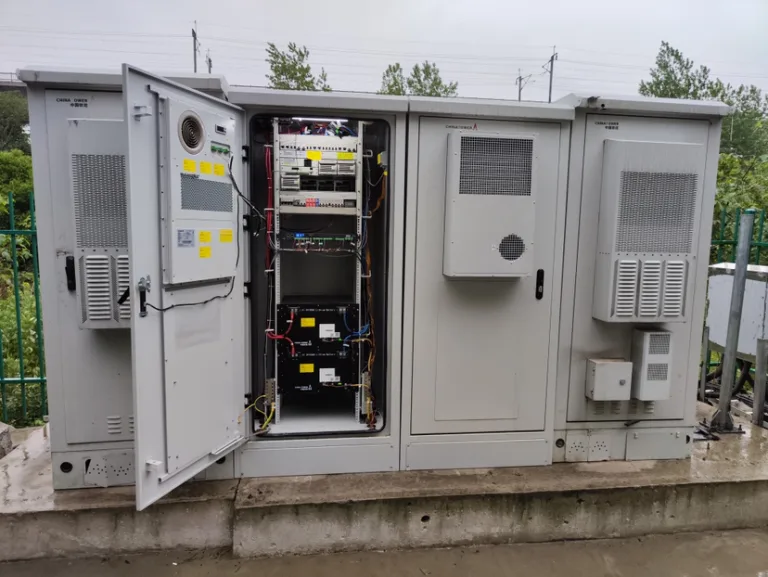
HTAN es uno de los principales fabricantes de bisagras, manillas y pestillos industriales de China.


An access cover on a vibrating screen, feeder, centrifuge, or dust-handling machine may look closed at startup but begin to loosen during operation. The cover may start to rattle, dust may escape around the gasket, or a cam latch may slowly rotate away from the closed position.
For the maintenance team, the real question is not simply that the latch is weak. It is whether the latch design can stay engaged under repeated vibration while still allowing the access speed the equipment requires. This article answers one decision only: when a vibration-prone equipment cover will not stay shut, should you specify a draw latch or a cam latch? It compares the two families dimension by dimension. It does not re-cover how to select a draw latch on its own — that is handled in the guide to cierres de tracción para equipos de vibración.
Quick Answer
Utilice un draw latch when the cover must maintain strong gasket compression, resist severe vibration, and reduce the risk of unexpected opening. Use a pestillo de leva when the cover must be opened frequently and quickly — but only if the cam latch includes a positive anti-rotation feature such as a detent, secondary lock, spring-loaded pawl, or tested vibration-resistant design. A simple friction-style cam latch is usually not the safest choice for covers exposed to continuous vibration.
Why Vibration Changes the Draw vs Cam Decision
On static cabinets, a latch only needs to keep the door closed, and either family works. On vibrating equipment, the latch must resist repeated movement, impact, fretting, and preload loss — and this is where the two families diverge. The decision comes down to one difference: how each latch resists opening, and therefore how each one usually fails.
A draw latch holds tension through an over-center lever, so it does not rely only on friction to stay closed. A cam latch rotates a cam behind a keeper, and a basic version relies on friction or operator-applied force. Under continuous vibration, that single mechanical difference drives most of the comparison below.
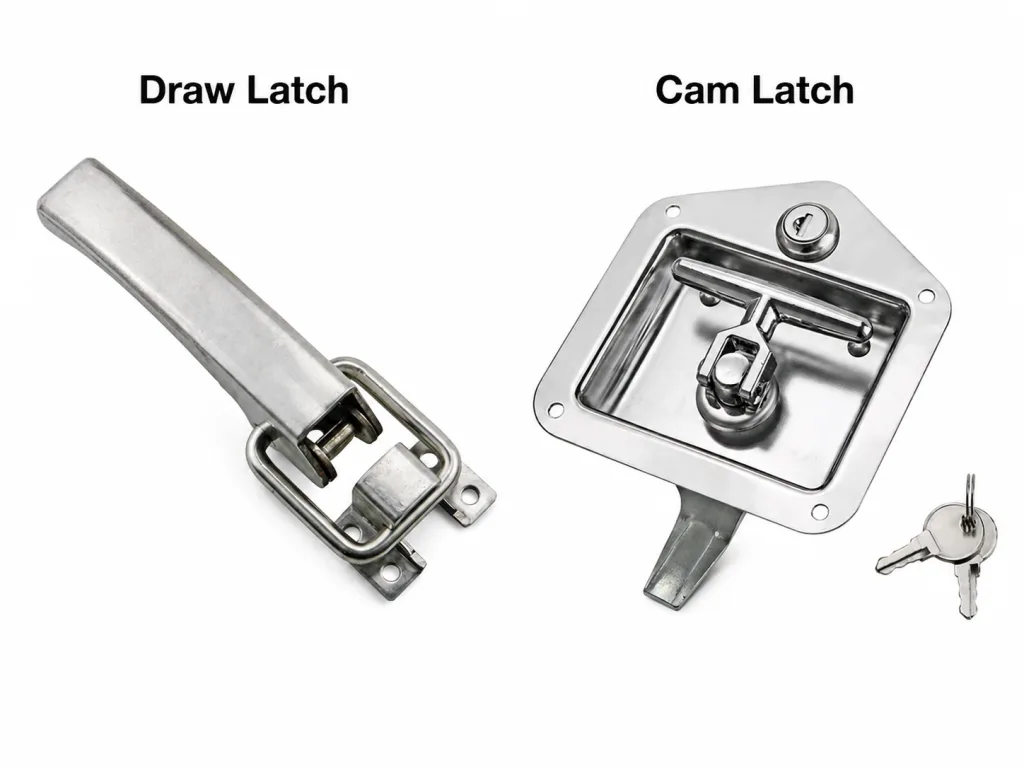
| Latch Family | How It Resists Opening | Typical Vibration Failure |
|---|---|---|
| Draw latch | Over-center lever holds the mechanism in tension | Gradual: hook or strike-plate wear reduces clamping, lever angle changes before release |
| Cam latch (friction-only) | Friction and cam geometry behind a keeper | Walking open: cam slowly rotates away from the keeper as preload drops |
| Cam latch (positive-locking) | Detent, pawl, or secondary lock blocks reverse rotation | Slower walking risk; detent or keeper wear over time |
Both families can fail under vibration. The practical point is that a draw latch tends to fail gradually and visibly, while a friction-only cam latch can fail by walking open. That difference, more than raw strength, should drive the specification.
Why Simple Cam Latches Walk Open Under Vibration
The single most important reason to compare — rather than default to a cam latch because it is fast — is the walking-open failure mode. A simple cam latch may close firmly at first, but under continuous vibration a predictable sequence can occur:
- The cam and keeper experience micro-motion
- Friction at the cam contact point decreases
- The gasket takes a compression set and closing pressure drops
- Reversing torque acts on the cam
- The cam slowly rotates away from the closed position
- The cover rattles, then can open unexpectedly
This is why a cam latch for vibrating equipment should never be specified only as “cam latch.” If a cam latch is the right choice for access speed, the specification must define the anti-rotation feature: a positive detent, spring-loaded pawl, secondary locking tab, tool-operated locking cam, captive locking pin, or keeper geometry that blocks reverse rotation. A cam latch can work on vibration equipment, but it must be designed to resist rotation, not just close the cover. For general cam latch selection beyond the vibration question, see the guía de compra del cierre de leva.
A draw latch avoids this specific failure mode because the over-center geometry must be physically pulled back through center to release. Its weakness is different — wear at the hook, loop, or strike plate gradually reduces clamping force — but that wear is usually visible during inspection before the cover releases. The detailed draw-latch wear points and maintenance checks are covered in the draw latch vibration selection guide.
Draw Latch vs Cam Latch: Dimension by Dimension
| Decision Dimension | Draw Latch | Pestillo de leva |
|---|---|---|
| Severe vibration | Usually the better starting point (over-center tension) | Only suitable with positive locking |
| Access speed | Slower, more deliberate operation | Faster, often one-hand |
| One-hand operation | Less convenient | Strong advantage |
| Sustained gasket compression | Stronger, more consistent pull-down | Depends on cam profile and detent |
| Risk of walking open | Lower when properly adjusted | Higher if friction-based |
| Safety-critical cover | Usually safer; visible failure path | Needs secondary lock |
| Washdown / hygiene | More pivots and crevices | Smoother low-profile designs available |
| Inspection visibility | Lever position easy to read | Detent wear may be less obvious |
| Heavy covers | Good when properly sized | May need stronger keeper design |
| Frequent opening | Acceptable but slower | Usually preferred |
Gasket Compression: Which Family Holds Seal Pressure
If the access cover uses a gasket, the latch must do more than hold the cover shut — it must maintain enough pressure for the gasket to seal. This is the dimension where the two families differ most clearly.
A draw latch pulls the cover toward the frame and can apply a stronger, more consistent clamping force, and many designs can be adjusted to restore pressure as the gasket settles. A cam latch can also compress a gasket, but the result depends on the cam profile, keeper position, gasket height, operator closing force, detent strength, contact-point wear, and whether the design has spring compensation. If the gasket takes a compression set over time, a friction-style cam latch may lose pressure and begin to walk open, while a draw latch can often be re-adjusted.
The rule for sealed covers: start from the seal requirement, then choose the latch family. If sustained, adjustable seal pressure under vibration is the priority, the draw latch usually leads. This is a different question from cam-versus-compression sealing, which is compared in cierre de leva frente a cierre de compresión.
Access Speed and Operator Behavior
A latch can be mechanically correct and still fail in the real world if it is inconvenient to use. This is the dimension where the cam latch leads.
Draw latches require more deliberate operation — align the hook, pull the lever, confirm it passes over center. That is acceptable on covers opened weekly or monthly, but frustrating on covers opened many times per shift. Cam latches are faster: a quarter-turn or wing-handle cam latch can be opened and closed quickly, often with one gloved hand. For high-frequency access on vibrating equipment, the best answer is usually a vibration-resistant cam latch with a positive closed-position detent, secondary locking feature, clear tactile or audible engagement, durable keeper surface, and a defined replacement plan for worn parts. If operators bypass a latch because it is slow or awkward, its theoretical safety advantage disappears.
Safety Risk and Failure Consequences
The decision should consider what happens if the cover opens. If opening could expose moving parts, eject material, release dust, contaminate a process, or create a pinch or impact hazard, the latch should fail gradually and visibly, not suddenly.
Draw latches often provide a more visible failure path: the lever angle changes, the hook wears, the cover gap increases, or the latch rattles before complete release. A cam latch without positive retention may fail more abruptly — once the cam rotates past the keeper, the cover can open. For safety-critical covers, use a draw latch with safety catch or padlock hasp, a cam latch with positive detent or secondary lock, a tool-operated latch where unauthorized opening must be prevented, or redundant latch points on larger covers. Do not rely on operator habit alone to keep a vibration-prone cover closed.
Mounting and Attachment Affect Both Families
The latch family is only one part of the system. A well-chosen latch of either type can still fail if it is mounted on a weak panel. On vibration-prone equipment, check cover and frame stiffness, keeper alignment, fastener security, backing plates, strike-plate hardness, gasket thickness, latch spacing, and whether the mounting surface flexes under load. A draw latch on a thin cover can lose alignment; a cam latch on a distorted frame can bind; a keeper on a soft bracket wears quickly. Where the question is whether the hinge or latch should be welded or bolted to the equipment, the trade-offs are covered in weld-on vs bolt-on hinges. The latch and its attachment method should be specified together, whichever family is chosen.
Vibration severity itself should be characterised before the final choice. Standardised sinusoidal vibration testing such as IEC 60068-2-6 describes how components are evaluated across frequency ranges, and the expected severity helps decide whether a positive-locking cam latch is sufficient or a draw latch is the safer starting point.
When to Choose Each Family
Choose a draw latch when the cover must compress a gasket continuously, leakage is unacceptable, vibration is severe or multi-axis, the cover is heavy or prone to rattling, unexpected opening creates a safety risk, the latch must act as a structural clamp, or the cover is opened only occasionally and maintenance can inspect hook and strike-plate wear. This favors vibrating screens, feeders, dust-collector access covers, chute inspection doors, and heavy gasketed panels.
Choose a cam latch when the cover is opened frequently, operators need one-hand access, the cover is light to moderate, vibration is moderate, a positive detent or secondary lock is included, hygiene favors fewer external linkages, or a low-profile body is required. The key condition holds: do not use a simple friction-only cam latch on a vibration-prone cover unless testing or field experience supports it.
Marco práctico de selección
| Pregunta | If Yes, Lean Toward |
|---|---|
| Does the cover need strong, sustained gasket compression? | Draw latch |
| Is vibration severe or multi-axis? | Draw latch, or positive-locking cam latch |
| Is the cover opened many times per shift? | Positive-locking cam latch |
| Would accidental opening create a safety risk? | Draw latch with safety catch, or locked cam latch |
| Is one-hand operation required? | Pestillo de leva |
| Is washdown cleanability important? | Smooth-body cam latch with positive lock |
| Is the cover heavy or prone to rattling? | Draw latch |
| Is the current cam latch walking open? | Positive-locking cam latch or draw latch |
| Is seal pressure more important than access speed? | Draw latch |
| Is access speed more important than maximum clamp force? | Cam latch with positive lock |
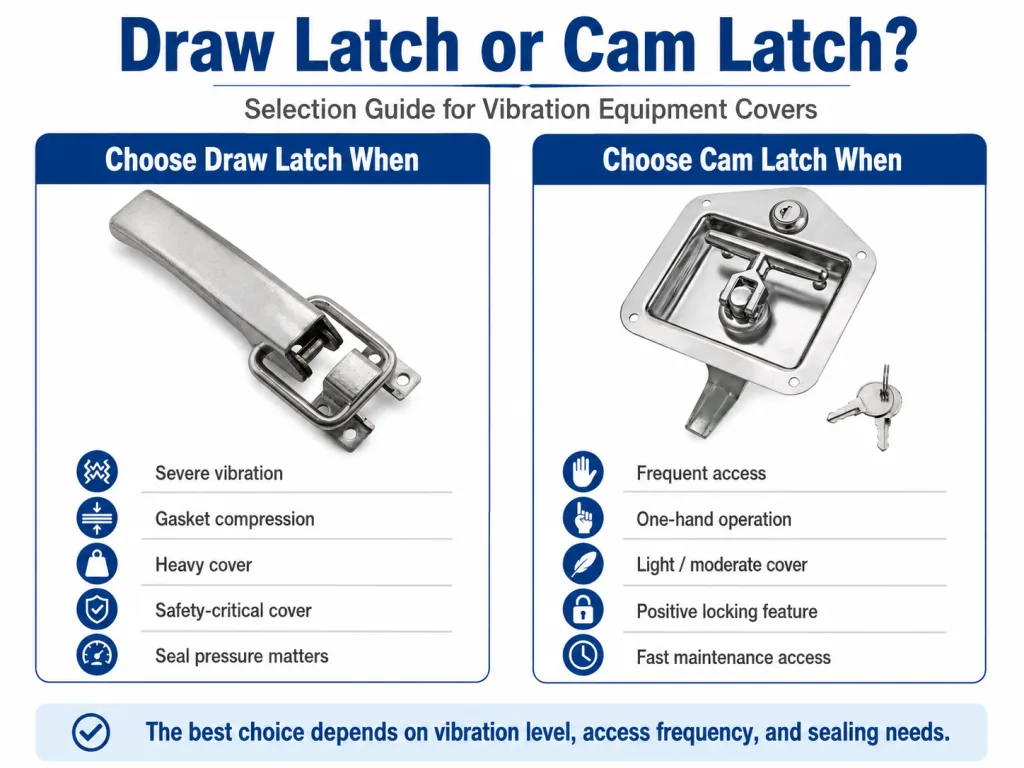
This table makes the decision visible and defensible, but it does not replace engineering judgment against the real vibration environment, cover weight, gasket requirement, and inspection plan.
Errores comunes en las especificaciones
Mistake 1: Using a Simple Cam Latch on Severe Vibration
A friction-style cam latch may close firmly at installation but walk open during operation. If the cover vibrates continuously, require positive anti-rotation retention or move to a draw latch.
Mistake 2: Choosing a Draw Latch Without Checking Access Frequency
A draw latch may be mechanically safer, but if operators open the cover many times per shift, they may find it slow — which can lead to shortcuts or bypassing. Match the latch to the real operator routine.
Mistake 3: Ignoring the Gasket
A latch that holds the cover shut may still fail to maintain gasket compression. If sealing matters, choose based on sustained clamping force and adjustability, not just on which family closes faster.
Mistake 4: Specifying Only the Latch Family
“Cam latch” or “draw latch” is not enough. The specification should define material, locking feature, mounting method, keeper design, and inspection requirements — for whichever family is chosen.
PREGUNTAS FRECUENTES
Is a draw latch better than a cam latch for vibration?
Usually a draw latch is the safer starting point for severe vibration because its over-center mechanism does not rely only on friction to stay closed. However, a vibration-rated cam latch with a positive detent or secondary lock can also work well in many applications, especially when fast access is required.
Why does a cam latch walk open under vibration?
A basic cam latch can walk open when vibration causes micro-motion at the cam and keeper, reduces friction at the contact point, lets the gasket take a compression set, and creates reversing torque on the cam. Once preload drops, the cam can slowly rotate away from the keeper until the cover opens.
Can a cam latch be used on vibrating equipment at all?
Yes, but it should include a positive anti-rotation feature such as a spring-loaded detent, pawl, secondary lock, or tool-operated locking mechanism. Avoid simple friction-only cam latches on severe vibration, where they are prone to walking open.
Which latch holds gasket pressure better on a vibrating cover?
A draw latch usually holds sustained gasket pressure better because it pulls the cover toward the frame with a stronger, more consistent clamping force and can often be re-adjusted as the gasket settles. A cam latch can compress a gasket, but the result depends on cam profile, detent strength, and contact-point wear.
When is a cam latch the better choice over a draw latch?
A cam latch is usually better when the cover is opened frequently, one-hand or fast access matters, the cover is light to moderate, vibration is moderate rather than severe, or a low-profile cleanable body is needed — provided the cam latch includes a reliable closed-position locking feature.
How do I decide if my current cam latch should be replaced with a draw latch?
If the cover rattles, the gasket leaks, or the cam is walking open during operation despite correct installation, the friction-only cam latch is likely under-specified for the vibration. Replace it with either a positive-locking cam latch or a draw latch, depending on whether access speed or sustained clamp force is the higher priority.
Conclusión
The decision between a draw latch and a cam latch is not about which latch is universally better. It is about which latch will stay closed under the specific vibration, access frequency, sealing requirement, and safety risk of the equipment. A draw latch is usually the better choice when the cover must maintain clamping force and gasket compression under severe vibration. A cam latch is usually the better choice when the cover must be opened quickly and frequently — but only if the cam design includes positive locking against vibration.
The best specification asks one practical question: if this cover starts to loosen during operation, which latch design gives maintenance the safest, most visible, and easiest-to-correct failure path? Answer that using the real vibration environment, cover weight, gasket requirement, operator routine, and inspection plan. The catalog does not shake. The equipment does. If you want help matching the latch family to a specific vibrating cover, HTAN can review vibration level, cover weight, gasket type, access frequency, and mounting before specification.