HTAN è uno dei principali produttori di cerniere, maniglie e chiusure industriali in Cina.


Una cerniera trascurata può compromettere un armadio server costoso. Se la cerniera cede, lo sportello si deforma, la sigillatura viene meno e la sicurezza diminuisce. In impianti difficili, ogni dettaglio è importante: una cerniera è la giunzione tra la porta e il telaio, un elemento critico che va ben oltre le sue dimensioni. Cerniere a scomparsa si trovano interamente all'interno del mobile. Nascondono tutta la ferramenta quando l'anta è chiusa, offrendo un aspetto esterno liscio e ininterrotto. Nell'industria moderna, la cerniera nascosta è il fulcro di un design elegante, oltre che di un'elevata sicurezza e di una robusta protezione. Tuttavia, il mercato è pieno di opzioni: decine di materiali, classificazioni e caratteristiche. Come fanno gli ingegneri o gli acquirenti a fare una scelta sicura? Questa guida illustra un metodo di selezione sistematico in sette punti. Ogni fattore chiave viene trattato in dettaglio, con esempi reali, in modo che possiate scegliere la cerniera a scomparsa più adatta a proteggere il vostro armadio o telaio industriale.
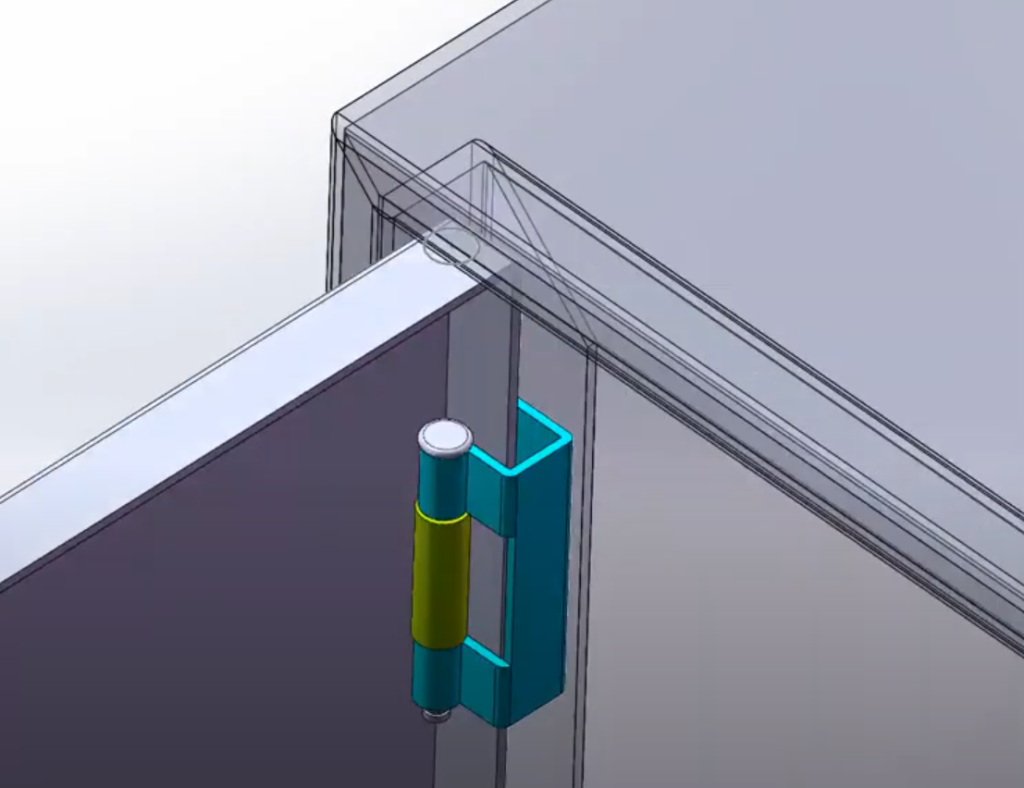
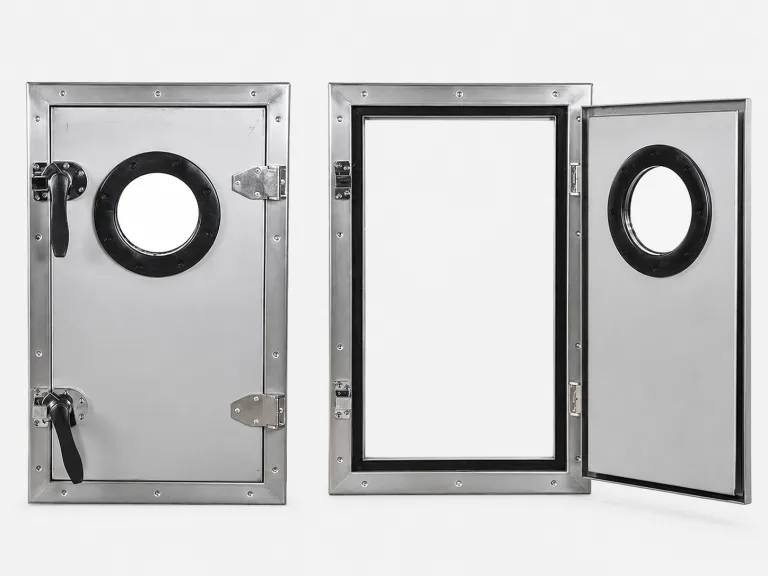
Cerniera nascosta all'interno di un armadio industriale
Che cos'è una cerniera a scomparsa e perché è preferita nell'industria?
Prima di scegliere una cerniera, è bene capire cos'è e a cosa serve. Una cerniera a scomparsa è semplicemente una cerniera che scompare alla vista quando l'anta del mobile si chiude. Il suo meccanismo - piastrine, perni e maglie - è montato all'interno dell'anta e del telaio. Questo design invisibile contrasta nettamente con le cerniere a vista di vecchia concezione (cerniere a testa o a cinghia), i cui perni e le cui maglie sono sempre visibili. Una cerniera a scomparsa mantiene le superfici esterne piatte e pulite. L'ingegnerizzazione utilizza spesso più punti di collegamento o bracci. Questi meccanismi multi-pivot consentono un movimento molto fluido e controllato anche per le porte più pesanti.
Definizione:
La cerniera a scomparsa è completamente nascosta dall'anta in posizione chiusa. Il meccanismo di rotazione è nascosto all'interno della parete del mobile. Quando si apre l'anta, i bracci o le maglie si estendono in un percorso preciso e si ritraggono alla chiusura. Molti progetti presentano due o più punti di rotazione. In questo modo, la porta può oscillare agevolmente senza sfregare le guarnizioni o i telai, anche fino a 180°. Le custodie ad alta sicurezza utilizzano spesso cerniere a scomparsa per impieghi gravosi con supporti a saldare o a vite: ogni parte è progettata per sopportare il peso e il movimento in condizioni difficili. In breve, una cerniera a scomparsa non è solo un perno, ma un sistema composto da più parti costruito per garantire resistenza e fluidità.
Il design nascosto offre numerosi e potenti vantaggi in ambito industriale:
Aspetto elegante:
Senza ferramenta in vista, gli armadi hanno un aspetto moderno e senza soluzione di continuità. Le cerniere a scomparsa full-overlay coprono completamente il telaio, lasciando poco spazio tra le ante. Due armadi affiancati possono stare a filo. Il risultato è un esterno pulito e monolitico che si adatta agli ambienti high-tech. I moderni pannelli di controllo e i rack utilizzano spesso cerniere a scomparsa per ottenere questo aspetto raffinato.
Alta sicurezza e antimanomissione:
Una cerniera nascosta all'interno significa che non ci sono viti esterne o perni esposti da forzare. Gli intrusi non possono facilmente rimuovere o forzare la porta attaccando la cerniera dall'esterno. Gli ingegneri indicano le cerniere nascoste come ideali per gli armadi di sicurezza e le cassette di telecomunicazione esterne, poiché "impediscono la manomissione dall'esterno". In altre parole, qualsiasi tentativo di forzare la porta deve prima rompere l'involucro esterno, non solo far saltare la cerniera.
Efficienza dello spazio:
Le cerniere nascoste consentono di avvicinare le porte tra loro e alle pareti. Un'anta che si sovrappone all'intero telaio può incontrare un'unità adiacente da bordo a bordo, senza alcuno spazio. Nei data center o nelle sale di controllo, dove i rack sono stretti, ciò consente di risparmiare spazio prezioso e di rendere l'installazione compatta. Inoltre, si riducono le parti sporgenti in cui urtare.
Migliore tenuta e protezione:
Le cerniere a scomparsa si integrano bene con le guarnizioni. Poiché spesso consentono alla porta di sollevarsi o spostarsi leggermente prima di aprirsi, evitano di sfregare contro le guarnizioni del telaio. Questo protegge le guarnizioni in gomma dall'usura. Inoltre, la cerniera stessa può essere progettata come parte della tenuta IP dell'involucro. Le cerniere a scomparsa correttamente allineate aiutano l'armadio a soddisfare i requisiti di protezione da polvere e acqua. (In effetti, i tecnici sottolineano che il corretto allineamento delle cerniere è fondamentale per mantenere la tenuta di qualsiasi guarnizione e il grado di protezione IP).
Ognuno di questi punti è fondamentale per l'industria. Una cerniera nascosta migliora l'estetica, la tenuta e la sicurezza contro gli intrusi. La sua complessità interna è il prezzo per questi vantaggi. Partendo da queste premesse, le prossime sezioni approfondiscono i sette fattori chiave che ogni ingegnere o acquirente deve considerare quando sceglie una cerniera nascosta.
Sette fattori fondamentali nella scelta delle cerniere
Passiamo ora al cuore della selezione: un esame passo dopo passo di sette fattori critici. Consideratela come una lista di controllo che va dalle esigenze di base a quelle più avanzate. Saltate un fattore a vostro rischio e pericolo: ognuno di essi svolge un ruolo importante per il successo.
Capacità di carico: il fondamento della sicurezza
Innanzitutto, una cerniera deve essere in grado di sostenere il peso della porta in modo affidabile. Il cedimento di una cerniera rappresenta un grave rischio per la sicurezza: immaginate una porta in acciaio da 200 libbre che cade su attrezzature o persone. Iniziare con il calcolo del peso. Calcolate il peso della porta come spessore × larghezza × altezza × densità del materiale. Ad esempio, se la porta è di 2 m × 0,5 m × 0,01 m in acciaio dolce (densità ~7850 kg/m³), il suo peso è 2×0,5×0,01×7850 ≈ 78,5 kg. Suggerimento: Utilizzare sempre le unità metriche in modo coerente per evitare errori.
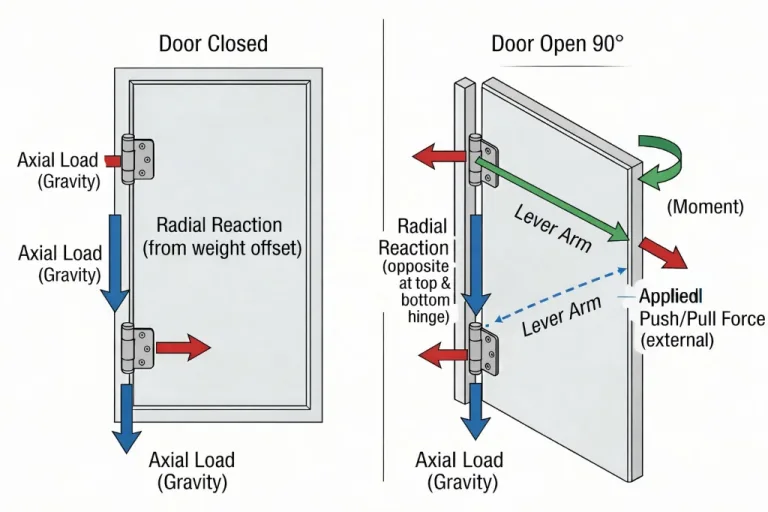
Poi, bisogna tenere conto dell'effetto braccio di leva. Una porta più larga esercita una coppia maggiore sulle cerniere anche a parità di peso. Un'anta doppia o un pannello molto largo possono cedere più rapidamente di un'anta stretta dello stesso peso. Pertanto, controllate sempre le specifiche delle cerniere non solo per il peso totale, ma anche per la larghezza o l'offset della porta. Spesso i produttori indicano qualcosa come "regge 80 kg per coppia (per ante di 1,2 m)", che tiene già conto delle dimensioni.
Ora interpretate correttamente le classificazioni del produttore. Se una coppia di cerniere è classificata come "100 kg (2 cerniere)", significa che le due cerniere sono in grado di sostenere 100 kg in totale alle dimensioni della porta testata. Se la vostra porta è più pesante o più grande, aumentate il modello. La pratica migliore: Scegliere una cerniera di almeno 20-30% superiore al fabbisogno calcolato. Questo margine di sicurezza copre i carichi dinamici (rimbalzi di apertura/chiusura, piccoli urti) e l'usura a lungo termine. Ad esempio, se il calcolo indica 50 kg, scegliete una cerniera (o una coppia di cerniere) con una portata di circa 65 kg. Un po' di sovradimensionamento evita sorprese future.
Materiale e finitura superficiale - Garanzie di durata
Se si tiene conto del peso, è bene scegliere un materiale robusto e resistente. Le cerniere sono disponibili in diversi metalli e leghe:
Acciaio inox (es. SS304 o SS316):
Estremamente resistenti alla corrosione e robusti. Ideale per ambienti difficili - esterni, costieri (nebbia salina), lavorazioni chimiche, apparecchiature alimentari e mediche o ovunque l'umidità sia un problema. L'SS316 ha una resistenza alla ruggine addirittura superiore a quella del 304. Utilizzate cerniere inossidabili quando la longevità è contro corrosione è fondamentale.
Lega di zinco:
Spesso utilizzata per la pressofusione per cerniere di prezzo contenuto. La lega di zinco offre una buona resistenza e consente di realizzare forme complesse. Molte apparecchiature interne ed elettroniche cerniere per armadietti La lega di zinco è economica e resistente alla ruggine anche dopo la placcatura. Inoltre, resiste bene alla verniciatura e alla placcatura.
Acciaio (acciaio al carbonio, ad esempio Q235):
Resistenza alla trazione molto elevata, ottima per carichi pesanti e impatti. Più pesante ed economico. Comune nei macchinari di grandi dimensioni e negli armadi per impieghi gravosi (ad esempio, quadri elettrici, armadi per generatori di grandi dimensioni). Poiché l'acciaio semplice può arrugginire, queste cerniere sono solitamente zincate, cromate o verniciate a polvere per proteggerle.
Alluminio:
Leggero e con una buona resistenza alla corrosione (soprattutto se anodizzato). Si usa quando è importante ridurre il peso (ad esempio, aerei, attrezzature per il trasporto ferroviario) e i carichi sono moderati. Non è resistente come l'acciaio, ma la sua bassa densità può essere importante per porte di grandi dimensioni.
Non trascurate la finitura superficiale. Anche il materiale più adatto può guastarsi se non viene trattato. Le finiture tipiche includono la zincatura o la cromatura (per ambienti interni/moderati), la verniciatura a polvere (vernice cotta al forno per ottenere colore e resistenza alla corrosione) e il rivestimento elettroforetico a E (sigillatura sottile e uniforme utilizzata nel settore automobilistico e nell'elettronica di fascia alta). In breve, il materiale e il rivestimento delle cerniere devono essere adeguati all'ambiente in cui si opera e occorre sempre confermare le specifiche del materiale con il fornitore.
Angolo di apertura - Soddisfare le esigenze operative
Considerate quanto deve aprirsi la porta. Le cerniere a 90°-120° sono comuni per gli armadi in spazi ristretti: si aprono a sufficienza per la maggior parte delle operazioni di accesso e impediscono la collisione con le pareti o i rack adiacenti. Le cerniere a 180° (o superiori) consentono alla porta di oscillare completamente all'indietro: utilizzatele quando è necessario uno spazio completo per il montaggio delle apparecchiature o per l'accesso completo ai componenti. Scegliete l'angolo immaginando lo spazio di lavoro reale e verificando che la scheda tecnica della cerniera indichi l'angolo massimo corretto.
Caratteristiche aggiuntive - Per una maggiore comodità e sicurezza
Le cerniere moderne spesso aggiungono funzioni che vanno oltre la semplice rotazione. Smorzamento (chiusura morbida): Uno smorzatore incorporato rallenta la porta alla fine della chiusura: evita lo sbattimento, riduce il rumore e l'usura nelle sale di controllo e nei centri dati. Afferrabile o autobloccante: Si blocca a determinate angolazioni per consentire ai tecnici di aprire un pannello pesante a mani libere. Sgancio rapido / Rimozione senza attrezzi: Un perno a scomparsa consente di sollevare l'anta dal telaio senza svitarla: utile per il trasporto di ante pesanti o per la sostituzione di pannelli sul campo.
Regolazione tridimensionale (3D):
È un aspetto importante per le porte industriali pesanti. Una cerniera regolabile in 3D significa che, una volta installata, è possibile regolare con precisione la posizione della porta lungo tre assi (su/giù, sinistra/destra e dentro/fuori) con semplici viti. Questa precisione è fondamentale per le porte in acciaio pesanti con guarnizioni: anche un millimetro di differenza può causare un rigonfiamento della guarnizione. Con la regolazione 3D, gli installatori allineano perfettamente la porta in modo che si incastri perfettamente con il telaio. Gli esperti del settore sottolineano che questa possibilità di regolazione è essenziale per garantire un accoppiamento perfetto su porte di precisione pesanti. Cercatela sempre se l'allineamento è fondamentale. Per una guida dettagliata sulle specifiche delle cerniere a scomparsa regolabili in 3D per i quadri elettrici, vedere: Selezione di cerniere a scomparsa regolabili in 3D per armadi elettrici.
Installazione e sovrapposizione della porta - Compatibilità strutturale
La cerniera deve essere adatta alla struttura della porta e al suo montaggio. Considerate lo stile di sovrapposizione della porta: Sovrapposizione completa - L'anta copre completamente il pannello laterale del mobile, molto diffusa nelle apparecchiature high-tech per un look elegante. Mezza sovrapposizione - due porte condividono una parete divisoria centrale, ognuna delle quali copre la metà. Porta a incasso - L'anta si trova interamente all'interno del telaio, a filo della superficie, e necessita di una cerniera a scomparsa che la faccia uscire dal telaio.
Scegliete lo stile di cerniera che si adatta esattamente al tipo di porta. La maggior parte cerniere industriali Sono disponibili in coppia: l'anta e l'anta del telaio. Per il metodo di fissaggio: A vite è il più comune per gli armadi in metallo: facile da installare o sostituire. A saldare forma una linea di saldatura resistente quanto il metallo di base - ideale per porte di sicurezza di grandi dimensioni o per contenitori in cui non si vogliono elementi di fissaggio rimovibili. Scegliete in base alle vostre esigenze di regolazione futura (viti) o di massima robustezza (saldatura).
Requisiti ambientali - Non dimenticare il contesto
Pensate al luogo in cui vivrà il mobile. Fattori chiave: Grado di protezione IP - se l'armadio è classificato IP65/67, la cerniera non deve compromettere la tenuta; il montaggio preciso è fondamentale per mantenere il contatto con la guarnizione. Corrosione e agenti atmosferici - Gli armadi da esterno sono esposti a pioggia, raggi UV e sbalzi di temperatura; gli stabilimenti da interno possono essere esposti a spruzzi chimici o a un'elevata umidità. Vibrazioni e Scossa - le installazioni mobili (veicoli, navi, generatori) richiedono cerniere robuste, eventualmente saldate. Estremi di temperatura - verificare che gli ammortizzatori e i lubrificanti funzionino alla temperatura di esercizio. EMC e messa a terra - nelle cabine elettriche, cercare cerniere di messa a terra o aggiungere cinghie di messa a terra per garantire che la porta rimanga elettricamente collegata al telaio dell'armadio.
Marchio, certificazioni e costo totale: una visione a lungo termine
Infine, valutate la qualità e il costo. Cercate le certificazioni: ISO 9001 (gestione della qualità), RoHS (senza piombo), Elenco UL (per le custodie elettriche). Una cerniera più economica potrebbe corrodersi o rompersi, causando tempi di fermo, riparazioni o incidenti di sicurezza che superano facilmente il prezzo della cerniera. Quando valutate i fornitori, chiedete in anticipo il supporto tecnico o i modelli 3D. La cerniera "migliore" è quella che soddisfa tutte le esigenze tecniche e ha senso dal punto di vista economico per tutta la durata di vita dell'apparecchiatura.
Casi di studio: Applicazione delle regole
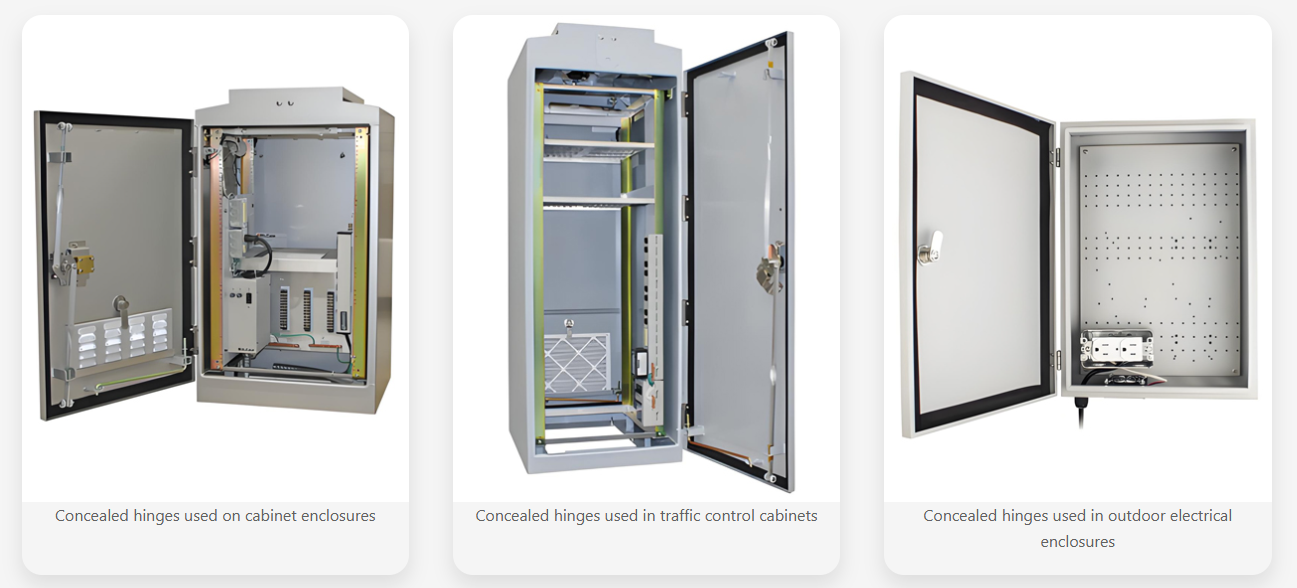
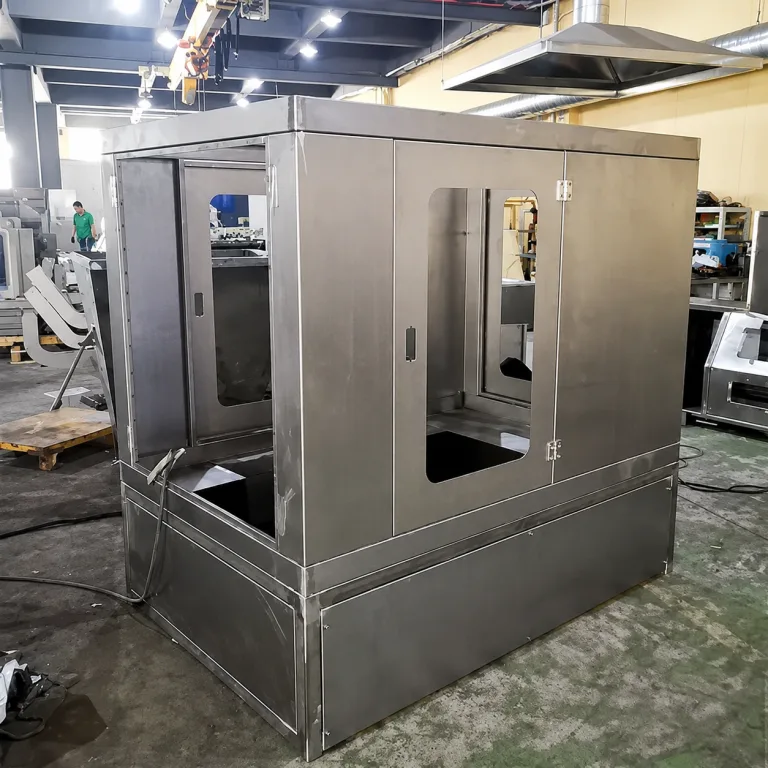
Applicazioni industriali delle cerniere a scomparsa (esempio di armadio per telecomunicazioni)
Caso 1: Armadio per telecomunicazioni da esterno.
Requisiti: Elevata resistenza agli agenti atmosferici, resistenza agli atti vandalici, ampio accesso per la manutenzione, tenuta IP54+, cerniere non rimovibili dall'esterno.
Soluzione: Cerniere a scomparsa in acciaio inox 316 con piastre di grosso spessore, apertura a 180°, montaggio a saldare, nessun elemento di fissaggio a vista. Aggiungere una guarnizione per impieghi gravosi intorno alla porta.
Caso 2: Rack per centri dati interni.
Requisiti: Porta molto pesante, apertura/chiusura frequente, allineamento preciso per mantenere la tenuta del flusso d'aria, spazio ridotto tra i rack.
Soluzione: Cerniera a scomparsa multi-link per oltre 50 kg, apertura a 180°, modello regolabile in 3D per un perfetto allineamento della porta, acciaio zincato per ambienti interni, perno a sgancio rapido per la sostituzione del server. Per i problemi di installazione e le soluzioni più comuni, vedere: L'anta del mobile industriale non si chiude? Guida al fissaggio della cerniera a scomparsa.
Caso 3: Armadio di controllo per apparecchiature di precisione.
Requisiti: Chiusura silenziosa, tenuta perfetta, prevenzione dell'ingresso di polvere, peso moderato della porta, condizioni ambientali interne.
Soluzione: Cerniera a scomparsa con ammortizzatore incorporato, guarnizione in gomma intorno al telaio della porta, materiale in lega di zinco o acciaio inox, stile full overlay per esterno a filo, angolo sufficiente di 120°, cerniera in metallo per messa a terra ESD se richiesta.
Questi esempi illustrano l'intero processo: elencare le richieste, quindi abbinare gli attributi delle cerniere. Si noti come fattori quali il materiale, la resistenza e le funzioni siano scelti per adattarsi con precisione a ciascun caso d'uso.
Lista di controllo definitiva e insidie comuni
- Ho calcolato il peso della porta e coppia? Non dimenticare la larghezza.
- La capacità della cerniera supera le mie esigenze di 20-30%?
- Il materiale e la finitura scelti sono adatti alle condizioni di corrosione e usura?
- L'angolo di apertura soddisfa i requisiti di accesso?
- Ho bisogno di qualche funzione aggiuntiva (chiusura ammortizzata, fermo-apertura, sgancio rapido, regolazione 3D)?
- La cerniera si adatta allo stile della porta (incassata, mezza/piena) e al metodo di montaggio?
- Ho tenuto conto delle vibrazioni, della temperatura, del grado di protezione IP, della messa a terra e così via?
Errori comuni da evitare: Scegliere solo in base al prezzo; ignorare la larghezza della porta (effetto braccio di leva); utilizzare lo stesso modello di cerniera ovunque, indipendentemente dalle condizioni; saltare la regolazione finale 3D dopo l'installazione: una cerniera regolabile disallineata rovina la tenuta e usura prematuramente la cerniera.
Conclusione
La scelta di una cerniera a scomparsa per un armadio industriale è una decisione completa. Influisce sull'aspetto dell'armadio, sulla sua sicurezza e persino sulla sicurezza delle operazioni. La cerniera giusta non è solo un pezzo, ma un elemento chiave dell'affidabilità dell'intero sistema.
Lavorando metodicamente su questi sette fattori, vi assicurate che il vostro mobile funzioni senza problemi per anni. Non fermatevi alla scheda tecnica: parlate con gli esperti di cerniere e, se possibile, fate delle prove di montaggio. L'attenzione ai dettagli è ciò che separa le apparecchiature ordinarie da quelle veramente eccezionali e affidabili. Sfoglia la gamma completa di cerniere HTAN Cerniere a scomparsa per armadi industriali o contattate il nostro team di ingegneri per il supporto alla selezione.