HTAN è uno dei principali produttori di cerniere, maniglie e chiusure industriali in Cina.


Su una porta larga o in metallo pesante, la scelta della cerniera dipende dal modo in cui il carico viene sostenuto lungo il bordo della porta. Una cerniera a battente sostiene la porta in due o tre punti distinti. Una cerniera continua — detta anche cerniera a pianoforte — si estende per l’intera lunghezza della porta e sostiene il carico lungo tutto il bordo. Per una porta stretta e leggera entrambe le soluzioni vanno bene, ma man mano che la porta diventa più larga, più pesante o deve garantire una tenuta ermetica, la differenza tra il sostegno puntuale e quello su tutta la lunghezza inizia a determinare se la porta rimane dritta, si chiude in modo uniforme e dura nel tempo.
Questa guida mette a confronto le cerniere a battente e quelle continue per porte metalliche larghe in termini di distribuzione del carico, resistenza all’affossamento, tenuta, costo e installazione. Si concentra sulla scelta tra supporto puntuale e supporto su tutta la lunghezza, non sul materiale delle cerniere, che costituisce una decisione a sé stante.
Punti di forza
- Una cerniera a battente sostiene la porta in alcuni punti distinti; una cerniera continua (da pianoforte) sostiene invece l’intero bordo in un unico punto. Questa singola differenza strutturale determina ogni altro compromesso.
- Le cerniere continue resistono all’affossamento, garantiscono una tenuta uniforme e offrono una maggiore resistenza allo scardinamento su porte larghe o pesanti, poiché il carico e la chiusura vengono distribuiti lungo l’intero bordo.
- Le cerniere a battente costano meno, sono più semplici da installare e possono essere sostituite una alla volta, il che le rende la scelta più pratica per porte standard di peso moderato.
- La domanda fondamentale non è “quale cerniera sia migliore”, bensì “se il peso e la tenuta della porta debbano essere distribuiti lungo l’intero bordo, oppure se sia sufficiente un sostegno in pochi punti”.”
Risposta veloce: a scatti o in continuo?
| Se la porta… | Una scelta migliore | Perché |
|---|---|---|
| È largo, pesante o tende a cedere? | Cerniera continua | Distribuisce il carico lungo l'intero bordo |
| È necessaria una tenuta uniforme e continua lungo il bordo | Cerniera continua | Nessuno spazio tra i punti di articolazione |
| È di dimensioni standard e di peso moderato | Cerniera di sicurezza | È sufficiente il supporto puntuale, a un costo inferiore |
| In futuro potrebbe essere necessario sostituire una singola cerniera | Cerniera di sicurezza | Le singole unità si sostituiscono facilmente |
| È necessario evitare di esercitare pressione lungo il bordo della cerniera | Cerniera continua | Non ci sono spazi in cui infilare qualcosa per aprire la porta |
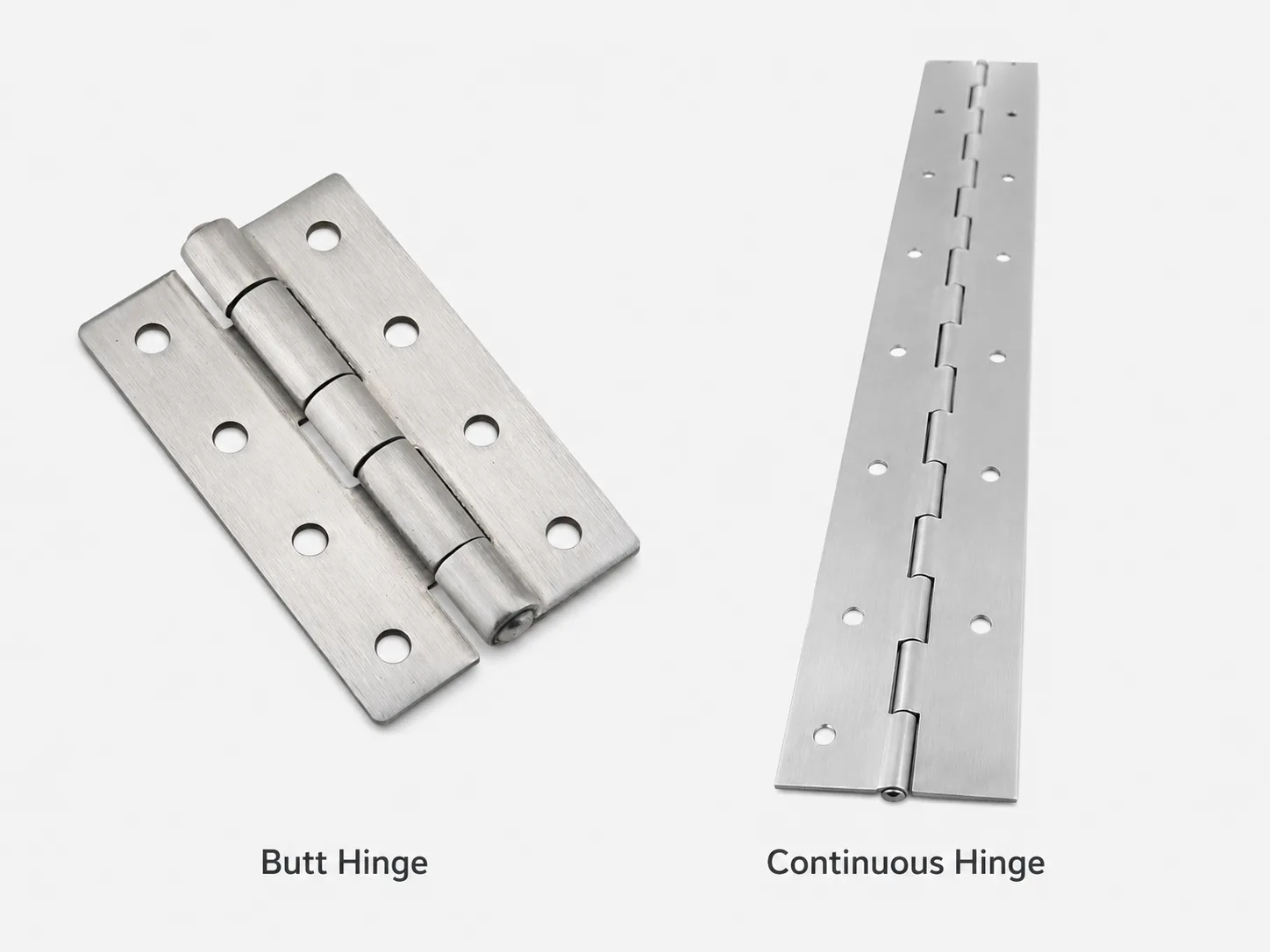
In sintesi, le cerniere continue sono più adatte alle porte larghe, pesanti o a tenuta stagna, dove il carico deve essere distribuito in modo uniforme, mentre le cerniere a battente sono più indicate per le porte standard, dove il costo inferiore e la facilità di sostituzione singola rappresentano i vantaggi principali. La scelta dipende solitamente dalla larghezza e dal peso della porta, nonché dal fatto che sia a tenuta stagna o meno.
Cosa caratterizza ciascun tipo di cerniera
Una cerniera a battente è la classica cerniera a due ante unite da un perno centrale, installata a coppie o in serie lungo il bordo della porta. Ogni cerniera sostiene la porta in un punto specifico e il peso della porta viene ripartito tra tutte le cerniere montate — in genere due o tre, o più nel caso di porte più alte. Le cerniere a battente sono semplici, facilmente reperibili e vengono montate solo nei punti in cui vengono posizionate, lasciando libero il resto del bordo della porta. I fattori da considerare nella scelta delle versioni per porte pesanti sono trattati nella guida a cerniere a battente in acciaio inossidabile per impieghi gravosi.
Una cerniera continua, detta anche cerniera a pianoforte, è una singola cerniera lunga che si estende per l’intera lunghezza della porta, collegata da un unico perno continuo. Anziché sostenere la porta in pochi punti, supporta l’intero bordo in un unico punto. Ecco perché originariamente veniva utilizzata sui coperchi dei pianoforti, dove è fondamentale un sostegno uniforme lungo un bordo esteso, ed ecco perché oggi è comunemente impiegata su porte industriali di grandi dimensioni, involucri e pannelli di accesso che necessitano di sostegno e tenuta su tutta la loro altezza.
Distribuzione del carico e resistenza al cedimento
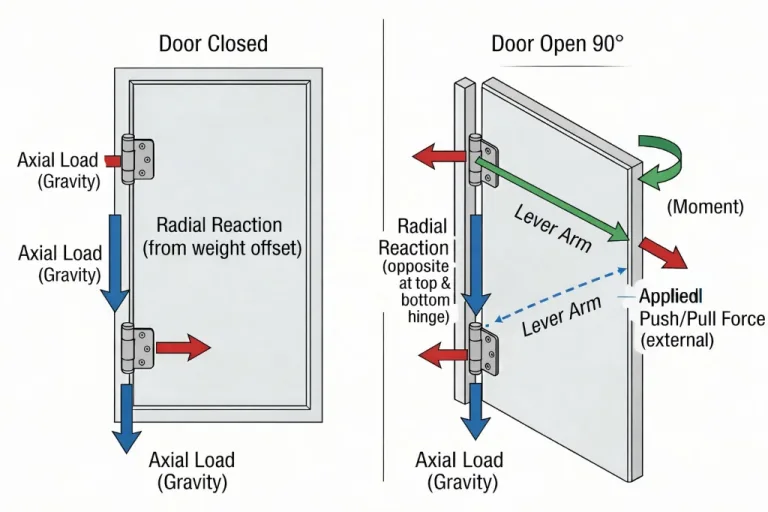
Questa è la differenza fondamentale. Una cerniera a battente concentra il peso della porta su ciascun punto di articolazione, esercitando una forte sollecitazione locale su quei punti e sui dispositivi di fissaggio presenti. Su una porta larga o pesante, è proprio quel carico concentrato a causare l’affossamento nel tempo: la porta si abbassa lentamente tra i punti di cerniera o al di sotto di essi e, alla fine, smette di chiudersi perfettamente. Aggiungere altre cerniere a battente aiuta, ma il carico continua comunque a gravare su punti ben definiti.
Una cerniera continua distribuisce il carico lungo l’intero bordo, in modo che nessun singolo punto sia sottoposto a una forte sollecitazione concentrata. È proprio grazie a questa distribuzione uniforme che le cerniere continue resistono molto meglio all’abbassamento su porte larghe e pesanti, ed è per questo che vengono spesso scelte proprio nei casi in cui una porta con cerniere a battente finirebbe per abbassarsi. Se il rischio è l’abbassamento — una porta larga, una porta pesante o una porta che deve continuare a chiudersi perfettamente per anni — il supporto a tutta lunghezza è la soluzione più affidabile. I parametri che determinano questa scelta, come lo spessore dell’anta e la capacità di carico, sono trattati nel Guida alla scelta delle cerniere industriali.
Tenuta e sicurezza
Le cerniere continue offrono un vantaggio in termini di tenuta. Poiché la cerniera si estende senza interruzioni lungo la porta, questa viene premuta in modo uniforme contro la guarnizione per l’intera lunghezza di quel bordo, senza lasciare spazi tra i punti di articolazione dove la tenuta potrebbe risultare più debole. Per le strutture che devono impedire l’ingresso di polvere o acqua lungo il lato della cerniera, questa chiusura continua e uniforme contribuisce a mantenere la tenuta. Una porta con cerniera a battente, al contrario, viene tirata a filo solo nei punti di cerniera, mentre le sezioni intermedie dipendono interamente dal lato del chiavistello e dalla guarnizione per rimanere sigillate.
La sicurezza segue una logica simile. Una cerniera continua non lascia alcuno spazio lungo il bordo della cerniera in cui inserire un attrezzo per fare leva sulla porta, quindi il lato della cerniera è più difficile da scassinare. Tra le cerniere a battente ci sono sezioni aperte del bordo che, in linea di principio, possono essere oggetto di effrazione. Per gli involucri in cui è importante la resistenza alle manomissioni lungo il lato della cerniera, il bordo ininterrotto di una cerniera continua rappresenta un vantaggio.
Costo, installazione e sostituzione
Le cerniere a battente di solito risultano più vantaggiose in termini di costo e facilità di manutenzione. Sono economiche, facilmente reperibili e, se una si danneggia, può essere sostituita singolarmente senza dover intervenire sulle altre. L’installazione consiste semplicemente nell’allineare alcune cerniere singole, operazione che risulta semplice su una porta standard. Per una porta di dimensioni moderate, in cui è sufficiente un sostegno puntuale, le cerniere a battente rappresentano la scelta più economica e pratica.
Le cerniere continue costano di più e vengono installate come un unico pezzo lungo, che deve essere tagliato a misura e allineato lungo l’intero bordo: un’operazione più complessa rispetto al montaggio di alcune cerniere a battente e, in caso di danneggiamento della cerniera, si sostituisce una sezione più lunga o l’intera lunghezza anziché una singola unità. In cambio, si ottiene un supporto e una tenuta su tutta la lunghezza. Gli aspetti pratici della loro installazione sono trattati nella guida a taglio e montaggio di cerniere continue.
Come decidere
Inizia considerando larghezza, peso e tenuta, poi valuta il costo e la facilità di manutenzione:
| Domanda | Indica… |
|---|---|
| La porta è larga, pesante o tende a incurvarsi? | Cerniera continua |
| La guarnizione del bordo della cerniera deve aderire in modo uniforme? | Cerniera continua |
| Il lato della cerniera deve resistere ai tentativi di scasso? | Cerniera continua |
| La porta è di dimensioni standard e il costo è un fattore determinante? | Cerniera di sicurezza |
| Vuoi sostituire una cerniera alla volta? | Cerniera di sicurezza |
La scelta dipende essenzialmente dal fatto che la porta necessiti di un sostegno e di una tenuta distribuiti lungo tutto il bordo, oppure se sia sufficiente un sostegno in pochi punti. Una volta stabilito il tipo di cerniera, occorre ancora scegliere il materiale e la portata — la guida a scegliere la cerniera giusta comprende il tipo, il materiale e il carico.
FAQ
Qual è la differenza tra una cerniera a battente e una cerniera continua?
Una cerniera a battente è una cerniera a due ante che sostiene la porta in punti distinti, installata in coppia o in serie lungo il bordo. Una cerniera continua, detta anche cerniera a pianoforte, si estende per l’intera lunghezza della porta e ne sostiene l’intero bordo in un unico punto. La differenza fondamentale sta nel supporto puntuale rispetto al supporto su tutta la lunghezza, il che influisce sulla distribuzione del carico, sulla resistenza all’affossamento e sulla tenuta lungo il bordo della cerniera.
Le cerniere continue sono più adatte alle porte pesanti?
Per le porte larghe o pesanti, le cerniere continue sono solitamente la scelta migliore perché distribuiscono il carico lungo l’intero bordo invece di concentrarlo in pochi punti. Questa distribuzione uniforme contrasta l’affossamento che col tempo colpisce le porte pesanti con cerniere a battente, dove la concentrazione di sollecitazioni in ciascun punto di cerniera fa sì che la porta si incurvi nel tempo. Per le porte standard di peso moderato, le cerniere a battente rimangono una scelta valida e più economica.
Una cerniera a pianoforte è la stessa cosa di una cerniera continua?
Sì. La cerniera a pianoforte è un altro nome per indicare una cerniera continua, ovvero una singola cerniera lunga che si estende per l’intera lunghezza di una porta o di uno sportello, collegata da un unico perno continuo. Il nome deriva dal suo impiego originario sugli sportelli dei pianoforti, dove è necessario un sostegno uniforme lungo un bordo esteso. In ambito industriale, lo stesso design viene utilizzato per sostenere porte larghe, involucri e pannelli di accesso.
Quale cerniera garantisce una migliore tenuta lungo il bordo della porta?
Una cerniera continua garantisce una tenuta migliore lungo il bordo della cerniera perché preme la porta in modo uniforme contro la guarnizione per tutta la lunghezza di quel bordo, senza lasciare spazi vuoti tra i punti di cerniera. Una porta con cerniera a battente viene tenuta ben tesa solo nei punti di cerniera, quindi le sezioni tra di essi dipendono dal lato dello scrocco e dalla guarnizione. Per le cabine che devono garantire la tenuta lungo il lato della cerniera, la cerniera continua rappresenta la scelta più efficace.
Quando è preferibile utilizzare una cerniera a battente?
Una cerniera a battente è la scelta migliore per porte di dimensioni standard e peso moderato, dove è sufficiente un sostegno puntuale. Costa meno, è facilmente reperibile e può essere sostituita una alla volta senza interferire con le altre, il che semplifica la manutenzione. A meno che la porta non sia larga, pesante, necessiti di una guarnizione perimetrale o richieda resistenza allo scardinamento lungo il lato della cerniera, una cerniera a battente è solitamente l’opzione più pratica ed economica.
Linea di fondo
La scelta tra cerniera a battente e cerniera continua si riduce alla differenza tra un supporto puntuale e un supporto su tutta la lunghezza. Scegliete una cerniera continua (a pianoforte) quando la porta è larga, pesante, soggetta a cedimenti o deve garantire tenuta o resistere a tentativi di scardinamento lungo il bordo della cerniera: il supporto su tutta la lunghezza distribuisce il carico e chiude il bordo in modo uniforme. Scegliete le cerniere a battente quando la porta è di dimensioni standard e di peso moderato, poiché il loro costo inferiore e la possibilità di sostituirle una alla volta superano la necessità di un supporto continuo. Adattate la cerniera alla larghezza, al peso e alle esigenze di tenuta della porta: la scelta è solitamente chiara prima ancora di confrontare i modelli.
Esiste un principio più ampio che vale la pena applicare a qualsiasi progetto di porta: man mano che una porta diventa più larga o più pesante, il costo del supporto puntuale aumenta più rapidamente di quanto la maggior parte dei progettisti si aspetti, poiché l’affossamento, il cedimento delle guarnizioni e la vulnerabilità allo scardinamento sono tutti riconducibili alla stessa causa: il carico concentrato negli spazi vuoti anziché distribuito lungo il bordo. Un supporto continuo non significa semplicemente “più cerniere”; cambia il modo in cui l’intera porta si comporta nel corso della sua vita utile. Quando una porta si trova al confine tra le due opzioni, è proprio quella differenza di comportamento, e non il prezzo unitario della cerniera, l’elemento più affidabile su cui basare la propria decisione.
Se ci fornite le misure relative alla larghezza e al peso della porta e ci indicate se è necessario garantire la tenuta, HTAN potrà consigliarvi le cerniere a battente o continue più adatte. Sfogliate la gamma di cerniere per impieghi gravosi oppure inviaci i dati della tua porta per ricevere un consiglio.