HTAN è uno dei principali produttori di cerniere, maniglie e chiusure industriali in Cina.


The choice between a surface-mount and a recessed handle comes down to one physical question: can the handle stick out from the panel, or does it need to sit flush? A surface-mount handle bolts onto the face of the panel and projects outward. A recessed handle drops into a cutout so its grip sits at or below the panel surface. Both let a person open the door — the difference is what happens to the space in front of the panel, and what the installation costs to achieve.
This guide compares surface-mount and recessed handles for equipment panels across protrusion, snag risk, cutout requirements, sealing, and cleaning, so you can match the handle style to the panel and its surroundings. It focuses on the mounting-profile decision, not handle materials or locking — those are separate choices.
Quick Answer: Surface-Mount or Recessed?
| If the panel… | Better choice | Perché |
|---|---|---|
| Sits in a walkway or tight aisle where people pass close | Recessed handle | Nothing protrudes to snag or bump |
| Must stay flush for sliding equipment or stacked units | Recessed handle | Grip sits at or below the surface |
| Needs the simplest, lowest-cost installation | Surface-mount handle | Bolts on, no large cutout |
| Has no room behind the panel for a recess pan | Surface-mount handle | Needs only bolt holes, not a pocket |
| Must be gripped firmly with gloves or for heavy doors | Surface-mount handle | Full grip clearance behind the bar |
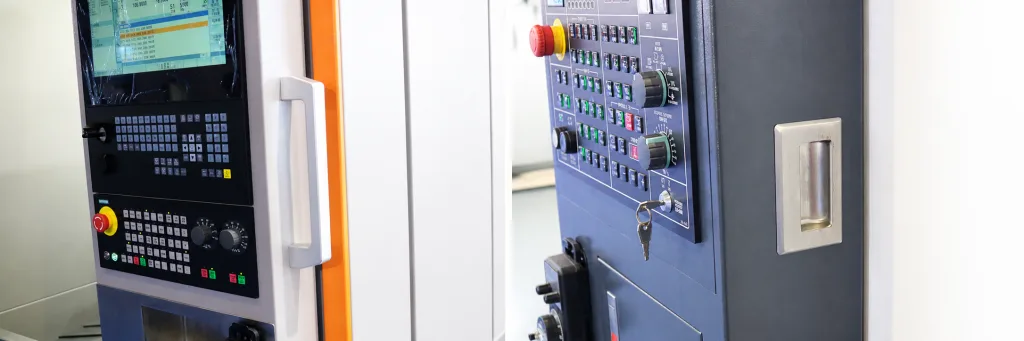
In short, recessed handles win where protrusion is a problem and surface-mount handles win where installation simplicity and grip clearance matter more. The panel’s surroundings usually make the decision before the handle itself does. The fastest decision is to check both sides of the panel: front clearance decides whether protrusion is acceptable, and back clearance decides whether a recessed pan can fit.
What Each Mounting Style Means
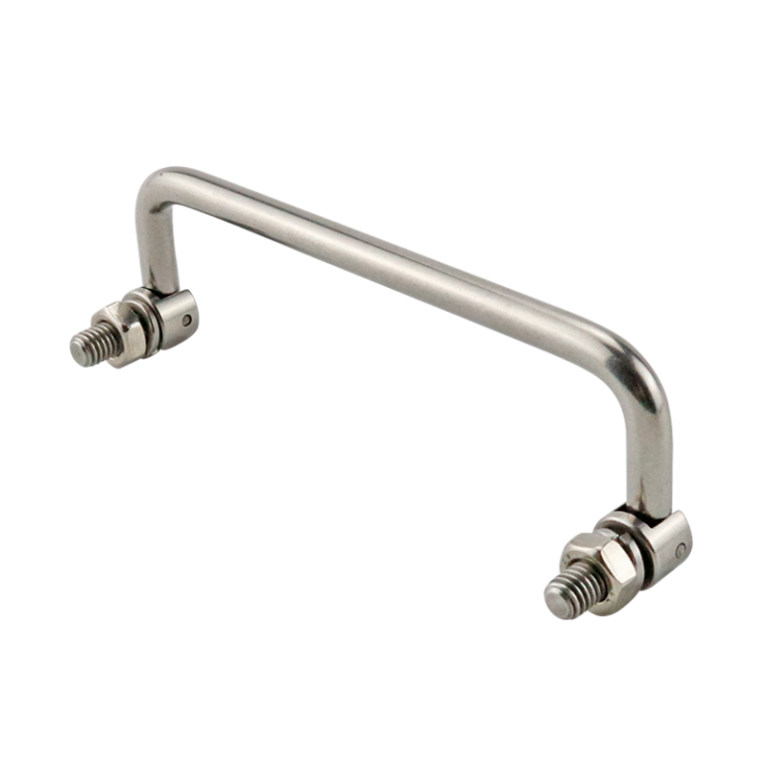
A surface-mount handle attaches to the outer face of the panel, usually with bolts or studs through pre-drilled holes. The body of the handle stands proud of the surface, giving a clear gap for fingers or a gloved hand to wrap around. Because it only needs bolt holes, it is fast to install and easy to retrofit onto an existing panel.
A recessed handle sits inside a cutout in the panel, with a pan or cup that the grip folds into. When not in use, the grip sits flush with — or below — the panel face, so nothing projects outward. This requires a larger, shaped opening in the panel and clearance behind it for the recess pan, which makes installation more involved than drilling bolt holes.
The Practical Rule: Check Front Clearance and Back Clearance
The fastest way to choose between the two styles is to check clearance on both sides of the panel. Front clearance decides whether the handle is allowed to protrude. Back clearance decides whether there is room for a recessed pan. These two questions resolve most cases before you ever look at a product.
If people, carts, tools, or sliding equipment pass close to the panel face, the protrusion becomes the problem and a recessed handle usually makes sense. If the inside of the panel is crowded with components, wiring, insulation, or only a shallow cavity, the recess pan may not fit, and a surface-mount handle becomes the safer choice. When both sides are tight, the back clearance usually wins the argument, because a handle that physically cannot fit behind the panel is not an option at any price.
This rule prevents the two most common mistakes: choosing a surface-mount handle that later becomes a snag point in a busy aisle, or choosing a recessed handle that looks clean on the outside but collides with components behind the panel. Check both sides first, and the rest of the decision follows.
Protrusion and Snag Risk
The strongest reason to choose a recessed handle is protrusion. A surface-mount handle that projects from the panel can be bumped, snagged, or caught by people and equipment passing close to it. In a narrow walkway, a busy production aisle, or anywhere clothing and tools brush past, a projecting handle is a real nuisance and sometimes a safety concern. A recessed handle removes that risk entirely because there is nothing to catch.
Flush mounting also matters when panels sit side by side or units slide into racks. If the handle protrudes, it dictates spacing and can prevent equipment from sitting tightly together. A recessed handle lets panels mount flush against each other or slide past obstructions without the handle getting in the way. For rack-mounted, drawer-style, or closely packed equipment, this is often the deciding factor.
Installation, Cutouts, and Cost
Surface-mount handles win decisively on installation. They need only bolt holes, so they are quick to fit, simple to retrofit, and forgiving of small alignment errors. There is no shaped cutout to cut and no clearance requirement behind the panel. For a panel that is already built, or where fabrication needs to stay simple, surface-mount is the practical choice.
Recessed handles cost more to install. The panel needs a shaped cutout sized to the recess pan, which means more precise fabrication, and there must be enough depth behind the panel for the pan to sit without hitting internal components. On a densely packed enclosure, that clearance is not always available. So the recessed handle’s flush profile comes at the price of a harder cutout and a space requirement behind the panel. The different mounting approaches and their fixings are covered in the guide to choosing the right handle installation method.
Grip, Force, and Operation
Surface-mount handles generally give a better grip. Because the bar stands away from the panel, there is full clearance for fingers or a gloved hand behind it, and the handle can be sized for the pulling force a heavy door needs. For doors that are large, heavy, or opened with gloves, that open grip clearance is a meaningful advantage.
Recessed handles trade some of that grip for the flush profile. The hand has to reach into the cutout, and the available finger room is limited by the pan depth. For light doors and occasional access this is fine, but for heavy or frequently operated doors it can feel cramped. Grip comfort and the force a handle can transmit are part of the same question — the guide to maniglie industriali ergonomiche covers how grip geometry affects operation for both styles.
Sealing and Cleaning
Sealing cuts both ways. A surface-mount handle only puts bolt holes through the panel, which are easy to seal with gaskets or sealed fasteners, leaving the panel face otherwise intact. A recessed handle puts a large shaped opening through the panel, and that opening must be sealed around its full perimeter if the enclosure needs to keep out dust or water. A well-designed recessed handle includes a gasketed pan for this, but it is a larger sealing path than a few bolt holes.
For cleaning, the recessed handle has a trade-off of its own. Its flush face is easy to wipe across, but the pan can collect dust, debris, or liquid that has to be cleaned out. A surface-mount handle has no pocket to trap material, though the gap behind the bar still needs wiping. In hygienic or washdown environments, weigh the flush surface against the pocket that has to be kept clean.
How to Decide
The decision usually starts outside the panel, not on it. Look at what passes in front of the panel and what sits behind it:
| Domanda | Points to… |
|---|---|
| Do people or equipment pass close to the panel face? | Recessed (no protrusion to snag) |
| Must panels sit flush, stack, or slide together? | Recessed (flush profile) |
| Is there limited depth behind the panel? | Surface-mount (no pan clearance needed) |
| Is the door heavy or operated with gloves? | Surface-mount (full grip clearance) |
| Does the build need to stay simple or be retrofitted? | Surface-mount (bolt holes only) |
Many designs also pair this choice with a locking decision — whether the handle needs to control access as well as open the door. That is a separate question, covered in the comparison of locking versus standard pull handles.
FAQ
What is the main difference between surface-mount and recessed handles?
A surface-mount handle bolts onto the face of the panel and projects outward, giving full grip clearance and simple installation. A recessed handle sits in a cutout so the grip is flush with or below the panel surface, removing any protrusion. The core trade-off is grip clearance and easy installation versus a flush, snag-free profile.
When should I use a recessed handle?
Use a recessed handle when protrusion is a problem: in narrow walkways or aisles where people and equipment pass close, or where panels must sit flush, stack, or slide together. The flush profile removes any handle that could be bumped or snagged, and it lets units mount tightly without the handle dictating spacing. It does require a shaped cutout and clearance behind the panel.
Are recessed handles harder to install?
Yes. A recessed handle needs a shaped cutout sized to its recess pan, which requires more precise fabrication than the bolt holes a surface-mount handle uses, and there must be enough depth behind the panel for the pan to sit clear of internal components. A surface-mount handle, by contrast, only needs bolt holes and is easy to retrofit onto an existing panel.
Which handle is better for heavy doors?
A surface-mount handle is usually better for heavy doors. Because the bar stands away from the panel, it gives full clearance for a firm or gloved grip and can be sized for higher pulling force. A recessed handle limits finger room to the depth of its pan, which can feel cramped on heavy or frequently operated doors.
Do recessed handles affect the panel’s seal?
They can, because a recessed handle puts a large shaped opening through the panel that must be sealed around its full perimeter if the enclosure needs to keep out dust or water. A well-designed recessed handle includes a gasketed pan for this. A surface-mount handle only puts bolt holes through the panel, which are a smaller and simpler sealing path.
Linea di fondo
Surface-mount versus recessed is a profile decision driven by the panel’s surroundings. Choose recessed when nothing can be allowed to protrude — tight walkways, flush-mounted or sliding units, closely packed racks — and accept the harder cutout and behind-panel clearance that come with it. Choose surface-mount when installation simplicity, retrofit, grip clearance, or heavy-door operation matter more than a flush face. Look at what passes in front of the panel and what sits behind it, and the right handle style is usually clear before you ever pick a model.
If you can describe the panel, its surroundings, and the depth available behind it, HTAN can recommend a surface-mount or recessed handle to match. Browse the gamma di maniglie in acciaio inox or send your panel details for a recommendation.