HTAN은 중국 최고의 산업용 경첩, 핸들 및 래치 제조업체 중 하나입니다.


A lid stay holds a lid or cover open at a safe angle so it does not slam shut on a hand. Two common types do this in different ways. A friction lid stay uses mechanical friction to hold the lid at any position you leave it. A spring-damper lid stay adds a spring and a damper, so the lid is supported as it opens and eased gently closed instead of dropping. Both keep a lid from falling, but they feel different to use and suit different lids — and the choice comes down to how the lid should behave when someone lets go of it.
This guide compares friction lid stays and spring-damper lid stays for equipment lids across hold position, soft-close, drop protection, cost, and maintenance, so you can match the stay to how the lid is used. It focuses on the two mechanism types, not on torque calculation or general lid stay selection, which are covered separately.
Core question
Should the lid just hold where you leave it, or ease itself closed?
Main difference
Friction = holds anywhere, simple. Spring-damper = soft-close, drop protection.
Next step
Check the lid weight and whether soft-close matters before choosing.
주요 내용
- A friction lid stay holds the lid at any angle by mechanical friction — simple, adjustable, and low-cost.
- A spring-damper lid stay supports the lid as it opens and eases it gently closed, preventing a heavy lid from dropping.
- Choose friction for light-to-medium lids that just need to stay put; choose spring-damper for heavy lids, frequent use, or where a slamming lid is a safety or comfort concern.
- The deciding factor is lid weight and how the lid should behave when released — hold in place, or close softly on its own.
Quick Answer: Friction or Spring-Damper?
| If the lid… | 더 나은 선택 | 왜 |
|---|---|---|
| Is light to medium and just needs to stay open | Friction lid stay | Holds at any angle, simple and low-cost |
| Is heavy and could drop hard | Spring-damper lid stay | Damper eases it closed, prevents slamming |
| Is opened and closed very often | Spring-damper lid stay | Soft-close improves comfort and safety |
| Needs to stop at many different angles | Friction lid stay | Holds anywhere along its travel |
| Must be low-cost and easy to maintain | Friction lid stay | Fewer parts, simple to adjust |
In short, friction lid stays win on simplicity, cost, and holding at any angle, while spring-damper lid stays win on soft-close, drop protection, and comfort for heavy or frequently used lids. Lid weight and whether it should close on its own usually decide it.
What Each Type Is
Friction lid stay
Uses mechanical friction between moving parts to hold the lid wherever it is left. It is simple, has few parts, and the friction can usually be adjusted. It holds the lid at any angle along its travel, but it does not actively help the lid open or close — the user does that, and the friction just keeps it in place.
Spring-damper lid stay
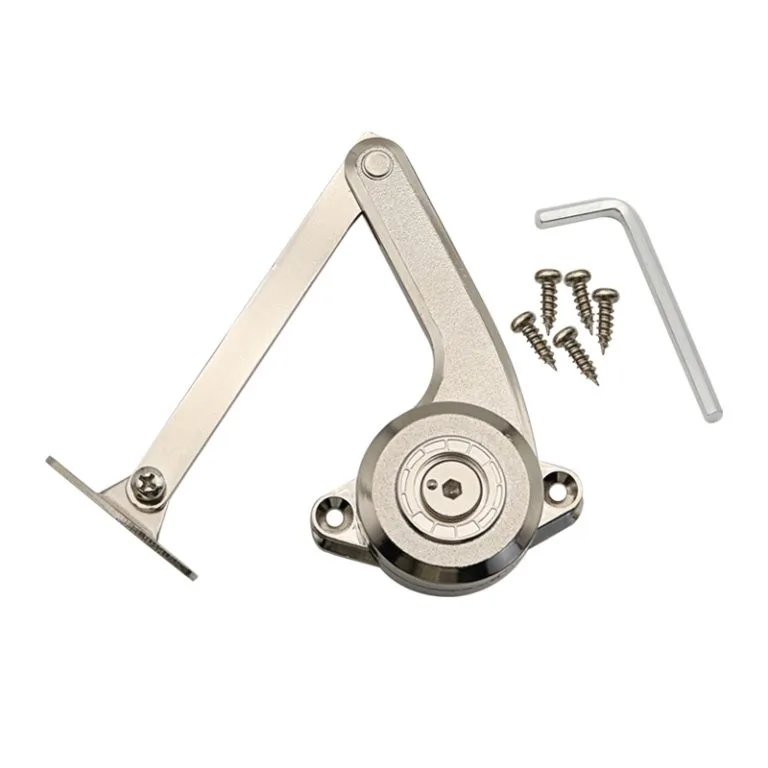
Adds a spring to support the lid’s weight as it opens and a damper to slow the closing motion. The lid rises with assistance and settles closed gently instead of dropping. It has more parts and costs more, but it controls the whole motion — which matters most on heavy lids or lids opened many times a day. This is a mechanical spring-and-damper mechanism, not a gas strut: the support comes from a mechanical spring rather than a sealed gas cylinder.
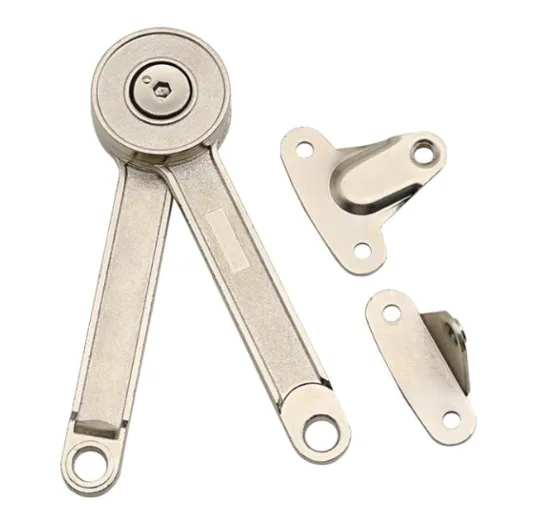
The full range of lid stay types, assemblies, and selection factors is covered in the comprehensive guide to lid stays.
Drop Protection and Soft-Close: The Core Difference
The defining difference is what happens when someone lets go of the lid. A friction lid stay holds the lid where it is — which is fine until the friction is set too low, a heavy lid is involved, or the friction wears down over time, at which point the lid can creep or drop. A friction stay does not slow a falling lid; it only resists motion through friction.
A spring-damper lid stay actively controls the closing motion. The damper slows the lid near the end of travel so it eases shut instead of slamming, and the spring supports the weight so the lid does not crash down even if released. For a heavy lid, or anywhere a dropping lid could injure a hand or damage the equipment, this controlled soft-close is the main reason to choose spring-damper over friction. The damping principle is the same one used in torque hinges with damping.
Cost, Adjustability, and Maintenance
Friction lid stays win on cost and simplicity. With fewer parts, they are cheaper, easy to install, and the holding friction can often be adjusted to suit the lid. A well-designed friction lid stay that is correctly sized to the lid will hold reliably over a long service life; the wear concern applies mainly when a stay is undersized for the lid or the friction is set too low. Maintenance is straightforward, and if the friction does ease over many years it can usually be adjusted or the unit replaced. For light or medium lids where soft-close is not needed, that simplicity and low cost are a real advantage.
Spring-damper lid stays cost more and have more parts — a spring and a damper in addition to the linkage — so there is more that can eventually wear, and the damping performance can change over a very long life. The trade is the controlled motion and drop protection they provide. Matching the spring and damper to the lid weight is important, since a unit sized for the wrong weight will either feel weak or fail to hold; the sizing method is covered in the guide to calculating torque for lid stays.
결정하는 방법
Start with lid weight and how often it is used, then weigh soft-close and cost:
| 질문 | 다음 내용을 가리킵니다… |
|---|---|
| Is the lid heavy or could it drop hard? | Spring-damper (drop protection) |
| Is it opened and closed many times a day? | Spring-damper (soft-close) |
| Does it need to hold at many different angles? | Friction (holds anywhere) |
| Is low cost and simple maintenance the priority? | Friction |
| Is a slamming lid a safety concern? | Spring-damper |
The choice is really about whether the lid just needs to stay where it is left, or whether its motion needs to be controlled all the way closed. Once the type is settled, the stay still has to be sized to the lid’s weight and geometry to hold correctly.
자주 묻는 질문
What is the difference between a friction lid stay and a spring-damper lid stay?
A friction lid stay uses mechanical friction to hold a lid at any position it is left, and it is simple and low-cost. A spring-damper lid stay adds a spring to support the lid as it opens and a damper to ease it gently closed, so a heavy lid does not slam or drop. The core difference is holding in place versus controlling the whole opening and closing motion.
When should I use a spring-damper lid stay?
Use a spring-damper lid stay for heavy lids, lids opened and closed many times a day, or anywhere a dropping or slamming lid could injure a hand or damage equipment. The spring supports the lid’s weight and the damper slows it near the end of travel, giving a controlled soft-close. For light lids that simply need to stay open, a friction lid stay is usually enough and costs less.
Can a friction lid stay hold a heavy lid?
A friction lid stay can hold a heavy lid if it is sized correctly, but there are limits. If the friction is set too low or wears down over time, a heavy lid can creep or drop, because friction only resists motion rather than actively supporting the weight. For heavy lids where a drop would be dangerous, a spring-damper lid stay gives more reliable support and a controlled close.
Which lid stay is cheaper and easier to maintain?
A friction lid stay is generally cheaper and simpler to maintain because it has fewer parts and the holding friction can often be adjusted. Over a long service life the friction may wear and need adjusting or replacing. A spring-damper lid stay has more parts — a spring and damper — so it costs more and has more that can eventually wear, in exchange for its controlled motion and drop protection.
Does the lid stay need to be sized to the lid weight?
Yes. Both types must be matched to the lid’s weight and geometry to work correctly. A stay sized for too little weight will not hold the lid, while an oversized one can make the lid hard to move. For a spring-damper stay in particular, the spring and damper must suit the lid weight so the support and soft-close feel right. Sizing to the actual lid is essential for either type.
결론
Friction versus spring-damper comes down to holding versus controlling. Choose a friction lid stay for light-to-medium lids that just need to stay where they are left, where simplicity, cost, and holding at any angle matter most. Choose a spring-damper lid stay for heavy or frequently used lids, or anywhere a slamming lid is a safety concern, where the spring’s support and the damper’s soft-close are worth the extra cost. Match the type to the lid’s weight and how it should behave when released, then size the stay to the lid — and the choice is clear.
선택 참고 사항: Whichever type you choose, the stay must be sized to the actual lid weight and opening geometry. The same lid can need a very different stay depending on its size and how far it opens, so confirm the lid weight and travel before ordering rather than assuming a type alone is enough.
If you can tell us the lid weight, size, opening angle, and whether soft-close is needed, HTAN can recommend a friction or spring-damper lid stay to match. As a manufacturer, we offer friction and spring-damper types in stainless steel, zinc alloy, and steel, with OEM sizing and samples for fit testing. Browse the lid stay range, or send your lid details for a recommendation.

-768x768-1.png)