A HTAN é um dos principais fabricantes de dobradiças, pegas e fechos industriais na China.


Uma dobradiça negligenciada pode arruinar um armário de servidor dispendioso. Se a dobradiça ceder, a porta deforma-se, a vedação falha e a segurança diminui. Em instalações difíceis, todos os pormenores contam - uma dobradiça é a junção entre a porta e o caixilho, sendo muito mais importante do que o seu tamanho. Dobradiças ocultas ficam totalmente dentro do armário. Escondem todas as ferragens quando a porta está fechada, proporcionando um exterior suave e intacto. Na indústria moderna, esta dobradiça oculta é fundamental para um design elegante, para além de uma elevada segurança e proteção robusta. No entanto, o mercado está inundado de opções: dezenas de materiais, classificações e caraterísticas. Como é que os engenheiros ou compradores fazem uma escolha segura? Este guia apresenta um método de seleção sistemático, com sete pontos. Abordaremos cada fator-chave em detalhe, com exemplos de casos reais, para que possa escolher a dobradiça oculta exacta para proteger o seu armário ou chassis industrial.
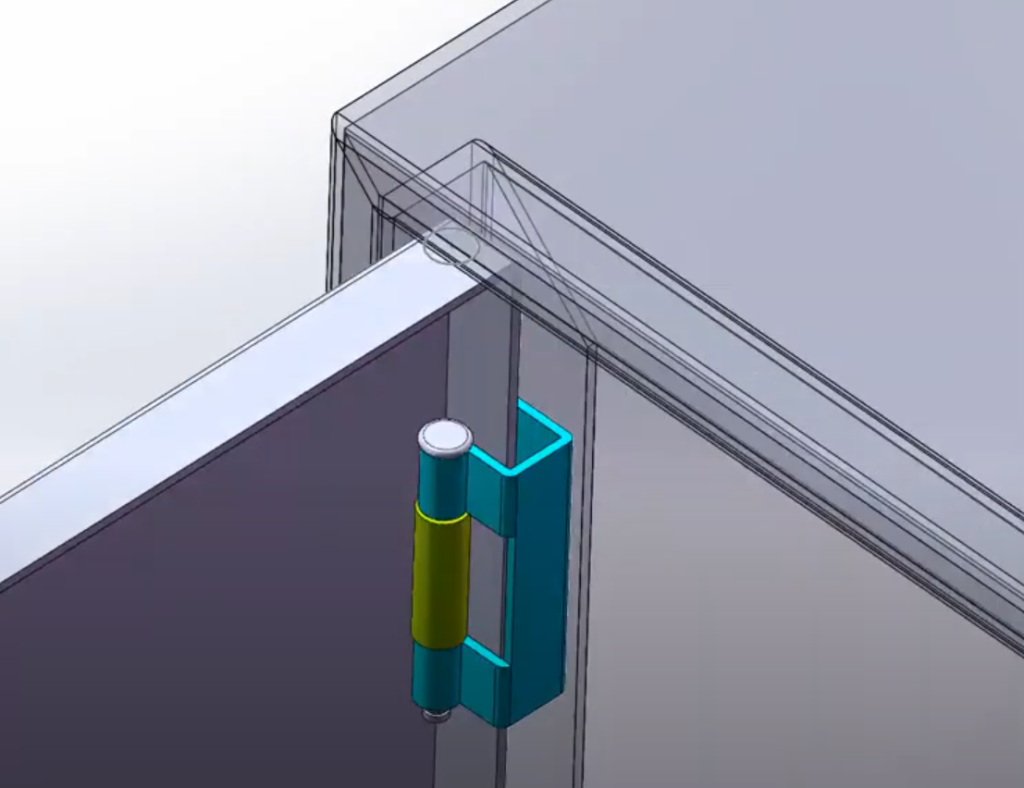
Dobradiça oculta no interior de um armário industrial
O que é uma dobradiça oculta e porque é que é preferida na indústria?
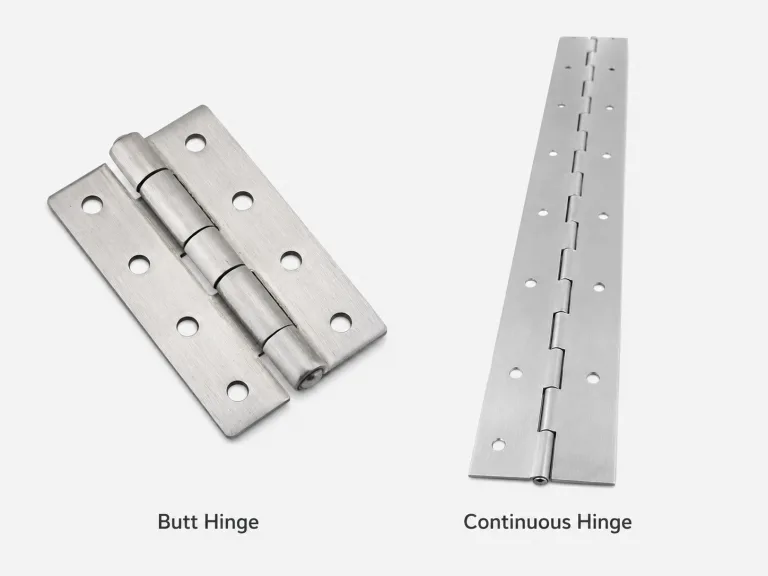
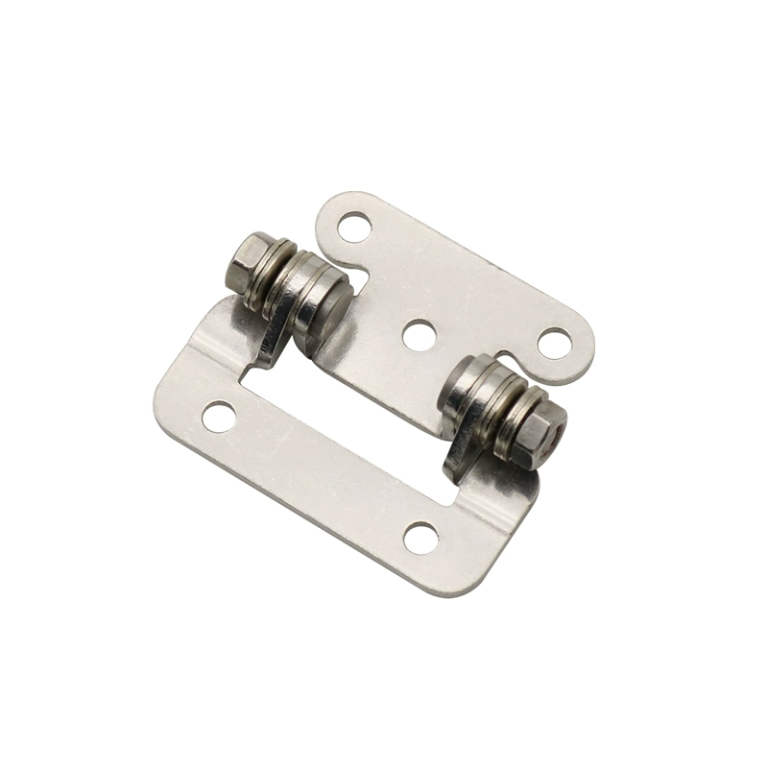
Antes de escolher uma dobradiça, é preciso saber o que é e o que faz. Uma dobradiça oculta é simplesmente uma dobradiça que desaparece da vista quando a porta do armário se fecha. O seu mecanismo - placas, pinos e elos - é montado no interior da porta e do caixilho. Este design invisível contrasta fortemente com as dobradiças expostas à moda antiga (dobradiças de topo ou de cinta), cujos pinos e folhas estão sempre à vista. Uma dobradiça oculta mantém as superfícies exteriores planas e limpas. A engenharia que lhe está subjacente utiliza frequentemente vários pontos de ligação ou braços. Estes mecanismos multipivotantes permitem um movimento muito suave e controlado, mesmo para portas pesadas.
Definição:
Uma dobradiça oculta fica totalmente escondida pela porta na sua posição fechada. O mecanismo pivotante está enterrado no interior da parede do móvel. Ao abrir a porta, os braços ou elos estendem-se numa trajetória precisa e voltam a recolher-se ao fechar. Muitos modelos possuem dois ou mais pontos de articulação. Isto permite que a porta gire suavemente sem raspar quaisquer vedações ou molduras, mesmo até 180°. Os armários de alta segurança utilizam frequentemente dobradiças ocultas para trabalhos pesados com montagens soldadas ou aparafusadas - todas as peças são concebidas para suportar o peso e o movimento em condições difíceis. Em suma, uma dobradiça oculta não é apenas um pivô; é um sistema de várias partes construído para ser resistente e ter uma ação suave.
O design oculto oferece várias vantagens poderosas em ambientes industriais:
Aspeto elegante:
Sem ferragens à vista, os armários têm um aspeto moderno e sem costuras. As dobradiças ocultas de sobreposição total cobrem totalmente a estrutura, deixando pouco espaço entre as portas. Dois armários lado a lado podem ficar nivelados. O resultado é um exterior limpo e monolítico que se adapta a ambientes de alta tecnologia. Os painéis de controlo e bastidores modernos utilizam frequentemente dobradiças ocultas para este aspeto polido.
Alta segurança e anti-adulteração:
Uma dobradiça escondida no interior significa que não há parafusos exteriores ou pinos expostos para forçar. Os intrusos não podem facilmente remover ou forçar a porta atacando a dobradiça a partir do exterior. Os engenheiros referem que as dobradiças ocultas são ideais para armários de segurança e caixas de telecomunicações exteriores, uma vez que "impedem a manipulação a partir do exterior". Por outras palavras, qualquer tentativa de forçar a porta tem de partir primeiro o invólucro exterior, e não apenas arrancar a dobradiça.
Eficiência de espaço:
As dobradiças ocultas permitem que as portas fiquem mais próximas umas das outras e das paredes. Uma porta que se sobrepõe a todo o caixilho pode encontrar-se com uma unidade adjacente de borda a borda sem qualquer folga. Em centros de dados ou salas de controlo onde os bastidores são apertados, isto poupa espaço precioso e torna a instalação compacta. Também significa menos peças salientes nas quais se pode chocar.
Vedação e proteção melhoradas:
As dobradiças ocultas integram-se bem com os vedantes e as juntas. Como muitas vezes permitem que a porta se levante ou se mova ligeiramente antes de se abrir, evitam esfregar-se contra as vedações do caixilho. Isto protege qualquer junta de borracha do desgaste. Além disso, a própria dobradiça pode ser concebida como parte da vedação IP do armário. As dobradiças ocultas corretamente alinhadas ajudam o armário a cumprir as classificações de proteção contra poeiras/água. (De facto, os técnicos salientam que o alinhamento correto das dobradiças é fundamental para manter a vedação de qualquer junta e a classificação IP).
Cada um destes pontos é vital na indústria. Uma dobradiça oculta aumenta a estética, veda melhor e afasta os intrusos. A sua complexidade no interior é o preço por esses benefícios. Com esta base em mente, as próximas secções abordam os sete factores-chave que cada engenheiro ou comprador deve considerar ao selecionar uma dobradiça oculta.
Sete factores essenciais na seleção de dobradiças
Passamos agora ao cerne da seleção: uma análise passo a passo de sete factores críticos. Trate isto como uma lista de verificação que vai das necessidades básicas às mais avançadas. Ignore qualquer fator por sua conta e risco - cada um desempenha um papel importante no sucesso.
Capacidade de carga - A base da segurança
Antes de mais, uma dobradiça deve ser capaz de suportar o peso da porta de forma fiável. Uma falha na dobradiça é um risco de segurança grave: imagine uma porta de aço de 200 libras caindo sobre equipamentos ou pessoas. Comece com os cálculos de peso. Calcule o peso da porta como espessura × largura × altura × densidade do material. Por exemplo, se a sua porta tiver 2 m × 0,5 m × 0,01 m de aço macio (densidade ~7850 kg/m³), o seu peso é 2×0,5×0,01×7850 ≈ 78,5 kg. Dica: Utilizar sempre as unidades métricas de forma consistente para evitar erros.
Em seguida, é necessário ter em conta o efeito de braço de alavanca. Uma porta mais larga exerce mais binário sobre as dobradiças, mesmo que o peso seja igual. Um painel de porta dupla ou muito largo pode ceder mais rapidamente do que um painel estreito com o mesmo peso. Por isso, verifique sempre as especificações das dobradiças, não só em relação ao peso total, mas também em relação à largura indicada da porta ou ao desvio. Os fabricantes indicam frequentemente algo como "suporta 80 kg por par (para uma porta de 1,2 m)", o que já tem em conta o tamanho.
Agora interprete corretamente as classificações do fabricante. Se um par de dobradiças tiver a classificação "100 kg (2 dobradiças)", isso significa que essas duas dobradiças podem suportar um total de 100 kg nas dimensões da porta testada. Se a sua porta for mais pesada ou maior, avance um modelo. Melhores práticas: Escolha uma dobradiça com uma classificação pelo menos 20-30% acima da sua necessidade calculada. Esta margem de segurança cobre as cargas dinâmicas (abertura/fecho por ressalto, pequenos impactos) e o desgaste a longo prazo. Por exemplo, se o seu cálculo indicar 50 kg, escolha uma dobradiça (ou par de dobradiças) classificada para ~65 kg. Uma engenharia um pouco mais avançada evita surpresas futuras.
Material e acabamento da superfície - Garantias de durabilidade
Com o peso selecionado, escolha um material forte e resistente. As dobradiças existem em vários metais e ligas:
Aço inoxidável (por exemplo. SS304 ou SS316):
Extremamente resistente à corrosão e forte. Ideal para ambientes agressivos - exteriores, costeiros (névoa salina), processamento químico, equipamento alimentar e médico, ou em qualquer lugar onde a humidade seja uma preocupação. A SS316 tem uma resistência à ferrugem ainda melhor do que a 304. Utilize dobradiças inoxidáveis quando a longevidade contra corrosão é vital.
Liga de zinco:
Frequentemente utilizada em fundição injectada para dobradiças de preço moderado. A liga de zinco oferece uma boa resistência e permite formas complexas. Muitos equipamentos de interior e electrónicos dobradiças de armários utilizam a liga de zinco porque é económica e continua a ser resistente à ferrugem depois de revestida. Além disso, é muito resistente à pintura e ao revestimento.
Aço (aço-carbono, por exemplo, Q235):
Resistência à tração muito elevada, boa para cargas pesadas e impactos. Mais pesado e económico. Comum em maquinaria de grandes dimensões e armários para trabalhos pesados (por exemplo, comutadores, caixas de geradores de grandes dimensões). Como o aço simples pode enferrujar, estas dobradiças são normalmente zincadas, cromadas ou revestidas a pó para proteção.
Alumínio:
Leve e com boa resistência à corrosão (especialmente anodizado). Utilizado quando a redução de peso é importante (por exemplo, aeronaves, equipamento de trânsito ferroviário) e as cargas são moderadas. Não é tão forte como o aço, mas a sua baixa densidade pode ser importante para portas de grandes dimensões.
Não se esqueça do acabamento da superfície. Mesmo o material correto pode falhar se não for tratado. Os acabamentos típicos incluem zincagem ou cromagem (para ambientes interiores/amenos), revestimento em pó (tinta cozida para cor e resistência à corrosão) e revestimento E electroforético (vedação fina e uniforme utilizada na indústria automóvel e eletrónica de ponta). Em suma, faça corresponder o material e o revestimento da dobradiça ao seu ambiente e confirme sempre as especificações do material com o fornecedor.
Ângulo de abertura - Satisfazer as necessidades operacionais
Considere até que ponto a porta deve abrir. As dobradiças de 90°-120° são comuns para armários em espaços apertados - abrem o suficiente para a maioria das tarefas de acesso, evitando a colisão com paredes ou racks adjacentes. Dobradiças de 180° (ou mais) permitem que a porta se abra totalmente para trás - utilize-as quando for necessário um espaço livre total para montar equipamento ou aceder a todos os componentes. Escolha o ângulo imaginando o espaço de trabalho real e confirmando que a folha de especificações da dobradiça indica o ângulo máximo correto.
Caraterísticas adicionais - Melhorar a conveniência e a segurança
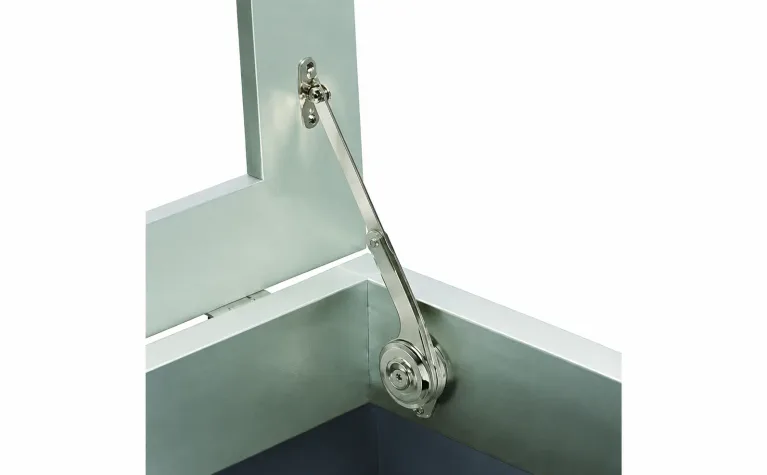
As dobradiças modernas acrescentam frequentemente caraterísticas que vão para além da simples articulação. Amortecimento (fecho suave): Um amortecedor incorporado abranda a porta no final do fecho - evita o bater, reduz o ruído e o desgaste em salas de controlo e centros de dados. Abertura ou fecho automático: Bloqueia em determinados ângulos para que os engenheiros possam abrir um painel pesado com as mãos livres. Desengate rápido / remoção sem ferramentas: Uma cavilha de abertura permite-lhe levantar a porta do aro sem a desaparafusar - útil para o transporte de portas pesadas ou para a troca de painéis no terreno.
Ajustabilidade tridimensional (3D):
Esta é uma grande vantagem para portas industriais pesadas. Uma dobradiça ajustável em 3D significa que, uma vez instalada, pode afinar a posição da porta ao longo de três eixos (cima/baixo, esquerda/direita e dentro/fora) com simples parafusos. Esta precisão é fundamental para portas de aço pesadas com vedantes: mesmo um milímetro de desvio pode fazer com que o vedante fique saliente. Com o ajuste 3D, os instaladores alinham a porta na perfeição para que encaixe perfeitamente no caixilho. Os especialistas do sector sublinham que esta capacidade de ajuste é essencial para garantir um encaixe perfeito em portas de precisão pesadas. Procure sempre este ajuste se o alinhamento for crítico. Para obter um guia detalhado sobre a especificação de dobradiças ocultas ajustáveis em 3D para armários eléctricos, consulte: Seleção de dobradiças ocultas ajustáveis 3D para armários eléctricos.
Instalação e sobreposição de portas - Compatibilidade estrutural
A dobradiça deve corresponder à forma como a sua porta é construída e como é montada. Considere o estilo de sobreposição da porta: Sobreposição total - A porta cobre completamente o painel lateral do armário, popular em equipamento de alta tecnologia para um aspeto elegante. Meia sobreposição - duas portas partilham uma divisória central, cada uma cobrindo metade. Porta embutida - a porta fica totalmente dentro do caixilho, nivelada com a face, requer uma dobradiça embutida que faz com que a porta fique fora do caixilho.
Escolha o estilo de dobradiça que corresponde exatamente ao seu tipo de porta. A maioria dobradiças industriais são fornecidas aos pares: a folha de porta e a folha de caixilho. Para o método de fixação: Parafuso é mais comum nos armários metálicos - fácil de instalar ou substituir. Soldadura forma uma linha de soldadura tão forte como o metal de base - ideal para portas de segurança de grandes dimensões ou contentores onde não se pretende ter fixadores amovíveis. Escolha com base na necessidade de ajuste futuro (parafusos) ou na robustez máxima (soldadura).
Requisitos ambientais - Não esquecer o contexto
Pense no local onde o armário vai viver. Factores-chave: Classificação IP - se o armário tiver a classificação IP65/67, a dobradiça não deve comprometer a vedação; a montagem precisa é fundamental para manter o contacto da junta. Corrosão e intempéries - os armários exteriores estão expostos à chuva, aos raios UV e às oscilações de temperatura; as fábricas interiores podem estar expostas a pulverização química ou a humidade elevada. Vibração e Choque - as instalações móveis (veículos, navios, geradores) exigem dobradiças robustas, eventualmente soldadas. Extremos de temperatura - confirmar que os amortecedores e lubrificantes funcionam na sua gama de temperaturas de funcionamento. EMC e ligação à terra - em armários eléctricos, procure dobradiças de ligação à terra ou adicione cintas de ligação à terra para garantir que a porta permanece ligada eletricamente à estrutura do armário.
Marca, certificações e custo total - A visão de longo prazo
Por fim, pondere a qualidade e o custo. Procure certificações: ISO 9001 (gestão da qualidade), RoHS (sem chumbo), Listagens UL (para armários eléctricos). Uma dobradiça mais barata pode corroer ou partir - causando tempo de inatividade, reparações ou incidentes de segurança que facilmente excedem o preço da dobradiça. Ao avaliar os fornecedores, solicite suporte técnico ou modelos 3D com antecedência. A "melhor" dobradiça é aquela que satisfaz todas as suas necessidades técnicas e faz sentido do ponto de vista económico ao longo da vida útil do equipamento.
Estudos de caso: Aplicação das regras
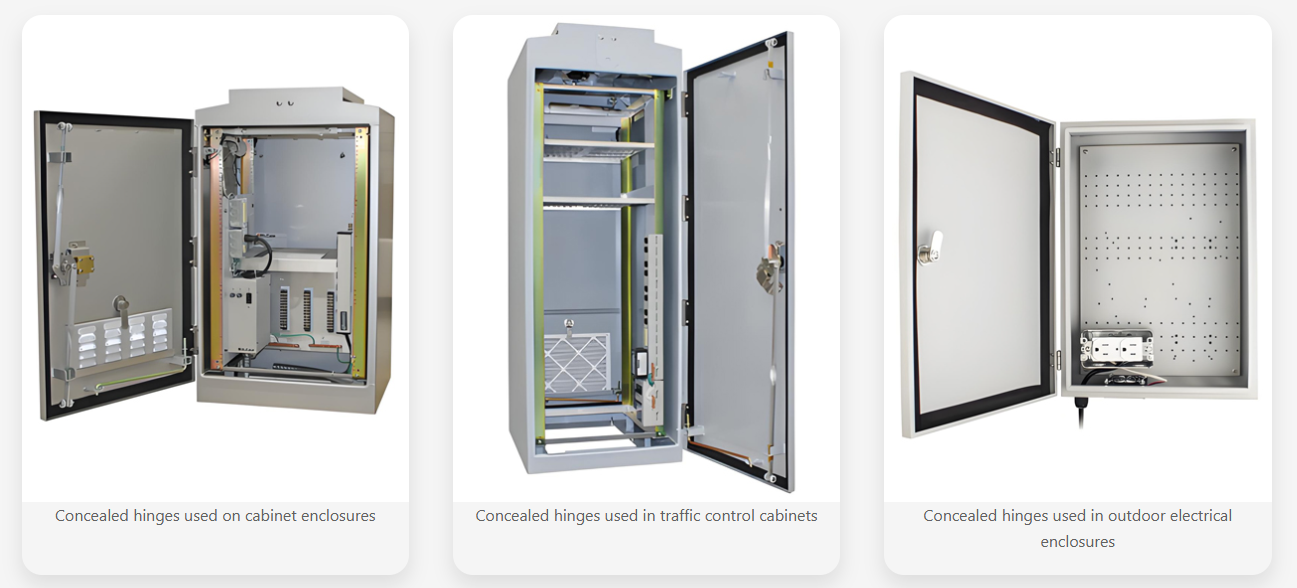
Aplicações industriais de dobradiças ocultas (exemplo de armário de telecomunicações)
Caso 1: Armário de telecomunicações para exterior.
Requisitos: Elevada resistência às intempéries, resistência ao vandalismo, amplo acesso para manutenção, vedação IP54+, dobradiças não amovíveis do exterior.
Solução: Dobradiças ocultas de aço inoxidável 316 com placas de calibre pesado, abertura de 180°, montagem soldada, sem fixadores expostos. Adicionar uma junta resistente à volta da porta.
Caso 2: Rack de centro de dados interno.
Requisitos: Porta muito pesada, abertura/fecho frequente, alinhamento preciso para manter as vedações do fluxo de ar, espaço apertado entre prateleiras.
Solução: Dobradiça oculta multi-link classificada para mais de 50 kg, abertura de 180°, modelo ajustável em 3D para um alinhamento perfeito da porta, aço revestido a zinco para ambiente interior, pino de libertação rápida para trocas de servidor. Para problemas de instalação e correcções comuns, consulte: A porta do armário industrial não está a fechar? Guia de fixação de dobradiças ocultas.
Caso 3: Armário de controlo de equipamentos de precisão.
Requisitos: Fecho suave e silencioso, vedação perfeita, evitar a entrada de pó, porta de peso moderado, condições ambientais interiores.
Solução: Dobradiça oculta com amortecimento de fecho suave incorporado, junta de borracha à volta da moldura da porta, material em liga de zinco ou aço inoxidável, estilo de sobreposição total para um exterior nivelado, ângulo de 120° suficiente, dobradiça metálica para ligação à terra ESD, se necessário.
Estes exemplos ilustram todo o processo: listar as exigências e, em seguida, combinar os atributos da dobradiça. Repare como factores como o material, a resistência e as funções são escolhidos para se adequarem com precisão a cada caso de utilização.
Lista de verificação definitiva e armadilhas comuns
- Calculei o peso da porta e binário? Não te esqueças da largura.
- A capacidade da dobradiça excede as minhas necessidades em 20-30%?
- O material e o acabamento escolhidos são adequados às condições de corrosão e desgaste?
- O ângulo de abertura cumpre os requisitos de acesso?
- Necessito de alguma caraterística adicional (fecho suave, abertura com retenção, aperto rápido, ajuste 3D)?
- A dobradiça corresponde ao estilo da porta (embutida, meia-cobertura/completa) e ao método de montagem?
- Tive em conta a vibração, a temperatura, a classificação IP, a ligação à terra, etc.?
Erros comuns a evitar: Escolher apenas pelo preço; ignorar a largura da porta (efeito de braço de alavanca); utilizar o mesmo modelo de dobradiça em todo o lado, independentemente das condições; saltar o ajuste 3D final após a instalação - uma dobradiça ajustável desalinhada estraga a vedação e desgasta a dobradiça prematuramente.
Conclusão
A seleção de uma dobradiça oculta para um armário industrial é uma decisão abrangente. Ela influencia a aparência do armário, a sua segurança e até mesmo a segurança da sua operação. A dobradiça certa não é apenas uma peça; é um elemento chave da fiabilidade de todo o sistema.
Ao trabalhar metodicamente estes sete factores, garante que o seu armário funcionará sem problemas durante anos. Não se limite à folha de dados - fale com especialistas em dobradiças e teste-as, se possível. Essa atenção aos detalhes é o que separa o equipamento comum do equipamento verdadeiramente excecional e fiável. Navegue pela gama completa da HTAN de dobradiças de encastrar para armários industriais ou contactar a nossa equipa de engenharia para apoio à seleção.