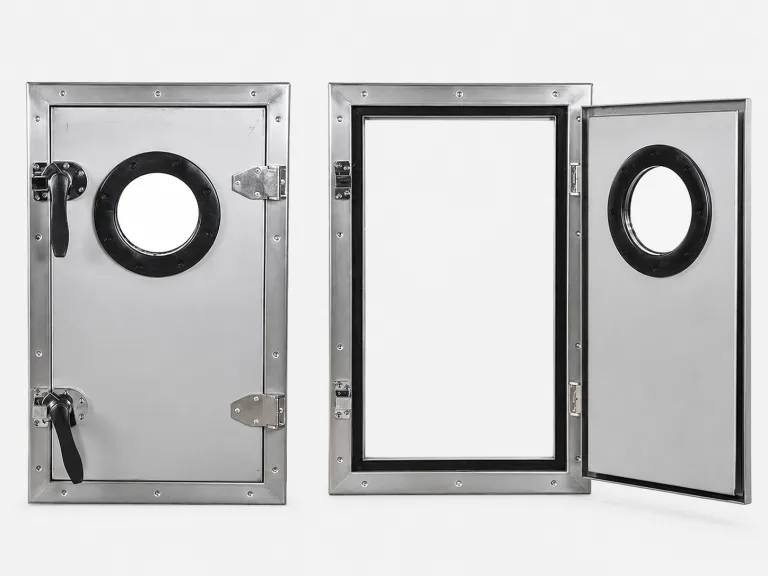
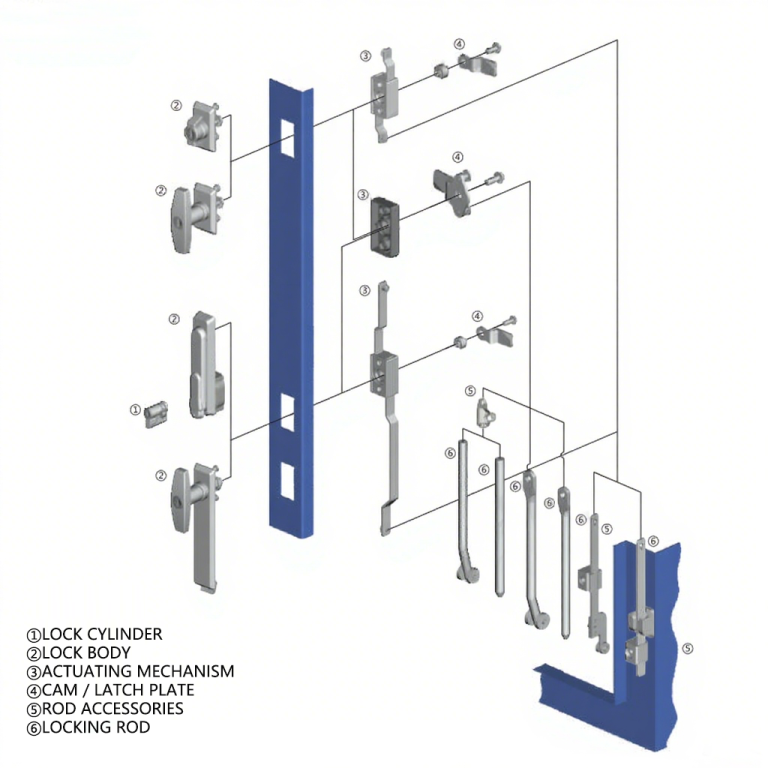
HTAN является одним из ведущих производителей промышленных петель, ручек и защелок в Китае.


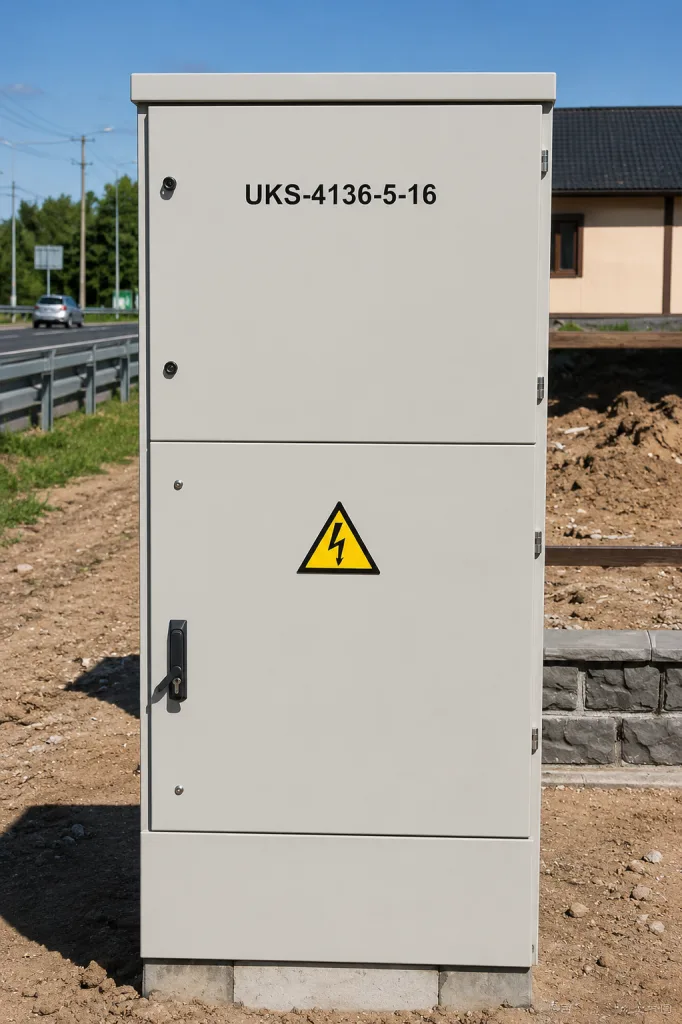
Roadside enclosures are not the same as sheltered indoor cabinets. A latch installed beside a road, highway, traffic signal, communication cabinet, EV charger, solar combiner box, or outdoor control enclosure is exposed to rain, traffic spray, humidity cycles, dust, vibration, and in many regions, deicing salt. That small latch becomes a maintenance problem when corrosion causes it to bind, seize, loosen, or stop compressing the gasket.
The question is not “which latch is cheaper?” The better question is “which latch material keeps the enclosure accessible, sealed, and serviceable in the actual roadside environment?” This article compares stainless steel and coated zinc latches for one specific situation: a roadside enclosure exposed to road salt and traffic spray, often with difficult service access. It does not re-explain generic stainless-steel metallurgy or the full material-by-material comparison — that is covered in the latch materials guide comparing stainless steel, zinc alloy, and plastic. Here the focus is the roadside scenario decision, the lifecycle cost, and the full-assembly corrosion picture.
Быстрый ответ
Используйте stainless steel latches when the enclosure is exposed to road salt, coastal air, industrial pollution, difficult service access, long maintenance intervals, or high consequences of water ingress. Use coated zinc latches only when the enclosure is sheltered or low-corrosion, the service life is short, maintenance access is easy, and the coating system is clearly specified and verified.
For most roadside enclosures exposed to deicing salt or traffic spray, stainless steel is usually the lower-risk choice. If chloride exposure is expected, 316 stainless steel is usually the safer specification than 304; for inland roadside installations with moderate exposure and no regular road salt, 304 may be sufficient. The grade logic is summarised later and explained in full in the generic 304-versus-316 guide — the point of this article is the roadside decision around it.
Why the Roadside Scenario Changes the Material Decision
A roadside enclosure latch faces more than normal outdoor weather, and it is the комбинация of stresses — not any single one — that changes the material decision compared with a sheltered cabinet. Road salt or deicing chemicals, traffic spray, grit from vehicles, freeze-thaw cycles, vibration from traffic, infrequent inspection, and difficult maintenance access all stack on top of ordinary rain and UV.
Two of these matter most for material choice. First, road salt creates repeated chloride exposure, which is the single most aggressive factor for both coatings and stainless grades. Second, service access is expensive — opening a roadside cabinet may require traffic control, safety planning, or a scheduled maintenance window, so a latch that needs replacement becomes far more costly than its unit price. A latch failure is not just a handle problem: if the latch no longer pulls the door into the gasket, the enclosure loses sealing pressure and moisture reaches the internal equipment. These two factors — chloride load and costly access — are why latch material for a roadside cabinet should be selected by service environment, not by unit price. The same roadside corrosion logic applies to the cabinet’s other hardware, as covered in the guide to петли для наружных телекоммуникационных шкафов.
Coated Zinc in the Roadside Scenario
Coated zinc latches are common because they are economical and widely available, and in low-corrosion environments they perform well. The roadside-specific issue is that zinc-based protection depends on coating integrity. Once the coating is scratched, worn, consumed, or breached at moving contact points — exactly what happens at a latch cam, key, or fastener over time — corrosion begins at the exposed metal. Road salt and moisture create a conductive path that accelerates this, so the roadside environment shortens the practical life of the coating compared with a sheltered cabinet.
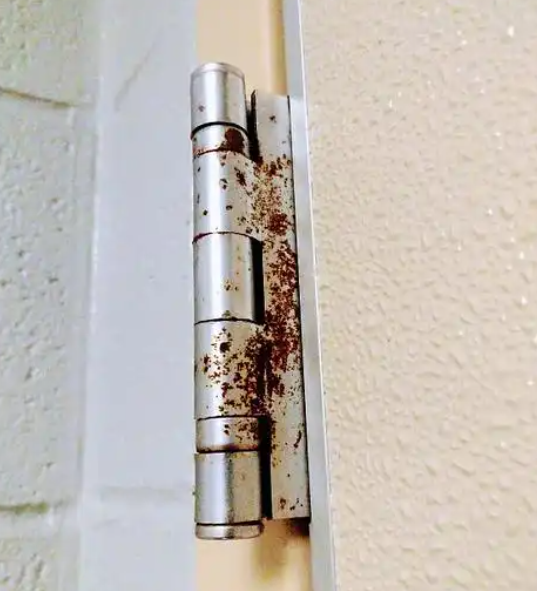
In roadside service, coated zinc latch problems typically show up as white corrosion product on the surface, red rust at worn contact points, binding during opening or closing, stiff key or cam operation, flaking plating around the latch cam, corrosion around fasteners, reduced gasket compression, or seizure after long periods without use. The issue is not that coated zinc is always bad — it is that its protection is a finite coating layer, and the roadside salt environment consumes that layer faster than the cabinet’s service interval may assume.
Stainless Steel in the Roadside Scenario
Stainless steel does not rely on a sacrificial coating for its basic corrosion resistance; that resistance comes from the alloy itself. The roadside advantage is practical rather than theoretical: a latch that may be scratched, handled, exposed to salt spray, and left unattended for long intervals keeps its corrosion resistance even when the surface is marked, because there is no finite coating to consume. (The underlying passive-layer metallurgy is covered in the generic stainless guides; what matters here is the field behaviour.)
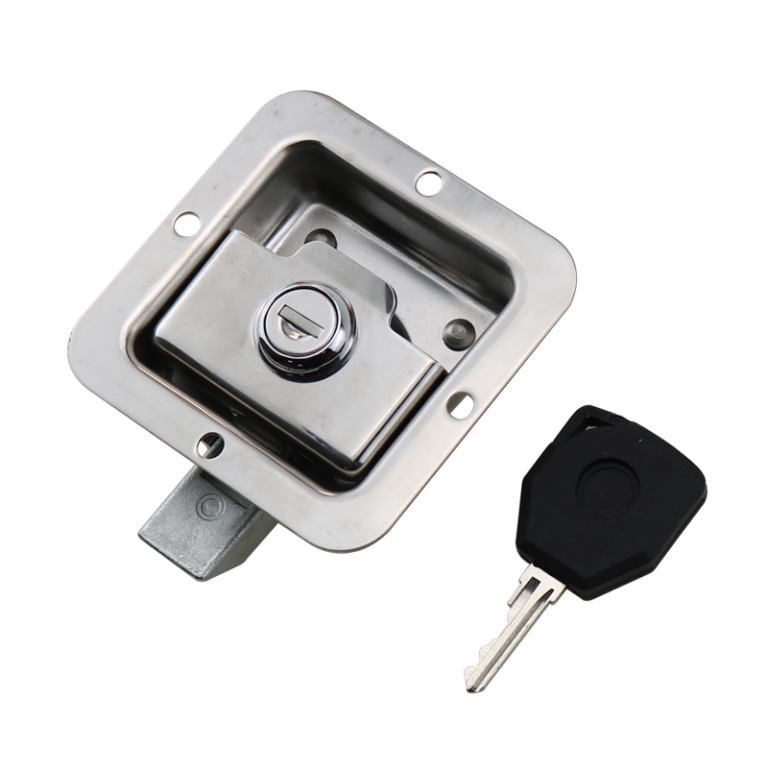
A stainless steel latch is usually preferred when the enclosure is exposed to rain or traffic spray, road salt or chloride exposure is expected, maintenance access is difficult, the enclosure must stay sealed for long intervals, the latch is part of a gasket compression system, the cabinet protects electronics or power components, or replacement would require traffic control or a scheduled shutdown. Stainless steel is not a magic solution — it still needs the correct grade, proper fasteners, and compatible mounting materials — but in salt-exposed roadside service it usually provides a wider safety margin than coated zinc.
304 or 316 for the Roadside Salt Environment
This article does not repeat the full 304-versus-316 metallurgy — that property comparison, including the role of molybdenum and pitting resistance, is covered in the guide to outdoor 304 vs 316 stainless selection. The roadside-specific question is narrower: given road salt, which grade fits?
The practical rule for a roadside latch is simple. Use 304 stainless steel for inland roadside cabinets with moderate exposure and little or no regular road salt, where the site is not near coastal air and the cabinet is inspected regularly. Step up to 316 stainless steel when road salt is applied during winter, the enclosure is near highways or primary roads, the site is coastal or exposed to salt-laden air, service access is difficult, the cabinet contains high-value electronics, or a corrosion failure would create costly downtime. In short: 304 for moderate inland roadside service, 316 when chloride exposure, road salt, coastal air, or difficult access raises the cost of failure.
Roadside Selection Matrix
Use this matrix as a roadside-scenario starting point. It maps installation conditions to material, rather than re-comparing material properties. Final selection should still consider project standards, enclosure material, access cost, required rating, and supplier test data.
| Roadside Installation Condition | Coated Zinc | 304 Нержавеющая | 316 Нержавеющая |
|---|---|---|---|
| Sheltered roadside cabinet, no road salt | Acceptable if coating verified | Хорошо | Usually unnecessary |
| Inland roadside, no regular road salt | Possible if coating verified | Recommended | Дополнительно |
| Inland roadside with seasonal road salt | Higher risk | Possible | Предпочтительный |
| Highway corridor with traffic spray | Not recommended for long intervals | Possible with inspection plan | Recommended |
| Coastal roadside or salt-laden air | High risk | Monitor for pitting | Предпочтительный |
| Remote cabinet, difficult service access | Higher lifecycle risk | Recommended | Предпочтительный |
| Protecting high-value electronics | Higher risk | Recommended | Preferred when salt is present |
The most important rule is a lifecycle one: if replacement access is difficult and salt exposure is expected, the lower-cost latch can become the more expensive choice over the life of the enclosure.
Lifecycle Cost: The Real Roadside Decision
The roadside decision is ultimately about lifecycle cost, not unit price — this is what separates it from a generic material comparison. A coated zinc latch may cost less to buy, but if it seizes or loses gasket compression after a few winters of road salt, the replacement cost includes far more than the part.
For a roadside cabinet, the true cost of a latch failure can include a service crew dispatched to a roadside location, traffic control or lane closure, a scheduled maintenance window, the risk of water already having reached the electronics, and the downtime of whatever the cabinet serves. Against that, the unit-price difference between coated zinc and stainless steel is usually small. The right question is not “how much does the latch cost today?” but “what will latch corrosion cost if the cabinet cannot be opened, cannot be locked, or cannot maintain gasket compression in the field?” When latch corrosion threatens sealing specifically, confirm the latch is still compressing the gasket before replacing the gasket — the interaction between latch condition and seal loss over time is covered in the guide to Потеря и обслуживание уплотнений наружных ограждений.
Galvanic Corrosion: Specify the Full Assembly, Not Just the Latch
Latch material is only one part of the assembly. The latch, fasteners, enclosure body, washers, coating, and mounting surface must work together — and in a roadside cabinet, rainwater and road salt provide exactly the electrolyte that drives galvanic corrosion between dissimilar metals. This is a roadside-specific risk because the electrolyte is almost always present.
Common mistakes include a stainless latch mounted with zinc-coated fasteners, a coated zinc latch mounted on a stainless enclosure, a stainless latch fixed to galvanized surfaces without isolation, scratched coating around mounting holes, moisture trapped between the latch base and door, and mixed fastener grades in one assembly. To reduce the risk: match latch and fastener materials where practical, use compatible washers and hardware, use isolation washers or non-conductive barriers when dissimilar metals must contact, avoid exposing bare metal around mounting holes, seal interfaces where moisture collects, and ask the supplier to confirm full-assembly compatibility. A stainless latch is not fully specified if the fasteners, washers, and mounting interface are ignored.
What to Ask Suppliers for a Roadside Latch
Do not request a roadside latch by saying only “stainless” or “zinc plated.” Ask for evidence that the material and coating system fit the salt environment, and provide the roadside context the supplier needs.
Ask the supplier
- Is the latch available in 304 and 316 stainless steel?
- What is the base material of the coated zinc latch, and what coating system is used — zinc plating, zinc-nickel, hot-dip galvanized, powder coating, or another finish?
- What coating thickness or specification is provided, and what salt spray or corrosion test data exists for the complete latch assembly?
- Are the screws, washers, cam, nut, spring, lock cylinder, and mounting hardware material-matched?
- Is the latch suitable for gasket compression or only basic closure, and is it intended for roadside use with road salt exposure?
- What inspection or replacement interval is recommended for the environment, and what isolation method is advised for mixed-metal mounting?
Send these project details
- Installation location and road type, and whether winter road salt is used
- Distance from coast or industrial exposure
- Required IP or NEMA rating and enclosure body material
- Door thickness, latch mounting method, locking requirement, and gasket compression requirement
- Expected service life, access difficulty, and whether traffic control is needed
- Photos or drawings of the enclosure door
Salt spray testing to ISO 9227 is the standard way suppliers evaluate the corrosion resistance of metallic materials and their coatings in salt-laden conditions, so asking for ISO 9227 test data is a reasonable way to compare a coated zinc finish against a stainless option for the road-salt environment.
Common Roadside Specification Mistakes
Mistake 1: Treating Road Salt as Occasional Exposure
If a cabinet is near a road where deicing salt is used, salt exposure should be treated as a repeating service condition, not an occasional event. This single assumption changes the material decision.
Mistake 2: Choosing Zinc Because the Cabinet Is “Only Outdoor”
Outdoor is not one environment. A sheltered wall cabinet and a roadside traffic cabinet exposed to salt spray face very different corrosion risks, even though both are technically outdoors.
Mistake 3: Specifying Stainless but Using Mismatched Fasteners
A stainless latch with zinc-coated or mismatched fasteners can still corrode at the interface in a salt environment. The roadside specification must cover the whole assembly, not just the latch body.
Mistake 4: Choosing by Unit Price on a Hard-to-Access Site
A lower-cost latch can be fine for easy-access, low-corrosion sites. For roadside installations where access needs traffic control, replacement labour can outweigh the initial saving many times over.
ЧАСТО ЗАДАВАЕМЫЕ ВОПРОСЫ
Are coated zinc latches ever acceptable for roadside enclosures?
Yes, but only in low-corrosion or sheltered roadside conditions where road salt is not present, maintenance access is easy, and the coating system is clearly specified and verified. For highways, coastal roads, or winter road-salt exposure, stainless steel is usually the safer choice because zinc coating protection is consumed faster in salt environments.
Is 304 stainless steel enough for roadside cabinets?
304 stainless can work for inland roadside cabinets with moderate exposure and little or no road salt. If chlorides are present from road salt or coastal air, 316 stainless is usually preferred for its better resistance to pitting corrosion. The grade decision should follow the actual road-salt exposure at the site.
Why do coated zinc latches fail faster beside a road?
Coated zinc latches rely on a finite protective coating. Once it is worn, scratched, or breached at moving contact points such as the cam or key, corrosion begins at the exposed base metal. Road salt and moisture create a conductive path that accelerates this, so a roadside salt environment consumes the coating faster than a sheltered cabinet would.
Why is lifecycle cost more important than unit price for roadside latches?
Because opening a roadside cabinet can require a service crew, traffic control, and a scheduled maintenance window. If a cheaper latch seizes or loses gasket compression after a few winters of road salt, the replacement cost — plus any water damage to electronics — usually far exceeds the small unit-price difference between coated zinc and stainless steel.
Can a stainless steel latch still corrode in a roadside cabinet?
Yes, if the assembly is not fully specified. A stainless latch mounted with zinc-coated fasteners or fixed to galvanized surfaces without isolation can suffer galvanic corrosion in the presence of road salt and rainwater. Match fastener and mounting materials, or use isolation washers, so the whole assembly resists corrosion, not just the latch body.
What should I send a supplier before choosing a roadside latch material?
Send the installation location and road type, whether winter road salt is used, distance from coast, required IP or NEMA rating, enclosure body material, gasket compression requirement, expected service life, and how difficult access is. Ask for the coating system, ISO 9227 salt spray test data, fastener material matching, and grade confirmation so the full assembly is specified for the road-salt environment.
Окончательная рекомендация
For roadside enclosures, latch material should be selected by environment and service risk, not by unit price alone. A coated zinc latch may be acceptable for sheltered, low-corrosion, easy-access installations where the project can tolerate a shorter replacement interval. A stainless steel latch is usually the better starting point for roadside enclosures exposed to rain, traffic spray, road salt, coastal air, difficult maintenance access, or long service intervals. Use 304 stainless for moderate inland exposure, and 316 when road salt, coastal air, or high maintenance cost makes corrosion failure unacceptable.
The best procurement question is not “how much does the latch cost today?” but “what will latch corrosion cost if the cabinet cannot be opened, cannot be locked, or cannot maintain gasket compression in the field?” If you are specifying hardware for roadside enclosures, send the enclosure material, environment, required rating, latch type, gasket requirement, and access conditions, and HTAN can review whether coated zinc, 304 stainless steel, or 316 stainless steel is the appropriate latch material — and confirm the fasteners and mounting are matched for the road-salt environment.