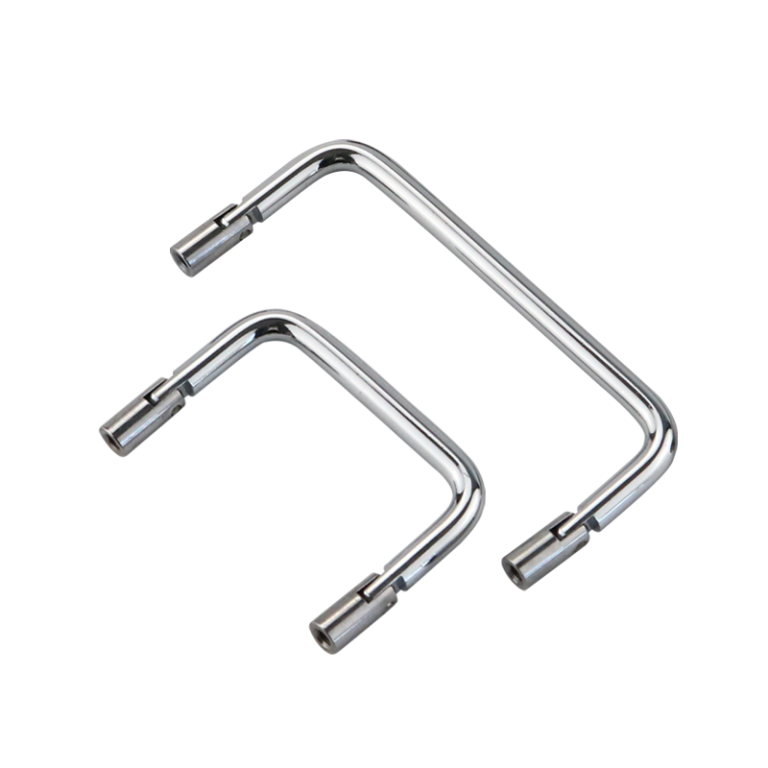
Industrial Stainless Steel Handles: Types & Selection Guide

Industrial stainless steel handles for equipment cabinets and machinery

Stainless steel handles are the standard specification for industrial equipment doors, electrical cabinets, toolboxes, and special vehicles — where corrosion resistance, structural strength, and long service life are non-negotiable. Compared to aluminum or zinc alloy alternatives, stainless steel handles maintain performance integrity across wide temperature ranges, high-humidity environments, and high-cycle operation without surface degradation or structural fatigue.

This guide covers the main types of industrial stainless steel handles, key material and surface finish specifications, application scenarios, and a practical procurement checklist for engineering and sourcing teams.

Why Stainless Steel for Industrial Handles?

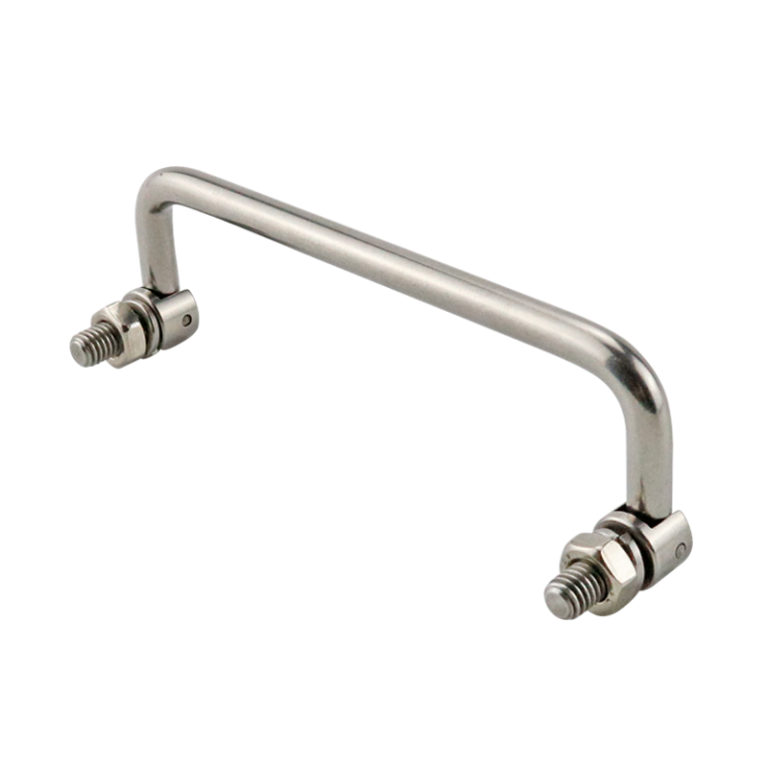
Stainless steel industrial handle LS508 for equipment cabinets
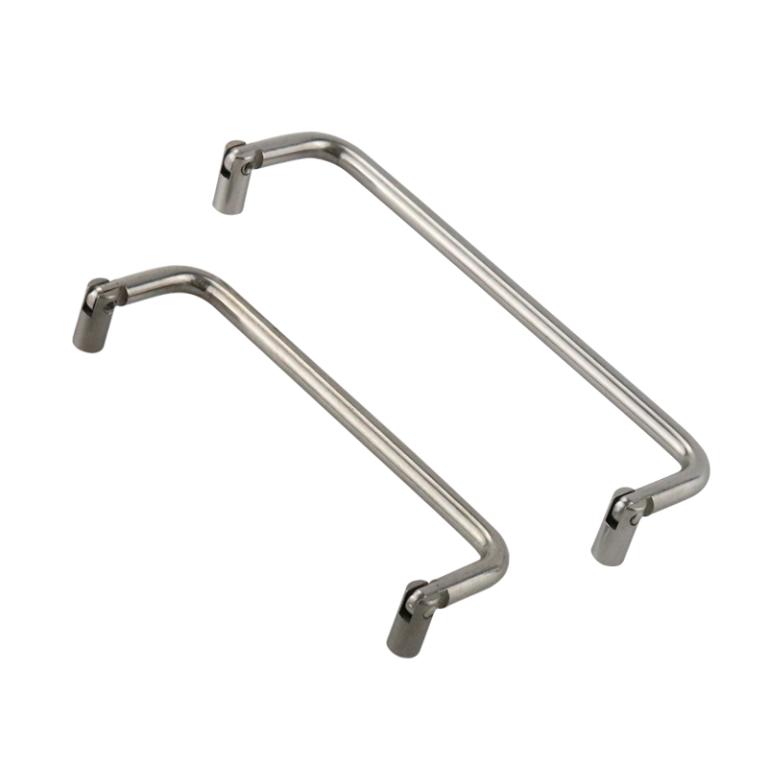
Stainless steel pull handle LS511 for industrial machinery doors
  • Corrosion resistance: Grade 304 (18% Cr, 8% Ni) withstands humidity, salt spray, and industrial cleaning agents without rusting. Grade 316 adds molybdenum for coastal, marine, and chemical processing environments.
  • Structural strength: Tensile strength of 520–750 MPa — significantly higher than zinc alloy or aluminum alternatives — suitable for heavy equipment doors and high-load applications.
  • Wide operating temperature: Stable from −50°C to 300°C — suitable for cold storage, industrial ovens, and outdoor installations in extreme climates.
  • Long service life: Rated for 100,000+ open/close cycles with minimal maintenance — reducing total cost of ownership for critical industrial equipment.
  • Hygienic surface: Non-porous brushed or mirror-polished finish resists bacterial adhesion — meets hygiene requirements for food processing and pharmaceutical environments.

For a detailed comparison of stainless steel vs. aluminum handle performance across industrial environments, see our material selection guide: Choosing Handle Materials: Stainless Steel vs. Aluminum.

Grade 304 vs. Grade 316: Which to Specify?

Grade 304 and 316 stainless steel handles for industrial and marine applications
SpecificationGrade 304Grade 316
Chromium content18%16%–18%
Nickel content8%–10.5%10%–14%
MolybdenumNone2%–3%
Corrosion resistanceExcellent for general industrial / outdoor useSuperior — coastal, marine, chemical, food/pharma
Typical applicationsElectrical cabinets, automation equipment, toolboxesMarine vessels, coastal installations, washdown environments
Relative costBaseline15%–25% higher

Rule of thumb: Specify Grade 316 for any installation within 5 km of a coastline, exposed to chlorine-based cleaning agents, or operating in chemical processing environments. Grade 304 is adequate for all other industrial applications.

Surface Finish Options

Brushed stainless steel handle for industrial enclosures
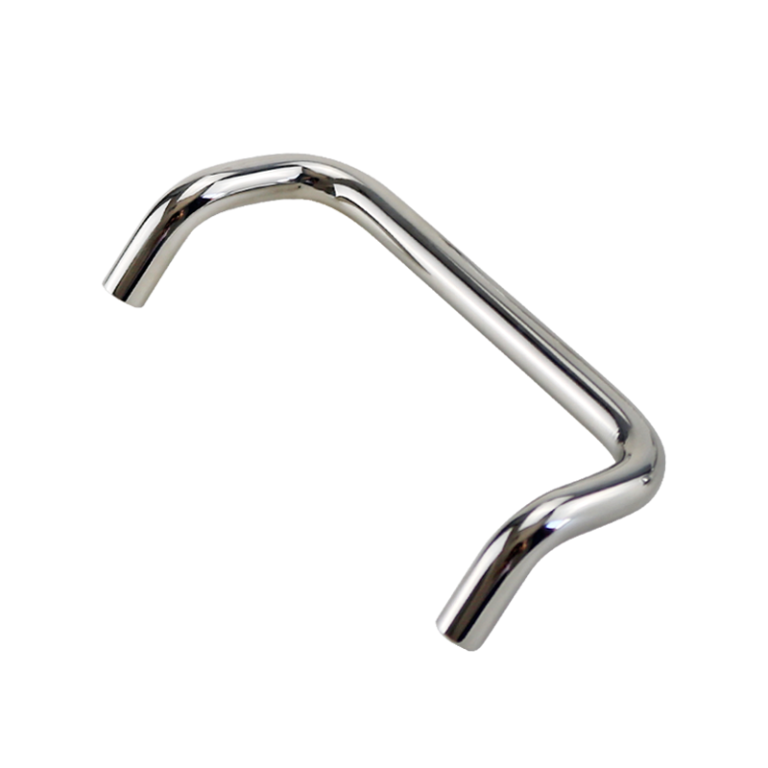
Mirror polished stainless steel handle for food processing equipment
  • Brushed (2B / No.4): The most common industrial finish — hides fingerprints and minor scratches, provides a professional appearance. Standard for electrical cabinets, automation equipment, and general industrial use.
  • Mirror polished (BA / No.8): High-gloss reflective finish — preferred for food processing, pharmaceutical, and cleanroom environments where surface cleanliness is critical.
  • Passivated: Chemical treatment that enhances the natural oxide layer — improves corrosion resistance without changing appearance. Recommended for Grade 316 in harsh environments.
  • Vibration finish: Satin-like appearance with uniform directional grain — commonly used on toolbox and portable equipment handles for a durable, non-glare surface.

Industrial Application Scenarios

Stainless steel handles applied across industrial equipment and enclosure types
Industry / ApplicationRecommended GradeKey Requirement
Electrical cabinets & switchgear304 BrushedHigh cycle life, corrosion resistance, IP rating compatibility
Industrial automation equipment304 BrushedLoad capacity, dimensional precision, vibration resistance
Toolboxes & portable equipment304 Vibration / ChromeLightweight, ergonomic grip, impact resistance
Food processing & pharmaceutical316 Mirror polishedHygienic surface, washdown resistance, no crevice corrosion
Marine & coastal installations316 PassivatedSalt spray resistance, UV stability
Rail transit & special vehicles304 / 316Vibration resistance, wide temperature range, high cycle rating
Heavy machinery & equipment doors304 BrushedHigh load capacity, M6+ fixing, structural stability

For guidance on ergonomic design requirements across these application categories, see: Ergonomic Industrial Handles: Safety, Comfort, and Durability Guide.

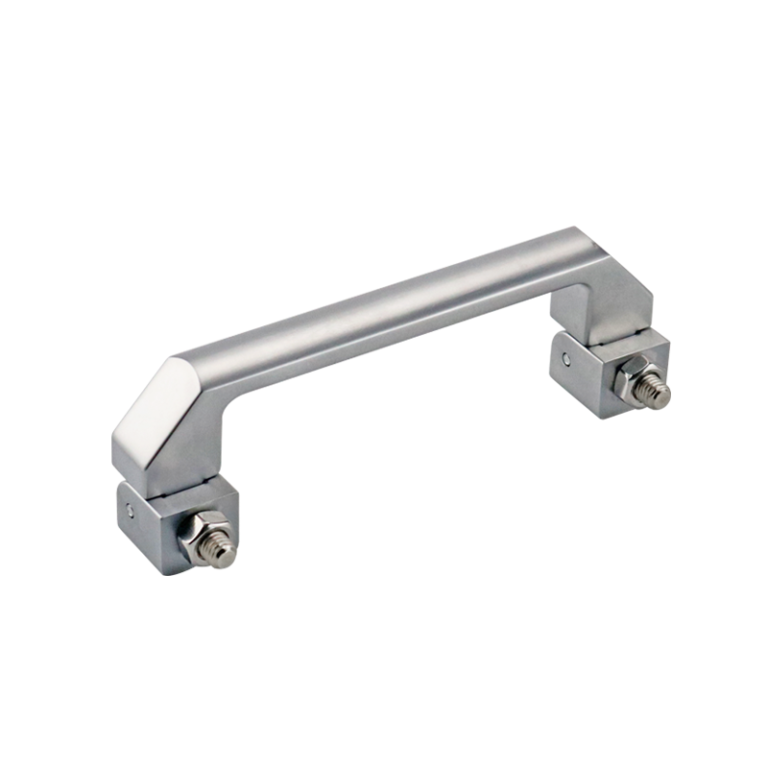
Electric cabinet chassis handle stainless steel brushed finish

Electric Cabinet Chassis Handle

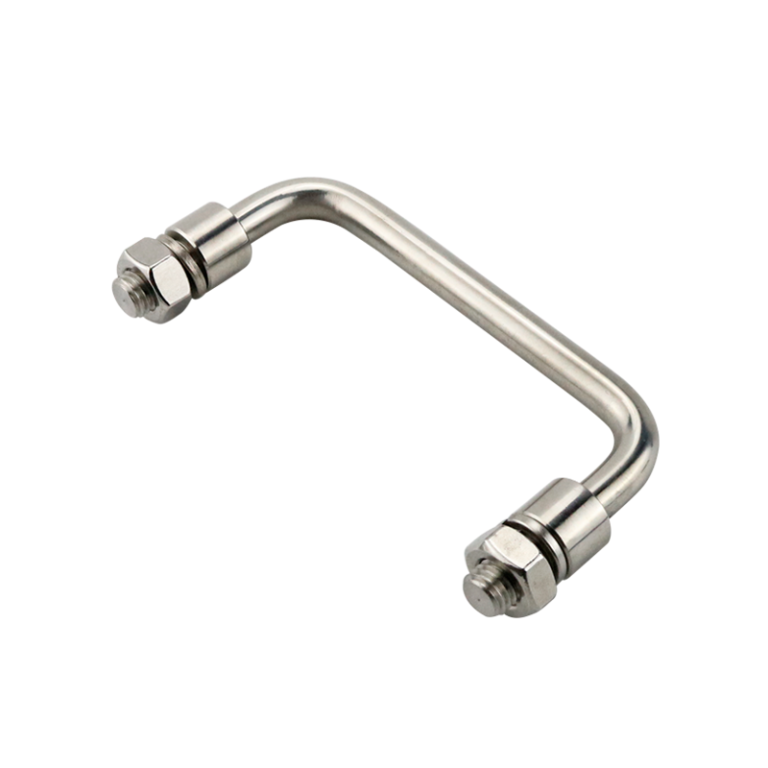
Weldable external thread fixing, corrosion-resistant stainless steel with brushed surface finish. Available in 90mm, 100mm, 135mm, and 150mm. Primarily used on electrical cabinet doors and chassis panels.

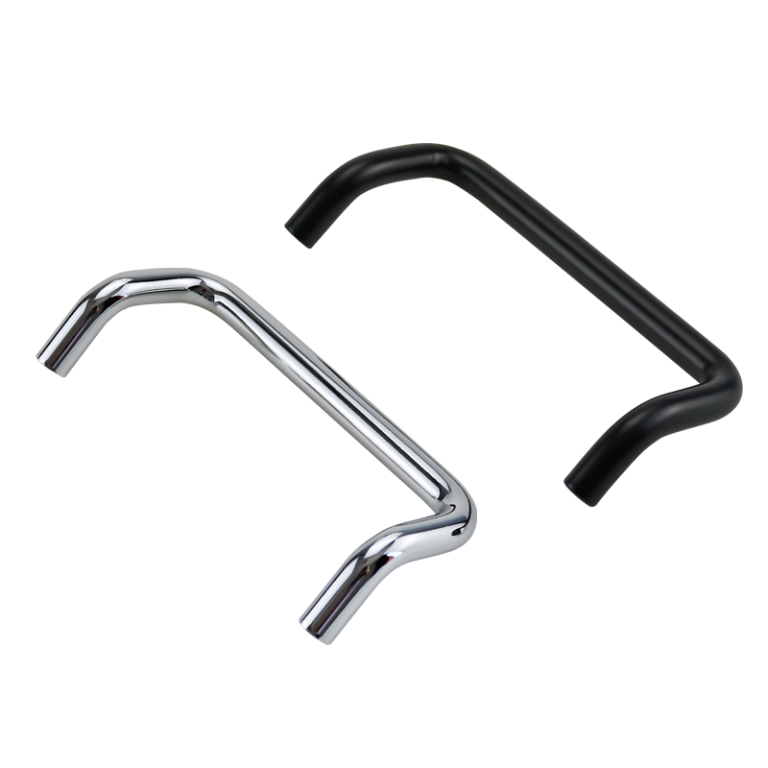
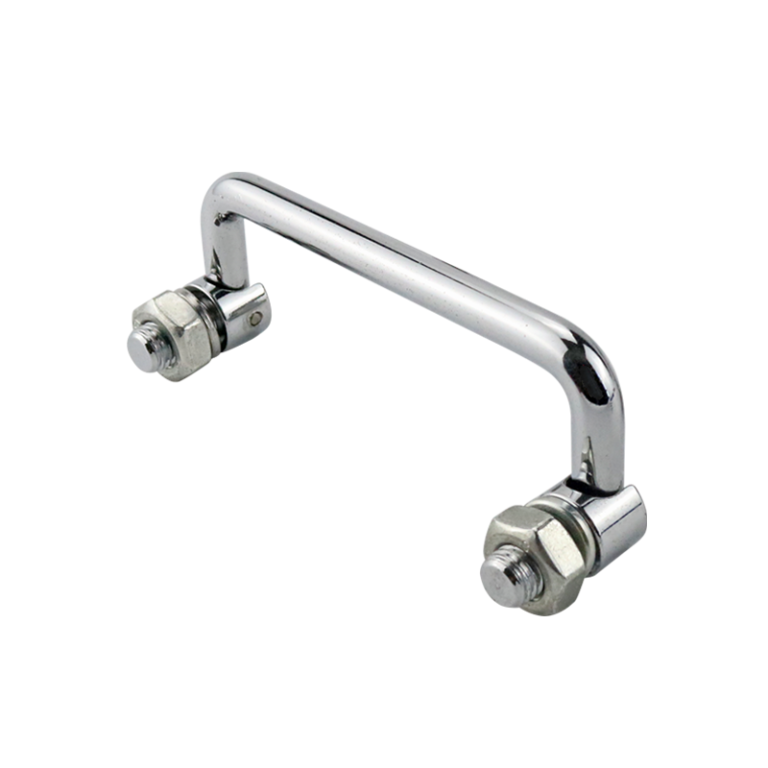
Toolbox carrying handle stainless steel chrome finish

Toolbox Carrying Handle

Stainless steel round bar, 45-degree bend, vibration and chrome-plated surface finish. Five hole spacings available: 85mm, 90mm, 100mm, 110mm, 120mm. Suitable for toolboxes and equipment cabinet doors.

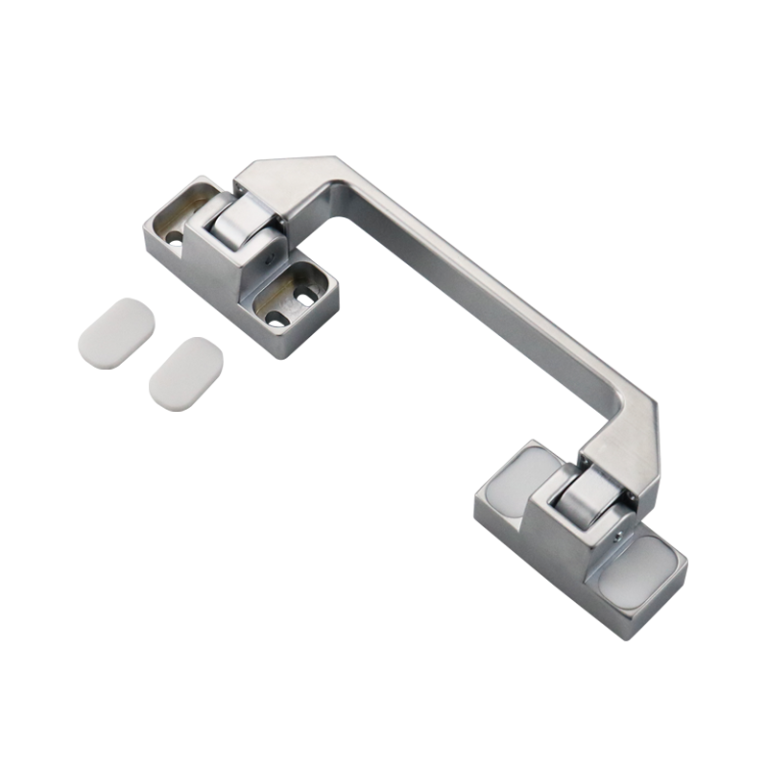
Solid industrial handle stainless steel mirror finish for heavy machinery

Solid Industrial Handles

Solid stainless steel construction with mirror finish. Hole spacing 122mm, M6 screw fixing. Designed for heavy machinery and equipment doors requiring high load capacity and long-term structural stability.

Bowed solid load-bearing stainless steel handle for furniture and industrial cabinets

Bowed Solid Load-bearing Pattern Handles

Bow-shaped solid stainless steel with mirror finish. Hole spacing 100mm and 150mm, M5 screw fixing. Suitable for industrial cabinets, furniture cabinets, and display equipment requiring both load capacity and aesthetic finish.

Procurement Checklist: 5 Things to Verify Before Ordering

  1. Specify grade explicitly: Always state 304 or 316 — never accept generic “stainless steel.” The grade determines corrosion performance; a generic claim provides no guarantee.
  2. Verify with a magnet: Genuine 304/316 stainless steel shows only very weak magnetic attraction. A strong magnetic response indicates lower-grade carbon steel or substituted material.
  3. Request material certification: Reputable manufacturers provide ISO 9001 certificates, material test reports (MTR), and salt spray test results (ASTM B117) on request. HTAN provides these as standard for specification-critical orders.
  4. Confirm fixing method and dimensions: Verify hole spacing, thread size (M5/M6/M8), and panel thickness compatibility before ordering. Request dimensional drawings for custom applications.
  5. Clarify surface finish requirement: Specify brushed, mirror, or passivated — different environments require different surface treatments. Mismatched finishes cause premature surface degradation in harsh environments.

About HTAN — Factory Direct, ISO 9001 Certified

HTAN, founded in 2015, specializes in the research, development, and manufacturing of industrial enclosure hardware components. Products include stainless steel handles, pull handles, torque hinges, standard hinges, and latches — used in specialized vehicles, heavy-duty truck cabinets, rail transit equipment, communication and power equipment, medical devices, industrial automation machinery, and marine vessels.

ISO 9001:2015 certified. Full OEM/ODM customization available — including non-standard hole spacing, surface finish, material grade, and dimensional modifications. Contact HTAN for factory-direct pricing and technical specification support.

FAQ

When should I specify 316 instead of 304 stainless steel handles?

Specify Grade 316 for installations within 5 km of a coastline, environments with salt spray or chloride exposure, food processing or pharmaceutical washdown areas, and chemical processing facilities. For all other indoor or sheltered industrial applications, Grade 304 is adequate and more cost-effective.

How do I verify that a handle is genuinely stainless steel and not carbon steel?

Use a magnet as a quick field check — genuine 304/316 stainless steel shows only very weak magnetic attraction. A strongly magnetic response indicates carbon steel or lower-grade material. For procurement verification, always request a material test report (MTR) from the supplier rather than relying on visual inspection alone.

Do stainless steel handles require maintenance?

In standard industrial environments, stainless steel handles are essentially maintenance-free. In coastal or chemical environments, wipe down periodically with a damp cloth and mild detergent to remove surface contaminants. Avoid abrasive cleaners or steel wool that can scratch the surface and compromise the passive oxide layer.

Can stainless steel handles be customized for non-standard specifications?

Yes. HTAN offers full OEM/ODM customization including non-standard hole spacing, thread sizes, handle lengths, wall thickness, surface finish, and material grade. Minimum order quantities vary by specification — contact our engineering team with your 2D drawings or dimensional requirements for a factory-direct quotation.

Anson Li
Anson Li

Hi everyone, I’m Anson Li. I’ve been working in the industrial hinge industry for 10 years! Along the way, I’ve had the chance to work with more than 2,000 customers from 55 countries, designing and producing hinges for all kinds of equipment doors. We’ve grown together with our clients, learned a lot, and gained valuable experience. Today, I’d love to share some professional tips and knowledge about industrial hinges with you.

文章: 511

通讯更新

在下面输入您的电子邮件地址并订阅我们的新闻通讯