HTAN est l'un des principaux fabricants de charnières, de poignées et de loquets industriels en Chine.


Si vous choisissez un système de fermeture pour des armoires industrielles, des coffrets électriques, des boîtes extérieures ou des panneaux d'accès à des machines, le choix entre un loquet à came et un loquet à compression a une incidence directe sur les performances d'étanchéité, la résistance aux vibrations, le confort d'utilisation et la fiabilité à long terme. Un mauvais choix peut entraîner le desserrement des panneaux de porte, une mauvaise compression des joints, des infiltrations d'eau ou une fermeture instable sous l'effet des vibrations.
Réponse rapide : Choisissez un loquet à came lorsque vous avez besoin d'une structure simple, d'un accès rapide par quart de tour et d'une fermeture rentable pour les applications d'armoires générales. Choisissez un loquet à compression lorsque la porte doit se fermer plus hermétiquement contre un joint, mieux résister aux vibrations et assurer l'étanchéité du boîtier dans des environnements plus difficiles.
Ce guide compare les deux types de loquets du point de vue de l'ingénierie et de l'application afin que vous puissiez décider lequel convient le mieux à votre projet. Si vous avez besoin d'une vue d'ensemble plus large avant de comparer les modèles, vous pouvez également consulter notre guide d'achat des loquets à came pour une logique plus générale de sélection des loquets.
Qu'est-ce qu'un loquet à came ?
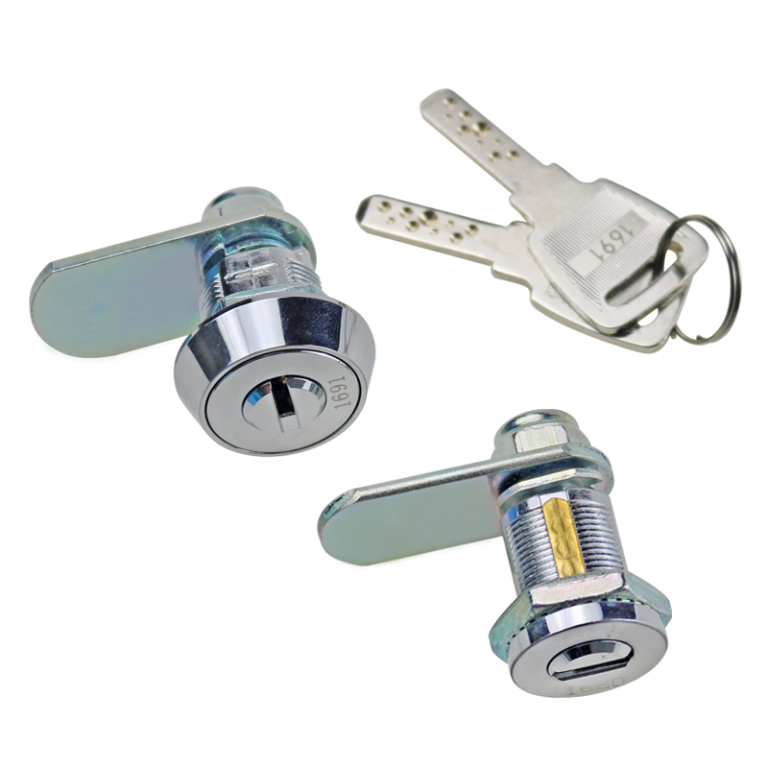
Un loquet à came est un loquet rotatif qui verrouille une porte ou un panneau en faisant tourner une came derrière le cadre ou la surface de montage. Dans la plupart des modèles industriels, l'utilisateur fait tourner le loquet d'un quart de tour ou d'un demi-tour, et la came s'engage dans le cadre de l'armoire, la gâche ou le bord de retenue pour maintenir la porte fermée.
Principe de fonctionnement
La structure de base est simple : un boîtier, un insert rotatif ou une poignée, et une came arrière. Lorsque l'insert est tourné, la came bascule en position et maintient mécaniquement le panneau fermé. En raison de la compacité de la structure et de la simplicité du mouvement, les loquets à came sont largement utilisés lorsque la rapidité d'accès est plus importante que l'étanchéité à haute compression.
Caractéristiques principales
- Ouverture et fermeture rapides, souvent par quart de tour
- Structure simple avec relativement peu de pièces mobiles
- Installation compacte pour les découpes d'armoires et de panneaux standard
- Convient aux portes à accès fréquent et aux portes d'entretien courant
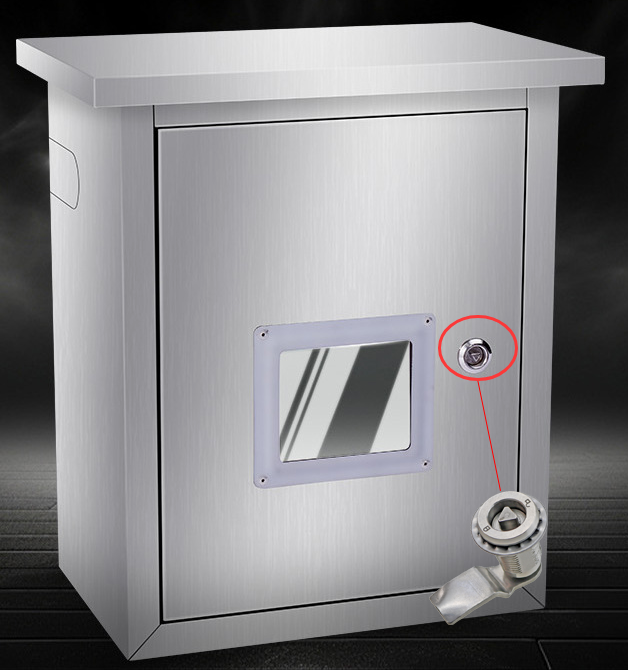
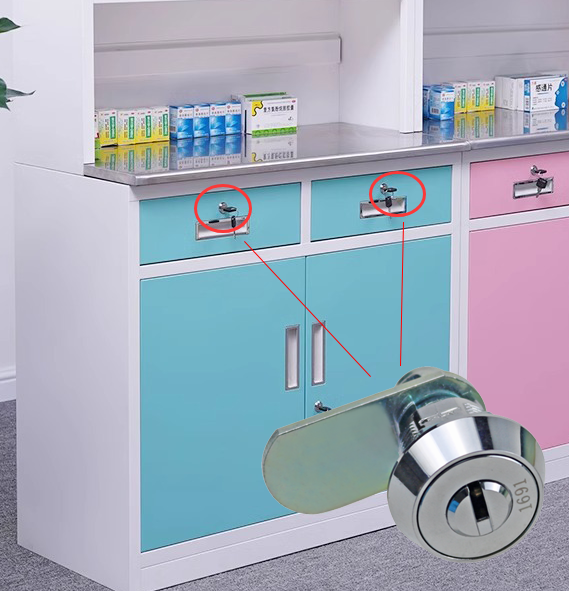
Applications typiques des loquets à came
- Armoires de commande électrique : Convient aux techniciens qui ont besoin d'un accès rapide aux opérations de routine.
- Armoires PLC et d'automatisation : Utile dans les systèmes où les inspections ou les remplacements de modules sont fréquents.
- Armoires de réseau et de serveur : Fréquents dans les enceintes qui sont souvent ouvertes pour l'entretien.
- Les équipements industriels généraux sont couverts : Approprié lorsque la fermeture de base est suffisante et qu'une compression élevée du joint n'est pas nécessaire.
- Boîtiers légers pour équipements extérieurs : Peut convenir lorsque les exigences en matière d'étanchéité sont limitées et que la conception du boîtier ne dépend pas d'une forte compression.
Pour d'autres cas d'utilisation en extérieur, voir notre applications de loquets à came pour armoires extérieures article.
Qu'est-ce qu'un loquet à compression ?
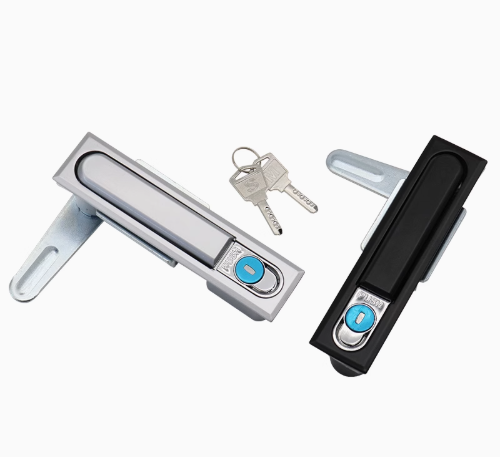
Un loquet à compression ajoute une fonction de traction ou de compression à l'action de verrouillage. Au lieu de se contenter de bloquer la porte, il attire également le panneau vers le cadre pendant le fonctionnement, ce qui permet de comprimer le joint et de créer une étanchéité plus grande.
Principe de fonctionnement
Lorsque le loquet est actionné, le mécanisme s'engage d'abord et tire ensuite la porte vers l'intérieur. Cela crée une compression contrôlée entre la porte et le cadre, ce qui améliore l'étanchéité et aide à réduire les mouvements sous l'effet des vibrations. Dans de nombreuses conceptions d'armoires, cet effet de compression est la principale raison de choisir ce type de loquet.
Caractéristiques principales
- Permet à la fois le verrouillage et la compression des panneaux
- Améliore le contact avec le joint et l'étanchéité du boîtier
- Généralement mieux adapté aux installations sujettes aux vibrations
- Courant dans les systèmes industriels, extérieurs et les armoires étanches
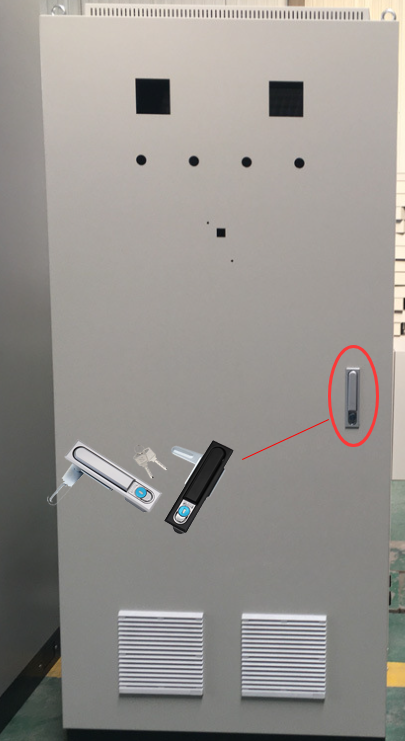
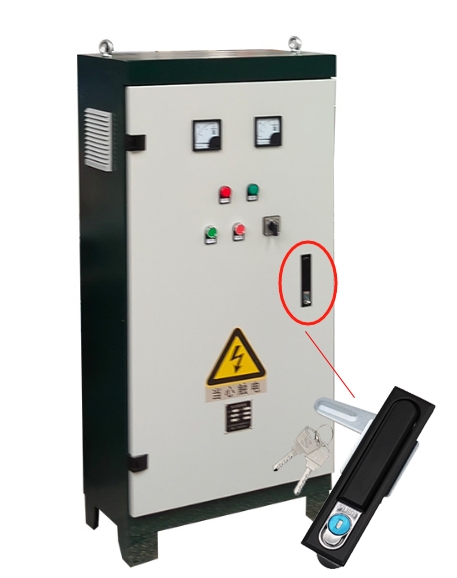
Applications typiques des loquets à compression
- Armoires extérieures et boîtiers de télécommunication : Utile lorsque la pluie, la poussière ou l'étanchéité de l'enceinte sont des facteurs importants.
- Armoires de distribution d'énergie et de contrôle industriel : Meilleur lorsque la stabilité de la porte et le contact avec le joint sont importants.
- Portes de protection pour machines-outils : Utile lorsque des vibrations répétées peuvent desserrer des systèmes de fermeture plus simples.
- Cas des transports et des équipements mobiles : Convient là où une fermeture anti-vibration est nécessaire.
- Boîtiers de laboratoires, d'équipements médicaux ou d'équipements spécialisés : Utile lorsqu'une fermeture plus serrée et mieux contrôlée est souhaitée.
Si votre principale préoccupation est l'étanchéité du boîtier, la performance IP ou la compression stable du joint, continuez avec nos guide d'étanchéité pour loquet à compression pour les boîtiers IP65/IP66.
Loquet à came ou loquet à compression : Comparaison côte à côte
| Facteur de comparaison | Loquet à came | Loquet de compression |
|---|---|---|
| Fonction principale | Verrouillage rotatif de base | Verrouillage et compression de la porte |
| Capacité d'étanchéité | Fermeture de base, compression limitée du joint | Meilleure compression du joint et fermeture plus étanche |
| Résistance aux vibrations | Convient aux applications plus légères ou à faibles vibrations | Généralement mieux adapté aux environnements sujets aux vibrations |
| Complexité de l'installation | Généralement plus simple et plus rapide | Nécessite une plus grande attention à l'épaisseur du panneau et à la plage de compression |
| Vitesse de fonctionnement | Accès rapide à la routine | Un fonctionnement légèrement plus contrôlé |
| Niveau de coût | Généralement inférieur | Généralement plus élevé en raison de la fonction ajoutée |
| Meilleure adéquation | Armoires et panneaux d'accès pour l'industrie générale | Boîtiers étanches pour l'extérieur ou sensibles aux vibrations |
Les plus grandes différences qui affectent réellement la sélection
1. Performance d'étanchéité
C'est généralement la différence la plus importante. Un loquet à came maintient principalement la porte fermée. Un loquet à compression permet d'attirer le panneau vers le cadre afin que le joint soit comprimé de manière plus constante. Si le boîtier doit être plus étanche à la poussière, à la pluie ou aux éclaboussures, les loquets à compression sont souvent l'option la plus appropriée.
2. Résistance aux vibrations
Dans les applications intérieures statiques, un loquet à came peut être tout à fait adéquat. Dans les équipements mobiles, les machines d'extérieur ou les environnements industriels soumis à des vibrations répétées, un loquet à compression offre généralement une fermeture plus stable, car la porte est maintenue sous une pression de traction contrôlée.
3. Complexité de l'installation
Les loquets à came sont généralement plus faciles à monter et à configurer dans les découpes standard des armoires. Les loquets à compression requièrent souvent une plus grande attention à l'épaisseur du panneau, à la position du joint et à la course de compression. Cela ne les rend pas difficiles, mais il est plus important de les spécifier correctement.
4. Expérience opérationnelle
Pour les armoires ouvertes fréquemment par le personnel de service, un loquet à came semble souvent plus rapide et plus simple. Les loquets à compression peuvent nécessiter un mouvement de fermeture plus délibéré, mais c'est souvent la contrepartie d'une meilleure étanchéité et d'une plus grande stabilité de la fermeture.
Quand choisir un loquet à came
- Vous avez besoin d'un accès rapide et simple pour l'entretien de routine.
- L'étanchéité de l'enceinte ne dépend pas fortement de la compression du joint.
- L'armoire est principalement utilisée à l'intérieur ou dans des conditions de service relativement douces.
- Vous recherchez un verrou économique, de structure compacte et facile à installer.
- L'application privilégie le confort d'utilisation par rapport à l'étanchéité du boîtier.
Les exemples typiques sont les armoires électriques intérieures, les boîtiers de commande généraux, les panneaux de service et les compartiments d'équipement qui sont ouverts fréquemment mais qui ne nécessitent pas d'étanchéité par compression.
Quand choisir un loquet à compression
- Le boîtier doit être mieux étanche à la poussière, à la pluie ou aux éclaboussures.
- La porte doit rester plus serrée en cas de vibration ou de mouvement de transport.
- L'armoire utilise un joint qui doit être comprimé uniformément pour fonctionner correctement.
- Le projet implique des conditions environnementales extérieures, industrielles ou plus exigeantes.
- Vous travaillez avec des armoires électriques, des boîtiers de télécommunication extérieurs, des protections de machines ou des boîtiers d'équipement où la stabilité de la fermeture est importante.
Parmi les exemples typiques, citons les boîtiers de commande extérieurs, les armoires industrielles sujettes aux vibrations, les boîtiers d'équipement étanches et les portes d'accès qui doivent maintenir une pression de joint plus constante.
Sélection rapide par scénario
| Scénario d'application | Direction recommandée | Raison principale |
|---|---|---|
| Armoire de commande intérieure | Loquet à came | Un accès rapide et une fermeture simple suffisent généralement |
| Armoire de télécommunication extérieure | Loquet de compression | Meilleure étanchéité et fermeture plus stable |
| Panneau d'accès à la machine avec entretien fréquent | Loquet à came | Ouverture et fermeture répétées et pratiques |
| Boîtier industriel classé IP | Loquet de compression | Amélioration de la compression des joints |
| Porte d'équipement général à faible coût | Loquet à came | Plus économique pour les besoins de verrouillage de base |
| Cas des équipements mobiles ou sujets aux vibrations | Loquet de compression | Meilleure résistance au desserrement sous l'effet du mouvement |
Erreurs de sélection courantes
- Utilisation d'un loquet à came lorsque l'étanchéité du boîtier est critique : Il peut en résulter une faible performance du joint, même si la serrure elle-même fonctionne normalement.
- Sur-spécification d'un loquet à compression pour une simple armoire d'intérieur : Cela peut augmenter les coûts et la complexité sans créer de réelle valeur ajoutée.
- Ignorer les conditions de vibration : Un verrou qui fonctionne sur une armoire intérieure statique peut ne pas fonctionner correctement sur un équipement mobile ou soumis à de fortes vibrations.
- Ne pas vérifier l'épaisseur du panneau et la compatibilité des découpes : L'ajustement et le comportement de compression dépendent d'une spécification correcte, et pas seulement de l'apparence du loquet.
Recommandations d'installation et d'entretien
Considérations relatives à l'installation
- Loquet à came : Confirmer l'orientation correcte de la came, la longueur d'engagement et l'alignement porte/encadrement avant de procéder au serrage final.
- Loquet de compression : Vérifier l'épaisseur du panneau, la position du joint et la plage de compression afin que le verrou se ferme hermétiquement sans surcharger le joint.
Si vous souhaitez obtenir des informations détaillées sur le montage, étape par étape, consultez notre site Internet guide d'installation du loquet à came.
Entretien courant
- Vérifier périodiquement le fonctionnement du verrou pour s'assurer qu'il n'est pas desserré, usé ou qu'il n'y a pas de dérive de l'alignement.
- Vérifier les joints et les surfaces d'étanchéité si l'enceinte dépend des performances de compression.
- Lubrifier les composants mobiles uniquement lorsque la conception de la serrure et l'environnement l'exigent.
- Remplacez les cames, ressorts ou éléments de compression usés avant qu'ils n'affectent la sécurité ou l'étanchéité de la porte.
FAQ
Q1 : Peut-on utiliser un loquet à compression pour les équipements intérieurs ?
Oui. Il peut encore s'agir d'un bon choix à l'intérieur lorsque l'armoire a besoin d'une fermeture plus étanche, d'une réduction des mouvements vibratoires ou d'un contact plus cohérent entre les joints. Il n'est tout simplement pas toujours nécessaire pour les armoires intérieures de base.
Q2 : Comment choisir le bon loquet en fonction de l'épaisseur du panneau ?
Commencez par l'empilage réel du panneau et du joint, puis confirmez que la plage de préhension ou de compression de la serrure correspond à la structure réelle de la porte. Les verrous à compression doivent être examinés avec une attention particulière.
Q3 : Un loquet à came est-il étanche ?
Pas par défaut. Un loquet à came standard est principalement un dispositif de verrouillage, et non un dispositif d'étanchéité. Certaines conceptions de boîtiers peuvent améliorer la résistance aux éclaboussures grâce à une meilleure stratégie d'étanchéité de la porte, mais si la compression du joint est essentielle, un loquet à compression est généralement le meilleur choix.
Q4 : Quelle est la meilleure serrure pour les équipements sujets aux vibrations ?
Dans la plupart des cas, les loquets à compression sont mieux adaptés car ils permettent de resserrer le panneau sur le cadre et de réduire les mouvements sous l'effet des vibrations.
Q5 : Lequel est le plus économique ?
Les loquets à came sont généralement plus économiques pour les besoins généraux de fermeture. Les loquets à compression coûtent plus cher, mais ils peuvent réduire les problèmes d'étanchéité et de vibrations dans les applications exigeantes.
Conclusion
Il n'y a pas de gagnant universel entre les loquets à came et les loquets à compression. Le bon choix dépend des besoins réels de l'armoire. Si la priorité est un accès rapide, une installation simple et une fermeture économique, un loquet à came est souvent la meilleure option. Si la priorité est une étanchéité plus grande, une meilleure résistance aux vibrations et une compression plus stable du joint, un loquet à compression est généralement le meilleur choix.
Pour les armoires industrielles, les enceintes extérieures et les portes d'équipement, le meilleur résultat est d'adapter le type de serrure à l'environnement de service réel, à la fréquence d'accès et aux exigences d'étanchéité, plutôt que de choisir uniquement en fonction du prix ou de l'apparence.