A HTAN é um dos principais fabricantes de dobradiças, pegas e fechos industriais na China.


As dobradiças de liga de zinco são normalmente preferidas para aplicações interiores secas e sensíveis ao custo, enquanto as dobradiças de aço inoxidável são mais adequadas para ambientes exteriores, de carga elevada, de ciclo elevado ou corrosivos. A escolha correta depende do peso da porta, da exposição à corrosão, da frequência de funcionamento, da temperatura e do custo total de propriedade e não apenas do preço unitário.
Em armários industriais, Para além das portas de acesso às máquinas, armários eléctricos, equipamento de transporte e portas de acesso às máquinas, as dobradiças têm de suportar a abertura e o fecho repetidos, a vibração, a variação de temperatura e a exposição ambiental a longo prazo. A escolha do material incorreto para as dobradiças é uma das razões mais comuns para o descaimento prematuro das portas, falhas de vedação, problemas de corrosão e manutenção desnecessária em instalações industriais.
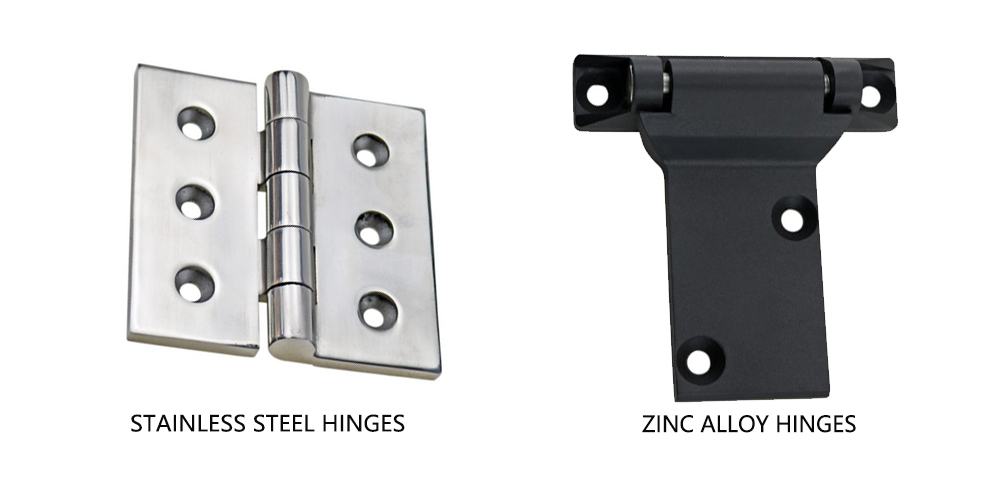
Os dois materiais de dobradiça mais amplamente especificados são dobradiças em liga de zinco e dobradiças em aço inoxidável. Este guia compara a força, a resistência à corrosão, o método de fabrico, o desempenho em termos de temperatura, o custo do ciclo de vida e as aplicações industriais reais, para que os engenheiros e as equipas de aquisição possam tomar uma decisão de especificação com base nos requisitos da aplicação e não em suposições.
Dobradiças em liga de zinco vs aço inoxidável
| Situação | Melhor escolha | Motivo principal |
|---|---|---|
| Equipamento de interior seco com funcionamento moderado | Liga de zinco | Menor custo e boa consistência dimensional |
| Ambientes exteriores ou húmidos | Aço inoxidável | Melhor resistência à corrosão e maior vida útil |
| Portas pesadas ou carga estrutural elevada | Aço inoxidável | Maior resistência e melhor fiabilidade a longo prazo |
| Aplicações OEM decorativas ou sensíveis ao custo | Liga de zinco | Boas opções de aparência e fundição eficiente |
| Exposição costeira, a lavagens ou a produtos químicos | Aço inoxidável 316 | Melhor resistência aos cloretos e aos ambientes de limpeza agressivos |
| Equipamento de armazenagem a frio ou a alta temperatura | Aço inoxidável | Gama de temperaturas de funcionamento mais alargada |
Se a aplicação for ligeira, em interiores e sensível ao orçamento, a liga de zinco é frequentemente a escolha prática. Se a aplicação envolver corrosão, cargas mais pesadas, acesso frequente ou um objetivo de longa vida útil, o aço inoxidável é normalmente a especificação mais segura.
Dobradiças em liga de zinco: Composição do material e fabrico
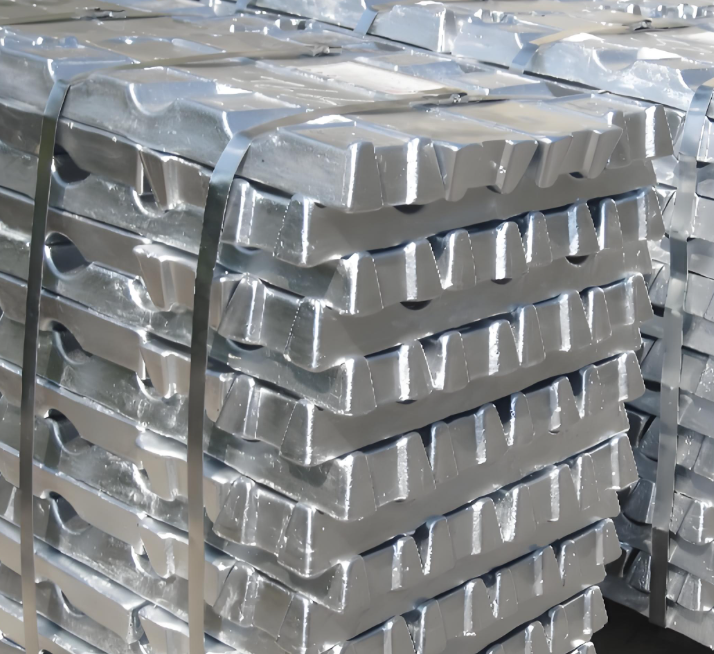
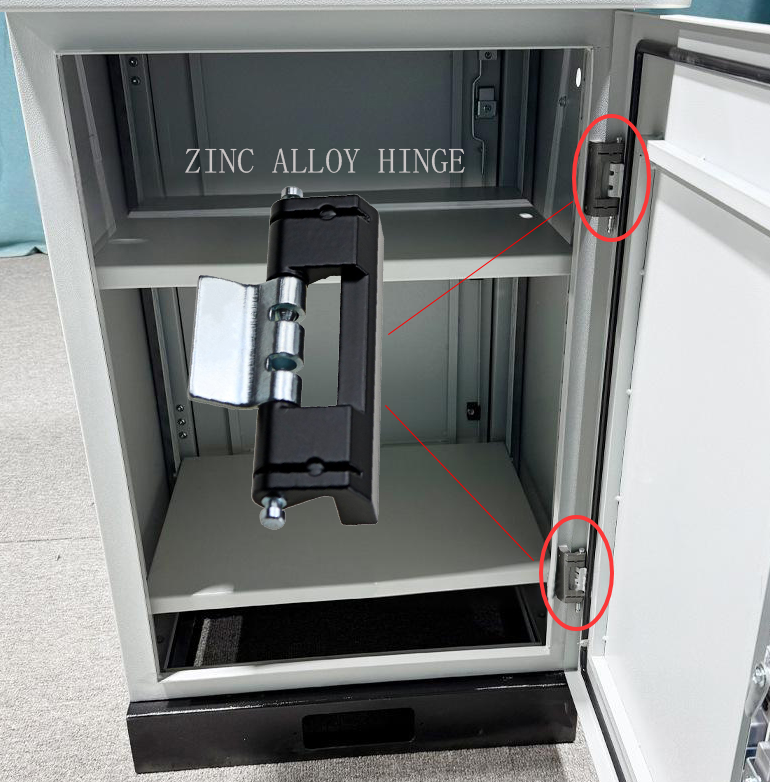
As dobradiças em liga de zinco são normalmente fabricadas a partir de ligas à base de ZAMAK, mais frequentemente ZAMAK 3 e ZAMAK 5, utilizando fundição sob pressão de alta pressão. Este processo permite que a liga fundida seja injectada em moldes de aço de precisão a alta velocidade, tornando-o eficiente para a produção de grandes volumes de formas complexas de dobradiças com boa consistência dimensional e opções de acabamento de superfície atractivas.
Uma vez que a fundição sob pressão suporta geometrias complexas e superfícies de acabamento lisas, a liga de zinco é amplamente utilizada quando o aspeto, a flexibilidade de formas e a eficiência da produção são importantes. É especialmente comum em armários de interior, painéis de equipamento, ferragens decorativas e pontos de acesso industriais de média dimensão.
| Elemento | Conteúdo típico | Papel na liga |
|---|---|---|
| Alumínio (Al) | Aprox. 3%-4% | Melhora a resistência, a dureza e a capacidade de fundição |
| Cobre (Cu) | Aprox. 0,5%-3% | Pode melhorar a força e a resistência ao desgaste |
| Magnésio (Mg) | Quantidade de vestígios | Apoia o controlo de grãos e a estabilidade geral da liga |
| Níquel (Ni) | Utilização para fins de rastreio ou de grau especial | Pode melhorar o desempenho em termos de corrosão e temperatura em qualidades específicas |
| Outros oligoelementos | Níveis baixos | Controlo de impurezas e equilíbrio do processo |
Vantagens das dobradiças em liga de zinco
- Económica para a produção em série: A liga de zinco é frequentemente mais económica do que o aço inoxidável em projectos OEM de grande volume.
- Boa flexibilidade de conceção: A fundição injetada permite perfis complexos, formas decorativas e detalhes integrados que são difíceis ou mais caros de produzir noutros materiais.
- Produção eficiente: Os ciclos de produção rápidos ajudam a reduzir os prazos de entrega em programas de produção repetida.
- Amplas opções de acabamento: A cromagem, a pintura a pó e os acabamentos decorativos são normalmente aplicados para efeitos de aparência e proteção básica.
Limitações das dobradiças em liga de zinco
- Mais dependente da proteção da superfície: A liga de zinco depende normalmente da qualidade do revestimento ou da galvanização para um desempenho anticorrosivo a longo prazo.
- Não é ideal para ambientes de corrosão severa: Em condições costeiras, de lavagem ou químicas, a durabilidade a longo prazo é normalmente inferior à do aço inoxidável.
- Margem estrutural inferior à de muitos projectos de dobradiças em aço inoxidável: Para portas maiores ou mais pesadas, o tamanho da dobradiça, a contagem e a estrutura de montagem devem ser cuidadosamente verificados.
- Menos adequado para temperaturas extremas: A liga de zinco é geralmente menos atractiva para ambientes abaixo de zero ou a altas temperaturas.
Dobradiças de aço inoxidável: Composição do material e fabrico
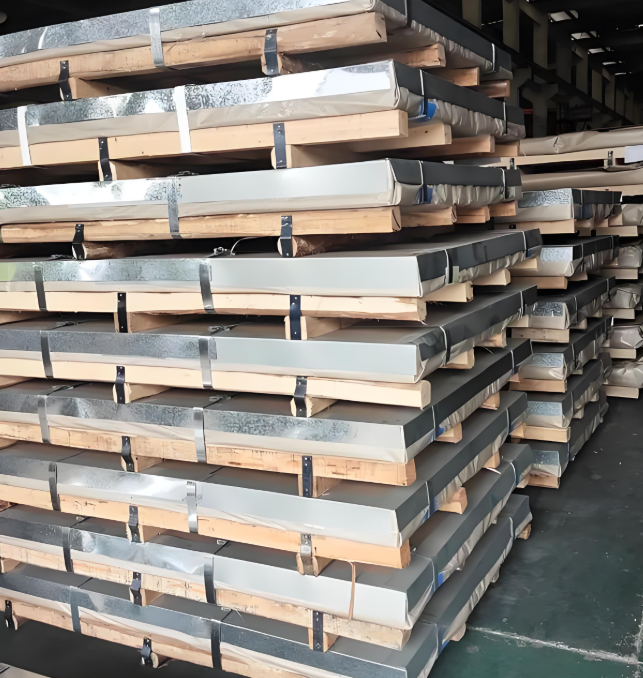
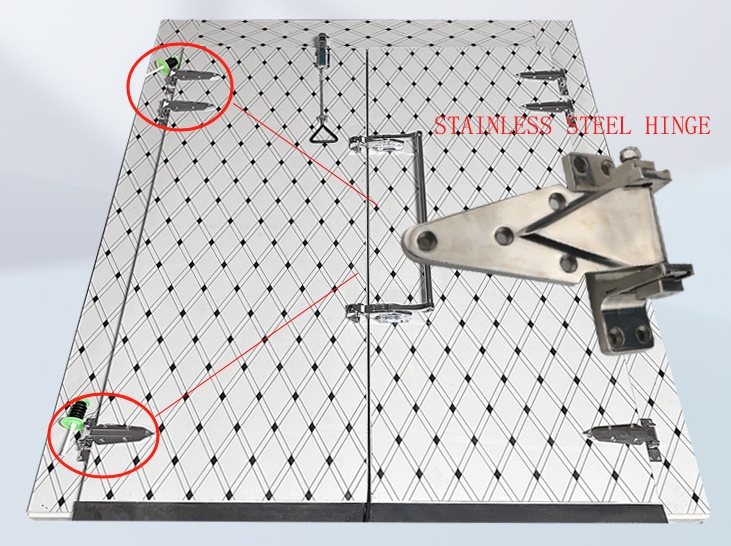
As dobradiças de aço inoxidável são produzidas a partir de ligas de ferro-crómio, com grau Aço inoxidável 304 e o aço inoxidável de grau 316 são os dois materiais mais comuns nas ferragens industriais. O fabrico de dobradiças em aço inoxidável pode envolver estampagem, soldadura, maquinagem, fundição ou fabrico, dependendo do design da dobradiça, da capacidade de carga e dos requisitos da aplicação.
A principal vantagem de desempenho do aço inoxidável provém da sua camada passiva rica em crómio, que proporciona uma resistência contínua à corrosão sem a mesma dependência de sistemas de revestimento decorativo. Em ambientes industriais em que o acesso para manutenção é limitado, a vida útil é importante ou a exposição à corrosão é contínua, o aço inoxidável proporciona normalmente uma solução mais fiável a longo prazo.
| Elemento | Conteúdo típico | Papel na liga |
|---|---|---|
| Crómio (Cr) | Aprox. 18%-20% | Cria a camada passiva de óxido resistente à corrosão |
| Níquel (Ni) | Aprox. 8%-10,5% em 304 | Melhora a ductilidade, a tenacidade e a estabilidade estrutural |
| Carbono (C) | Nível baixo | Apoia a soldabilidade e ajuda a reduzir o risco de sensibilização |
| Manganês (Mn) | Montante controlado | Contribui para a resistência e o endurecimento |
| Molibdénio (Mo) | Aprox. 2%-3% em 316 | Melhora a resistência ao cloreto e à corrosão |
Vantagens das dobradiças de aço inoxidável
- Maior potencial de resistência: Muitos modelos de dobradiças industriais em aço inoxidável são adequados para portas maiores e condições estruturais mais exigentes.
- Melhor resistência à corrosão: O aço inoxidável é normalmente a escolha preferida para ambientes exteriores, húmidos, de lavagem ou quimicamente agressivos.
- Gama de temperaturas de funcionamento mais alargada: O aço inoxidável é mais adequado para armazenamento a frio, exposição ao ar livre durante o inverno e aplicações a temperaturas elevadas.
- Vida útil mais longa em condições severas: No ambiente correto, o aço inoxidável pode reduzir a frequência de substituição e a carga de manutenção.
- Mais adequado para equipamento crítico: Quando o risco de inatividade é elevado, o aço inoxidável suporta frequentemente um custo de propriedade a longo prazo mais baixo.
Limitações das dobradiças de aço inoxidável
- Custo inicial mais elevado: O aço inoxidável requer normalmente um orçamento inicial mais elevado.
- Material mais pesado: Dependendo do design da dobradiça, o peso total do hardware pode ser superior ao das alternativas em liga de zinco.
- A produção personalizada pode ser mais lenta: Certos modelos de dobradiças fabricadas ou maquinadas em aço inoxidável podem implicar prazos de entrega mais longos do que as peças fundidas sob pressão normais.
Comparação frente a frente: 8 dimensões principais
| Dimensão | Dobradiças em liga de zinco | Dobradiças em aço inoxidável |
|---|---|---|
| Força | Adequado para exigências estruturais ligeiras a moderadas | Normalmente melhor para aplicações de carga mais elevada |
| Resistência à corrosão | Depende fortemente da qualidade do revestimento e do ambiente | Normalmente superior em condições húmidas, exteriores e corrosivas |
| Custo | Custo inicial mais baixo em muitos projectos OEM | Custo de aquisição inicial mais elevado |
| Flexibilidade do acabamento da superfície | Muito bom para acabamentos e cores decorativas | Acabamentos industriais mais limitados mas duradouros |
| Adequação à temperatura | Mais limitado nos extremos | Gama de funcionamento mais alargada |
| Necessidade de manutenção | Pode exigir a inspeção do revestimento em ambientes agressivos | Frequentemente inferior em condições de serviço adequadas |
| Custo do ciclo de vida | Pode ser atrativo para utilização em interiores ligeiros | Frequentemente, menor duração em ambientes exigentes |
| Melhor ajuste | Aplicações interiores, sensíveis ao custo e de serviço moderado | Aplicações exteriores, de serviço pesado, de ciclo elevado e corrosivas |
Quando as dobradiças em liga de zinco são a melhor escolha
- Equipamento de interior seco: A liga de zinco é frequentemente adequada quando a humidade, os produtos químicos e a exposição ao sal são mínimos.
- Programas OEM sensíveis ao custo: Quando o custo unitário é importante em grandes volumes de produção, a liga de zinco pode oferecer um bom valor.
- Formas complexas ou decorativas das dobradiças: A fundição sob pressão é especialmente atractiva quando a aparência e os detalhes da forma são importantes.
- Utilização moderada em armários e caixas: Para portas interiores mais leves, a liga de zinco pode ser uma escolha eficiente quando o tamanho e a quantidade da dobradiça são corretamente combinados.
A liga de zinco não é um material de baixa qualidade por defeito. Simplesmente, é mais adequado para algumas aplicações do que para outras. Em ambientes industriais protegidos, onde a exposição à corrosão é baixa e o orçamento é importante, pode ser uma especificação muito razoável.
Quando é que as dobradiças de aço inoxidável valem o custo mais elevado
- Instalações exteriores e costeiras: O aço inoxidável é normalmente a escolha preferida quando se prevê a exposição à humidade, à condensação ou aos cloretos.
- Portas pesadas e estrutura resistente: Para painéis maiores e cargas de trabalho mais elevadas, o aço inoxidável proporciona frequentemente uma maior confiança a longo prazo.
- Pontos de acesso de ciclo elevado: As portas que abrem e fecham frequentemente beneficiam de materiais mais resistentes e de expectativas de vida útil mais longas.
- Ambientes alimentares, médicos e de lavagem: O aço inoxidável é normalmente preferido nos casos em que a higiene, a resistência à limpeza e o desempenho da corrosão são importantes.
- Armazenamento a frio e temperaturas extremas: O aço inoxidável é geralmente mais adequado quando a falha frágil ou a deformação térmica são uma preocupação.
Nestes ambientes, o custo de aquisição mais elevado é frequentemente compensado por menos substituições, menos manutenção e menor risco de inatividade durante a vida útil do equipamento.
Dobradiças de aço inoxidável 304 vs 316
| Grau | Melhor para | Vantagem principal | Principal impacto nos custos |
|---|---|---|---|
| Aço inoxidável 304 | Aplicações industriais gerais, exteriores e em armários | Boa resistência à corrosão e ampla disponibilidade | Inferior a 316 |
| Aço inoxidável 316 | Ambientes marinhos, costeiros, químicos e de lavagem | Melhor resistência aos cloretos e à corrosão | Superior a 304 |
Em muitas aplicações industriais normais, o aço inoxidável 304 é suficiente. Para a limpeza costeira, marítima, à base de cloro ou exposição a produtos químicos agressivos, o aço inoxidável 316 é normalmente a escolha mais segura devido à sua melhor resistência à corrosão e ao ataque relacionado com o cloro.
Aplicações típicas para dobradiças de liga de zinco e de aço inoxidável
| Aplicação | Geralmente melhor material | Motivo |
|---|---|---|
| Armário elétrico de interior | Liga de zinco ou aço inoxidável 304 | Depende do orçamento, do nível de serviço e da humidade |
| Porta do compartimento exterior | Aço inoxidável | Melhor resistência à corrosão a longo prazo |
| Porta de acesso à máquina | Depende da carga e do ciclo | A carga estrutural e a frequência de abertura são mais importantes do que a aparência |
| Equipamento de processamento de alimentos | Aço inoxidável | Resistência à limpeza e requisitos de higiene |
| Mala de transporte ou painel de equipamento protegido | Liga de zinco | Frequentemente adequado para utilização moderada em espaços interiores ou semi-protegidos |
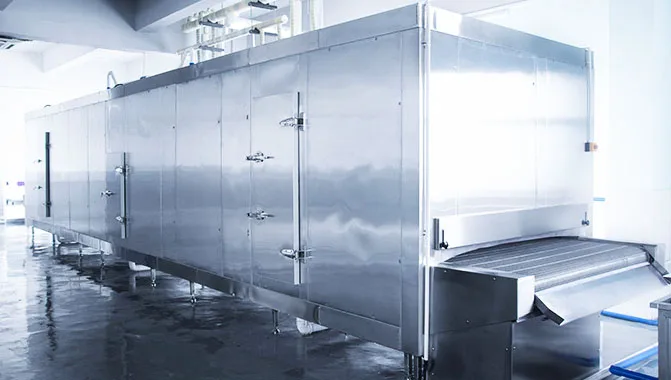
| dobradiças para câmaras frigoríficas aplicações | Aço inoxidável | Maior fiabilidade a baixas temperaturas |
Fabrico e custo total de propriedade
| Fator de custo | Liga de zinco | Aço inoxidável |
|---|---|---|
| Custo unitário inicial | Normalmente inferior | Normalmente mais elevado |
| Lógica das ferramentas | O custo da matriz pode ser mais elevado, mas é eficiente para grandes séries | Menor dependência do molde, mas maior custo de processamento por peça em alguns modelos |
| Velocidade de produção | Frequentemente elevado em programas de fundição OEM repetidos | Depende do processo de fabrico e da estrutura da dobradiça |
| Frequência de substituição | Pode ser maior em ambientes agressivos | Normalmente mais baixo quando o grau corresponde ao ambiente |
| Custo total de propriedade | Frequentemente atrativo para utilização em espaços interiores abrigados | Frequentemente mais forte em ambientes de serviço exigentes |
Orientação TCO: Em aplicações industriais de ciclo elevado, no exterior ou sensíveis à corrosão, o aço inoxidável proporciona frequentemente um custo total de propriedade mais baixo, mesmo quando o custo unitário inicial é mais elevado. Em projectos interiores secos e de serviço moderado com condições controladas, a liga de zinco pode continuar a ser a escolha mais económica.
Como selecionar o material certo para a dobradiça: Guia em 4 etapas
Passo 1: Avaliar o ambiente operacional
- Recinto seco, interior ou abrigado: a liga de zinco pode ser adequada e económica.
- Exposição ao ar livre, a humidade elevada, a zonas costeiras ou a lavagens: o aço inoxidável é normalmente preferido.
- Ambientes abaixo de zero: o aço inoxidável é geralmente mais adequado.
- Ambientes de alta temperatura: o aço inoxidável é normalmente a especificação mais segura.
Passo 2: Verificar o peso e a carga da porta
A seleção do material deve ser sempre verificada em função do tamanho real da porta, do número de dobradiças e da estrutura de montagem. Se a aplicação envolver portas maiores ou uma carga estrutural significativa, reveja a guia de capacidade de carga da dobradiça em vez de se basear apenas na categoria do material. Para projectos de carga mais elevada, dobradiças para trabalhos pesados devem ser selecionados com base em cálculos de engenharia reais.
Passo 3: Avaliar a frequência de abertura
- Acesso para manutenção de baixa frequência: a liga de zinco pode ser adequada no ambiente correto.
- Funcionamento a alta frequência: o aço inoxidável é frequentemente preferido para uma vida útil mais longa e um menor risco de desgaste.
Passo 4: Calcular o custo total de propriedade
Não compare os materiais apenas com base no preço unitário. Considere o tempo de vida útil esperado, a frequência de substituição, a mão de obra, o risco de paragem e as falhas relacionadas com a corrosão. Em ambientes mais severos, o custo de aquisição mais elevado do aço inoxidável é frequentemente compensado por custos de substituição e manutenção mais baixos ao longo do tempo.
Guia de compras: 5 coisas a verificar antes de encomendar
- Verificar a qualidade do material: Confirme se a dobradiça é de liga de zinco, de aço inoxidável 304 ou de aço inoxidável 316, em vez de aceitar uma descrição vaga do material.
- Solicitar documentos comprovativos: Peça registos de testes de materiais, dados de testes de corrosão e documentação de qualidade, quando necessário.
- Verificar a expetativa de vida útil do ciclo: A carga e a corrosão não são os únicos problemas; a frequência de serviço também é importante.
- Confirmar a compatibilidade dimensional: O tamanho da folha, o padrão dos orifícios de montagem, a espessura do painel e a folga devem corresponder à instalação real.
- Especificar claramente a aplicação: Informe o fornecedor se a dobradiça se destina a utilização em interiores, exteriores, em lavagens, em zonas costeiras, em câmaras frigoríficas ou em ciclos elevados, para que a recomendação de material possa ser validada corretamente.
FAQ
As dobradiças de liga de zinco enferrujam completamente?
Em ambientes interiores secos, a liga de zinco pode funcionar de forma fiável durante muitos anos com uma qualidade de revestimento adequada. Em ambientes húmidos, exteriores ou expostos ao sal, a proteção contra a corrosão depende muito mais da integridade do revestimento, da manutenção e do nível de exposição real. Quando os acabamentos de proteção estão muito danificados, a deterioração do material de base pode acelerar.
Qual é a diferença entre as dobradiças de aço inoxidável 304 e 316?
O aço inoxidável 304 é normalmente utilizado para aplicações industriais gerais, no exterior e em armários. O aço inoxidável 316 contém molibdénio, o que lhe confere uma melhor resistência a ambientes de limpeza agressivos e ricos em cloretos. Para aplicações costeiras, marítimas, de lavagem e de exposição a produtos químicos, o 316 é normalmente preferido.
Qual é a diferença entre as dobradiças de aço inoxidável 304 e 201?
O 304 oferece geralmente uma resistência à corrosão mais fiável para o equipamento industrial. O aço inoxidável 201 pode ser comercializado como uma alternativa de baixo custo, mas é normalmente menos adequado para ambientes industriais húmidos ou exteriores onde o desempenho da corrosão é importante.
Como é que distingo as dobradiças em liga de zinco das dobradiças em aço inoxidável?
O peso, o acabamento e a documentação do material são as verificações mais fiáveis. As dobradiças em liga de zinco têm frequentemente superfícies revestidas e podem ter um peso e um aspeto diferentes das dobradiças em aço inoxidável, mas as decisões finais de aquisição devem ser sempre confirmadas através da documentação ou de testes do fornecedor e não apenas pelo aspeto.
Como posso prolongar a vida útil das dobradiças industriais?
Em primeiro lugar, o material da dobradiça deve ser compatível com o ambiente. Em seguida, verifique o tamanho da dobradiça, o número de dobradiças, a estrutura de montagem e as necessidades de manutenção. As dobradiças de liga de zinco dependem mais da proteção do acabamento em ambientes mais agressivos, enquanto as dobradiças de aço inoxidável requerem normalmente menos manutenção quando o grau é corretamente especificado.
As dobradiças de liga de zinco podem ser utilizadas em aplicações de armazenagem frigorífica?
As aplicações de armazenamento a frio e abaixo de zero são normalmente melhor servidas por sistemas de dobradiças em aço inoxidável, porque as baixas temperaturas podem reduzir a adequação da liga de zinco em condições de serviço exigentes.
Os tratamentos de superfície melhoram a durabilidade das dobradiças de liga de zinco?
Sim. Os sistemas de revestimento e galvanização podem melhorar significativamente a durabilidade da superfície e o desempenho da corrosão a curto e médio prazo. No entanto, o desempenho continua a depender da qualidade do revestimento, do ambiente de aplicação e do facto de os danos serem inspeccionados e reparados a tempo.
Conclusão
A escolha entre dobradiças de liga de zinco e de aço inoxidável deve basear-se em quatro variáveis fundamentais: ambiente de funcionamento, carga estrutural, frequência de abertura e custo total de propriedade, e não apenas no preço unitário.
- Dobradiças em liga de zinco são frequentemente a melhor escolha para aplicações interiores, sensíveis ao custo e de serviço moderado, em que a exposição à corrosão é limitada e a flexibilidade da forma é importante.
- Dobradiças em aço inoxidável são normalmente a melhor opção para aplicações ao ar livre, com cargas elevadas, ciclos frequentes, em ambientes corrosivos, que exijam condições de higiene ou em temperaturas extremas, onde uma longa vida útil é fundamental. Para mais informações sobre as propriedades dos materiais de liga de zinco, consulte o nosso guia de materiais de liga de zinco.
Se precisar de ajuda para escolher o material de dobradiça correto para um projeto real, incluindo considerações sobre carga, ambiente e ciclo de vida, contactar a nossa equipa de engenharia para apoio à seleção com base na aplicação e recomendações diretas da fábrica.