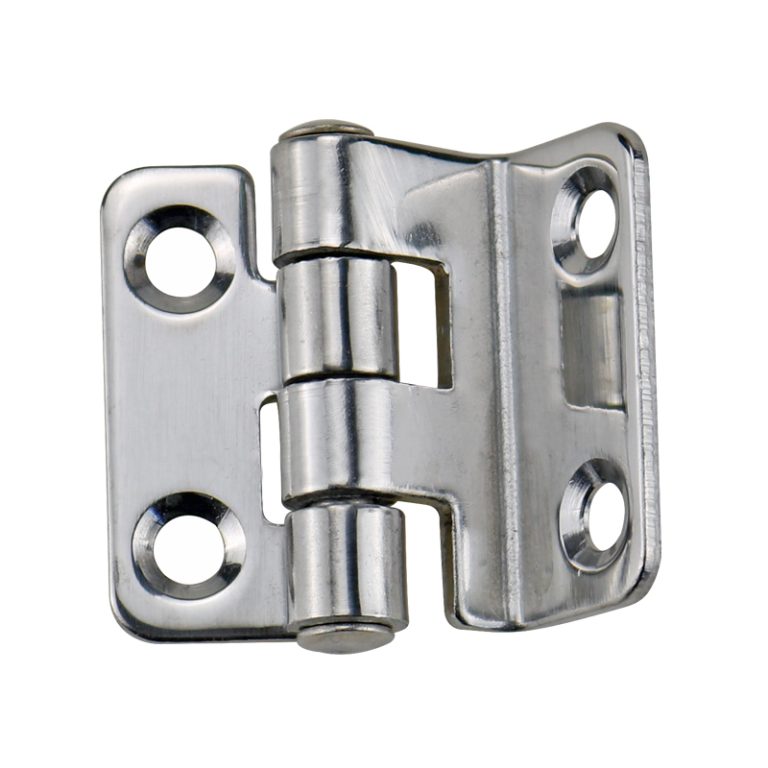
HTAN is one of the leading manufacturers of industrial hinges, handles and latches in China.


Zinc alloy hinges are usually preferred for cost-sensitive, dry indoor applications, while stainless steel hinges are better suited to outdoor, high-load, high-cycle, or corrosive environments. The right choice depends on door weight, corrosion exposure, operating frequency, temperature, and total cost of ownership rather than unit price alone.
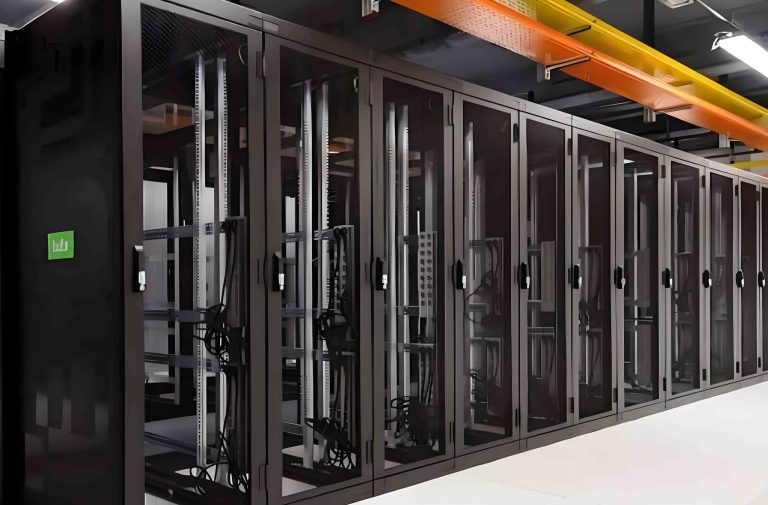
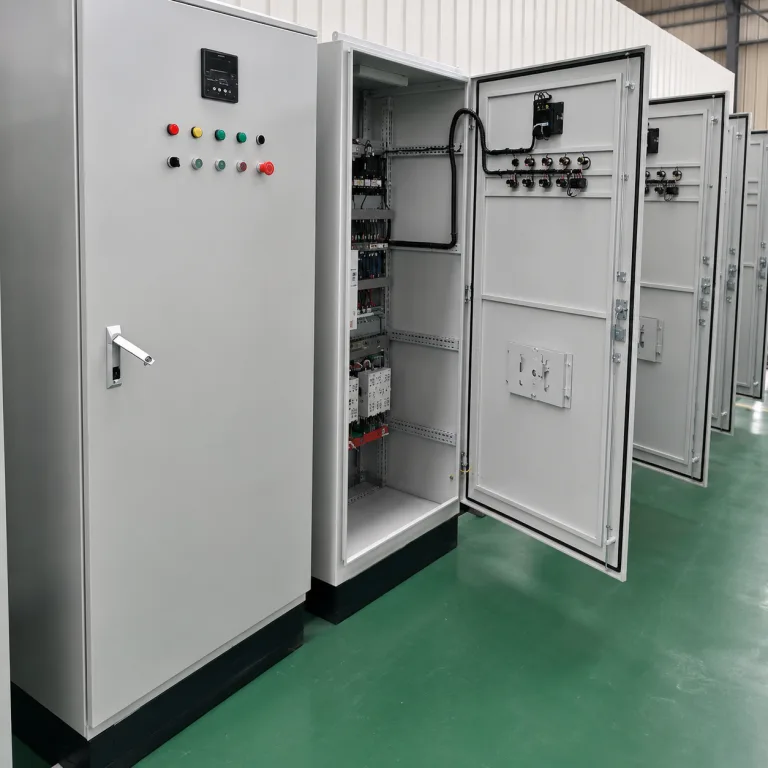
In industrial enclosures, electrical cabinets, transport equipment, and machine access doors, hinges must withstand repeated opening and closing, vibration, temperature variation, and long-term environmental exposure. Choosing the wrong hinge material is one of the most common reasons for premature door sag, seal failure, corrosion issues, and unnecessary maintenance in industrial installations.
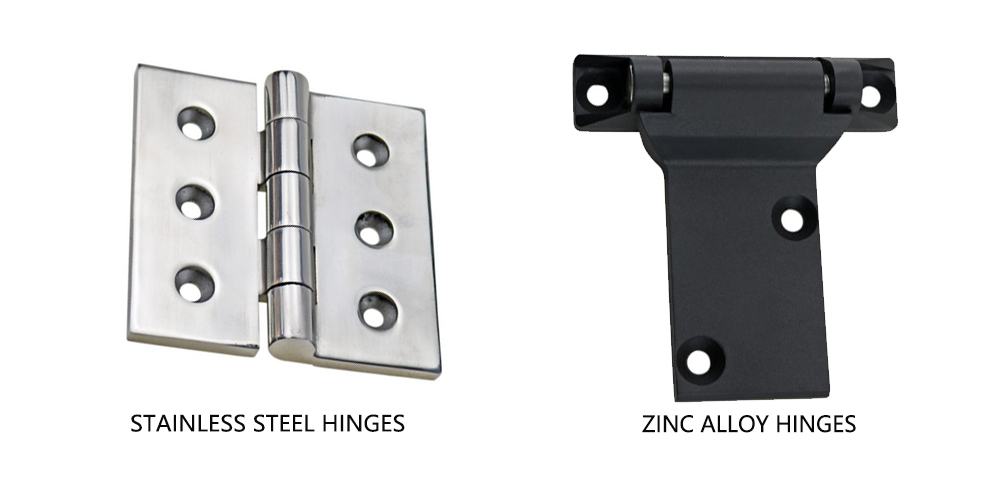
The two most widely specified hinge materials are zinc alloy hinges and stainless steel hinges. This guide compares both across strength, corrosion resistance, manufacturing method, temperature performance, lifecycle cost, and real industrial applications so engineers and procurement teams can make a specification decision based on application requirements rather than assumptions.
Zinc Alloy vs Stainless Steel Hinges
| Situation | Better Choice | Main Reason |
|---|---|---|
| Dry indoor equipment with moderate duty | Zinc alloy | Lower cost and good dimensional consistency |
| Outdoor or humid environments | Stainless steel | Better corrosion resistance and longer service life |
| Heavy doors or high structural load | Stainless steel | Higher strength and better long-term reliability |
| Decorative or cost-sensitive OEM applications | Zinc alloy | Good appearance options and efficient die casting |
| Coastal, washdown, or chemical exposure | 316 stainless steel | Better resistance to chloride and aggressive cleaning environments |
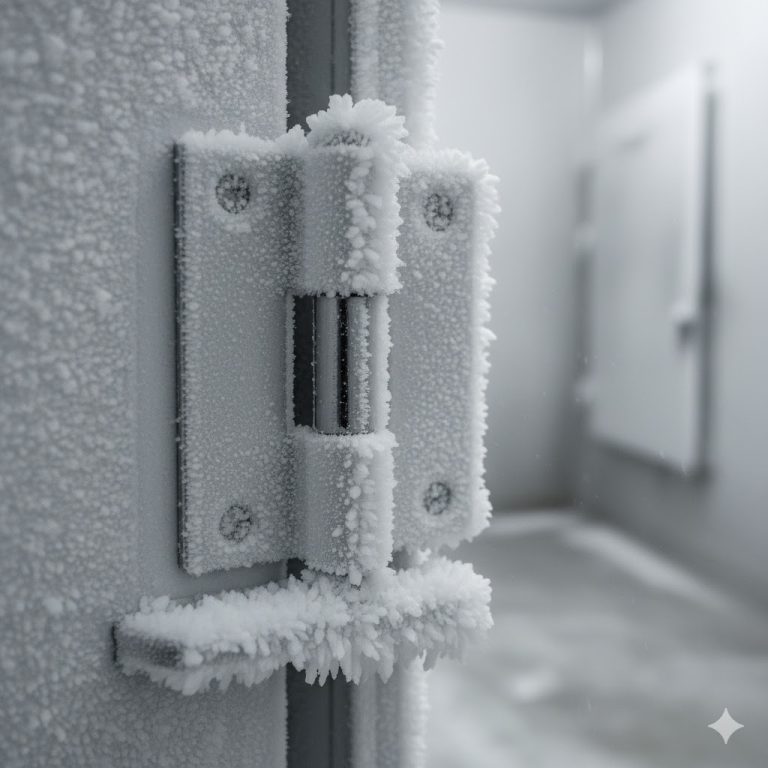
| Cold storage or high-temperature equipment | Stainless steel | Wider operating temperature range |
If the application is light-duty, indoor, and budget-sensitive, zinc alloy is often the practical choice. If the application involves corrosion, heavier loads, frequent access, or a long service life target, stainless steel is usually the safer specification.
Zinc Alloy Hinges: Material Composition and Manufacturing
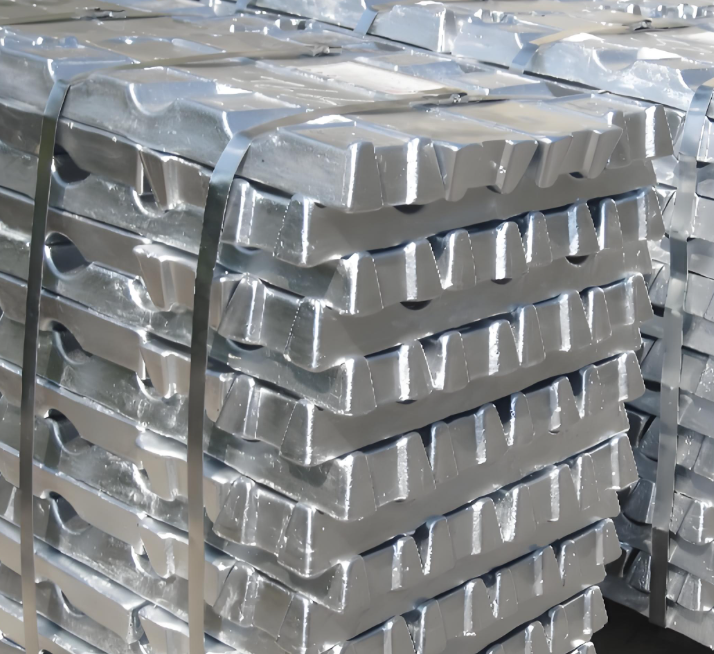
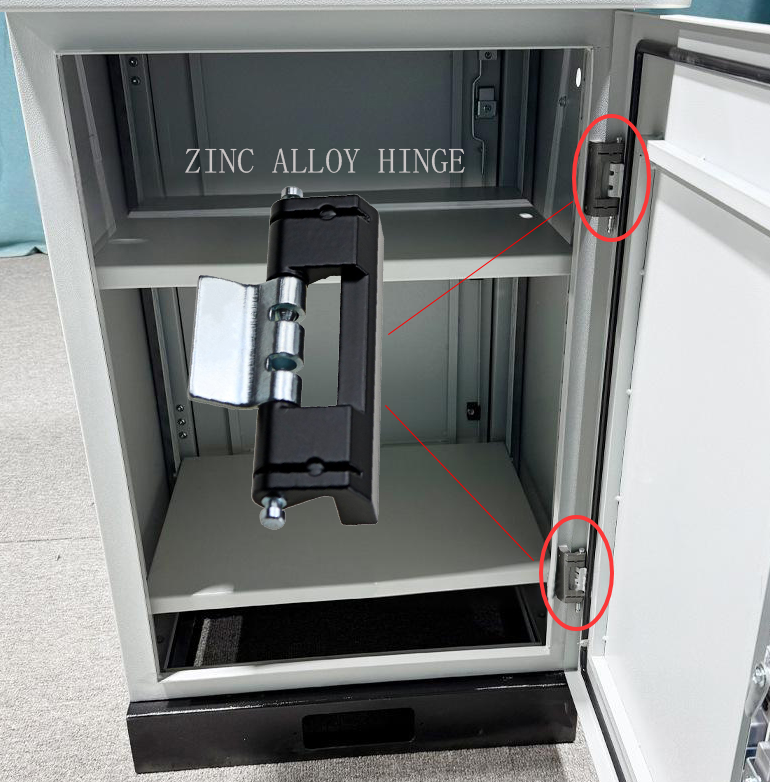
Zinc alloy hinges are typically manufactured from ZAMAK-based alloys, most commonly ZAMAK 3 and ZAMAK 5, using high-pressure die casting. This process allows molten alloy to be injected into precision steel molds at high speed, making it efficient for large-volume production of complex hinge shapes with good dimensional consistency and attractive surface finish options.
Because die casting supports complex geometry and smooth finished surfaces, zinc alloy is widely used where appearance, shape flexibility, and production efficiency are important. It is especially common in indoor cabinets, equipment panels, decorative hardware, and medium-duty industrial access points.
| Element | Typical Content | Role in the Alloy |
|---|---|---|
| Aluminum (Al) | Approx. 3%–4% | Improves strength, hardness, and castability |
| Copper (Cu) | Approx. 0.5%–3% | Can improve strength and wear resistance |
| Magnesium (Mg) | Trace amount | Supports grain control and overall alloy stability |
| Nickel (Ni) | Trace or special grade use | May improve corrosion and temperature performance in specific grades |
| Other trace elements | Low levels | Impurity control and process balance |
Advantages of Zinc Alloy Hinges
- Cost-effective for volume production: Zinc alloy is often more economical than stainless steel in high-volume OEM projects.
- Good design flexibility: Die casting allows complex profiles, decorative forms, and integrated details that are difficult or more expensive to produce in other materials.
- Efficient manufacturing: Fast production cycles help shorten lead times in repeat production programs.
- Wide finish options: Chrome plating, powder coating, and decorative finishes are commonly applied for appearance and basic protection.
Limitations of Zinc Alloy Hinges
- More dependent on surface protection: Zinc alloy usually relies on coating or plating quality for long-term corrosion performance.
- Not ideal for severe corrosion environments: In coastal, washdown, or chemical conditions, long-term durability is usually lower than stainless steel.
- Lower structural margin than many stainless steel hinge designs: For larger or heavier doors, hinge size, count, and mounting structure must be checked carefully.
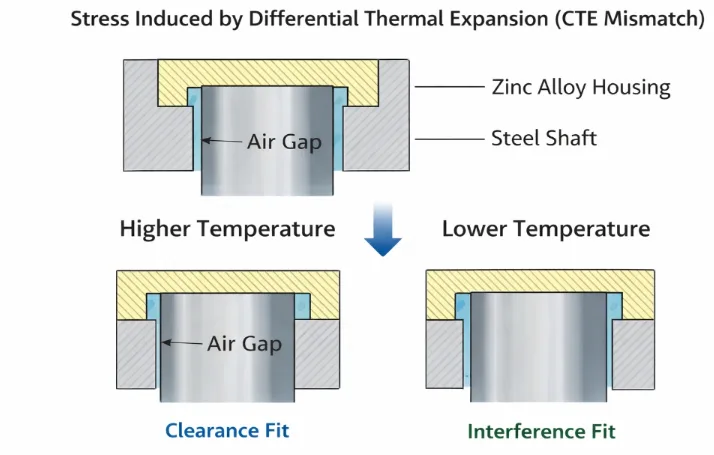
- Less suitable for temperature extremes: Zinc alloy is generally less attractive for sub-zero or high-temperature environments.
Stainless Steel Hinges: Material Composition and Manufacturing
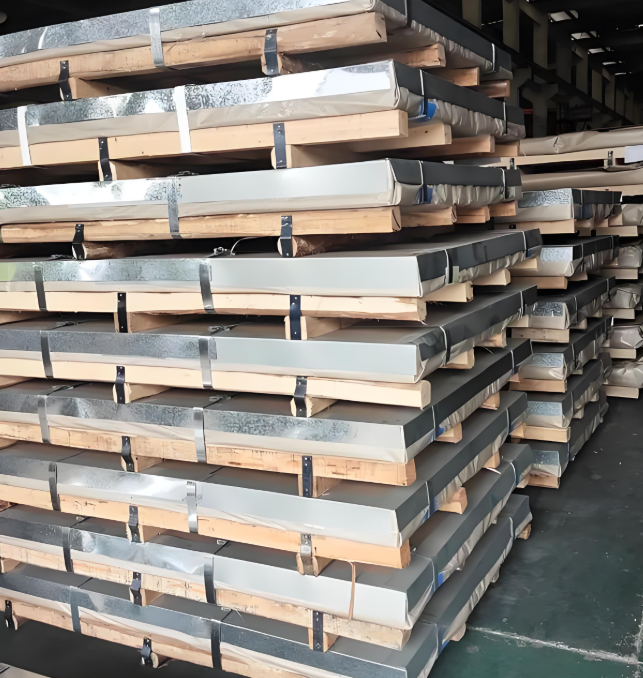
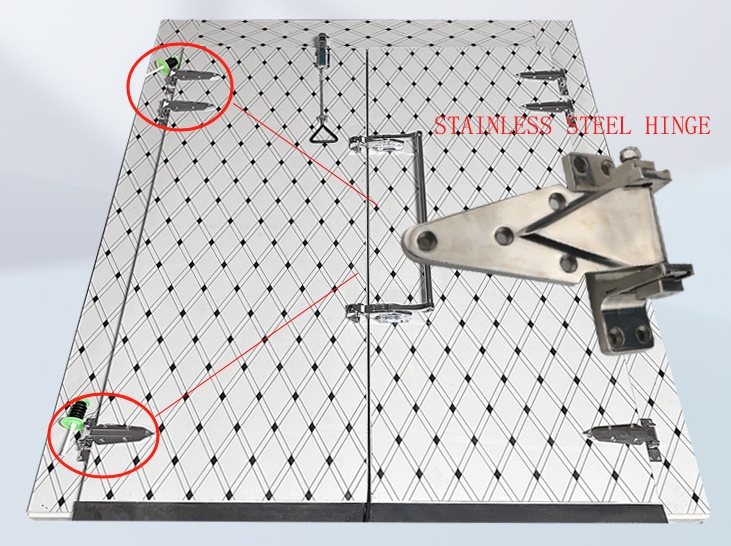
Stainless steel hinges are produced from iron-chromium alloys, with Grade 304 stainless steel and Grade 316 stainless steel being the two most common material choices in industrial hardware. Stainless steel hinge manufacturing may involve stamping, welding, machining, casting, or fabrication depending on hinge design, load rating, and application requirements.
The key performance advantage of stainless steel comes from its chromium-rich passive layer, which provides ongoing corrosion resistance without the same dependence on decorative plating or coating systems. In industrial environments where maintenance access is limited, service life matters, or corrosion exposure is continuous, stainless steel usually provides a more reliable long-term solution.
| Element | Typical Content | Role in the Alloy |
|---|---|---|
| Chromium (Cr) | Approx. 18%–20% | Creates the passive corrosion-resistant oxide layer |
| Nickel (Ni) | Approx. 8%–10.5% in 304 | Improves ductility, toughness, and structural stability |
| Carbon (C) | Low level | Supports weldability and helps reduce sensitization risk |
| Manganese (Mn) | Controlled amount | Contributes to strength and work hardening |
| Molybdenum (Mo) | Approx. 2%–3% in 316 | Improves chloride and pitting resistance |
Advantages of Stainless Steel Hinges
- Higher strength potential: Many industrial stainless steel hinge designs are suitable for larger doors and more demanding structural conditions.
- Better corrosion resistance: Stainless steel is usually the preferred choice for outdoor, humid, washdown, or chemically aggressive environments.
- Broader operating temperature range: Stainless steel is more suitable for cold storage, outdoor winter exposure, and elevated-temperature applications.
- Longer service life in severe conditions: In the right environment, stainless steel can reduce replacement frequency and maintenance burden.
- More suitable for critical equipment: When downtime risk is high, stainless steel often supports a lower long-term ownership cost.
Limitations of Stainless Steel Hinges
- Higher initial cost: Stainless steel usually requires a larger upfront budget.
- Heavier material: Depending on hinge design, total hardware weight may be higher than zinc alloy alternatives.
- Custom production may be slower: Certain fabricated or machined stainless steel hinge designs can involve longer lead times than standard die-cast parts.
Head-to-Head Comparison: 8 Key Dimensions
| Dimension | Zinc Alloy Hinges | Stainless Steel Hinges |
|---|---|---|
| Strength | Suitable for light to moderate structural demand | Usually better for higher-load applications |
| Corrosion Resistance | Depends strongly on coating quality and environment | Usually superior in humid, outdoor, and corrosive conditions |
| Cost | Lower upfront cost in many OEM projects | Higher initial purchase cost |
| Surface Finish Flexibility | Very good for decorative finishes and colors | More limited but durable industrial finishes |
| Temperature Suitability | More limited at extremes | Broader operating range |
| Maintenance Demand | May require coating inspection in harsh environments | Often lower in suitable service conditions |
| Lifecycle Cost | Can be attractive in indoor light-duty use | Often lower long-term in demanding environments |
| Best Fit | Indoor, cost-sensitive, moderate-duty applications | Outdoor, heavy-duty, high-cycle, corrosive applications |
When Zinc Alloy Hinges Are the Better Choice
- Dry indoor equipment: Zinc alloy is often suitable where moisture, chemicals, and salt exposure are minimal.
- Cost-sensitive OEM programs: When unit cost matters across large production volumes, zinc alloy can provide good value.
- Complex or decorative hinge shapes: Die casting is especially attractive when appearance and shape detail are important.
- Moderate-duty cabinet and enclosure use: For lighter indoor doors, zinc alloy can be an efficient choice when hinge size and quantity are matched correctly.
Zinc alloy is not a low-quality material by default. It is simply a better match for some applications than others. In sheltered industrial environments where corrosion exposure is low and budget matters, it can be a very reasonable specification.
When Stainless Steel Hinges Are Worth the Higher Cost
- Outdoor and coastal installations: Stainless steel is usually the preferred choice where moisture, condensation, or chloride exposure is expected.
- Heavy doors and structural duty: For larger panels and higher working loads, stainless steel often provides better long-term confidence.
- High-cycle access points: Doors that open and close frequently benefit from stronger materials and longer service life expectations.
- Food, medical, and washdown environments: Stainless steel is typically favored where hygiene, cleaning resistance, and corrosion performance matter.
- Cold storage and temperature extremes: Stainless steel is generally more appropriate where brittle failure or thermal deformation is a concern.
In these environments, the higher purchase cost is often offset by fewer replacements, less maintenance, and lower downtime risk over the life of the equipment.
304 vs 316 Stainless Steel Hinges
| Grade | Best For | Main Advantage | Main Cost Impact |
|---|---|---|---|
| 304 Stainless Steel | General industrial, outdoor, and cabinet applications | Good corrosion resistance and broad availability | Lower than 316 |
| 316 Stainless Steel | Marine, coastal, chemical, and washdown environments | Better chloride and pitting resistance | Higher than 304 |
In many standard industrial applications, 304 stainless steel is sufficient. For coastal, marine, chlorine-based cleaning, or aggressive chemical exposure, 316 stainless steel is usually the safer choice because of its improved resistance to pitting and chloride-related attack.
Typical Applications for Zinc Alloy and Stainless Steel Hinges
| Application | Usually Better Material | Reason |
|---|---|---|
| Indoor electrical cabinet | Zinc alloy or 304 stainless steel | Depends on budget, duty level, and humidity |
| Outdoor enclosure door | Stainless steel | Better long-term corrosion resistance |
| Machine access door | Depends on load and cycle | Structural load and opening frequency matter more than appearance |
| Food processing equipment | Stainless steel | Cleaning resistance and hygiene requirements |
| Transport case or sheltered equipment panel | Zinc alloy | Often suitable for moderate-duty indoor or semi-protected use |
| cold storage hinges applications | Stainless steel | Better low-temperature reliability |
Manufacturing and Total Cost of Ownership
| Cost Factor | Zinc Alloy | Stainless Steel |
|---|---|---|
| Upfront unit cost | Usually lower | Usually higher |
| Tooling logic | Die cost may be higher, but efficient for large runs | Lower mold dependency, but more processing cost per part in some designs |
| Production speed | Often high in repeat OEM casting programs | Depends on fabrication route and hinge structure |
| Replacement frequency | Can be higher in harsh environments | Usually lower when the grade matches the environment |
| Total cost of ownership | Often attractive in sheltered indoor use | Often stronger in demanding service environments |
TCO guidance: In high-cycle, outdoor, or corrosion-sensitive industrial applications, stainless steel often delivers a lower total cost of ownership even when the initial unit cost is higher. In dry indoor, moderate-duty projects with controlled conditions, zinc alloy can remain the more economical choice.
How to Select the Right Hinge Material: 4-Step Guide
Step 1: Assess the Operating Environment
- Dry indoor or sheltered enclosure: zinc alloy may be adequate and cost-effective.
- Outdoor, high humidity, coastal, or washdown exposure: stainless steel is usually preferred.
- Sub-zero environments: stainless steel is generally more suitable.
- High-temperature environments: stainless steel is usually the safer specification.
Step 2: Check Door Weight and Load
Material selection should always be checked against actual door size, hinge count, and mounting structure. If the application involves larger doors or meaningful structural load, review the hinge load capacity guide rather than relying on material category alone. For higher-load projects, heavy duty hinges should be selected based on real engineering calculations.
Step 3: Evaluate Opening Frequency
- Low-frequency maintenance access: zinc alloy can be appropriate in the right environment.
- High-frequency operation: stainless steel is often preferred for longer service life and lower wear risk.
Step 4: Calculate Total Cost of Ownership
Do not compare materials on unit price alone. Consider expected lifespan, replacement frequency, service labor, downtime risk, and corrosion-related failures. In more severe environments, the higher purchase cost of stainless steel is often offset by lower replacement and maintenance costs over time.
Procurement Guide: 5 Things to Verify Before Ordering
- Verify the material grade: Confirm whether the hinge is zinc alloy, 304 stainless steel, or 316 stainless steel rather than accepting a vague material description.
- Request supporting documents: Ask for material test records, corrosion test data, and quality documentation when needed.
- Check cycle life expectation: Load and corrosion are not the only issues; service frequency also matters.
- Confirm dimensional compatibility: Leaf size, mounting hole pattern, panel thickness, and clearance must match the real installation.
- Specify the application clearly: Tell the supplier whether the hinge is for indoor, outdoor, washdown, coastal, cold storage, or high-cycle use so the material recommendation can be validated properly.
FAQ
Will zinc alloy hinges rust completely?
In dry indoor environments, zinc alloy can perform reliably for many years with proper coating quality. In humid, outdoor, or salt-exposed environments, corrosion protection depends much more on coating integrity, maintenance, and actual exposure level. Once protective finishes are badly damaged, base material deterioration can accelerate.
What is the difference between 304 and 316 stainless steel hinges?
304 stainless steel is commonly used for general industrial, outdoor, and cabinet applications. 316 stainless steel contains molybdenum, which gives it better resistance to chloride-rich and aggressive cleaning environments. For coastal, marine, washdown, and chemical exposure, 316 is usually preferred.
What is the difference between 304 and 201 stainless steel hinges?
304 generally offers more reliable corrosion resistance for industrial hardware. 201 stainless steel may be marketed as a lower-cost alternative, but it is usually less suitable for humid or outdoor industrial environments where corrosion performance matters.
How do I distinguish zinc alloy from stainless steel hinges?
Weight, finish, and material documentation are the most reliable checks. Zinc alloy hinges often have plated or coated surfaces and can feel different in weight and appearance from stainless steel hinges, but final procurement decisions should always be confirmed through supplier documentation or testing rather than appearance alone.
How do I extend the service life of industrial hinges?
Match the hinge material to the environment first. Then check hinge size, hinge count, mounting structure, and maintenance needs. Zinc alloy hinges depend more on finish protection in harsher environments, while stainless steel hinges usually require less maintenance when the grade is correctly specified.
Can zinc alloy hinges be used in cold storage applications?
Cold storage and sub-zero applications are usually better served by stainless steel hinge systems because low temperatures can reduce the suitability of zinc alloy in demanding service conditions.
Do surface treatments improve zinc alloy hinge durability?
Yes. Coatings and plating systems can significantly improve surface durability and short- to medium-term corrosion performance. However, performance still depends on coating quality, application environment, and whether damage is inspected and repaired in time.
Conclusion
The choice between zinc alloy and stainless steel hinges should be based on four core variables: operating environment, structural load, opening frequency, and total cost of ownership rather than unit price alone.
- Zinc alloy hinges are often the better choice for indoor, cost-sensitive, and moderate-duty applications where corrosion exposure is limited and shape flexibility matters.
- Stainless steel hinges are usually the better choice for outdoor, high-load, high-cycle, corrosive, hygienic, or temperature-extreme applications where long service life is critical. For more on zinc alloy material properties, see our zinc alloy materials guide.
If you need help choosing the correct hinge material for a real project, including load, environment, and lifecycle considerations, contact our engineering team for application-based selection support and factory-direct recommendations.