






Industrial hinges, handles and latches for OEM equipment.
- +86 13720060320


Ultimate Cold Storage Hinges Selection Guide for Freezers and Walk-Ins
A malfunctioning cold storage door hinge is far more than just an inconvenience. It is a critical failure point that can directly lead to energy waste, spoiled inventory, safety risks, seal failure, frost buildup, and costly operational downtime.
Cold storage hinges are not ordinary door hinges. They are engineered components designed to perform reliably in refrigerated and freezer environments where low temperatures, heavy insulated doors, condensation, frequent opening cycles, and hygiene demands place continuous stress on the hardware.
Wrong hinge selection = poor sealing = cold air leakage = frost buildup = compressor overwork = higher operating costs.
This guide provides a practical framework to help facility managers, engineers, and buyers evaluate, select, install, and maintain the right cold storage hinge for their application.
Why Do Standard Hinges Fail in Low-Temperature Environments?
The Physical Impact of Extreme Temperatures
- Material Brittleness: General-purpose hinge materials may lose toughness in freezer conditions, increasing the risk of cracking, deformation, or accelerated wear under load.
- Lubricant Failure: Ordinary grease can thicken or lose flow at low temperatures, making the hinge harder to operate and increasing stress on the hinge body and mounting points.
- Reduced Operating Consistency: A hinge that works normally in ambient conditions may become stiff, noisy, or unreliable after repeated low-temperature cycling.
Persistent Condensation, Moisture, and Frost
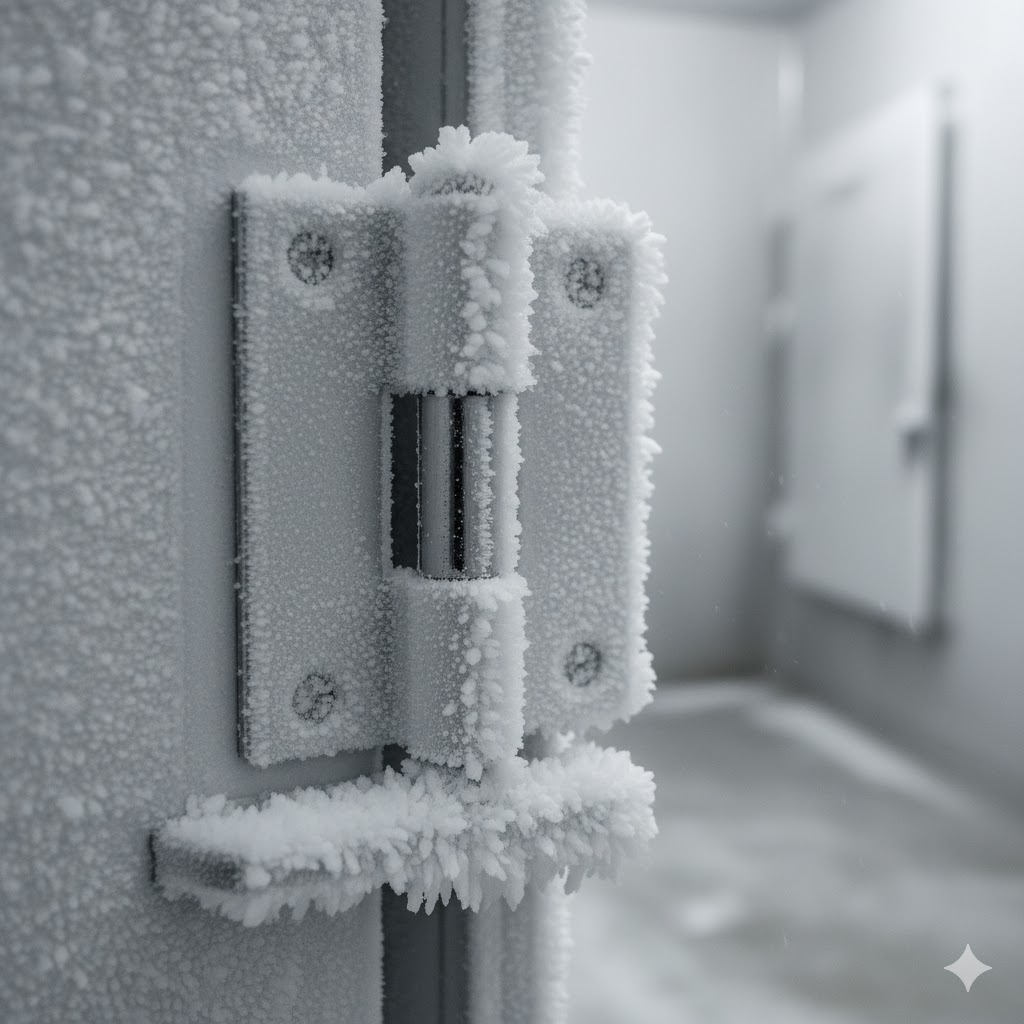
- Condensation Exposure: Large temperature differences between the inside and outside of the room create constant moisture on door frames, fasteners, and hinge surfaces.
- Corrosion Risk: In humid cold rooms, seafood storage, food processing, and washdown areas, hinge corrosion can develop quickly if the material grade is not suitable.
- Mechanical Interference: Frost and ice buildup around the hinge area can restrict movement, create abnormal stress, and accelerate seal failure.
Heavy Doors and High-Frequency Use
- Static Load: Cold storage doors usually contain thick insulation, reinforced skins, seals, and closing hardware, making them much heavier than standard service doors.
- Dynamic Stress: In logistics centers, food facilities, and commercial cold rooms, doors may be opened and closed hundreds of times per day.
- Door Sag: Once bushings, pins, or mounting points begin to wear, the door can sag, gasket compression becomes uneven, and cold air leakage begins.
Cold Storage Hinges vs. Ordinary Hinges: Performance Comparison
Low-Temperature Adaptability
| Factor | Cold Storage Hinges | Ordinary Hinges |
|---|---|---|
| Temperature Suitability | Designed for refrigerated and freezer environments | Often unstable in prolonged low-temperature service |
| Materials | Corrosion-resistant stainless steel or other low-temperature-suitable materials | Standard plated steel or general-purpose hardware materials |
| Lubrication | Low-temperature grease or sealed maintenance-free pivot design | Standard grease may thicken or seize |
| Durability Under Repeated Cycling | Better long-term consistency in cold-room operation | Faster wear, stiffness, and misalignment risk |
Anti-Corrosion Performance
| Factor | Cold Storage Hinges | Ordinary Hinges |
|---|---|---|
| Material Grade | 304 or 316 stainless steel, depending on environment | Carbon steel, basic plated steel, or lower-grade materials |
| Moisture Resistance | Suitable for condensation and humid service | More vulnerable to rust and surface breakdown |
| Cleaning Tolerance | Better suited to washdown and hygiene-sensitive environments | May degrade faster under repeated cleaning exposure |
| Service Life in Wet Cold Rooms | Longer when correctly specified | Higher risk of corrosion-related failure |
Load Strength Comparison
| Factor | Cold Storage Hinges | Ordinary Hinges |
|---|---|---|
| Door Load Suitability | Designed for insulated, heavier door systems | Often intended for lighter general-purpose doors |
| Structural Design | Reinforced hinge body, pin, and mounting structure | May deform under long-term heavy-duty use |
| Alignment Stability | Better support for sealing and repeated cycling | Higher sagging and seal-loss risk over time |
Core Types of Cold Storage Hinges
Surface-Mounted Hinges
- Description: Hinge leaves mount directly onto the door and frame surface without recessed machining.
- Advantages: Easy installation, robust structure, simple replacement, and strong load-bearing performance.
- Best For: General walk-in cold rooms, freezer doors, and industrial refrigeration doors.
Offset Hinges / E-Type Hinges
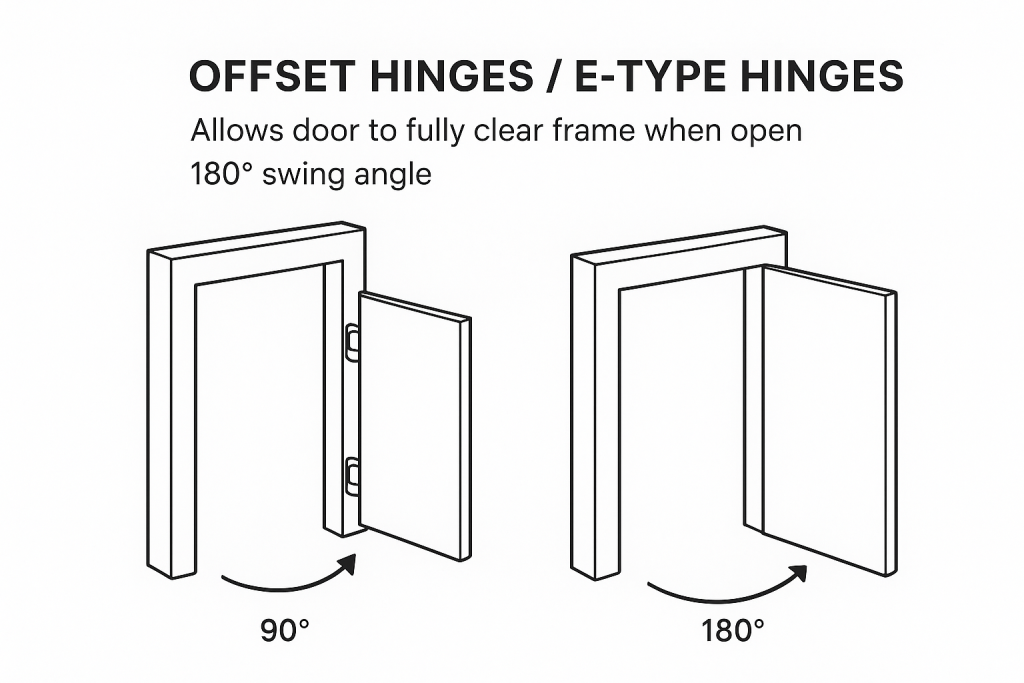
- Description: The hinge geometry moves the door clear of the opening during swing.
- Advantages: Creates wider usable passage space and improves clearance for carts, pallets, and handling traffic.
- Best For: Warehouse cold rooms, logistics zones, and other high-traffic access areas.
Spring-Loaded / Self-Closing Hinges
- Description: Hinges with a built-in closing mechanism that returns the door to the closed position after use.
- Advantages: Helps reduce cold air leakage, improves energy efficiency, and supports more consistent seal engagement.
- Best For: Walk-in coolers, commercial freezer rooms, and any application where door-closing reliability matters.
Lift-Off Hinges
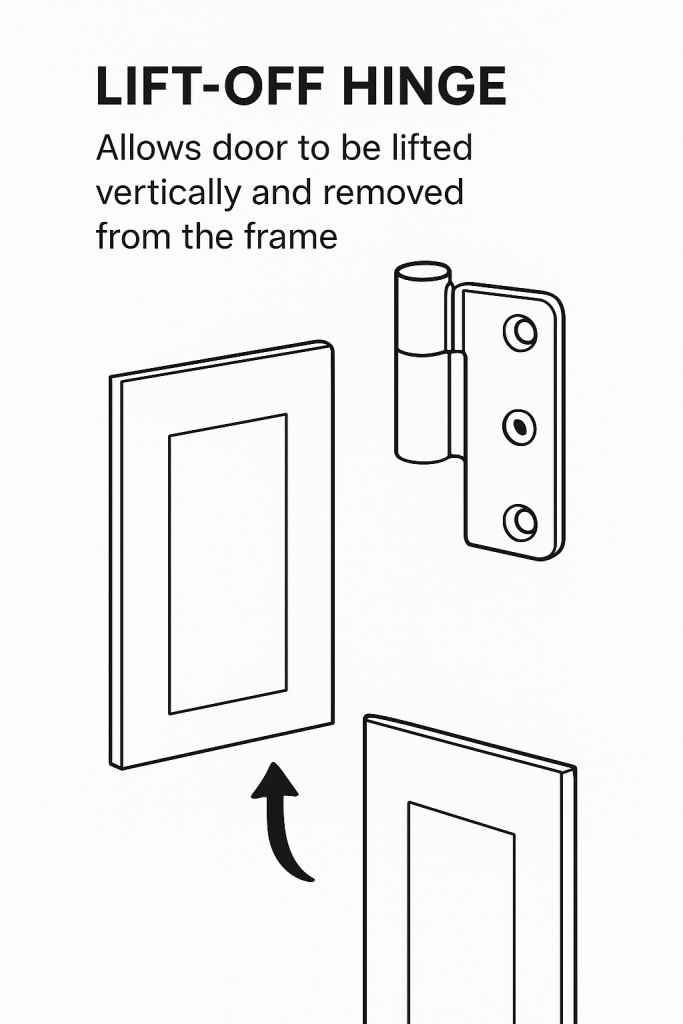
- Description: A removable hinge structure that allows the door to be lifted off for maintenance or cleaning.
- Advantages: Simplifies washdown, sanitation, and temporary door removal when needed.
- Best For: Food processing, pharmaceutical, and hygiene-sensitive environments.
Ultimate Selection Checklist: 10 Key Decision Points
Decision Point 1: Material Composition
| Material | Advantages | Best Application |
|---|---|---|
| 304 Stainless Steel | Good corrosion resistance and reliable general cold-room performance | Standard refrigeration, meat storage, and medium-duty cold rooms |
| 316 Stainless Steel | Higher chloride resistance and better performance in aggressive environments | Seafood processing, coastal facilities, chemical washdown, harsh hygiene zones |
| Aluminum Alloy | Lightweight and easier to handle in some lighter applications | Smaller doors and lighter-duty indoor refrigerated systems |
| Engineering Plastics / Reinforced Nylon | Corrosion-resistant and lightweight in selected non-heavy-duty uses | Lightweight display cabinets or specialized low-load applications |
Quick Material Comparison: 304 stainless steel is usually a practical standard choice for many cold rooms, while 316 stainless steel is preferred where chloride exposure, aggressive cleaning chemicals, or coastal air increase corrosion risk. Aluminum and reinforced polymer options may suit lighter-duty applications, but they are not the default choice for heavy insulated cold room doors.
When to specify 316: Coastal areas, seafood processing rooms, cured food storage, or facilities that require frequent washdown with stronger cleaning agents. For broader stainless steel material selection, see our 304 vs 316 stainless steel selection guide.
Decision Point 2: Load Capacity vs. Door Weight
Safety Factor Formula: Required hinge capacity should always exceed actual door load with a practical safety margin, especially for high-frequency use and insulated door systems.
Engineering Rule: In most cold storage applications, the hinge system should be specified with at least a 1.5× safety factor, while also considering dynamic use, opening frequency, and door width.
3-Step Hinge Quantity Check:
- Measure the real door weight: Include door leaf, insulation, handles, seals, closers, and mounted accessories.
- Use a conservative hinge capacity value: Do not rely blindly on the maximum nominal figure. A practical working value is often lower once real conditions are considered.
- Calculate hinge quantity and layout: Confirm not only total capacity, but also how load is distributed between upper and lower hinges.
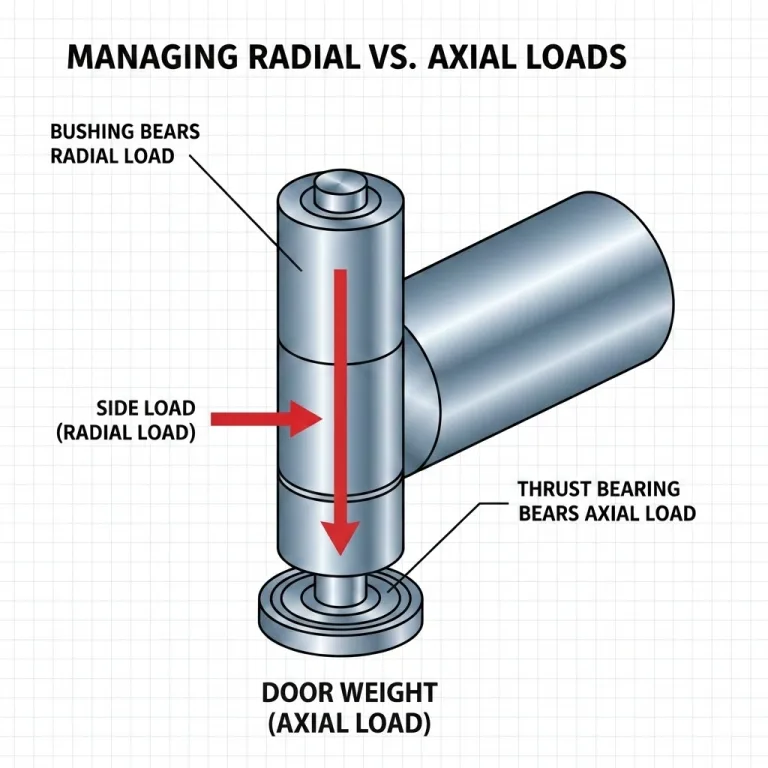
Critical Warning: Three hinges do not simply equal three perfectly shared loads. The top hinge often carries more pull force, while lower hinges resist compression and alignment load. Always follow the manufacturer’s installation guidance for multi-hinge door systems.
For large insulated doors, you can also review our heavy-duty hinges category when comparing higher-load hinge structures.
Decision Point 3: Operating Temperature Range
- Refrigerated Rooms: The main challenge is high humidity and ongoing condensation, so corrosion resistance is essential.
- Freezer Rooms: Material toughness, lubrication behavior, and smooth movement become more critical as temperatures drop further below freezing.
- Ultra-Low Temperature Rooms: Very low-temperature environments require closer review of material grade, bushing design, and low-temperature service suitability.
Decision Point 4: Core Functionality — Self-Closing vs. Hold-Open
- Self-Closing: Valuable where energy efficiency and reliable door closure are critical.
- Hold-Open: Useful for loading, unloading, and high-traffic movement where temporary open positioning improves workflow.
- Application Balance: The right choice depends on traffic volume, safety requirements, and whether operators need hands-free passage.
Decision Point 5: Adjustability
Cold room doors can drift out of alignment over time due to settling, frequent use, impact, or frame movement. Hinges with vertical or horizontal adjustment can make maintenance easier and help restore sealing performance without major rework.
Decision Point 6: Hinge Profile and Offset
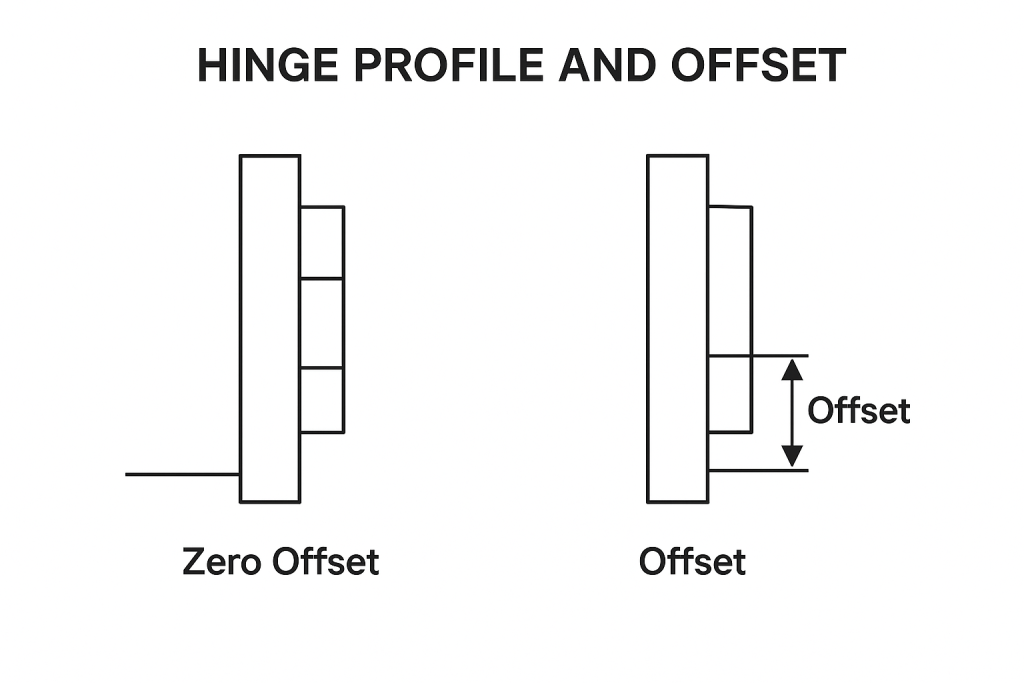
The hinge profile must match the door construction and frame geometry. Flush doors, recessed doors, and offset-clearance doors all require different hinge geometry. Incorrect offset can prevent smooth operation and reduce sealing quality.
Decision Point 7: Safety and Emergency Exit
- Internal Release Compatibility: The hinge system must support the safe operation of internal emergency release hardware.
- Smooth Opening Force: Doors should open without excessive resistance, even in freezer conditions.
- Operational Safety: The hinge should not create sticking, sudden binding, or unstable door movement that could affect users.
Decision Point 8: Maintenance Requirements
- Sealed Bearing or Maintenance-Free Design: Helps reduce moisture ingress and lowers routine maintenance needs.
- Serviceable Design: In some heavy-duty applications, greaseable hinges may still be appropriate when maintenance access is practical.
- Inspection Access: Choose a hinge design that allows technicians to inspect wear, fastener condition, and alignment without difficulty.
Decision Point 9: Certification Standards
- Food Equipment and Hygiene Requirements: Food and pharmaceutical environments often require easier-to-clean, corrosion-resistant hardware and materials suitable for hygiene-sensitive use.
- Material Standards: Stainless steel grade claims should be backed by reliable material specifications.
- Corrosion and Performance Testing: Where applicable, ask for evidence of testing relevant to the operating environment.
Decision Point 10: Total Cost of Ownership
Initial hinge price is only one part of the cost equation. In cold storage, the real cost of a poor hinge decision often appears later through energy waste, downtime, premature replacement, frost issues, and maintenance labor. In many cases, a better-specified stainless steel hinge reduces total long-term cost even if the purchase price is higher.
Installation Best Practices
Installation Steps
- Mark the hinge positions accurately: Confirm hinge spacing, door alignment, and frame reference points before drilling.
- Use suitable mounting hardware: Fasteners, backing support, and fixing depth should match the actual door weight and substrate condition.
- Adjust the door for even sealing: After mounting, confirm the gasket compresses consistently around the perimeter.
Sealing and Thermal Insulation
Where necessary, use thermal breaks, insulation pads, or suitable mounting details to reduce thermal bridging through the hinge and fastener area. This helps reduce external condensation and supports better thermal performance.
Sealing Performance Verification
- Basic Seal Check: Use a paper or bill test to confirm even gasket compression around the door perimeter.
- Visual Inspection: Look for uneven gaps, rubbing, or incomplete latch engagement.
- Operational Check: Confirm the door opens and closes smoothly without unusual resistance.
Post-Installation Acceptance Checklist
- Opening and Closing Force: The door should move smoothly without excessive drag, sticking, or rebound problems.
- Seal Consistency: Gasket compression should remain even along the full frame perimeter.
- Fastener Stability: All screws and fixing points should remain secure after the first operating cycles.
- Alignment Check: The door should remain level with no early sagging, rubbing, or visible twist.
Recommended Preventive Maintenance Schedule
| Frequency | Recommended Check |
|---|---|
| Weekly | Inspect for loose fasteners, unusual noise, or visible frost around the hinge area |
| Monthly | Check alignment, gasket contact, and signs of corrosion or moisture damage |
| Quarterly | Inspect pivot wear, verify smooth movement, and service lubrication if the hinge design requires it |
| Annually | Review the full hinge set, mounting integrity, door sag, and sealing performance under normal operating load |
Early Warning Signs of Hinge Failure
- Abnormal Noise: Grinding, squeaking, or scraping often indicates lubrication problems, wear, or misalignment.
- Door Sagging: If the door begins to drop, drag, or pull unevenly against the frame, the hinge set should be inspected immediately.
- Cold Air Leakage: Frost buildup or condensation around the door edge may indicate poor sealing caused by hinge-related misalignment.
- Abnormal Swing Behavior: If the opening angle changes unexpectedly or the door no longer returns correctly, the hinge or closing mechanism may be wearing out.
Common Problem Diagnosis & Troubleshooting
Problem: Door Sagging or Dragging
- Diagnosis: Worn bushings, loose fasteners, underspecified hinge load capacity, or long-term structural drift.
- Solution: Tighten fasteners, re-level the door if adjustment is available, and replace worn hinges or upgrade to a higher-capacity model if necessary.
Problem: Ice or Frost Forming on Hinges
- Diagnosis: Usually a symptom of seal failure or warm air leakage rather than a primary hinge problem.
- Solution: Inspect the gasket, verify door alignment, and confirm the hinge system allows full seal compression after closure.
Problem: Difficulty Opening, Closing, or Sticking
- Diagnosis: Inadequate low-temperature lubrication, corrosion, frost interference, or frame misalignment.
- Solution: Clean the area, inspect for corrosion or ice interference, service lubrication if appropriate, and correct alignment problems.
Conclusion: Better Hinge Selection Improves Cold Room Reliability
Cold storage hinges are not ordinary hardware. They are part of the door system that protects sealing performance, operating efficiency, hygiene standards, and long-term maintenance cost. The right specification depends on environment, door weight, operating frequency, corrosion exposure, functionality, and maintenance strategy.
In most industrial and commercial cold room applications, the right approach is to focus on corrosion-resistant materials, realistic load capacity, reliable alignment support, and service life under repeated low-temperature use. If you are comparing hinge options for freezer doors, insulated equipment doors, or other low-temperature access panels, reviewing higher-load hinge structures can also help narrow the specification range.
Browse HTAN’s cold storage hinge range or contact our engineering team for help selecting the right hinge for your specific cold storage application.
FAQ
Q1: Why are cold storage hinges more expensive than standard door hinges?
Cold storage hinges usually require better materials, stronger corrosion resistance, more stable low-temperature operation, and a structure that can support heavier insulated doors. The added cost is usually justified by better sealing reliability, longer service life, and lower maintenance and energy loss over time.
Q2: Why do my hinges keep icing up?
In most cases, hinge icing is a symptom of warm, humid air entering through a gasket or alignment problem. The hinge may not be the root cause, but hinge wear or sagging can contribute to seal failure.
Q3: Is a self-closing hinge necessary for a cold room door?
Not in every application, but self-closing hinges are often highly beneficial in cold rooms where energy efficiency and reliable sealing depend on the door returning to the closed position after each use.
Q4: When should cold storage hinges be replaced?
Replace the hinge set when you see advanced corrosion, persistent door sagging, worn pivot points, unstable movement, or repeated sealing problems that cannot be corrected through adjustment or maintenance.
Q5: Can I replace only one damaged hinge?
In many cases, replacing the full hinge set is the safer option because all hinges on the door have usually experienced similar load history and wear. Replacing only one hinge can create uneven load distribution if the remaining hinges are already degraded.

-768x768-1.png)