






Industrial hinges, handles and latches for OEM equipment.
- +86 13720060320


304 Stainless Steel Guide for Industrial Hinges: Properties, Limits, and Verification
“304 stainless steel” is a starting point, not a complete hinge specification.
A usable 304 stainless steel hinge specification must identify the material standard, product form, condition, component materials, fabrication route, surface treatment, and service environment. Without those details, two suppliers can both write “304” while delivering hinges with different strength, magnetic response, corrosion behavior, weld condition, and traceability.
This 304 stainless steel guide follows one task: decide whether a supplier has specified and verified 304 correctly for an industrial hinge or hardware component.
304 is suitable when
The hinge works in a controlled or moderately corrosive environment, the complete assembly is specified, and fabrication and surface condition are controlled.
304 is not enough when
The application includes sustained chloride exposure, trapped washdown residue, aggressive chemicals, or an assembly that mixes unknown pins, fasteners, washers, and springs.
Approval requires
A drawing callout, applicable material standard, product form and condition, component-level material list, traceability, surface-treatment record, and a representative hinge sample.
What this guide covers: this guide focuses on specifying and verifying 304 stainless steel for industrial hinges. Use the linked guides when the primary decision is outdoor 304-versus-316 exposure, hinge-pin design, polished surface selection, or available product models.
What “304 Stainless Steel” Must Mean on a Hinge Drawing
A drawing note that says only “Material: 304 stainless steel” leaves several engineering questions unanswered. It does not identify which product standard applies, whether the raw material is sheet, strip, bar, wire, or a purchased subcomponent, whether the material is annealed or cold worked, or whether the requirement applies to the leaf only or to the complete hinge assembly.
The first step is to turn the material name into a procurement callout that can be checked against supplier documents and the finished part.
| Drawing Field | What to State | Release Risk if Missing |
|---|---|---|
| Grade designation | One governing grade system, such as Type 304 / UNS S30400; cross-standard grades require technical comparison and approval | Prevents a generic “stainless” substitution |
| Applicable standard | The material standard that matches the product form | Sheet and strip, bar, wire, and fasteners may require different specifications |
| Product form | Sheet, strip, plate, bar, wire, or purchased component | The governing chemistry and mechanical-property table may change |
| Material condition | Annealed, quarter-hard, half-hard, or another defined condition | Cold work changes strength, hardness, springback, and magnetic response |
| Component coverage | Leaf, pin, washer, bushing, spring, rivet, and fasteners | A 304 leaf does not prove that the complete hinge is stainless |
| Surface requirement | Mill finish, brushed, polished, cleaned, pickled, or passivated | Surface condition affects contamination, appearance, and corrosion initiation |
| Traceability | Heat, lot, material certificate, and finished-part batch link | Allows the supplied hinge to be connected to the claimed raw material |
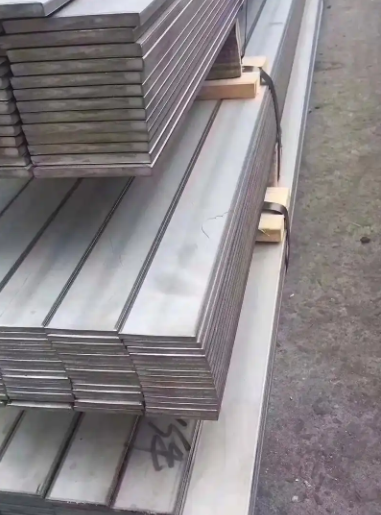
What ASTM A240/A240M covers: ASTM A240/A240M covers stainless steel plate, sheet, and strip. Use the edition named in the project or purchase specification. The standard does not define hinge geometry, pin material, weld quality, passivation, corrosion life, or completed-hinge acceptance.
Read 304 Composition by Standard, Product Form, and Grade Variant
Type 304 is an austenitic chromium-nickel stainless steel commonly identified as UNS S30400 or EN 1.4301. The familiar “18-8” description is useful shorthand, but it is not a purchase specification. Formal chemistry limits must come from the named material standard and the product form being supplied.
For hinge work, the most common source of confusion is not the chromium or nickel label. It is the difference between grade, product condition, and component function.
Type 304
U.S. designation: Type 304 / UNS S30400. EN 1.4301 is commonly cross-referenced, but approve any cross-standard substitution only after comparing chemistry, mechanical requirements, product form, condition, and the governing specification.
Type 304L
U.S. designation: Type 304L / UNS S30403. EN 1.4307 is commonly cross-referenced, but it should not be accepted as an automatic substitution without comparing the applicable standards and product requirements.
Cold-Worked 304
The grade family may be unchanged while the condition is different. Higher strength and hardness may be available, but forming load, springback, flatness, and magnetic response also change.
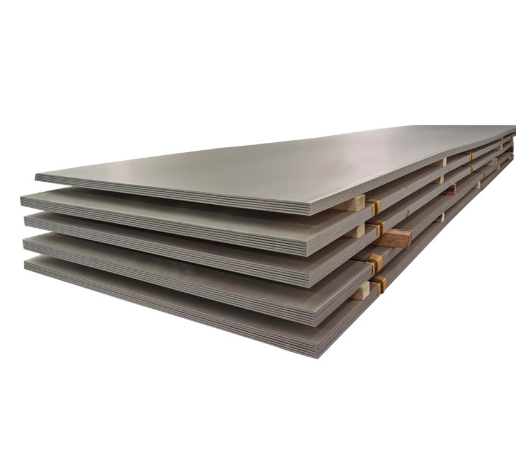
Check the complete assembly: a supplier description such as “304 stainless hinge” still does not identify whether the pin, washers, rivets, bushings, springs, and fasteners meet the same or different material requirements.
Do not automatically replace 304 with 304L or treat the two as interchangeable without checking the drawing, weld procedure, material certificate, and supplier process. The lower-carbon distinction matters only when the specification, product form, and verification method can support it.
PMI limitation: handheld XRF is useful for checking major alloying elements such as chromium, nickel, and molybdenum, but it does not normally measure carbon. It therefore cannot by itself prove the L-grade distinction between 304 and 304L. Carbon-capable LIBS, OES, laboratory chemistry, or a traceable material certificate is needed when the carbon grade matters.
Translate 304 Material Properties Into Hinge Behavior
A material-property table becomes useful only when it changes a hinge decision. Density affects the weight of the hinge itself only slightly in most assemblies. Elastic modulus and leaf geometry affect deflection. Thermal expansion affects alignment and clearance when the hinge and frame see temperature changes. Strength and hardness depend strongly on material condition and fabrication history.
| Property | Reference Value | Hinge Design Meaning |
|---|---|---|
| Density | Approximately 7.9–8.0 g/cm³ | 304 is not a lightweight substitute for carbon steel; hinge mass is usually governed more by geometry than by this small density difference. |
| Elastic modulus | Approximately 193 GPa at room temperature | Leaf stiffness still depends on thickness, width, knuckle geometry, fastener spacing, and frame support. |
| Thermal expansion | Approximately 17 µm/m·°C over a common near-ambient range | Long hinge lines and mixed materials need clearance and alignment review across the operating temperature. |
| Thermal conductivity | Approximately 16 W/m·K near room temperature | Heat is conducted less readily than in carbon steel, which affects welding heat concentration and distortion control. |
| Strength and hardness | Condition-dependent | Annealed and cold-worked 304 can behave very differently. Use the certificate and condition-specific requirement rather than one generic value. |
| Magnetic response | Usually low in annealed austenitic condition; may increase after cold work or welding | A magnet is not a reliable pass/fail test for 304 grade. |
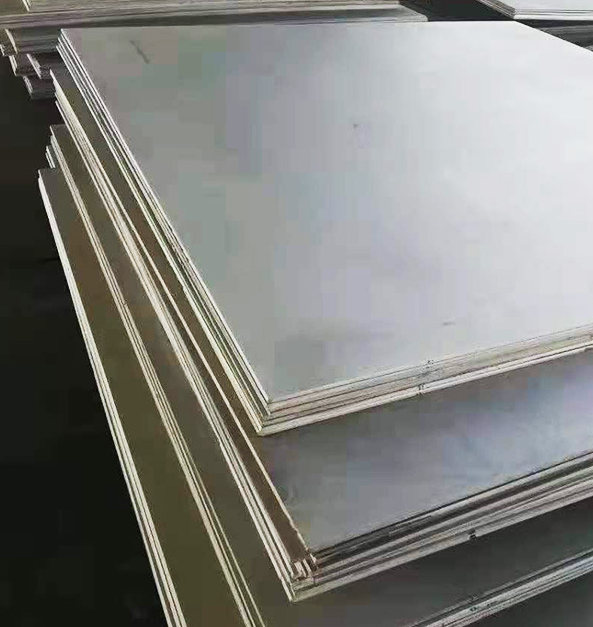
The physical values above are approximate published reference values for 304 near room temperature. They are not material-certificate or finished-hinge acceptance values. Review the governing specification, supplier data, and project temperature range before using them in a design calculation. A useful published reference is the worldstainless tables of technical properties.
These values are reference data, not finished-hinge acceptance limits. A hinge drawing should control the parameters that affect the function: leaf thickness and flatness, pin diameter, knuckle geometry, hole location, material condition, surface finish, and the complete mounting load path.
Avoid these material-data errors: 304 is not about 10% lighter than carbon steel, cold-worked hardness cannot be expressed as “HRB 200+,” and a material grade alone cannot support a universal million-cycle hinge-life claim.
Control Stamping, Bending, and Cold-Work Effects in 304 Hinge Leaves
Many industrial hinge leaves begin as stainless sheet or strip. The finished leaf no longer behaves exactly like the incoming annealed material after blanking, punching, bending, rolling the knuckle, coining, and flattening. 304 work-hardens during deformation, so the local condition around bends, holes, knuckles, and formed stops may differ from the flat center of the leaf.
Forming Load and Springback
Cold work raises strength and forming load. Springback can shift the leaf angle, knuckle centerline, or bracket geometry after the tooling opens. The drawing should control the finished geometry, not only the tool angle.
Burrs and Edge Condition
Punching and blanking can leave burrs that interfere with leaf seating, coating contact, gasket clearance, or safe handling. Burr direction and deburring method should match the assembly surface and the corrosion-cleanliness requirement.
Flatness and Axis Alignment
Knuckle forming and secondary flattening can distort the leaf. A nominally correct hole pattern can still produce binding if the leaf rocks on the mounting surface or the hinge axis shifts after forming.
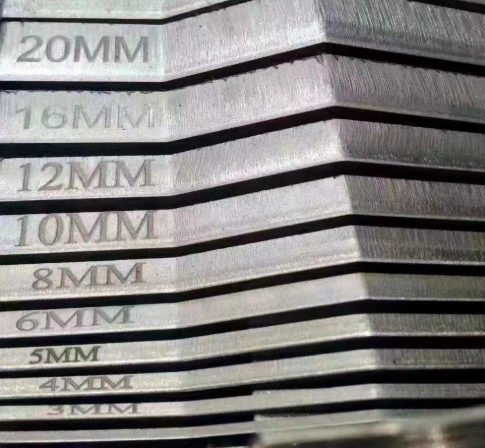
When a supplier reports mechanical properties, ask whether the values describe the incoming raw material, the finished cold-worked region, or a separate coupon. The finished hinge should be accepted by geometry and function, while the raw material should be accepted against the specified grade, standard, and condition.
Drawing action: add finished-part requirements for leaf flatness, knuckle alignment, hole position, formed angle, burr direction, and surface condition. A certificate for annealed sheet cannot prove those finished-hinge characteristics.
Control Welding, Heat Tint, and Post-Fabrication Cleaning
A welded 304 hinge should not be evaluated as raw 304 plus a weld bead. Welding changes the local heat input, oxide condition, distortion, and crevice geometry. The hinge may use correct 304 material and still develop early corrosion or poor alignment if post-weld cleaning and fixture control are inadequate.
- Weld procedure: define the joint, weld size, process, filler requirement, heat input control, and acceptance criteria for the actual hinge and frame material.
- Distortion control: fixture the hinge axis and verify alignment after welding and cooling. Do not assume that pre-weld alignment survives the complete weld sequence.
- Heat tint and scale: remove oxide and contamination to the level required by the project. Dark heat tint is not equivalent to a clean stainless surface.
- Cross-contamination: separate stainless work from carbon-steel grinding dust, wire brushes, clamps, and handling surfaces where free iron could be transferred.
- Post-fabrication treatment: state whether cleaning, pickling, or passivation is required and how the effectiveness will be confirmed.
What ASTM A967/A967M covers: ASTM A967/A967M defines chemical passivation treatments and qualitative tests intended to confirm removal of contaminant iron and other exogenous matter. It does not prove that the alloy is 304, select the correct grade for the service environment, or define the required service life.
Why a Correct 304 Leaf Can Still Produce a Rusting Hinge
Consider a welded cabinet hinge whose leaf passes PMI as 304. Red staining later appears around the weld, washer, and pin end. The leaf chemistry may be correct, yet the complete result can still fail because the weld heat tint was not removed, carbon-steel grinding dust contaminated the surface, a plated carbon-steel washer trapped moisture against the leaf, or the pin material was never included in the 304 requirement.
Increasing the nominal grade of the leaf would not automatically correct any of those conditions. The corrective action is to separate the evidence: verify each component material, inspect the weld and post-weld surface, remove the crevice or improve drainage, confirm the fastener and washer combination, and test the representative assembly under the defined exposure.
This is an illustrative engineering scenario, not a customer project record or product test claim.
Separate the evidence: material grade, fabrication quality, surface condition, and assembly geometry are four separate controls. Do not use one certificate or one PMI reading as evidence for all four.
Prevent Galling and Material Mismatch Across the Hinge Assembly
A hinge is a moving assembly. The leaf material may be 304 while the pin, thrust washer, rivet, bushing, spring, and mounting hardware use other materials. That combination may be intentional, but it must be documented because each interface affects wear, friction, corrosion, and serviceability.
Pin-to-Knuckle Interface
Stainless-on-stainless sliding contact can gall when pressure, surface roughness, alignment, clearance, and lubrication are unfavorable. A bushing, different pin material, surface treatment, lubricant, or revised fit may be required.
Fasteners and Washers
Fasteners should be reviewed for grade, coating, preload, crevice formation, and galvanic compatibility. “Stainless fastener” is not a complete callout, and carbon-steel hardware can become the first visible corrosion source.
Springs, Bushings, and Retainers
Spring hinges, detent hinges, and retained-pin designs may contain components that cannot simply use annealed 304. Specify each functional component by its required material and condition rather than applying one grade label to the full assembly.
Detailed pin loading, fit, wear, and retention belong to the 304 stainless steel hinge-pin guide. This page keeps the boundary at component-level material definition and assembly verification.
Full-assembly requirement: the bill of materials or drawing should identify the leaf, pin, washers, bushings, springs, retainers, rivets, and mounting fasteners separately. A supplier should not describe the complete hinge as “304” when only the visible leaves are confirmed.
Define the Corrosion Boundary for 304 Stainless Steel Hinges
304 resists many normal atmospheric and industrial conditions because a clean stainless surface can form a protective passive film. That does not make the hinge rustproof. Chlorides, wet crevices, retained cleaning chemicals, iron contamination, weld oxide, and deposits can locally defeat the protection even when the base material is correctly identified.
| Service Condition | 304 Starting Point | Review Before Release |
|---|---|---|
| Dry indoor cabinet | Often a reasonable starting point | Condensation, handling contamination, fastener material, and cleaning method |
| Humid industrial room | May be suitable | Persistent wetness, crevices, deposits, drainage, and maintenance access |
| General outdoor exposure | Project-specific | Site pollution, chloride deposition, wet-dry cycling, shelter, finish, and water traps |
| Coastal or road-salt exposure | Do not assume 304 is sufficient | Chloride severity, cleaning frequency, crevice geometry, and possible 316 or higher-grade requirement |
| Chlorine-based washdown | High caution | Chemical concentration, temperature, contact time, rinsing, deposits, and gasketed crevices |
| Aggressive chemical service | Compatibility review required | Actual chemical, concentration, temperature, aeration, stress, and exposure duration |
Do not expand this page into a complete alloy comparison. When the decision is specifically 304 versus 316 for outdoor or chloride exposure, use the outdoor stainless steel hinge selection guide.
Cleaning instructions must also be chemical-specific. Do not publish a general claim that 304 can be cleaned with any strong acid, strong alkali, or sodium hypochlorite solution. The acceptable process depends on concentration, temperature, contact time, rinse procedure, surface finish, and crevice geometry.
Acceptance action: define the actual environment first, then state the required material, surface treatment, cleaning exposure, test method, test duration, and allowable result. A material grade alone is not a corrosion acceptance criterion.
Verify 304 Grade, Traceability, and Surface Condition
Verification should move from the drawing to the raw material, from the raw material to the production lot, and from the production lot to the finished hinge. No single test proves every part of that chain.
| Evidence | What It Confirms | Separate Evidence Still Required |
|---|---|---|
| Drawing and purchase specification | The required grade, standard, product form, condition, components, and finish | Supplier conformance, traceability, fabrication quality, and finished-hinge function |
| Material test report or mill certificate | Heat chemistry and the mechanical data listed for the raw material | Finished geometry, component coverage, surface condition, and assembly function |
| Heat and lot traceability | The connection between the certificate, incoming material, production batch, and finished hinge | Whether every hinge component and process step is covered by the records |
| Handheld XRF PMI | Major measurable alloying elements such as chromium, nickel, and molybdenum | Carbon grade, 304-versus-304L distinction, surface treatment, and full assembly conformity |
| Carbon-capable LIBS, OES, or laboratory chemistry | Carbon and other required elements at suitable detection limits | Batch traceability, fabrication quality, passivation, geometry, and hinge function |
| Surface cleanliness or passivation test | Free-iron removal or treatment effectiveness under the specified method | Alloy grade, raw-material certificate, component materials, and environmental suitability |
| Finished-part inspection | Geometry, weld condition, contamination, finish, visible component coverage, and function | Raw-material chemistry, heat traceability, and any hidden component not verified by the inspection |
Tests That Do Not Prove “Real 304” by Themselves
- Magnet test: annealed 304 is usually only weakly magnetic, but cold work and welding can increase magnetic response. Magnet attraction is not a reliable grade identification method.
- Copper sulfate test: under ASTM A967 it is used as a qualitative test related to free iron and passivation effectiveness. A red result is not a general “fake 304” test.
- Appearance or spark color: surface color, polish, or grinding appearance cannot establish the exact stainless grade.
- One leaf PMI reading: it does not prove the pin, washers, spring, fasteners, weld filler, or all production lots.
- Supplier declaration without traceability: it does not connect the claimed raw material to the finished hinge batch.
Surface finish does not change the alloy: polishing can change appearance, cleanability, roughness, and contamination behavior, but it does not upgrade 304 into a more corrosion-resistant alloy. Use the stainless steel hinge mirror-polishing guide when finish selection is the primary task.
304 Stainless Steel Guide Checklist for Hinge Approval
The final review should confirm that the material callout, supplier evidence, fabrication route, finished assembly, and operating environment describe the same hinge. The checklist below is not a general OEM approval process; it is the minimum material-specific review for this page.
| Review Item | Question | Required Action |
|---|---|---|
| Grade and designation | Does the drawing name one governing grade system, such as Type 304 / UNS S30400, and define how any cross-standard substitution will be approved? | Correct the callout before requesting a quote |
| Product form and standard | Is the applicable sheet, strip, bar, wire, or component standard identified? | Match the standard to each material form |
| Material condition | Is the leaf annealed or cold worked, and are strength and flatness requirements condition-specific? | Request the condition and certificate data |
| Complete assembly | Are pin, washers, bushings, springs, retainers, rivets, and fasteners defined? | Add a component-level material list |
| Fabrication controls | Are forming, weld, heat-tint removal, contamination control, and cleaning requirements stated? | Request the relevant process plan or supplier confirmation |
| Surface treatment | Is the required finish or passivation process and acceptance method defined? | Separate alloy verification from surface-treatment verification |
| Service environment | Are chlorides, cleaning chemicals, condensation, temperature, and water traps described? | Confirm whether 304 remains an appropriate starting point |
| Traceability | Can the heat or lot be linked from certificate to the finished hinge batch? | Request batch records and incoming-material identification |
| PMI method | Does the selected method measure the elements needed for the claimed grade? | Use carbon-capable analysis when 304L distinction matters |
| Representative sample | Does the sample use production material, components, welds, finish, and mounting geometry? | Validate the complete hinge rather than a loose material coupon |
After these material-specific points are closed, the project can move into sample and production approval using its normal quality process. Keep the material certificate, heat or lot record, process evidence, and approved sample linked to the purchase specification.
Material and Process Review
Send the 304 Hinge Specification for Review
HTAN can review whether the material callout, component list, fabrication route, surface requirement, and supplier evidence describe the same production hinge.
- Hinge drawing and bill of materials
- 304 or 304L designation and applicable standard
- Leaf, pin, washer, bushing, spring, and fastener materials
- Material condition, thickness, and surface finish
- Welding, cleaning, and passivation requirements
- Operating environment and cleaning exposure
- MTR, heat or lot traceability, and PMI requirement
- Representative sample and acceptance criteria
FAQ
Will 304 stainless steel hinges rust?
They can. Correctly specified 304 can still develop staining, pitting, or crevice corrosion when chlorides, retained moisture, deposits, weld oxide, free-iron contamination, or unsuitable component combinations are present. Evaluate the complete hinge and the actual environment.
Is 304L automatically better than 304 for every welded hinge?
No. 304L has lower carbon and can be useful where welding and sensitization are material concerns, but the drawing, product form, weld procedure, environment, and verification method must support the choice. It is not a universal upgrade for every hinge.
Can handheld XRF prove that a hinge is 304L?
Not by itself. Handheld XRF can verify major alloying elements but normally cannot measure carbon, so it cannot establish the carbon-based difference between 304 and 304L. Use a traceable certificate or a carbon-capable analytical method when that distinction matters.
Does passivation prove that a part is made from 304 stainless steel?
No. Passivation treats or verifies the surface condition of stainless parts. It does not identify the exact alloy grade, prove the material certificate, or establish suitability for the operating environment.
Can 304 stainless steel be used outdoors?
Sometimes, but the answer depends on chloride deposition, pollution, wet-dry cycling, shelter, crevices, surface condition, and cleaning. Use the dedicated 304-versus-316 outdoor hinge guide when outdoor corrosion grade is the main decision.
A reliable 304 stainless steel guide for industrial hinges must go beyond composition. The approved hinge should connect the drawing callout, applicable standard, material condition, component-level bill of materials, fabrication controls, surface treatment, corrosion boundary, and traceable evidence to one representative production assembly.