






Industrial hinges, handles and latches for OEM equipment.
- +86 13720060320


Understanding Concealed and Exposed Hinges for Industrial Cabinet Doors
Industrial Cabinet Door Architecture
The right choice is not simply hidden or visible.
Choose between concealed and exposed hinges by checking the available mounting envelope, opening geometry, door load path, gasket layout, service access, external exposure, and tamper requirements.
A concealed hinge may clean up the exterior and reduce direct access to the hardware. An exposed hinge may simplify mounting, inspection, and replacement. Neither architecture is automatically stronger, better sealed, more corrosion-resistant, or more secure.
Choose concealed when
Exterior hardware must be minimized, internal mounting space is available, and reducing snag points or direct access to the hinge is important.
Choose exposed when
Direct mounting, visible inspection, field replacement, or a simple external swing path matters more than hiding the hinge from view.
Verify before choosing
Check door mass, center of gravity, hinge spacing, frame strength, opening clearance, gasket path, fastening method, environment, and removal access.
Quick decision: use this guide to compare concealed and exposed hinge architectures for industrial cabinet doors. For model families and available configurations, review the concealed hinges product category. For full structural sizing, use the hinge load-capacity guide.
What Concealed and Exposed Hinges Mean
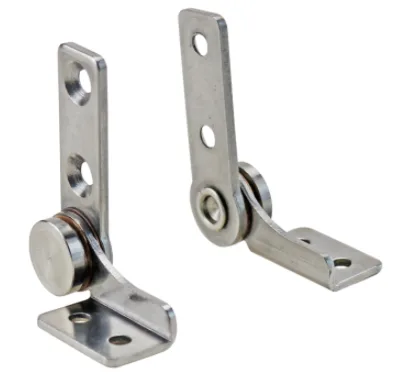
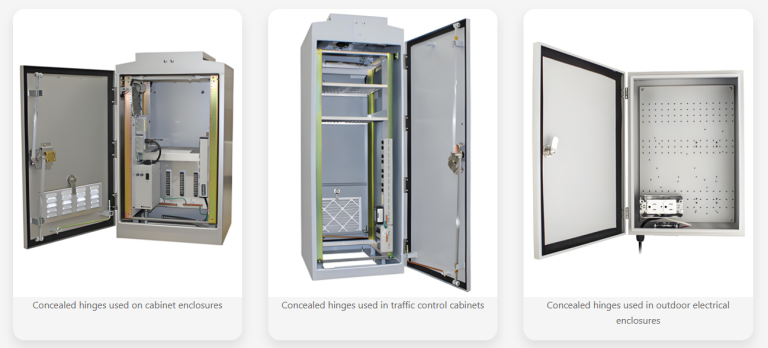
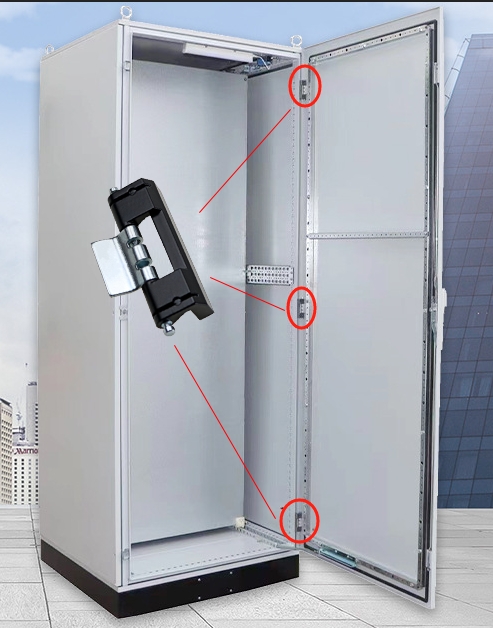
A concealed hinge is not visible from the cabinet exterior when the door is closed. Its leaf, pin, barrel, or linkage is positioned behind the door return, frame flange, or internal mounting surface.
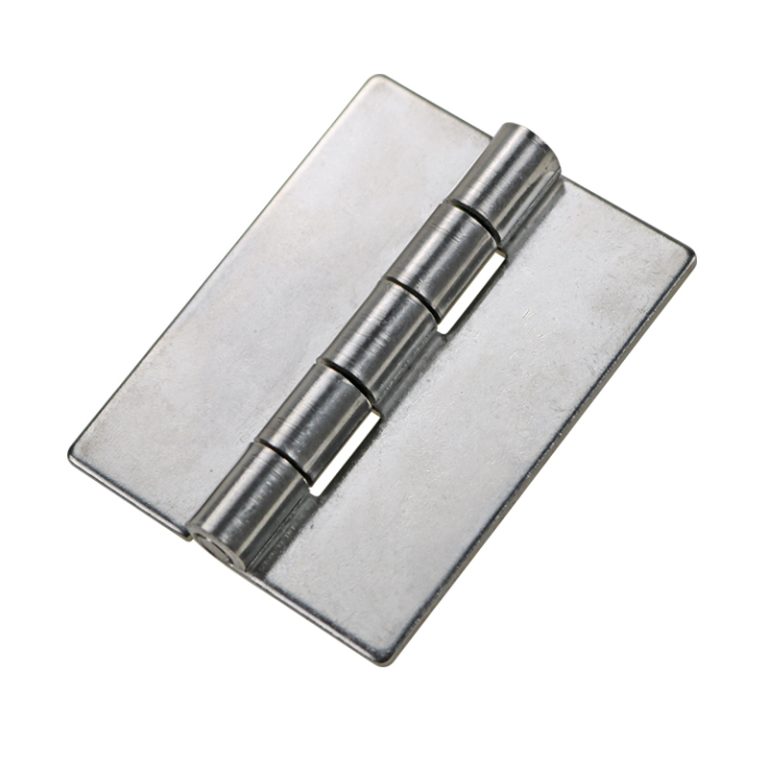
An exposed hinge has a visible barrel, leaf, or mounting portion on the cabinet exterior when the door is closed. Exposed describes visibility, not one universal fastening method. An exposed hinge may be bolted, screwed, riveted, stud-mounted, or welded.
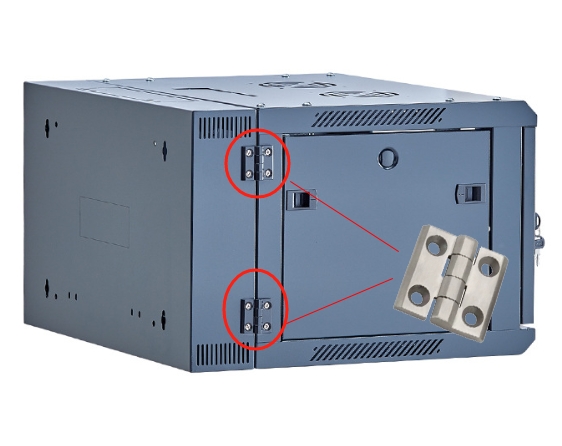
Concealed vs Exposed Hinges: Decision Matrix
| Decision Factor | Concealed Hinge | Exposed Hinge |
|---|---|---|
| Exterior visibility | Hidden when the door is closed | Partly or fully visible |
| Internal mounting envelope | Requires room behind the door return or frame flange | Usually uses less internal hinge space |
| Opening clearance | May be limited by internal geometry and door-return interference | Often provides a simpler external swing path |
| External exposure | May reduce direct external impact and contamination exposure | Material and finish face direct environmental exposure |
| Service access | May require internal access or door removal | Often easier to inspect, tighten, or replace |
| Gasket integration | Depends on how the internal hinge crosses the frame and seal envelope | Can sometimes be placed outside the gasket line |
| Tamper access | Reduces direct access to visible hinge parts | Requires review of pin retention, fasteners, frame overlap, and latch architecture |
| Production preparation | May need internal brackets, cutouts, or tighter geometry control | Often permits more direct external mounting |
Mounting Space and Opening Geometry
The first practical difference is where the hinge has to fit. A concealed hinge uses internal cabinet space that may already be occupied by a door return, reinforcement, gasket, cable path, latch rod, insulation, or adjacent equipment. An exposed hinge moves more of the mechanism outside the enclosure, but its barrel and leaves must clear neighboring panels, handles, covers, and personnel.
Internal Envelope
Check the hinge body, leaf movement, adjustment access, fasteners, door return, reinforcement, seal compression zone, and the clearance needed to install or remove the hinge.
Swing Path
Model the closed position, required opening angle, barrel projection, door-edge path, adjacent-panel interference, stop location, and clearance for the user’s hand or service tools.
Door Removal
Confirm whether the door can be lifted off, unbolted, or withdrawn without removing internal equipment, cutting a seal, or dismantling the surrounding cabinet structure.
Engineering check: do not approve the hinge from a closed-door rendering alone. Review the complete swing envelope, installation access, adjustment access, and removal path.
Door Load and Mounting Load Path
Hinge visibility does not determine load capacity. A concealed hinge is not automatically stronger than an exposed hinge, and an exposed hinge is not automatically limited to light doors. Capacity depends on the selected leaf, pin, knuckle, bushing or bearing, fasteners, welds, substrate, reinforcement, hinge spacing, door mass, and center of gravity.
- Door mass and center of gravity: define the complete door, including windows, insulation, handles, locks, cable carriers, and attached equipment.
- Hinge spacing: wider vertical spacing generally reduces the horizontal reaction couple created by door moment, but the complete structure still needs verification.
- Mounting substrate: thin sheet, unsupported returns, inserts, studs, welds, backing plates, and frame brackets can govern the joint before the hinge body reaches its own limit.
- Dynamic service: stop impact, vibration, slammed doors, transport loads, and misalignment require project-specific margin and validation.
Load-rating warning: do not publish one universal kilogram rating for concealed or exposed hinges. Compare model-specific ratings only when the door geometry, hinge count, spacing, orientation, fastening method, and test basis are defined. For mounting architecture, review the weld-on vs bolt-on hinge guide.
Sealing, Washdown, and Contamination
Neither hinge architecture guarantees enclosure sealing. The final result depends on the hinge axis, mounting penetrations, frame geometry, gasket path, compression, latch position, drainage, and the complete cabinet assembly.
Concealed Hinge Check
Internal placement can reduce direct external impact and washdown exposure, but hidden crevices may retain moisture or contamination. Verify drainage, cleaning access, internal coating, and the effect of the hinge on the door-return and seal envelope.
Exposed Hinge Check
External placement usually makes the hinge easier to inspect. Cleaning access depends on the barrel, leaf, fasteners, and surrounding cabinet geometry. The material, finish, pin retention, lubricant, and fasteners still need to match the actual environment.
Selection note: an exposed hinge positioned outside the gasket line may preserve a continuous seal path. A concealed hinge may also support a clean exterior, but its internal bracket or linkage must not obstruct gasket compression or door closure.
Service Access and Tamper Resistance
Exposed hinges are often easier to inspect and replace because the barrel, leaves, fasteners, and pin are visible. Concealed hinges can reduce direct external access, but service may require opening the cabinet, removing internal covers, supporting the door, or working around equipment.
| Review Item | Questions to Ask |
|---|---|
| Fastener access | Can fasteners be reached from outside, inside, or only after the door is opened? |
| Pin retention | Is the pin removable, staked, retained, or protected by the closed-door geometry? |
| Frame overlap | Does the closed door overlap the frame so that removing the hinge still does not release the door? |
| Inspection | Can wear, corrosion, looseness, and alignment be checked without dismantling the cabinet? |
| Replacement | Can one hinge be replaced while the door is supported, or must the complete door be removed? |
| Lubrication | Does the selected hinge require lubrication, and can it be applied without contaminating the cabinet? |
Security note: concealed hardware can reduce visible access, but the complete door, hinge pin, fasteners, frame overlap, latch, and lock points determine whether the assembly resists removal or prying.
Exposed Hinge Installation Checks for Industrial Cabinet Doors
The exact hole pattern, fastener type and tightening torque, weld size or procedure, and inspection criteria must come from the selected hinge drawing and project specification. The following sequence focuses on the cabinet-door checks that are valid across most exposed-hinge installations.
- Support the complete door. Use a fixture or temporary supports so the hinge does not carry an uncontrolled door during marking and fastening.
- Establish one hinge axis. Mark or fixture the pin centerline and keep all hinge barrels coaxial.
- Confirm leaf orientation and opening direction. Check the barrel projection, door edge, stop, adjacent panels, and required opening angle.
- Verify the structural substrate. Confirm that the door and frame have adequate thickness, backing, inserts, studs, brackets, or weld preparation.
- Transfer the selected drawing. Use the actual model hole pattern and edge distances rather than a generic cabinet-hinge template.
- Fasten without forcing alignment. Do not pull a twisted door or misaligned frame into position by tightening the hinge leaves.
- Check the complete closure. Verify door gaps, latch engagement, gasket compression, opening clearance, and the structural stop.
- Inspect under representative use. Look for fastener movement, leaf lift, bracket flex, pin binding, door sag, and interference through the full swing.
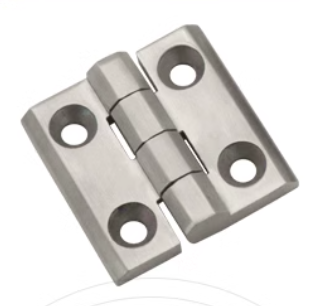
Manufacturing and Lifecycle Cost
Cost should be compared as a process, not as one hinge price. The lower-cost part may require more cabinet preparation, finishing, alignment labor, downtime, or replacement access. The higher-cost part may reduce those activities—or may not—depending on the actual cabinet design.
| Cost Driver | Concealed Hinge | Exposed Hinge |
|---|---|---|
| Door and frame preparation | May require internal brackets, cutouts, or tighter envelope control | Often allows more direct external mounting |
| Assembly access | Can be less accessible after internal equipment is installed | Usually easier to inspect and fasten from the exterior |
| Exterior protection | Hardware receives less direct external exposure | Material and finish must match direct environmental exposure |
| Adjustment and alignment | Internal geometry may make adjustment less visible | Alignment is easier to observe, but exposed leaves still need a stable substrate |
| Replacement labor | May require internal access or door removal | Often more accessible, but the specific pin and fastening design still govern |
| Downtime | Depends on how much cabinet equipment blocks access | Can be lower when the hinge is replaceable without disturbing the cabinet interior |
Prototype Validation Checklist
Geometry and Load
- Complete door mass and center of gravity
- Hinge quantity and vertical spacing
- Required opening angle and adjacent interference
- Door gaps and hinge-axis alignment
- Door sag, bracket flex, and fastener movement
- Structural stop and impact path
Service and Environment
- Gasket path and compression
- Latch engagement through the full door tolerance
- External corrosion and contamination exposure
- Cleaning, drainage, and lubrication access
- Pin and fastener tamper access
- Door removal and field replacement space
Cabinet Door Review
Send the Cabinet Door Requirements
Provide the door and frame drawing so the concealed or exposed architecture can be reviewed against mounting space, load path, sealing, service access, and environment.
- Door and frame drawing
- Door mass and center of gravity
- Door and frame thickness
- Hinge quantity, spacing, and opening angle
- Gasket, latch, and internal clearance
- Fastening method, environment, and cycle requirement
FAQ
Are concealed hinges stronger than exposed hinges?
Not as a general rule. Visibility does not determine strength. Compare the selected hinge body, pin, leaves, fasteners, mounting substrate, hinge spacing, door mass, center of gravity, and test basis.
Do concealed hinges improve an enclosure’s IP rating?
A concealed hinge does not establish an IP rating by itself. The complete cabinet, gasket path, mounting penetrations, door compression, latch system, and test result determine enclosure protection.
Are exposed hinges easier to maintain?
They are often easier to inspect and replace because the hinge is visible and accessible. Actual maintenance still depends on the pin, fasteners, lubrication method, door support, and replacement procedure.
How should exposed cabinet hinges be installed?
Support the complete door, establish one hinge axis, use the selected model drawing, verify the structural substrate, fasten without forcing alignment, and test door gaps, opening clearance, latch engagement, and gasket compression.
Which hinge architecture is more secure?
Concealed hardware can reduce direct access, but security depends on the complete door, hinge pin retention, fasteners, frame overlap, latch, and lock points. Exposed hinges can also use protected pins and inaccessible fasteners.
Should lifecycle cost be based on hinge price alone?
No. Include door and frame preparation, assembly access, alignment labor, finishing, inspection, replacement access, corrosion exposure, and downtime in the comparison.
Choose concealed vs exposed hinges by matching the architecture to the complete cabinet door. Mounting space, swing geometry, load path, sealing, service access, environment, and replacement requirements matter more than whether the hinge is visible.