HTAN is one of the leading manufacturers of industrial hinges, handles and latches in China.


Outdoor telecom cabinet hinges are not just simple door hardware. In exposed communication cabinets, the hinge system affects door alignment, gasket compression, corrosion resistance, maintenance access, and long-term weather protection. If the hinge is undersized, poorly aligned, or made from the wrong material, the cabinet door may sag, the seal may lose pressure, and moisture or dust can enter the enclosure.
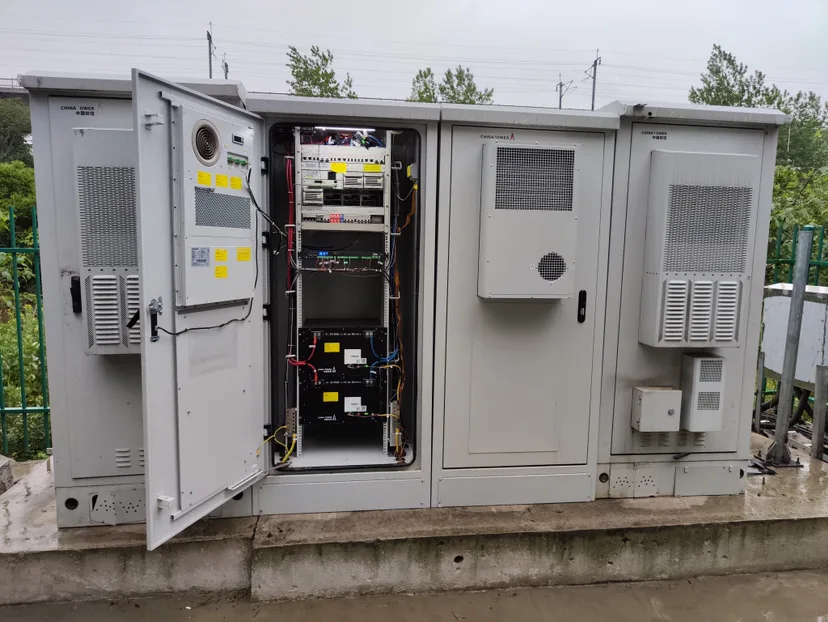
This guide focuses specifically on outdoor telecom cabinet doors. It explains how corrosion, door sag, and seal failure happen in exposed communication cabinet applications, and how engineers or buyers can reduce these risks through better hinge material, hinge structure, mounting design, and validation. The goal is to help maintain stable door alignment, reliable gasket compression, and long-term weather protection in outdoor telecom equipment.
Why Outdoor Telecom Cabinet Hinges Need Special Attention
Outdoor telecom cabinets are commonly installed on rooftops, roadside base stations, remote communication sites, coastal areas, industrial zones, and utility infrastructure. These locations expose cabinet doors to rain, humidity, dust, salt spray, UV exposure, temperature cycling, wind load, and repeated service access.
A hinge that performs well on an indoor control box may fail much earlier on an outdoor telecom cabinet. The problem is not only whether the hinge can carry the door weight. The hinge must also keep the door in the correct position so the gasket can compress evenly around the frame. Once the door drops, twists, or shifts, the latch may still close, but the seal line may no longer be reliable.
For this reason, outdoor telecom cabinet hinge selection should be treated as part of the cabinet sealing and reliability system, not only as a mechanical accessory.
Common Hinge-Related Failures in Outdoor Telecom Cabinets
Corrosion Around Hinge Pins, Screws, and Mounting Plates
Corrosion is one of the most common reasons outdoor telecom cabinet hinges lose performance. Moisture, salt spray, polluted air, and surface damage can attack hinge pins, screw holes, mounting plates, and exposed edges. In coastal or high-humidity environments, zinc-plated steel hinges may develop rust quickly once the protective coating is scratched or worn.
Another hidden problem is galvanic corrosion. This can happen when stainless steel hinges, aluminum frames, coated steel doors, and unsuitable carbon steel fasteners are used together in a wet outdoor environment. Moisture creates an electrical path between different metals, and corrosion may appear around screws, washers, hinge leaves, or mounting holes.
For telecom cabinets installed near coastal roads, ports, chemical facilities, or high-humidity sites, the hinge material should be reviewed together with the cabinet material and fastener material. If the project involves chloride exposure, coating damage, or visible outdoor rust, the corrosion risk should be evaluated more carefully. A related reference on salt spray corrosion in heavy-duty hinges can help explain how surface damage and harsh environments accelerate hinge failure.
Door Sag That Reduces Gasket Compression
Door sag happens when the hinge system cannot hold the original door position over time. This may be caused by insufficient hinge load capacity, poor hinge spacing, worn pins, weak mounting points, oversized doors, or cabinet-frame deformation. In an outdoor telecom cabinet, door sag is more serious than a simple opening problem because it can directly reduce gasket compression.
When the door drops even slightly, the upper and lower seal gaps may become uneven. The cabinet may still look closed from the outside, but the gasket may no longer press evenly against the frame. Over time, this can allow water, dust, insects, and humid air to enter the cabinet.
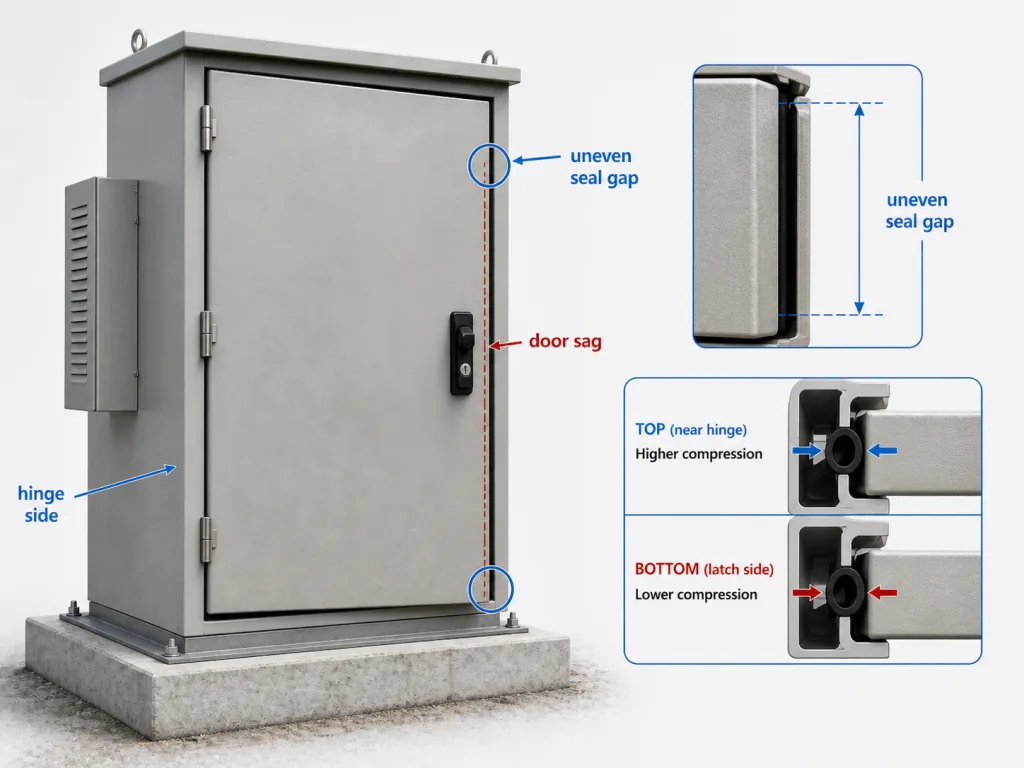
For telecom cabinet doors, the hinge should be selected by checking door weight, door height, door width, hinge spacing, and the distance from the hinge line to the door’s center of gravity. Door width is especially important because a wide telecom cabinet door creates higher leverage on the hinge line than a narrow door of the same weight. For projects that require load calculation, safety factor review, or pull-out force checks, engineers can refer to this hinge load capacity guide for a more detailed calculation method.
Seal Failure Caused by Hinge Misalignment
Outdoor telecom cabinets often use foam, EPDM, silicone, or rubber gaskets to protect internal communication equipment. These seals only work correctly when the door stays parallel to the frame. If the hinge bends, loosens, corrodes, or shifts, the gasket may be over-compressed in one area and under-compressed in another.
This is why hinge alignment, pivot position, mounting stiffness, and latch position must be reviewed together. A strong gasket cannot compensate for a hinge system that allows the telecom cabinet door to twist, drop, or lose parallel contact with the frame. If the cabinet must meet specific water or dust protection requirements, this guide on hinge selection for IP65/IP67 cabinets provides additional details on sealing-related hinge decisions.
In outdoor telecom cabinets, hinge design should therefore be evaluated together with gasket compression, latch engagement, door flatness, and maintenance frequency.
How to Select Hinges for Outdoor Telecom Cabinet Doors
Check Door Weight, Door Width, and Hinge Spacing
The first selection factor is the actual cabinet door load. This includes the door panel, reinforcement ribs, lock system, cable holders, grounding strap, insulation, and any mounted accessories. For outdoor applications, the hinge also needs a safety margin because the door may experience wind load, service impact, vibration, and repeated opening cycles.
Door width and hinge spacing should be reviewed together. A tall or wide cabinet door can create higher bending force on the hinge line, even when the total door weight does not appear extreme. If hinge spacing is too narrow, the door may place more stress on the upper hinge and gradually lose alignment.
For light telecom cabinet doors, two properly rated hinges may be enough. For taller or heavier doors, three hinges or a continuous hinge may help distribute the load more evenly. However, adding more hinges does not automatically solve sag. If multiple hinges are not aligned during installation, they can create binding instead of improving performance.
Review the Outdoor Environment
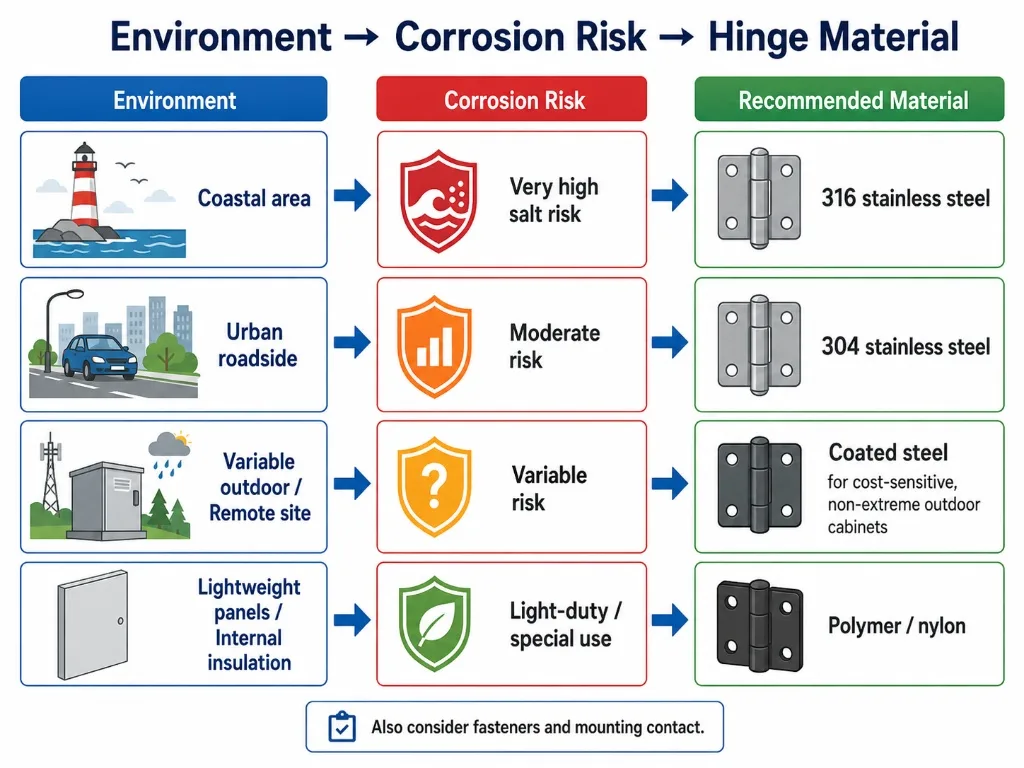
Outdoor telecom cabinets do not all face the same environment. A cabinet installed in a dry inland area may not need the same hinge material as a cabinet installed near the coast, beside a busy road, or in a chemical-heavy industrial zone. The main environmental risks should be identified before hinge selection.
| Outdoor Environment | Main Risk | Hinge Selection Focus |
|---|---|---|
| Coastal area | Salt spray, chloride corrosion, high humidity | 316 stainless steel, compatible fasteners, corrosion-resistant mounting |
| Urban roadside | Rain, dust, pollution, vibration | Stainless steel or coated steel with reliable sealing and secure fastening |
| Industrial zone | Chemicals, moisture, airborne contaminants | Corrosion-resistant material and surface treatment |
| Dry desert area | Thermal cycling, dust, UV exposure | Stable alignment, dust-resistant design, secure fasteners |
| Remote telecom site | Limited maintenance access | Long service life, easy inspection, reliable adjustment |
Match Hinge Material with Cabinet Material
Outdoor telecom cabinets may use powder-coated steel, stainless steel, aluminum, or mixed-material construction. The hinge body, hinge pin, screws, washers, and mounting plates should be considered together. A stainless steel hinge does not automatically solve corrosion if the wrong fasteners are used or if water collects around the mounting holes.
For general outdoor telecom cabinets, 304 stainless steel may be suitable when the environment is not coastal or chemically aggressive. For coastal, high-humidity, or chloride-rich sites, 316 stainless steel is usually safer. If the project team is comparing these two materials, this outdoor stainless steel hinge selection guide explains the difference between 304 and 316 in more detail.
For light access panels, polymer or nylon hinges may help avoid rust, but they must be checked for load capacity, UV exposure, creep resistance, and long-term stability. These materials should not be selected only because they are non-corrosive.
Protect the Gasket Compression Path
The hinge pivot position affects how the cabinet door moves into the seal. If the pivot location changes during replacement, or if the hinge offset is wrong, the door may rub the gasket, pinch the seal, or leave a gap on one side. This is a common problem when older telecom cabinets are retrofitted with new hinges that do not match the original geometry.
Before replacing hinges, technicians should check the original hinge offset, door gap, gasket thickness, latch position, and compression path. If the new hinge changes the door movement, adapter plates or shims may be required. Adjustable hinges can help correct small alignment issues, but they must be locked securely after adjustment.
Hinge Type Options for Outdoor Telecom Cabinets
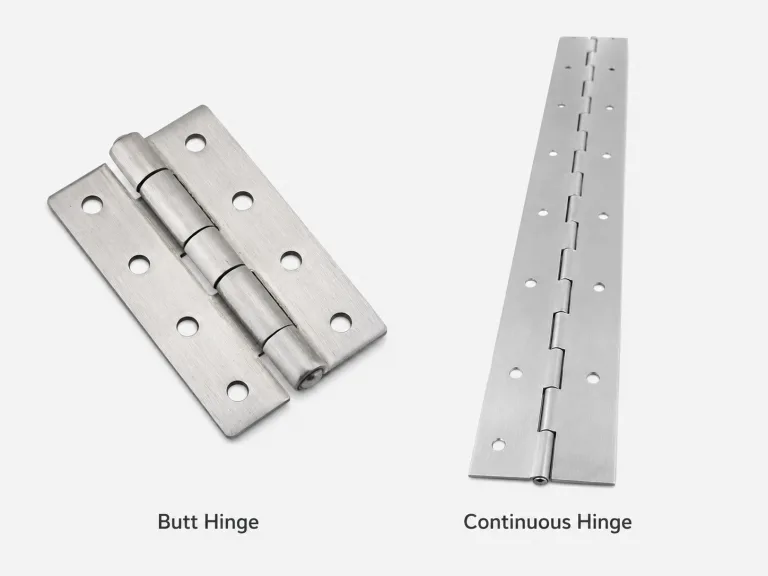
Butt Hinges
Butt hinges are commonly used on telecom cabinet doors because they are compact, easy to install, and available in stainless steel versions. For outdoor use, the hinge should have enough thickness, corrosion-resistant pins, and secure mounting points. If the door is medium or heavy, standard light-duty butt hinges may not provide enough long-term alignment stability.
Continuous Hinges
Continuous hinges distribute load along the full height of a tall telecom cabinet door. This can reduce local stress and help control door sag on tall or narrow cabinet doors. However, continuous hinges must be carefully installed because poor cutting, inaccurate drilling, or exposed cut edges can create alignment and corrosion problems.
If the project uses full-length hinges on metal enclosures, cutting accuracy, hole alignment, edge protection, and mounting flatness should be checked carefully. For installation details, see this guide on continuous hinge installation for metal enclosures.
Concealed Hinges
Concealed hinges can improve appearance and reduce external tampering risk. In outdoor telecom cabinets, they may also help protect the hinge mechanism from direct impact or weather exposure when the cabinet structure is designed correctly. However, concealed hinges still need enough load capacity and must not interfere with gasket compression.
For telecom cabinet applications, concealed hinges should be treated as an option only when security, external appearance, and protected mounting are important. They should not be selected if their structure reduces door stiffness, limits service access, or makes gasket compression harder to control.
Adjustable Hinges
Adjustable hinges can be useful when the cabinet door needs alignment after installation. Slotted holes or adjustment features can help correct minor vertical drop, uneven door gaps, or gasket compression imbalance. This is useful for telecom cabinets that may shift during transport, field installation, or long-term outdoor service.
The limitation is that adjustable mechanisms must be locked securely after adjustment. If adjustment screws loosen under vibration or temperature cycling, the door may lose alignment again.
Material Comparison for Outdoor Telecom Cabinet Hinges
Material selection should be based on environment, cabinet material, door weight, and expected service life. The table below is focused on exposed communication cabinet doors, not general hinge material selection.
| Material | Advantages | Limitations | Best Use in Telecom Cabinets |
|---|---|---|---|
| Zinc-Plated Steel | Low cost and easy to source | Coating damage can lead to early rust outdoors | Indoor or sheltered telecom cabinets |
| 304 Stainless Steel | Good general corrosion resistance and clean appearance | Less suitable for strong chloride or coastal exposure | General outdoor telecom cabinets in non-coastal locations |
| 316 Stainless Steel | Better resistance to chloride corrosion and harsh humidity | Higher cost than 304 or plated steel | Coastal, humid, roadside, or harsh outdoor telecom sites |
| Polymer or Nylon | Non-corrosive and lightweight | Lower load capacity and possible UV or creep concerns | Light-duty access panels or non-structural telecom covers |
This table should not replace project-specific engineering review. The final choice should consider cabinet location, door size, opening frequency, material compatibility, seal design, and expected maintenance interval.
Outdoor Telecom Cabinet Hinge Selection Checklist
| Selection Item | What to Check | Why It Matters |
|---|---|---|
| Door Weight | Total weight including locks, accessories, insulation, and grounding parts | Prevents undersized hinge selection |
| Door Size | Height, width, and center of gravity | Large doors create higher bending force on the hinge line |
| Hinge Spacing | Distance between hinge points | Affects load distribution and sag resistance |
| Cabinet Material | Powder-coated steel, aluminum, stainless steel, or mixed materials | Helps reduce galvanic corrosion risk |
| Fastener Material | Screws, washers, nuts, and mounting plates | Incorrect fasteners can become the first corrosion point |
| Seal Design | Gasket thickness, latch position, and compression path | Ensures the hinge does not weaken weather protection |
| Maintenance Access | Opening frequency and field adjustment needs | Reduces service time and repeated alignment work |
| Testing Requirements | Corrosion, cycle life, load deflection, and vibration checks | Improves procurement confidence before bulk use |
Testing and Validation Before Bulk Purchase
Outdoor telecom cabinet hinges should be checked before large-scale procurement, especially when the cabinets will be used in coastal, humid, or remote locations. A supplier’s catalog rating is useful, but it should be supported by material information, sample installation, and performance validation.
Corrosion Testing
Salt spray testing can help compare corrosion resistance between materials and surface treatments. It does not perfectly predict real service life, but it can help screen unsuitable materials before deployment. For telecom cabinets exposed to coastal air or road salt, buyers should request corrosion-related test information when available.
Cycle-Life Testing
Telecom cabinet doors may be opened many times for inspection, cable routing, battery service, router replacement, and emergency repair. Cycle-life testing helps confirm whether the hinge can maintain smooth operation and alignment after repeated use.
Load and Deflection Checks
The hinge should not only avoid breaking; it should also keep the door aligned. Small deflection can still reduce gasket compression. During sample approval, the cabinet door should be checked for top and bottom gap consistency, latch engagement, smooth operation, and seal contact after repeated opening.
Field Sample Approval
Before full deployment, it is useful to install sample hinges on one or more telecom cabinet doors in the intended environment. The sample should be checked after opening cycles, rain exposure, temperature changes, and maintenance work. This helps identify mounting, alignment, corrosion, or seal problems before mass production.
Common Mistakes to Avoid
Choosing Hinges Only by Door Weight
Door weight is important, but it is not enough. Door width, hinge spacing, gasket compression, cabinet material, mounting strength, wind exposure, and corrosion environment all affect long-term hinge performance.
Using Stainless Steel Hinges with Unsuitable Fasteners
A stainless steel hinge can still develop corrosion problems if it is installed with unsuitable screws, washers, or mounting plates. The complete hinge assembly should be reviewed, not only the visible hinge leaves.
Ignoring Gasket Compression During Hinge Replacement
When replacing hinges on existing telecom cabinets, the new hinge must preserve the original door movement and seal path. If the pivot offset changes, the gasket may be over-compressed in one area and under-compressed in another.
Adding More Hinges Without Checking Alignment
More hinges do not always improve performance. If multiple hinges are not aligned, they can create binding and increase stress on the door frame. Alignment should be checked before and after installation.
Assuming Outdoor Hinges Require No Maintenance
Even corrosion-resistant hinges should be inspected. Outdoor telecom cabinets should be checked for loose screws, worn pins, rust at fasteners, uneven door gaps, and damaged gaskets during scheduled maintenance.
If your telecom cabinet project involves outdoor exposure, uneven door gaps, corrosion around hinge points, or gasket compression loss, HTAN can help review hinge material, mounting structure, and access-door requirements before sample production. Share your cabinet door size, material, installation environment, and opening frequency to receive a more suitable hinge recommendation.
FAQ
Can standard indoor hinges be used for outdoor telecom cabinets?
No. Standard indoor hinges usually do not provide enough corrosion resistance, sealing compatibility, or long-term outdoor durability. Outdoor telecom cabinets should use hinges selected for moisture, temperature cycling, door load, and gasket compression.
Which hinge material is best for coastal telecom cabinets?
316 stainless steel is usually preferred for coastal telecom cabinets because it offers better resistance to chloride-related corrosion than 304 stainless steel. Fasteners, washers, and mounting contact should also be reviewed to reduce corrosion risk.
How many hinges does an outdoor telecom cabinet door need?
The correct number depends on door weight, door height, door width, hinge spacing, and opening frequency. Light doors may use two hinges, while taller or heavier doors may require three hinges or a continuous hinge. Alignment is more important than simply adding more hinges.
Can a sagging telecom cabinet door be adjusted without replacing the hinges?
Sometimes. If the hinge has slotted holes or adjustment features, technicians may correct minor door drop with alignment adjustments, shims, or fastener tightening. If the pin holes are worn or the hinge has permanent deformation, replacement is usually required.
When should outdoor telecom cabinet hinges be replaced?
Hinges should be replaced when there is visible rust, worn pin holes, loose mounting points, uneven door gaps, difficult movement, or seal compression loss. If door sag affects gasket contact or latch alignment, the hinge system should be reviewed immediately.

-768x768-1.png)