HTAN es uno de los principales fabricantes de bisagras, manillas y pestillos industriales de China.


Un retenedor de tapa mantiene abierta una tapa o cubierta en un ángulo seguro para que no se cierre de golpe y golpee la mano. Hay dos tipos habituales que lo hacen de formas diferentes. Un retenedor de fricción utiliza la fricción mecánica para mantener la tapa en cualquier posición en la que la dejes. Un retenedor de tapa con resorte y amortiguador incorpora un resorte y un amortiguador, de modo que la tapa queda sujeta al abrirse y se cierra suavemente en lugar de caer de golpe. Ambos evitan que la tapa se caiga, pero su uso es diferente y se adaptan a distintos tipos de tapas; la elección depende de cómo deba comportarse la tapa cuando alguien la suelte.
Esta guía compara los cierres de tapa por fricción y los cierres de tapa con amortiguador de resorte para tapas de equipos en cuanto a la posición de retención, el cierre suave, la protección contra caídas, el coste y el mantenimiento, para que puedas elegir el cierre más adecuado en función del uso que se le dé a la tapa. Se centra en estos dos tipos de mecanismos, y no en el cálculo del par ni en la selección general de cierres de tapa, temas que se tratan por separado.
Pregunta fundamental
¿La tapa debería quedarse tal y como la dejes, o cerrarse sola?
Diferencia principal
Fricción = se sujeta en cualquier sitio, así de sencillo. Resorte-amortiguador = cierre suave, protección contra caídas.
Siguiente paso
Antes de elegir, comprueba el peso de la tapa y si te importa que tenga cierre suave.
Principales conclusiones
- Un soporte de fricción para la tapa mantiene esta en cualquier ángulo mediante fricción mecánica: es sencillo, ajustable y económico.
- Un soporte con resorte y amortiguador sujeta la tapa al abrirla y facilita su cierre suave, evitando que una tapa pesada se caiga de golpe.
- Elige el sistema de fricción para tapas ligeras o de peso medio que solo tengan que mantenerse en su sitio; elige el sistema de resorte con amortiguador para tapas pesadas, uso frecuente o en aquellos casos en los que el golpe de la tapa al cerrarse suponga un problema de seguridad o comodidad.
- El factor decisivo es el peso de la tapa y cómo debe comportarse esta al soltarla: si debe permanecer en su sitio o cerrarse suavemente por sí sola.
Respuesta rápida: ¿Fricción o resorte-amortiguador?
| Si la tapa… | Una mejor opción | Por qué |
|---|---|---|
| Es de ligera a media y solo hay que mantenerla abierta | Soporte de fricción para la tapa | Se mantiene en cualquier ángulo; es sencillo y económico |
| Es pesado y podría caer con fuerza | Soporte de tapa con resorte amortiguador | El amortiguador facilita el cierre y evita que la puerta se cierre de golpe |
| Se abre y se cierra con mucha frecuencia | Soporte de tapa con resorte amortiguador | El cierre suave mejora la comodidad y la seguridad |
| Tiene que detenerse desde muchos ángulos diferentes | Soporte de fricción para la tapa | Se mantiene fijo en cualquier punto de su recorrido |
| Debe ser económico y fácil de mantener | Soporte de fricción para la tapa | Menos piezas, fácil de ajustar |
En resumen, los soportes para tapas con fricción destacan por su sencillez, su precio y su capacidad para mantenerse en cualquier ángulo, mientras que los soportes con resorte y amortiguador destacan por su cierre suave, la protección contra caídas y la comodidad en el caso de tapas pesadas o de uso frecuente. El peso de la tapa y si debe cerrarse por sí sola suelen ser los factores decisivos.
En qué consiste cada tipo
Soporte de fricción para la tapa
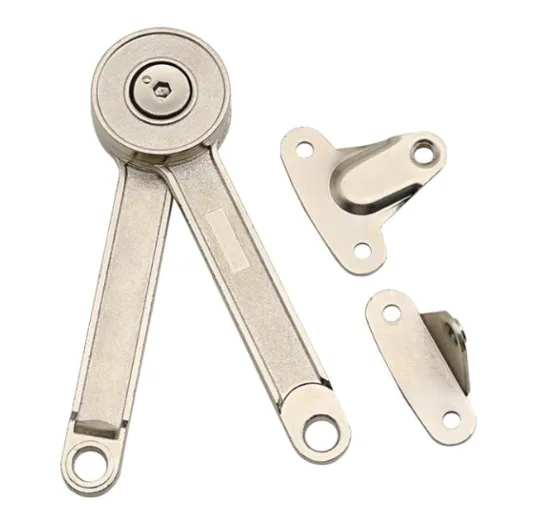
Utiliza la fricción mecánica entre las piezas móviles para mantener la tapa en la posición en la que se deje. Es sencillo, tiene pocas piezas y, por lo general, la fricción se puede ajustar. Mantiene la tapa en cualquier ángulo a lo largo de su recorrido, pero no ayuda activamente a que la tapa se abra o se cierre; eso lo hace el usuario, y la fricción simplemente la mantiene en su sitio.
Soporte de tapa con resorte amortiguador
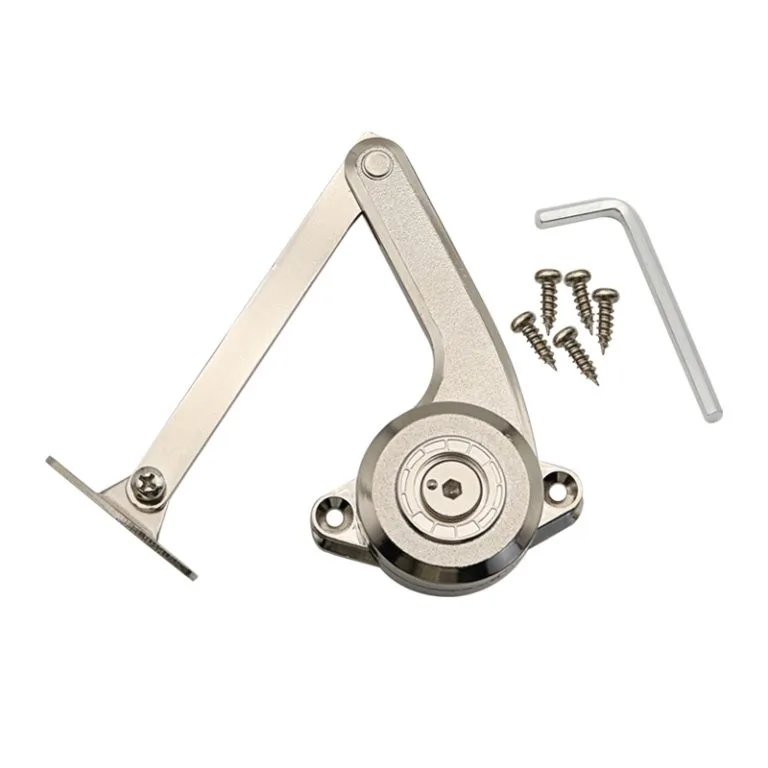
Incorpora un resorte para soportar el peso de la tapa al abrirse y un amortiguador para ralentizar el movimiento de cierre. La tapa se eleva con ayuda y se cierra suavemente, en lugar de caer de golpe. Tiene más piezas y es más cara, pero controla todo el movimiento, lo cual es fundamental en el caso de tapas pesadas o que se abren muchas veces al día. Se trata de un mecanismo mecánico de resorte y amortiguador, no de un puntal de gas: el soporte proviene de un resorte mecánico en lugar de un cilindro de gas sellado.
En el siguiente documento se aborda toda la gama de tipos de retenedores de tapa, conjuntos y factores de selección: Guía completa sobre los soportes para tapas.
Protección contra caídas y cierre suave: la diferencia fundamental
La diferencia fundamental radica en lo que ocurre cuando alguien suelta la tapa. Un retenedor de fricción mantiene la tapa en su sitio, lo cual está bien hasta que la fricción se ajusta a un nivel demasiado bajo, se trata de una tapa pesada o la fricción se desgasta con el tiempo; en ese momento, la tapa puede deslizarse o caerse. Un retenedor por fricción no frena la caída de la tapa; solo se opone al movimiento mediante la fricción.
Un sistema de retención de la tapa con resorte y amortiguador controla activamente el movimiento de cierre. El amortiguador frena la tapa al final de su recorrido para que se cierre suavemente en lugar de dar un portazo, y el resorte soporta el peso para que la tapa no caiga de golpe aunque se suelte. En el caso de una tapa pesada, o en cualquier situación en la que una tapa que caiga pueda lesionar una mano o dañar el equipo, este cierre suave y controlado es la razón principal para elegir el sistema de resorte y amortiguador en lugar del de fricción. El principio de amortiguación es el mismo que se utiliza en bisagras de torsión con amortiguación.
Coste, adaptabilidad y mantenimiento
Los retenedores de tapa por fricción destacan por su bajo coste y su sencillez. Al tener menos piezas, son más baratos, fáciles de instalar y, a menudo, la fricción de sujeción se puede ajustar para adaptarla a la tapa. Un soporte de fricción para tapa bien diseñado y con las dimensiones adecuadas para la tapa funcionará de forma fiable durante una larga vida útil; el problema del desgaste se da principalmente cuando el soporte es demasiado pequeño para la tapa o la fricción está ajustada a un nivel demasiado bajo. El mantenimiento es sencillo y, si la fricción disminuye con el paso de los años, normalmente se puede ajustar o sustituir la unidad. Para tapas ligeras o de peso medio en las que no se necesita un cierre suave, esa simplicidad y ese bajo coste suponen una ventaja real.
Los soportes de tapa con resorte y amortiguador son más caros y tienen más piezas —un resorte y un amortiguador, además del sistema de articulación—, por lo que hay más elementos que pueden acabar desgastándose, y el rendimiento de la amortiguación puede variar a lo largo de una vida útil muy prolongada. A cambio, ofrecen un movimiento controlado y protección contra caídas. Es importante ajustar el muelle y el amortiguador al peso de la tapa, ya que una unidad dimensionada para un peso incorrecto resultará poco resistente o no conseguirá sujetarla; el método de dimensionamiento se explica en la guía de Cálculo del par de apriete para los soportes de la tapa.
Cómo tomar una decisión
Empieza por el peso de la tapa y la frecuencia con la que se utiliza; después, ten en cuenta el cierre suave y el coste:
| Pregunta | Apunta a… |
|---|---|
| ¿Es pesada la tapa o podría caer con fuerza? | Amortiguador de resorte (protección contra caídas) |
| ¿Se abre y se cierra muchas veces al día? | Amortiguador de resorte (cierre suave) |
| ¿Tiene que poder colocarse en muchos ángulos diferentes? | Fricción (se sujeta en cualquier sitio) |
| ¿Lo más importante es que sea económico y de fácil mantenimiento? | Fricción |
| ¿Supone un riesgo para la seguridad que la tapa se cierre de golpe? | Amortiguador de muelle |
En realidad, la decisión radica en si la tapa solo tiene que permanecer en la posición en la que se deja, o si es necesario controlar su movimiento hasta que quede completamente cerrada. Una vez elegido el tipo, el soporte debe adaptarse al peso y la geometría de la tapa para que esta se sujete correctamente.
PREGUNTAS FRECUENTES
¿Cuál es la diferencia entre un soporte de tapa con fricción y uno con resorte amortiguador?
Un retenedor de tapa por fricción utiliza la fricción mecánica para mantener la tapa en cualquier posición en la que se deje, y es sencillo y económico. Un retenedor de tapa con resorte y amortiguador incorpora un resorte para sostener la tapa al abrirse y un amortiguador para facilitar su cierre suave, de modo que una tapa pesada no se golpee ni caiga bruscamente. La diferencia fundamental radica en mantenerla en su sitio frente a controlar todo el movimiento de apertura y cierre.
¿Cuándo debo utilizar un soporte de tapa con resorte amortiguador?
Utilice un soporte para tapas con resorte y amortiguador en el caso de tapas pesadas, tapas que se abran y cierren muchas veces al día, o en cualquier lugar donde la caída o el golpe de una tapa puedan causar lesiones en las manos o dañar el equipo. El resorte soporta el peso de la tapa y el amortiguador frena su movimiento al final del recorrido, lo que permite un cierre suave y controlado. Para tapas ligeras que simplemente deben permanecer abiertas, suele bastar con un retenedor de fricción, que además es más económico.
¿Puede una tapa de fricción soportar el peso de una tapa pesada?
Un soporte de fricción para tapas puede sujetar una tapa pesada si tiene las dimensiones adecuadas, pero hay límites. Si la fricción se ajusta a un nivel demasiado bajo o se desgasta con el tiempo, una tapa pesada puede deslizarse o caerse, ya que la fricción solo se opone al movimiento en lugar de soportar activamente el peso. En el caso de tapas pesadas cuya caída podría resultar peligrosa, un retenedor de tapa con resorte y amortiguador ofrece un soporte más fiable y un cierre controlado.
¿Qué soporte para tapas es más barato y más fácil de mantener?
Un soporte de tapa con fricción suele ser más barato y más fácil de mantener, ya que tiene menos piezas y, a menudo, se puede ajustar la fricción de sujeción. A lo largo de su larga vida útil, la fricción puede desgastarse y ser necesario ajustarla o sustituirla. Un sistema de retención de tapa con resorte y amortiguador tiene más piezas —un resorte y un amortiguador—, por lo que cuesta más y tiene más elementos que pueden desgastarse con el tiempo, a cambio de ofrecer un movimiento controlado y protección contra caídas.
¿Es necesario que las dimensiones del soporte de la tapa se adapten al peso de esta?
Sí. Ambos tipos deben adaptarse al peso y a la geometría de la tapa para funcionar correctamente. Un soporte dimensionado para un peso demasiado reducido no sujetará la tapa, mientras que uno sobredimensionado puede dificultar su movimiento. En el caso concreto de un soporte con resorte y amortiguador, tanto el resorte como el amortiguador deben adaptarse al peso de la tapa para que el soporte y el cierre suave sean los adecuados. En ambos casos, es fundamental ajustar el tamaño a la tapa concreta.
Conclusión
La diferencia entre el sistema de fricción y el de resorte con amortiguador radica en la sujeción frente al control. Elige un retenedor de tapa por fricción para tapas ligeras o de peso medio que solo necesiten permanecer en la posición en la que se dejan, donde la simplicidad, el coste y la sujeción en cualquier ángulo son lo más importante. Elige un retenedor de tapa con resorte y amortiguador para tapas pesadas o de uso frecuente, o en cualquier caso en el que el golpe de la tapa suponga un riesgo para la seguridad, donde el soporte del resorte y el cierre suave del amortiguador compensan el coste adicional. Adapta el tipo al peso de la tapa y a cómo debe comportarse al soltarla; a continuación, elige el tamaño del retenedor en función de la tapa, y la elección quedará clara.
Nota de selección: Sea cual sea el tipo que elijas, el soporte debe adaptarse al peso real de la tapa y a la geometría de la abertura. Una misma tapa puede necesitar un soporte muy diferente en función de su tamaño y de su amplitud de apertura, por lo que es importante confirmar el peso de la tapa y su recorrido antes de realizar el pedido, en lugar de dar por sentado que un solo tipo es suficiente.
Si nos indicas el peso, las dimensiones y el ángulo de apertura de la tapa, así como si necesitas un cierre suave, HTAN puede recomendarte un retenedor de tapa con fricción o con amortiguador de resorte que se adapte a tus necesidades. Como fabricantes, ofrecemos modelos con fricción y con amortiguador de resorte en acero inoxidable, aleación de zinc y acero, con dimensiones a medida y muestras para comprobar el ajuste. Echa un vistazo a la rango de sujeción de la tapa, o envíanos los datos de tu tapa para que te demos una recomendación.