






Industrial hinges, handles and latches for OEM equipment.
- +86 13720060320


Industrial Torque Hinges With Damping: Holding Torque vs. Soft-Close Control
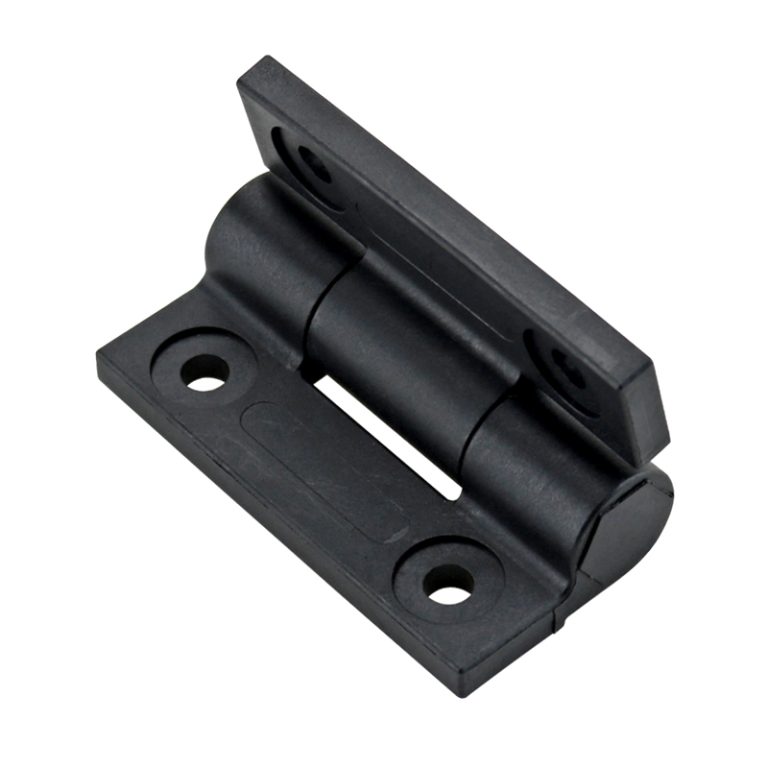
Industrial torque hinges with damping are often described as though they were one standard mechanism. In practice, the term may refer to a friction torque hinge that holds a panel in position, a viscous rotary damper that slows motion, or a combined system that provides both static holding torque and speed-dependent resistance.
Those functions are not interchangeable. A friction hinge may hold an HMI screen at a selected angle but may not control a fast closing event. A viscous damper may slow a cover during motion but normally cannot hold it at rest. When an industrial lid or display panel needs both behaviors, the specification must separate holding torque from damping torque and define how each changes with angle, speed, direction, temperature, and operating life.
This guide helps engineers and buyers identify which motion-control function is required and prepare a testable specification for an industrial cover, access lid, display panel, or operator interface.
Quick Selection Answer
If the panel must stay where it is left, you need static holding torque from friction. If the panel must close slowly or without impact, you need speed-dependent viscous damping. If it must do both, you need a combined system that supplies each function separately. Match the requirement to the mechanism before comparing any product.
| If the panel must… | Primary function required | Suitable starting mechanism |
|---|---|---|
| Stay at a selected angle after release | Static holding torque | Friction torque hinge |
| Close slowly or without impact | Speed-dependent damping | Rotary damper or damping hinge |
| Hold position and also move at a controlled speed | Both, defined separately | Combined friction-and-damping system |
| Be easier to lift and then close slowly | Assist plus damping | Counterbalance or spring assist with a damper |
The rest of this guide turns that starting point into a testable specification: how to separate the two torques, define opening and closing behavior, size damping and closing time, account for temperature and cycle life, read supplier data, and validate the installed panel.
Separate Holding Torque From Damping Torque
Holding torque and damping torque act under different conditions. Holding torque matters when angular speed is zero or nearly zero. Damping torque matters while the panel is rotating. A useful specification must define both conditions instead of using one broad term such as “smooth resistance.”
| Motion-Control Function | Main Source of Resistance | Behavior at Rest | Behavior While Moving | Primary Engineering Task |
|---|---|---|---|---|
| Friction torque hinge | Preloaded friction surfaces, sleeves, washers, or similar interfaces | Can provide static holding torque | Resistance is typically much less dependent on speed than viscous damping, although stick-slip, lubrication, wear, and temperature can still change it | Hold a panel at selected angles and control operating effort |
| Viscous damping hinge or rotary damper | Fluid shear or restricted fluid flow | Provides little or no ideal viscous resistance at zero speed | Resistance increases with angular speed according to the damper design | Limit closing speed, absorb motion energy, or reduce impact |
| Spring hinge | Stored elastic energy | Creates a return moment that depends on spring position | Drives the panel toward an open or closed position | Self-open, self-close, or counterbalance |
| Combined friction and damping system | Static friction plus a viscous or flow-controlled element | Can hold position when friction torque exceeds the external moment | Can add speed-sensitive resistance during opening, closing, or both | Provide position holding and controlled motion in one assembly or coordinated mechanism |
Supplier terminology is not consistent. “Damping hinge,” “friction hinge,” “free-stop hinge,” and “torque hinge with damping” may be used differently across catalogs. A free-stop claim indicates position holding but does not, by itself, prove that the hinge contains a viscous damper. A smooth hand-operated sample also does not prove controlled closing across different speeds and temperatures.
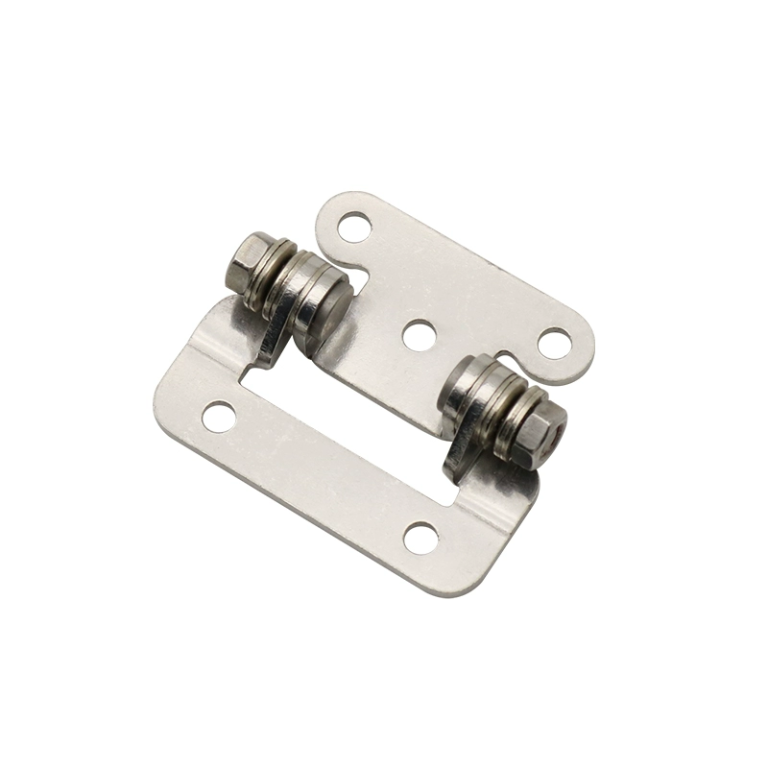
For the broader definition, construction, and types of torque hinges, use the torque hinge guide. For the friction-holding side on its own, including how static holding torque is sized and verified, use the position-control hinge guide. This page remains focused on the boundary between static position holding and speed-dependent damping, and it treats friction holding only as the reference behavior that damping is compared against.
Define the Panel Load and Required Hold Angles
If the panel must remain at a selected angle, begin with the complete moving assembly rather than the bare door skin or display. Include covers, glass, controls, cables, handles, latches, insulation, brackets, and any other parts that rotate with the hinge.
Preliminary holding relation:
Tg(θ) = W × d⊥(θ)
W is the complete moving assembly weight as a force, and d⊥(θ) is the perpendicular distance from the hinge axis to the weight line of action at angle θ. The required static holding torque must be evaluated across every angle where the panel is expected to remain after release.
Tg(θ) = W × d⊥(θ)
W is the complete moving assembly weight as a force, and d⊥(θ) is the perpendicular distance from the hinge axis to the weight line of action at angle θ. The required static holding torque must be evaluated across every angle where the panel is expected to remain after release.
The maximum gravitational moment may occur at an intermediate angle rather than at the fully open or fully closed position. Cable forces, gasket reaction, magnets, seals, and an offset user handle can also add or subtract torque at different angles.
| Required Input | Why It Changes the Specification | Action Before Selecting a Hinge |
|---|---|---|
| Complete panel mass and center of gravity | Determine the gravitational moment around the hinge axis | Measure or calculate the equipped moving assembly, not only the panel shell |
| Hinge-axis location | Changes the lever arm and the available mounting geometry | Define the real pivot line in the assembled product |
| Required hold-angle range | Identifies where static torque must resist drift | List the minimum and maximum angles where the panel must remain stable |
| Number of hinges | Affects total available torque and alignment sensitivity | Define total system torque and verify how the hinges share it |
| Cables, seals, magnets, and latches | Add direction- and angle-dependent resistance | Measure them in the production-representative assembly |
| Allowable operating force | Limits how much friction torque the user can comfortably overcome | Specify the user force and application point for opening and closing |
Do not increase friction torque simply to slow a falling cover. Excessive friction can make the panel difficult to open, increase bracket and fastener loads, and create an abrupt breakaway feel. When the main problem is closing speed or end impact, viscous damping should be evaluated separately.
Specify Opening, Closing, and One-Way Behavior
One nominal torque value is not enough for a motion-control hinge. Opening and closing resistance may differ because of friction direction, one-way clutches, damper valving, seals, cable routing, spring assistance, or gravity. The specification should identify each direction and the angles where the measurement applies.
- Opening breakaway torque: the peak resistance required to begin opening from rest.
- Opening running torque: the resistance while the panel moves through the usable range.
- Closing breakaway torque: the force required to reverse direction after the panel has stopped.
- Closing running torque: the moving resistance in the closing direction.
- Static holding torque: the resistance available after the panel is released at a specified angle.
- One-way behavior: whether friction or damping acts in only one direction, acts more strongly in one direction, or acts symmetrically.
One-way damping is useful when a cover should open with limited resistance but close slowly. One-way friction can reduce effort in one direction while supporting a load in the other. These are different functions and should not be described only as “one-way torque.”
Adjustability is another separate attribute. An adjustment screw may change friction preload without changing viscous damping, or may adjust only part of the total motion behavior. For adjustment-mechanism definitions and boundaries, use the adjustable torque hinge guide.
Define Speed-Dependent Damping and Closing Time
A viscous damper should be specified by motion behavior, not by an undefined phrase such as “strong damping.” In a simplified linear model, damping torque may be represented as:
Simplified damping relation:
Td = c(temperature, direction) × ω
Td is damping torque, c is an effective damping coefficient, and ω is angular speed. Real rotary dampers may be nonlinear, may use one-way valving, and may show different behavior near the start or end of travel.
Td = c(temperature, direction) × ω
Td is damping torque, c is an effective damping coefficient, and ω is angular speed. Real rotary dampers may be nonlinear, may use one-way valving, and may show different behavior near the start or end of travel.
The user normally experiences closing time, peak speed, rebound, and end impact rather than the damping coefficient itself. For that reason, the project should define a representative starting angle, panel configuration, release method, temperature, and acceptable closing behavior.
- Starting angle: the angle from which the panel is released.
- Closing zone: whether damping acts through the full motion or only near the closed position.
- Closing time: the permitted time between two defined angles under a specified load and temperature.
- Maximum angular speed: a useful limit when nearby equipment, fingers, cables, or seals can be affected by rapid movement.
- End impact and rebound: the permitted contact behavior at the stop or latch.
- Manual override: the force and speed a user may apply without damaging the damper or hinge.
A damper does not automatically counterbalance a heavy top-opening lid. It can slow downward motion, but it may not reduce the force required to lift the lid or keep the lid open. When lift force is the main issue, a spring, gas spring, counterbalance, or another assist mechanism may be required in addition to damping.
Account for Temperature, Environment, and Cycle Life
Temperature is especially important in viscous damping systems because fluid viscosity changes with temperature; viscosity grades for industrial fluids are classified under standards such as ISO 3448. A panel may close slowly when cold and too quickly when hot, or the opposite behavior may appear depending on the fluid, internal flow path, and seal design. Friction torque can also change with lubricant condition, thermal expansion, surface materials, and preload.
Environmental review must cover the complete mechanism. Dust can enter exposed friction interfaces. Washdown chemicals may affect seals or lubricants. Corrosion can increase drag or damage shafts and retaining parts. Pressure differences, altitude, and orientation can affect some fluid-filled devices. None of these conditions should be converted into a universal performance claim without model-specific evidence.
| Exposure | Possible Effect on Friction Torque | Possible Effect on Viscous Damping | Required Evidence |
|---|---|---|---|
| Low temperature | Lubricant thickening, clearance change, higher breakaway, stick-slip | Higher fluid viscosity and slower movement may occur | Opening, closing, and hold tests after temperature stabilization |
| High temperature | Lower lubricant viscosity, preload relaxation, material expansion | Lower damping resistance, seal change, or leakage risk may occur | Speed and torque data at the upper project temperature |
| Dust or process debris | Surface contamination, abrasive wear, uneven torque | Seal and shaft contamination where the mechanism is exposed | Representative contamination test and post-test inspection |
| Washdown or chemical exposure | Lubricant removal, corrosion, material attack | Seal, housing, fluid, and interface compatibility | Material documentation and mounted exposure test |
| Repeated cycles | Wear, torque decay, preload change, increasing free play | Fluid aging, seal wear, leakage, or changed flow resistance | Before-and-after curves under a defined cycle profile |
Do not publish a universal cycle count or acceptable torque-loss percentage without identifying the hinge model, panel load, motion range, speed, temperature, mounting condition, test interruptions, and pass/fail criteria. General durability and cycle-test methodology is described by standards bodies such as ASTM International; the project should still define its own representative profile.
Build the Total Torque Budget and Read Supplier Data
The user does not feel friction torque, damping torque, gravity, cable resistance, and spring force as separate items. The hand or actuator must overcome their combined effect. For each direction and angle, use a consistent sign convention and build a total torque budget.
Conceptual moving-torque budget:
Tuser(θ,ω) = Tfriction + Tdamping(ω) + Tgravity(θ) + Tspring(θ) + Tcable(θ,direction)
The signs depend on the chosen opening or closing direction. The equation is a bookkeeping model, not a universal sizing formula. Measure or calculate each meaningful contribution under the same angle, speed, direction, and temperature convention.
Tuser(θ,ω) = Tfriction + Tdamping(ω) + Tgravity(θ) + Tspring(θ) + Tcable(θ,direction)
The signs depend on the chosen opening or closing direction. The equation is a bookkeeping model, not a universal sizing formula. Measure or calculate each meaningful contribution under the same angle, speed, direction, and temperature convention.
This budget prevents a common specification error: selecting a hinge from its nominal resistance while ignoring the rest of the assembly. A panel may have the correct static holding torque but still require excessive opening force because the damper, gasket, cable bundle, and spring all oppose the user in the same direction. In the reverse direction, gravity may assist the motion and cause the panel to accelerate unless damping increases with speed.
Supplier data must also be read according to the test condition. A value reported as “torque” may be a breakaway peak, an average running value, a static hold value, or a measurement at one angular speed. Those numbers cannot be substituted for one another without confirming the method.
| Supplier Statement | What It Does Not Tell You | Evidence to Request |
|---|---|---|
| “Rated torque: X N·m” | Whether X is breakaway, running, holding, opening, closing, peak, or average torque | Torque definition, direction, angle range, speed, temperature, tolerance, and sample condition |
| “Constant torque” | How much torque varies with angle, direction, temperature, wear, and production spread | Opening and closing torque-angle curves with acceptance bands |
| “Soft close” | Starting angle, panel load, closing time, peak speed, temperature, and end impact | Release test conditions and closing-time or angular-speed results |
| “One-way damping” | Which direction is damped, how free the reverse direction is, and whether holding friction remains | Rotation convention, one-way curve, reverse resistance, and installation orientation |
| “Works at any angle” | The load, center of gravity, hold duration, vibration, and permitted drift | Static hold test across the required angle range on a representative load |
| “Long life” | Cycle count, motion range, load, speed, temperature, change in torque, leakage, or free play | Complete cycle profile and before-and-after measurements |
Units must also be consistent. Torque may be reported in N·m, N·cm, kgf·cm, or other units. Convert the value before comparison and confirm whether it applies to one hinge or the complete hinge pair. When two hinges are installed, do not assume perfect equal sharing without checking alignment, bracket stiffness, and the supplier’s rating method.
For production release, request an acceptance band rather than one ideal value. The band should cover the relevant angles, speeds, directions, temperatures, and life state. This allows incoming inspection and prototype approval to compare the same performance definition instead of repeating an informal hand-feel judgment.
Choose the Motion-Control Architecture
After the required hold and moving behavior are defined, select the mechanism that can create both without forcing one component to perform a function it was not designed to provide.
| Project Requirement | Preferred Starting Architecture | Main Reason | Critical Verification |
|---|---|---|---|
| Panel must hold at selected angles; closing speed is not critical | Friction torque hinge | Provides static position holding with a compact mechanism | Hold margin, breakaway, running torque, drift, wear, and user effort |
| Panel does not need to hold; closing speed and impact must be controlled | Free hinge plus rotary damper or damping hinge | Separates rotation support from speed-sensitive braking | Closing time, peak speed, temperature, direction, stop impact, and damper mounting |
| Panel must hold at multiple angles and close without impact | Integrated friction-and-damping hinge or coordinated friction hinge plus damper | Provides static hold and moving resistance as separate functions | Total opening effort, static hold, damping curve, packaging, heat, and cycle interaction |
| Heavy lid must be easier to lift and must close slowly | Counterbalance or spring assist plus damping, with a hinge suited to the structure | Assist handles the gravitational load while damping controls motion speed | Lift-force curve, hold safety, spring force, damping, stop load, and failure behavior |
| Prototype load may change and position holding is required | Adjustable friction torque hinge; add damping only if speed control is also required | Allows holding torque to be tuned without confusing adjustment with damping | Adjustment range, locking method, production setting, and separate closing-speed test |
Architecture labels such as fixed, adjustable, concealed, or in-line describe configuration and packaging; they do not automatically define the damping function. Use the fixed, adjustable, and concealed torque hinge comparison only after the required friction and damping behavior has been established.
Integrate the Hinge With Stops, Latches, Cables, and Mounting
The measured hinge behavior can change after installation. Flexible brackets twist, multiple axes bind, cables add direction-dependent torque, gaskets resist closing, and latches pull the panel into a position that the hinge does not reach freely.
- Axis alignment: keep multiple hinges and dampers on their intended axes without using the panel or fasteners to force alignment.
- Bracket stiffness: prevent mounting flex from absorbing motion, changing torque, or moving the latch edge.
- Mechanical stops: do not use an internal damper stop as the structural end stop unless the manufacturer explicitly rates it for that load.
- Latch and gasket forces: measure closing resistance with the production seal, magnet, latch, or compression system installed.
- Cable routing: check opening and closing resistance at every angle with production-representative cable bends and retention.
- Heat and clearance: provide the space and thermal conditions required by the friction or fluid mechanism.
- Service access: allow inspection, adjustment, or replacement without disturbing critical alignment.
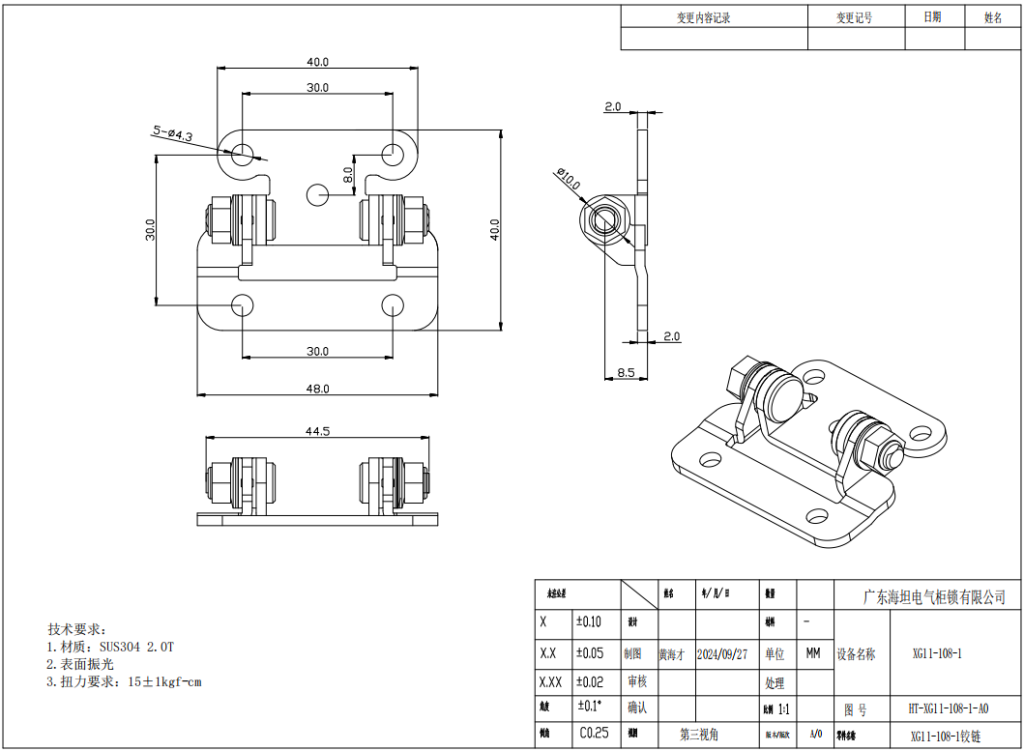
Validate Torque, Speed, Temperature, and Cycle Performance
Approval should be based on a representative panel assembly. A hand-operated hinge sample can reveal obvious friction or leakage problems, but it cannot confirm the required hold angles, closing time, bracket stiffness, cable resistance, latch interaction, or performance across temperature and operating life.
| Validation Check | Test Condition to Record | Evidence Needed |
|---|---|---|
| Low-speed torque-angle curve | Direction, defined low angular speed, temperature, panel or fixture, and hinge identity | Breakaway, opening, closing, and angle-dependent torque data |
| Static hold and drift | Panel load, selected angles, dwell time, temperature, and disturbance condition | Angular movement and pass/fail limit after release |
| Speed sweep | Several defined angular speeds in opening and closing directions | Resistance or required force versus speed |
| Closing-time test | Starting angle, release method, panel configuration, temperature, and end angle | Closing time, peak speed, impact, rebound, and repeatability |
| Temperature test | Stabilized low, room, and high project temperatures | Hold, opening effort, closing time, leakage, and recovery after temperature change |
| Cycle test | Motion range, load, speed, dwell, temperature, cycle count, and interruptions | Before-and-after torque and speed data, free play, leakage, noise, and visual condition |
| Installed structure inspection | Production-representative brackets, fasteners, cables, stops, latch, and gasket | Alignment, deformation, loosening, interference, and structural movement |
The report should identify the tested model or sample and separate preliminary engineering data from final sample approval. A supplier statement such as “smooth damping” or “constant torque” is not sufficient when the operating speed, direction, temperature, load, and acceptance limits are not defined.
Repeatability matters as much as the result from one sample. Test enough samples to reveal production spread, and record whether the hinge was new, adjusted, temperature-conditioned, or previously cycled. If the project uses a left and right hinge pair, measure both the individual components and the assembled pair so a strong unit does not hide a weak or misaligned unit. The final acceptance record should also state the measurement equipment, fixture, angular reference, zeroing method, and data-reduction method. Without those details, two suppliers can report different “torque” values for the same mechanism even when neither measurement is intentionally misleading.
Common Torque Hinge With Damping Selection Mistakes
Most motion-control problems on industrial panels come from a small set of recurring specification errors rather than from a defective hinge. Reviewing these before release prevents redesign after prototype testing.
| Mistake | Why It Fails | What to Do Instead |
|---|---|---|
| Treating “torque hinge” and “damping hinge” as the same part | Friction holds at rest; viscous damping resists speed. One cannot replace the other. | Decide whether the panel must hold, must close slowly, or must do both, then specify each function. |
| Increasing friction torque to slow a falling cover | High friction makes opening hard, raises bracket and fastener loads, and creates an abrupt breakaway feel. | Control closing speed with viscous damping evaluated separately from the holding requirement. |
| Expecting a viscous damper to hold a panel at an angle | Ideal viscous resistance falls toward zero as speed approaches zero, so the panel can drift. | Add static holding torque from friction, a detent, a lock, or a counterbalance. |
| Specifying one nominal torque value | Opening, closing, breakaway, running, and holding can all differ, hiding a panel that opens well but closes too fast. | Define each direction and state separately, with the angle and speed where each applies. |
| Approving from a smooth hand-operated sample | Hand feel does not confirm closing time, temperature behavior, or performance across operating life. | Validate on a representative assembly across speed, temperature, and cycle count. |
| Using an internal damper stop as the structural end stop | The damper may not be rated to absorb the panel’s impact energy at the stop. | Provide a separate mechanical stop unless the manufacturer rates the internal stop for that load. |
| Assuming a damper counterbalances a heavy top-opening lid | A damper slows downward motion but does not reduce the force to lift or hold the lid open. | Add a spring, gas spring, or counterbalance for the lift load, with damping for speed. |
Industrial Torque Hinge With Damping Checklist
- State whether the panel must hold position, close slowly, or perform both functions.
- Provide the complete moving mass, center of gravity, hinge-axis location, and required angle range.
- Define opening breakaway, opening running, closing breakaway, closing running, and static holding behavior separately.
- Define whether friction and damping are symmetric, asymmetric, or one-way.
- Specify closing time or maximum angular speed from a defined starting angle and load.
- Identify the low and high operating temperatures and any dust, washdown, corrosion, or chemical exposure.
- Confirm whether the mechanism is friction-only, damping-only, integrated friction plus damping, or assisted by a separate spring or counterbalance.
- Provide the mounting envelope, axis, rotation direction, stops, latch, gasket, and cable routing.
- Request torque-angle-speed-temperature data and the exact cycle-test conditions.
- Approve the complete installed panel after repeating the functional measurements.
After the motion requirements are defined, review available industrial torque hinge models against the product drawing and test evidence. Contact HTAN for a torque-hinge motion review with the panel mass, center of gravity, hinge axis, required hold angles, opening and closing behavior, speed target, temperature range, mounting drawing, and cycle requirement.
FAQ
Is a torque hinge the same as a damping hinge?
No. A torque hinge primarily uses controlled friction to resist rotation and hold a panel at rest. A damping hinge or rotary damper primarily creates speed-dependent resistance while the panel is moving. Supplier terminology varies, so confirm the torque-speed behavior rather than relying on the product name.
Can a viscous damping hinge hold a panel at any angle?
Not by viscous damping alone. Ideal viscous resistance falls toward zero as angular speed approaches zero. A panel that must remain at a selected angle needs sufficient static holding torque from friction, a detent, a lock, a counterbalance, or another holding mechanism.
Can a friction torque hinge provide soft-close behavior?
It can slow movement by adding resistance, but friction alone does not create the same speed-sensitive braking as a viscous damper. A friction hinge may still allow a heavy panel to accelerate, may feel sticky at the start, and may not provide a controlled closing time across temperature and load conditions.
Why must opening and closing torque be specified separately?
Friction interfaces, one-way mechanisms, seals, cables, springs, gravity, and rotary dampers can create different resistance in each direction. One nominal torque value can hide a panel that opens acceptably but closes too quickly, or closes smoothly but is difficult to open.
How does temperature affect a damped hinge?
Temperature can change fluid viscosity, seal behavior, lubricant condition, friction coefficient, and material clearances. A viscous damper may resist movement more strongly when cold and less strongly when hot, depending on its design and fluid. Validate the complete hinge system at the project temperature limits.
What test data should a supplier provide for a torque hinge with damping?
Request opening and closing torque-angle curves at defined speeds and temperatures, static hold behavior, directionality, closing-time or angular-speed data, cycle-test conditions, before-and-after performance, leakage or seal inspection where applicable, mounting details, and the exact sample or model identification.
The correct industrial torque hinge with damping is not identified by a product label alone. It is the motion-control system whose static hold, opening and closing resistance, speed response, directionality, temperature behavior, mounting structure, and cycle evidence match the real industrial panel.