HTAN is one of the leading manufacturers of industrial hinges, handles and latches in China.


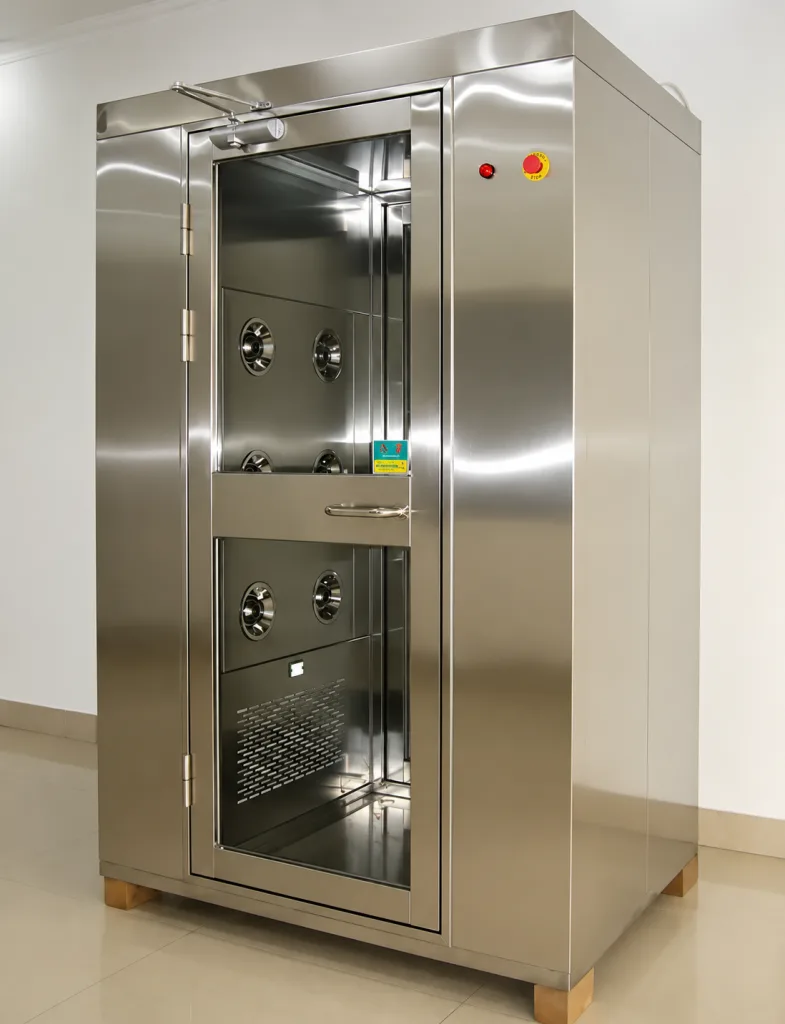
Pharmaceutical equipment hinges are not just mechanical door hardware. In cleanrooms, isolators, filling equipment, inspection panels, and washdown cabinets, hinge design can affect cleanability, contamination control, corrosion resistance, drainage, and validation work. A hinge that looks strong enough may still create hidden hygiene risks if it has exposed threads, deep crevices, rough surfaces, absorbent parts, or areas where cleaning liquid cannot drain.
This guide focuses on hygienic hinge design for pharmaceutical and cleanroom equipment. It explains what engineers should check before specifying a hinge, including material selection, surface finish, crevice control, drainage, cleaning access, lubrication strategy, and supplier validation documents. These checks align with the hygienic equipment principles covered by ASME BPE and the contamination control expectations described in EU GMP Annex 1.
What Makes a Hinge Hygienic for Pharmaceutical Equipment?
A hygienic hinge should support cleaning, inspection, and contamination control instead of creating residue traps. In pharmaceutical equipment, the hinge should avoid unnecessary cavities, exposed springs, open threads, sharp internal corners, absorbent materials, and difficult-to-rinse gaps. The goal is not only to prevent visible dirt, but also to reduce the chance of microbial retention, corrosion initiation, and cleaning validation failure.
For cleanroom cabinets, process access doors, sample ports, inspection panels, and equipment covers, engineers should check whether the hinge can be wiped, rinsed, drained, and inspected without disassembly. Where the door or cover must be removed for deeper cleaning, filter replacement, or maintenance access, compare the trade-offs between removable vs. fixed hinges before choosing a detachable hinge design.
Hygienic Hinge Design Checkpoints
| Checkpoint | What Engineers Should Check | Why It Matters |
|---|---|---|
| Crevice Control | Avoid exposed threads, spring pockets, sharp internal corners, and narrow gaps that are hard to clean | Reduces residue retention and microbial harborage risk |
| Surface Finish | Specify measurable surface roughness rather than appearance alone | Smoother surfaces are easier to clean and inspect |
| Drainability | Confirm that cleaning liquid does not remain trapped around the hinge barrel, pin, or mounting area | Standing liquid can increase corrosion and contamination risk |
| Material Compatibility | Match hinge material to disinfectants, cleaning chemicals, temperature, and cabinet material | Prevents pitting, swelling, galvanic corrosion, and premature failure |
| Lubrication Strategy | Avoid grease traps and uncontrolled lubricants in hygiene-sensitive zones | Lubricant residues can attract particles and complicate cleaning validation |
| Mounting Method | Check whether screws, welds, spacers, or gasket interfaces create hidden dead zones | Mounting details often become the real contamination point |
| Inspection Access | Ensure hinge areas can be visually checked during maintenance or validation | Improves long-term contamination control and maintenance reliability |
Material Selection: 316L Stainless Steel, Polymers, and Compatibility
Material selection should be based on cleaning chemistry, contact risk, temperature, load, and validation requirements. In many pharmaceutical and cleanroom applications, 316L stainless steel is preferred because it offers strong corrosion resistance and better suitability for hygienic equipment than lower-grade stainless steels. However, material alone does not make a hinge hygienic. A poorly designed 316L hinge with exposed threads or deep pockets can still create cleaning problems. Even with the right alloy, localized corrosion can develop from chloride exposure, crevice geometry, trapped liquid, or inadequate passivation. For applications where corrosion exposure is a major concern, the guide to corrosion-resistant hinges explains how material choice, surface treatment, drainage, and maintenance affect long-term hinge performance.
High-performance polymers such as PEEK or PTFE-based components may help in some low-friction or non-corrosive designs, but they must be checked for temperature resistance, cleaning chemical compatibility, wear behavior, and moisture absorption. If the design uses bushings, sleeves, or polymer inserts, the supplier should confirm that these parts will not swell, crack, shed particles, or trap cleaning residue after repeated washdown or sterilization cycles.
For passivation requirements after machining or welding, ASTM A380/A380M-17 provides recommendations for cleaning, descaling, and passivating stainless steel parts, equipment, and systems before they enter hygiene-sensitive service. Passivation records should be available from the supplier as part of the validation package.
Material and Finish Comparison
| Option | Strength | Limitation | Best Fit |
|---|---|---|---|
| 316L Stainless Steel | Good corrosion resistance, clean appearance, suitable for many hygiene-sensitive applications | Can still suffer localized corrosion if crevices, chlorides, or poor drainage are present | Pharmaceutical cabinets, cleanroom access doors, washdown equipment panels |
| 304 / 304L Stainless Steel | Cost-effective and widely available | Less suitable for aggressive disinfectants, chloride exposure, or strict cleanability requirements | Dry or low-risk non-product-contact cleanroom hardware |
| PEEK / PTFE-Based Components | Low friction, corrosion-free, useful in selected bushings or sleeves | Requires verification for heat, chemical exposure, wear, and particle generation | Specialized low-friction areas where polymer compatibility is validated |
| Mirror or Electropolished Finish | Can reduce surface retention and improve cleanability | Higher cost; does not solve poor hinge geometry | Visible or hygiene-sensitive surfaces that require measurable finish control |
| Brushed or Satin Finish | More cost-effective and suitable for many non-product-contact areas | May retain more residue than highly refined surfaces | General equipment cabinets where cleanability targets are moderate |
Surface Finish and Cleanability Requirements
Surface finish should be specified with measurable roughness targets instead of visual descriptions such as “shiny” or “premium.” In hygienic equipment, surface roughness affects how easily residue, moisture, and cleaning chemicals can be removed. A smooth finish can improve cleanability, but it must be paired with good hinge geometry. A polished surface does not compensate for exposed fasteners, overlapping gaps, or unsealed spring cavities.
For procurement, engineers should ask suppliers for surface finish information, passivation details, polishing method, and inspection records where relevant. The roughness expectations should be defined in the equipment specification and matched to the contamination risk level, not assumed from supplier marketing language.
Cleanability Questions to Ask the Supplier
- What material grade is used for the hinge body, pin, washer, bushing, and fasteners?
- Are there exposed threads, spring pockets, hollow cavities, or overlapping leaves that may trap residue?
- Can the hinge be cleaned and inspected without removing the door?
- Is the hinge surface polished, brushed, passivated, or electropolished?
- Can the supplier provide material certificates, surface finish data, or cleaning compatibility information?
- Does the mounting method create gaps behind the hinge plate?
- Will the hinge maintain alignment and gasket compression after repeated cleaning and service cycles?
Crevice Control, Drainage, and Mounting Design
Crevice control is one of the most important hygienic hinge design factors. Even when the hinge material is suitable, small gaps around pins, leaves, mounting screws, or spacers can trap residue and moisture. In pharmaceutical equipment, these areas may become difficult to clean, difficult to inspect, and difficult to validate.
Drainage should also be reviewed. Hinges mounted on vertical doors, sloped covers, access panels, or removable guards should not create areas where water, disinfectant, or product residue remains after cleaning. Where full-length contact with the door frame is needed, continuous hinge designs may help, but mounting details, weld quality, and gasket interfaces still require review.
Mounting design is often the real contamination risk. A hygienic hinge body installed with poorly sealed fasteners, missing gaskets, or unfinished mounting holes can still create a residue trap behind the hinge plate. Engineers should request mounting drawings and check the hinge as part of the full door assembly, not as an isolated component.
Lubrication and Particle Generation Control
Lubrication strategy should be reviewed for any hinge used in hygiene-sensitive zones. Exposed grease, uncontrolled lubricants, or non-validated polymer wear can introduce contamination risk and complicate cleaning validation. In sterile or particulate-controlled environments, the hinge should ideally use sealed bearings, dry-running designs, or self-lubricating bushings that have been verified for the cleaning environment.
Particle generation should also be considered. Frequent door movement, hinge wear, and gasket compression can release particles over the equipment service life. For ISO Class 5 cleanrooms or aseptic processing zones, particle release from hardware components should be evaluated as part of the equipment qualification, especially where the hinge is near critical process areas. The FDA guidance on sterile drug products produced by aseptic processing can support this review.
Hinge Selection Process for Pharmaceutical Equipment
The selection process should match the contamination risk level of the application. A non-product-contact utility cabinet does not need the same hinge design as hinges used near filling, sampling, transfer, sterile storage, or washdown areas. Engineers should define the contamination risk level before selecting material, finish, mounting method, and hinge type.
Define the Cleaning and Exposure Conditions
List the cleaning method, disinfectants, temperature, frequency, contact time, and whether the hinge is exposed to splash, fogging, wipe-down, or direct washdown. A hinge used in a dry cleanroom cabinet may only need a smooth and inspectable design, while a hinge exposed to repeated disinfectant cleaning may require stronger corrosion resistance and more careful drainage.
Check Material and Fastener Compatibility
Do not check only the hinge leaf. The pin, bushings, washers, screws, sleeves, and mounting plates should also match the environment. A 316L hinge body can still fail if the fasteners are unsuitable or if polymer parts swell after repeated cleaning.
Review Load, Cycle Life, and Door Alignment
Cleanability is not the only requirement. The hinge must also keep the door aligned after repeated use. If the door drops, twists, loosens, or loses gasket compression, cleaning and sealing performance can both suffer. For projects where repeated access, long service life, or door alignment stability is important, the industrial hinge failure guide can help engineers review common causes of hinge wear, loosening, sagging, and premature failure before approving samples for production.
Request Validation and Procurement Documents
For pharmaceutical equipment, the supplier should be able to support the hinge specification with relevant documentation. This may include material certificates (EN 10204 3.1), finish information, passivation records, corrosion resistance information, cleaning compatibility statements, and sample inspection data.
Hygienic Hinge Selection Matrix
| Application Area | Main Risk | Preferred Design Focus | Typical Hinge Direction |
|---|---|---|---|
| Sterile equipment access door | Residue retention, validation difficulty | Sealed structure, smooth surfaces, no exposed threads | 316L stainless, enclosed or continuous design |
| Cleanroom service cabinet | Particle retention, cleaning access | Wipeable exterior, corrosion-resistant fasteners, inspectable mounting | Stainless steel or validated polymer design |
| Washdown pharmaceutical cabinet | Moisture retention, corrosion, gasket compression loss | Drainable geometry, compatible materials, stable alignment | 316L stainless with suitable mounting and finish |
| Cleanroom conveyor cover | Frequent opening, cleaning access, wear | Low-particle movement, tool-free or removable access if validated | Enclosed lift-off, removable, or continuous hinge design |
| Non-product-contact utility panel | Cost, basic corrosion resistance, maintenance access | Simple inspectable geometry, suitable stainless or polymer material | Standard stainless hinge if cleaning risk is low |
Common Selection Mistakes to Avoid
Assuming Stainless Steel Automatically Means Hygienic
Stainless steel improves corrosion resistance, but hygienic performance depends on the full design. Exposed threads, deep knuckles, unsealed springs, rough edges, and poor drainage can still create contamination risk. The hinge should be judged by geometry, finish, material compatibility, and cleanability together.
Using Standard Hinges in Validation-Sensitive Areas
A standard industrial hinge may be strong enough mechanically, but not cleanable enough for pharmaceutical equipment. If the area requires cleaning validation, the hinge should be included in the validation review, not treated as a commodity hardware item.
Ignoring Gasket Compression and Door Alignment
Door alignment affects both sealing and cleaning. If a hinge allows the door to sag, the gasket may compress unevenly and cleaning residues may collect near the frame. This is especially important on cabinets, isolators, and washdown access doors that are opened frequently.
Overusing Lubricated or Spring-Loaded Designs
Lubricants and springs may create cleaning challenges if they are exposed or not validated for the environment. Where possible, engineers should use dry-running, sealed, or self-lubricating solutions that do not add uncontrolled residue risks.
Procurement Checklist for Pharmaceutical Equipment Hinges
| Item to Request | Why It Matters |
|---|---|
| Material grade for hinge body, pin, washers, and fasteners | Confirms compatibility with cleaning chemicals and corrosion exposure |
| Surface finish or roughness information | Supports cleanability and inspection requirements |
| Passivation or surface treatment record | Reduces risk of early staining or localized corrosion |
| Drawing with hinge geometry and mounting details | Helps identify crevices, hidden gaps, and drainage issues |
| Sample for cleaning and installation review | Allows engineers to check real fit, wipeability, and access |
| Cycle-life or durability information | Helps verify long-term alignment and access reliability |
| Cleaning chemical compatibility statement | Reduces risk of material swelling, corrosion, or finish failure |
FAQ
Are all stainless steel hinges suitable for pharmaceutical equipment?
No. Stainless steel improves corrosion resistance, but the hinge also needs hygienic geometry, smooth surfaces, compatible fasteners, and cleanable mounting. A stainless hinge with exposed threads, spring cavities, or deep crevices may still be unsuitable for pharmaceutical equipment.
What surface finish should pharmaceutical hinges use?
The required finish depends on the application zone, cleaning method, and validation expectations. In hygiene-sensitive areas, engineers should specify measurable surface roughness and ask for finish documentation instead of relying only on terms such as mirror finish or satin finish.
Can polymer bushings be used in cleanroom hinges?
Yes, but only when the polymer is compatible with the cleaning chemicals, temperature, wear conditions, and validation requirements. The design should prevent swelling, particle generation, residue trapping, and hidden moisture retention.
How do engineers check hinge drainability?
Engineers should review the hinge orientation, knuckle geometry, mounting gaps, and surrounding door frame to see whether cleaning liquid can drain away naturally. Prototype testing with water, dye, or cleaning validation methods can help identify trapped liquid or dead zones.
Should hygienic hinges use lubrication?
Exposed or uncontrolled lubrication should be avoided in hygiene-sensitive zones. If lubrication is unavoidable, it should be compatible with the operating environment and approved by the project’s quality or validation team. Dry-running, sealed, or self-lubricating designs are often easier to manage.
What documentation should I require from a pharmaceutical hinge supplier?
At minimum, request material certificates, surface finish or roughness information, passivation or surface treatment records, hinge geometry and mounting drawings, cycle-life data, and a cleaning chemical compatibility statement. For sterile or aseptic processing applications, also request particle generation information and confirmation that the hinge can be reviewed within the equipment qualification process.
Final Selection Advice
For pharmaceutical equipment hinges, the safest selection approach is to review the hinge as part of the full hygienic access system. Material grade, surface finish, crevice control, drainage, door alignment, gasket compression, cleaning access, and validation documents should all be checked before approval. The right hinge should make the equipment easier to clean, easier to inspect, and more reliable over repeated maintenance and cleaning cycles.
If your pharmaceutical equipment project needs hygienic hinges for access doors, cleanroom cabinets, isolator panels, or washdown covers, HTAN can help review material grade, hinge geometry, mounting method, drainage, surface finish, and cleaning requirements before sample production. Share your door size, cabinet material, cleaning method, operating environment, and validation requirements to receive a more suitable hinge recommendation.