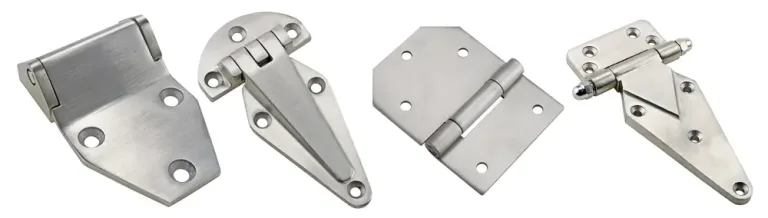
HTAN is one of the leading manufacturers of industrial hinges, handles and latches in China.


A heavy access cover needs a reliable grip point. Without one, maintenance crews lift from the edge, pull from a bolt hole, or use a tool as a lever — creating safety risk and damaging the cover, gasket surface, or mounting flange. But adding a handle is not enough. The wrong handle type creates a different problem.
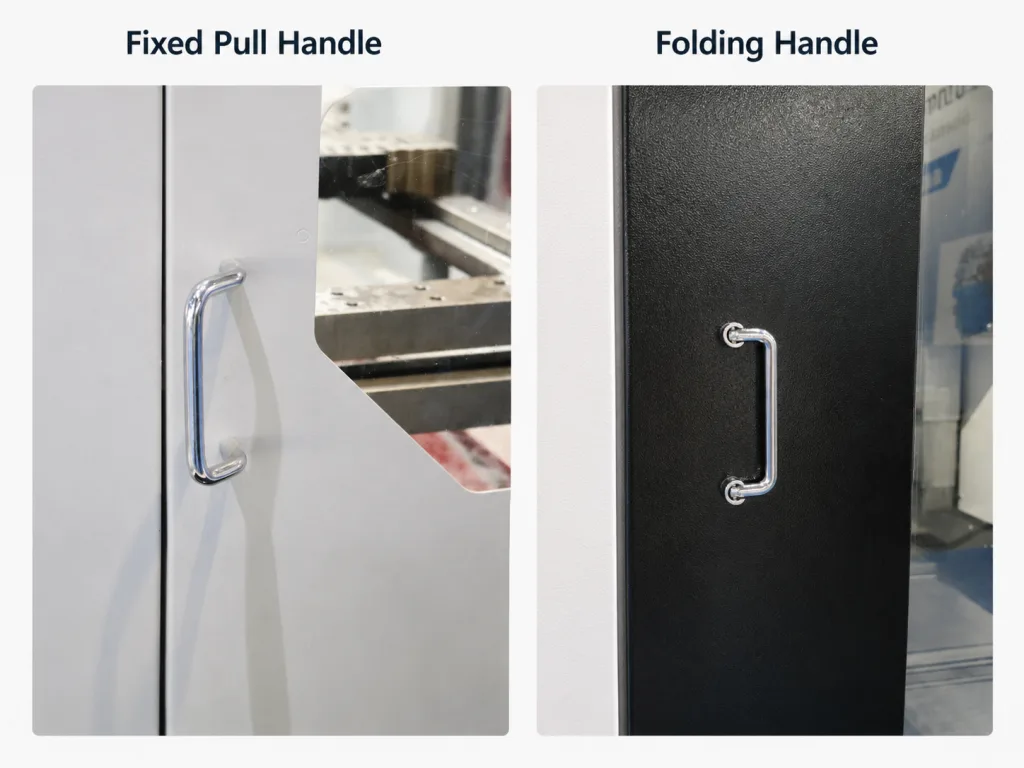
A fixed pull handle gives a rigid, always-available grip, but it creates a permanent projection from the cover surface. A folding handle reduces that protrusion by lying flat when not in use, but it introduces a moving mechanism that must still carry the lifting load. This article answers one decision only: for a heavy machinery guard or large access cover, when should you choose a fixed pull handle, and when should you choose a folding handle? It does not explain how to select or mount a folding handle on its own — that is covered in the existing folding-handle guides linked below. It focuses purely on the choice between the two families.
Quick Answer
Choose a fixed pull handle when the cover is heavy, the space around the equipment is clear, the handle will not create an impact or trip hazard, and you want a simple rigid grip with no moving mechanism. Choose a folding handle when the cover is in a confined area, near walkways, near moving equipment, during transport, or anywhere a permanent projection could become a hazard.
The decision is not “which handle is stronger?” The better question is: which handle type controls the dominant risk — lifting load or protrusion hazard — in this specific access cover? That single question drives the whole comparison.
The Real Trade-Off: Protrusion vs Lifting Load
Every other point in this comparison flows from one trade-off. A fixed pull handle wins on load simplicity but always occupies space. A folding handle wins on low profile but adds a moving joint into the lifting path. Neither is universally better; the right choice depends on which of those two costs is more dangerous in your installation.
| Dominant Risk in Your Application | Usually Points To | Why |
|---|---|---|
| Permanent projection would be hit, kicked, or snagged | Folding handle | It lies flat when stowed, removing the projection |
| Maximum lifting reliability with no moving parts | Fixed pull handle | Direct, predictable load path with nothing to seize |
| Harsh dust, slurry, or corrosion | Fixed pull handle | No mechanism to clog or corrode |
| Tight workspace, walkway, or shipping envelope | Folding handle | Low profile protects clearance — if it stays stowed |
| High vibration | Either, if retention is correct | Fixed must be mounted secure; folding must lock stowed |
Why Protrusion Changes the Decision
Fixed pull handles are often chosen because they are strong and simple — a rigid grip with nothing to unfold before lifting. The problem is that a fixed handle always occupies space, and that permanent projection becomes a hazard when the cover sits near a walkway, beside a platform, under pipework, next to a conveyor, on mobile equipment, near forklift traffic, at foot or hip height, or in a narrow service corridor.
In those cases the handle may not fail because the material is weak. It fails because its projection is repeatedly hit, kicked, bent, or used as an unintended contact point. A folding handle solves this when it stays flat in the stowed position — but only if the folding mechanism also locks securely when extended and does not rattle open during operation. A folding handle that drifts open under vibration becomes an unpredictable projection, which can be worse than a fixed handle because the operator does not expect it to be extended.
Load Path: The Core Mechanical Difference
For a heavy cover, the handle is part of the lifting system, and the two families carry load very differently. This is the single mechanical fact that separates them.
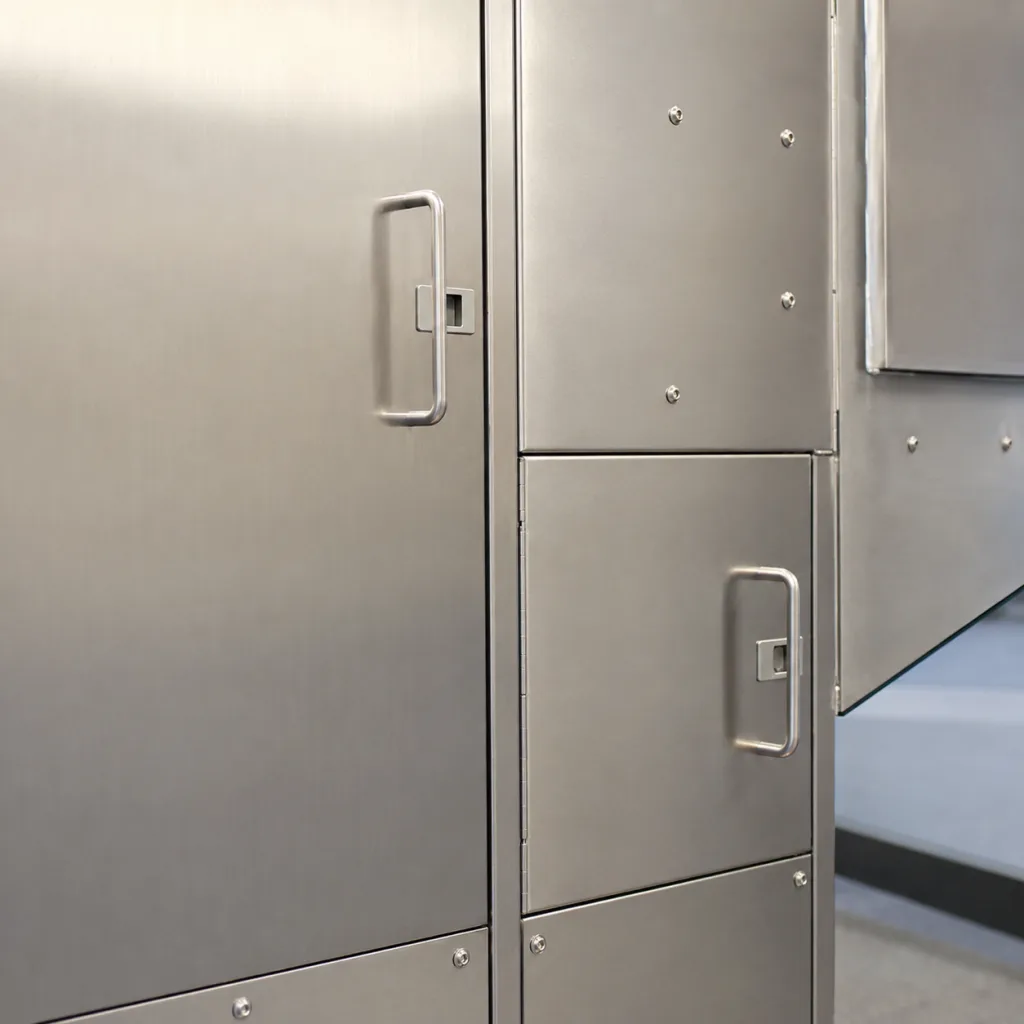
A fixed pull handle carries load through a rigid bar, bracket, weld, or bolted base — a direct, predictable path into a reinforced cover panel. A folding handle carries load through a moving joint: the hinge pin, detent, and handle stop must support the operator’s pull without folding, deforming, or slipping. That is the trade-off in one sentence — the fixed handle’s weak point is usually the weld, fastener, or panel around the mount; the folding handle’s weak point is usually the hinge pin, detent, or pivot.
The catalog pull rating is useful but not the whole decision, because field lifting is rarely a straight-line pull — operators pull at an angle, wear gloves, stand on a platform, guide the cover around a gasket, or lift with a second technician. For the detailed load-path, hinge-pin, and base design of a heavy folding handle specifically, see the dedicated guide to mounting heavy-duty folding handles; this article stays on the choice between families rather than the internal design of one. For the fixed-handle side, a rigid U-handle is the common representative, covered in U-shaped handles for industrial doors.
Whichever family is chosen, the load also has to reach the cover. A strong handle on a thin panel still fails, so heavy covers may need backing plates, thicker panels, ribs, or reinforced mounting zones — and that requirement is identical for both handle types. Grip and lifting posture should follow general ergonomics principles such as ISO 6385, especially where two operators or overhead lifts are involved.
Folding vs Fixed: Quick Comparison
| Decision Point | Fixed Pull Handle | Folding Handle |
|---|---|---|
| Lifting strength | Simple, rigid load path | Depends on hinge pin, detent, and base |
| Protrusion risk | Permanent projection | Low profile when stowed |
| Confined workspace | Can create impact hazard | Usually better |
| Harsh dust or slurry | Fewer moving parts | Mechanism may clog or seize |
| Corrosion exposure | Easier to inspect | Moving parts need material control |
| Frequent use | Always ready to grip | Must deploy and stow correctly |
| Foot-level covers | Trip hazard risk | Better if it stays flat |
| Shipping envelope | May need protection | Can reduce shipping width |
| Vibration | Strong if mounted well | Must not rattle open |
| Replacement | Welded versions harder to replace | Bolt-on versions easier to replace |
Workspace Clearance and Safety
This is the main reason to choose a folding handle over a fixed one. A fixed handle that projects into the work area can become a shoulder or hip impact point, a trip hazard, a snag point for clothing or hoses, a collision point during cover removal, or a target for forklifts and cleaning tools. A folding handle reduces this by lying flat when not in use.
But folding handles are only safer if they remain stowed. For confined workspaces, the specification must answer two questions: can the handle project safely while the machine is operating, and if not, can the folding handle stay locked in the stowed position? If the answer to the first is no, a fixed pull handle may be the wrong choice regardless of its strength — and a folding handle is only the right answer if it positively locks stowed.
Vibration and Harsh Environments
Heavy equipment vibrates — screens, fans, crushers, conveyors, pumps, and engines all transmit movement into access covers. A fixed pull handle has fewer vibration-sensitive parts; if welded or bolted properly, it is less likely to rattle because nothing folds. A folding handle can rattle or drift open if the detent is weak, the hinge pin has clearance, or the stowed position does not positively lock. For vibrating equipment, a folding handle must include positive retention in the stowed position, not just gravity or friction.
Harsh environments push the decision toward the fixed handle for the same reason: it has no mechanism to clog or seize. In cement dust, aggregate fines, slurry, salt air, or washdown chemicals, a folding joint can collect dirt, moisture, or corrosion until it binds or fails to deploy. This does not rule out folding handles in harsh service, but it raises the requirement on material, pivot design, and a clear cleaning and replacement plan. If the handle shares a vibrating cover with a latch, review the hardware together — the draw latch vs cam latch for vibration equipment covers comparison separates latch choice from handle choice, and the weld-on vs bolt-on hinges guide covers how attachment method affects field repair.
Application Matrix
| Operating Condition | Fixed Pull Handle | Folding Handle |
|---|---|---|
| Heavy cover, space is clear | Usually suitable | Possible if load rating and lock are verified |
| Confined workspace | May create impact hazard | Usually preferred |
| Walkway or platform nearby | Risky if projection enters traffic path | Better if stowed securely |
| Foot-level cover | Trip hazard risk | Preferred if low-profile |
| High dust or slurry | Fewer moving parts | Mechanism must resist clogging |
| Corrosive outdoor site | Material and finish matter | Full mechanism must resist corrosion |
| High vibration | Strong if attachment is secure | Needs positive stowed retention |
| Transport envelope limit | May need protection or removal | Can reduce shipping width |
| Heavy lift / two operators | Strong candidate with reinforcement | Only if hinge pin and base are rated |
When to Choose Fixed Pull Handles
Choose a fixed pull handle when lifting strength, simplicity, and harsh-environment durability matter more than low-profile storage: the cover is heavy and needs a rigid grip, there is enough clearance, the projection will not interfere with walkways or nearby equipment, the environment is dusty or corrosive enough that a folding mechanism could clog or seize, the handle must be easy to inspect visually, and the cover panel can be reinforced around the mount. Fixed handles are not inferior or old-fashioned — they are often the most reliable choice when there is room for the projection.
When to Choose Folding Handles
Choose a folding handle when protrusion creates a hazard or when the handle must disappear into the equipment envelope after use: the cover is in a confined service area, a fixed handle would hit nearby structure or enter a walkway, the handle is at foot level, the equipment must ship fully assembled, or a low-profile surface is required. The condition that must hold: a folding handle for a heavy cover has to be more than a fold-flat grip — it must be a load-bearing, lockable, inspectable mechanism that locks both extended and stowed. How to specify that mechanism is covered in the existing folding-handle guides; the point here is simply when the folding family is the right call.
Common Decision Mistakes
Mistake 1: Choosing Folding Only to Save Space
A folding handle solves protrusion, but on a heavy cover it must still carry the real lifting load through its hinge pin, detent, and base. Do not pick it for appearance alone — if the load rating is not verified, the space saving is not worth the failure risk.
Mistake 2: Treating a Fixed Handle as Harmless Projection
If the fixed handle enters a walkway, transport path, or service envelope, its projection becomes part of the machine’s hazard profile — even though the handle itself is mechanically sound. Map the projection against the work area before defaulting to fixed.
Mistake 3: Ignoring the Mounting Surface
Either family fails on a weak panel. The handle-versus-handle decision does not remove the need to reinforce the cover around the mount with backing plates, ribs, or thicker material.
Mistake 4: Forgetting the Handle Is Also an Alignment Tool
Maintenance teams use handles to pull, shift, and align covers, not just lift them. If side or angled loads are expected, both the chosen handle and its mount must be rated for them — this often tips a borderline case toward the fixed handle.
FAQ
Are folding handles strong enough for heavy access covers?
They can be, but only if the hinge pin, detent, mounting base, and cover reinforcement are rated for the real lifting load. A folding handle on a heavy cover must be treated as a load-bearing mechanism, not chosen only because it folds flat. If the load path is not verified, a fixed pull handle is the safer default.
Are fixed pull handles safer than folding handles?
Not always. Fixed pull handles are simple and rigid, but their permanent projection can create impact or trip hazards in confined spaces, near walkways, or at foot level. Folding handles are safer when protrusion is the dominant risk — provided they lock securely in the stowed position and do not rattle open under vibration.
When should I avoid folding handles on a heavy cover?
Avoid folding handles when the environment is likely to clog, corrode, or seize the mechanism and maintenance cannot inspect or replace the folding joint, or when the handle cannot lock securely both extended and stowed. In dusty, slurry, or washdown service, a fixed handle’s lack of moving parts is often the more reliable choice.
When should I avoid fixed pull handles?
Avoid fixed pull handles when the projection enters a walkway, conflicts with nearby equipment, creates a trip or impact hazard, or prevents the machine from fitting within its transport or service envelope. In those cases the projection is the dominant risk, and a securely stowing folding handle is usually the better choice.
Can a folding handle rattle open under vibration?
Yes. If the stowed position is not positively retained, vibration can cause the handle to drift or rattle open, turning it into an unpredictable projection. On vibrating machinery, specify a folding handle with secure stowed retention rather than gravity or friction alone.
Should heavy covers use two handles?
Often yes, especially when two operators lift the cover or when the center of gravity makes single-handle lifting unsafe. Handle placement should match the actual lift path and operator posture, and this applies equally whether the handles are fixed or folding.
Final Recommendation
The choice between folding handles and fixed pull handles is not a simple strength comparison. A fixed pull handle is usually better when the cover is heavy, the workspace has enough clearance, the environment is harsh, and a simple rigid grip is the safest option. A folding handle is usually better when protrusion creates a hazard, the cover is near a walkway or obstruction, the equipment must stay within a tight envelope, or a low-profile surface is required.
For heavy access covers, the best decision comes from one practical question: what is the bigger risk in this application — losing grip strength, or leaving a permanent projection in the operating space? Answer that using the real cover weight, workspace clearance, lift path, vibration level, environment, and maintenance routine, then specify the handle, mounting method, hinge, and latch as one access-hardware system rather than separate catalog parts. If you are unsure which way a specific heavy cover should go, send the cover weight, drawings, workspace clearance, environment, and lifting routine, and HTAN can recommend a handle type that fits both the load and the service environment.