HTAN is one of the leading manufacturers of industrial hinges, handles and latches in China.


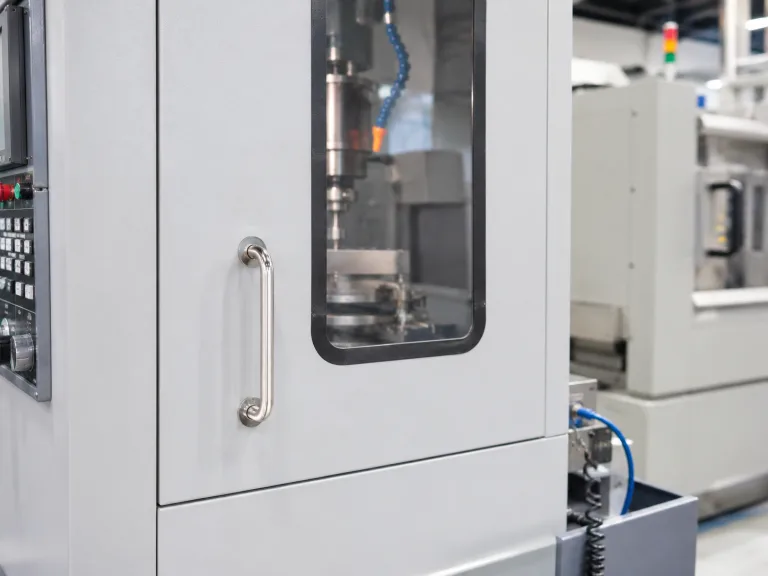
A control cabinet has to do two opposite jobs at the same time. It must stay closed to protect internal components from dust, moisture, accidental contact, and unauthorized handling. But it also has to open quickly and reliably when a technician needs to reset a breaker, troubleshoot a PLC, inspect wiring, or replace a failed module.
That is why the choice between a locking cam latch and a non-locking cam latch matters more than it first appears. A locking cam latch helps prevent unqualified or unauthorized opening, while a non-locking cam latch gives faster access for trained personnel. This article answers one question only: should a control cabinet use a locking cam latch or a non-locking cam latch? It does not cover which lock type to choose after locking is decided, or cam sizing and grip range. If the main issue is gasket compression rather than access control, the cam latch vs compression latch guide is the better starting point. This page focuses on access control, maintenance speed, key management, safety risk, and enclosure rating.
Quick Answer
Use a locking cam latch when the cabinet is in a public, semi-public, or unsecured area; when unqualified people could access energized parts; when tampering could create safety, downtime, or compliance risk; or when the cabinet is opened infrequently.
Use a non-locking cam latch when the cabinet is inside a secured room or controlled area, when trained personnel need frequent access, when key management causes repeated delays, or when another access-control method already protects the cabinet. Use a convertible latch or a non-locking latch with a padlockable hasp when the cabinet needs fast daily access but also requires temporary lockout, shutdown security, or after-hours restriction.
The real question is not “which latch is safer?” It is: what creates more risk in this cabinet — unauthorized opening, or delayed authorized access?
Unauthorized Access vs Maintenance Delay
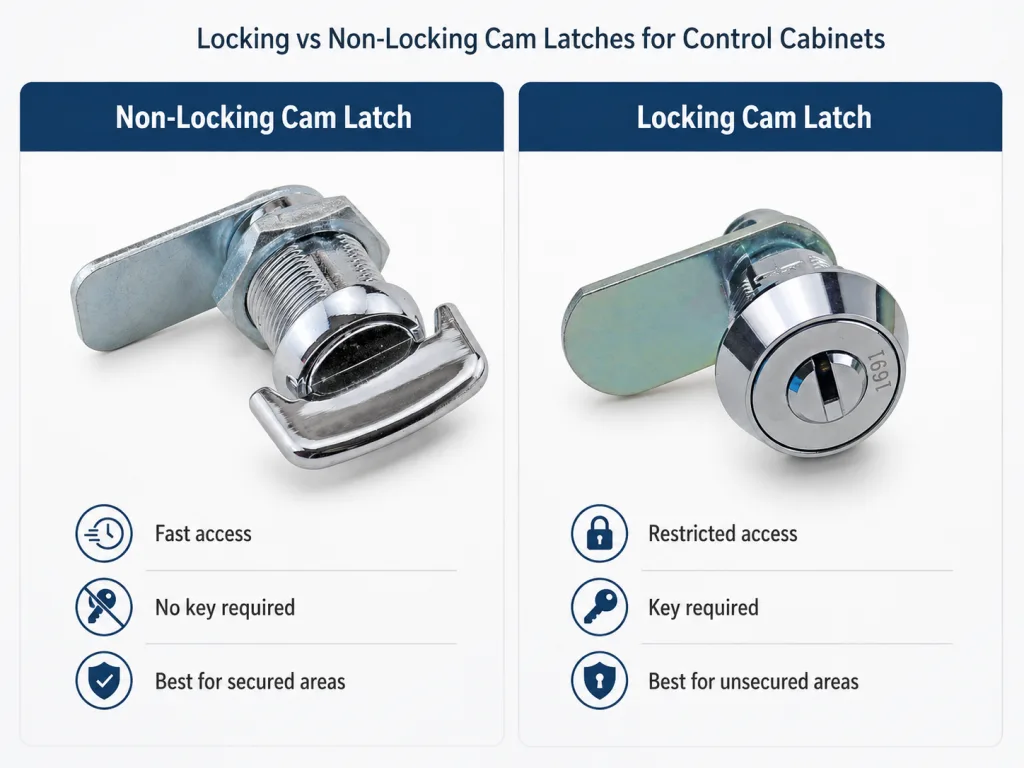
A locking cam latch and a non-locking cam latch solve different problems. A locking cam latch limits access, which is useful when a cabinet is exposed to visitors, contractors, operators, or the public. It helps reduce casual opening, accidental contact, tampering, and unauthorized adjustment.
A non-locking cam latch improves access speed, which is useful when trained personnel open the cabinet often and the area is already controlled by the building, room, fence, or machine access procedure. Both latch types can be correct. Both can also be wrong if the cabinet context is ignored.
A locking latch is a poor choice when technicians often cannot find the key and maintenance delays become routine. A non-locking latch is a poor choice when anyone walking by can open a cabinet that contains energized equipment, safety controls, or sensitive automation hardware. The right latch depends on the cabinet’s location, access frequency, safety risk, and key-management plan.
What Is a Locking Cam Latch?
A locking cam latch uses a key, tool, or lock cylinder to rotate the cam from closed to open. The cam engages behind the cabinet frame or keeper and holds the door shut. It is commonly selected for access control, tamper deterrence, electrical safety, outdoor or public-facing cabinets, cabinets with exposed energized parts or critical controls, cabinets opened infrequently, and sites with formal key management.
A locking cam latch is not a high-security lock by itself. Most standard cam locks are designed to deter casual or unauthorized opening, not to resist a determined attack. If forced-entry resistance is required, use a higher-security lock, reinforced enclosure design, or a supplementary padlock hasp. For most control cabinets, the main purpose of a locking cam latch is practical access control, not maximum security. Once you have decided the cabinet should lock, the choice between keyed, tubular, and higher-security cam lock types is covered in the guide to cam locks and what to use where.
What Is a Non-Locking Cam Latch?
A non-locking cam latch uses a knob, wing, recessed grip, tool head, or quarter-turn actuator to rotate the cam without a key. It is commonly selected for fast maintenance access, frequent inspection, cabinets inside secured rooms, operator-access panels, test cabinets, low-risk control enclosures, cabinets protected by perimeter access control, and applications where key loss would create downtime.
Non-locking cam latches are simpler because they have no keyway, tumbler, or lock cylinder. In dusty, wet, washdown, or corrosive environments, that simplicity can be an advantage. However, convenience alone is not a good reason to choose one. If the cabinet is accessible to unqualified people, the access risk may be greater than the maintenance benefit.
Locking vs Non-Locking Cam Latches: Quick Comparison
| Decision Point | Locking Cam Latch | Non-Locking Cam Latch |
|---|---|---|
| Unauthorized access control | Better | Limited |
| Maintenance speed | Slower if key is required | Faster |
| Key management | Required | Not required |
| High-frequency access | Can become inconvenient | Usually better |
| Public or semi-public location | Usually preferred | Usually not preferred |
| Secured electrical room | May be unnecessary | Often acceptable |
| Exposed energized parts | Usually safer | Only if access is otherwise controlled |
| Dirty or corrosive environment | Keyway can be a weak point | Simpler mechanism |
| NEMA/IP sealing | Requires sealed or covered keyway | Often simpler to seal |
| Lockout/tagout support | May still need hasp | Often paired with padlock hasp |
| Best use case | Access restriction | Fast authorized access |
When to Choose a Locking Cam Latch
Choose a locking cam latch when unauthorized opening is the bigger risk. It is usually the better starting point when the cabinet is in a public, semi-public, or unsecured production area; when unqualified personnel could reach it; when it contains energized parts, safety circuits, or critical controls; when unauthorized adjustment could stop equipment; when it is opened infrequently; when the facility has a working key-management system; or when tamper deterrence is required.
Typical examples include factory-floor control cabinets, electrical distribution cabinets in shared spaces, outdoor equipment control panels, utility corridor cabinets, and process control panels near non-maintenance personnel. A locking latch is especially useful when the cabinet has no other layer of access control. If there is no locked room, fence, guard, or badge-controlled area, the latch may be the first practical barrier.
Limits of Locking Cam Latches
Locking cam latches can create problems if the access plan is poor: missing keys, too many different keys, broken or corroded keyways, technicians forcing the latch open, delayed troubleshooting, doors left unlocked after service, keys left in the latch for convenience, and replacement latches with mismatched keys. If a facility has no key-management process, adding locking latches to every cabinet may create more downtime than security.
Key management should be part of the latch decision. Useful options include keyed-alike cam latches for similar cabinet groups, master key systems for maintenance teams, restricted key control for higher-risk cabinets, controlled key storage, convertible latch designs, padlockable hasps for temporary lockout, and standardized plant key numbers. A locking latch without a key plan is not a complete specification.
When to Choose a Non-Locking Cam Latch
Choose a non-locking cam latch when fast authorized access matters more than cabinet-level locking. It is usually the better starting point when the cabinet is inside a locked electrical room or supervised control room, within a fenced or restricted machine area, reachable only by trained personnel, opened frequently, used for troubleshooting or testing, affected by repeated key-loss delays, paired with a separate padlockable hasp for lockout, or when environmental durability matters more than key restriction.
Examples include test benches in R&D labs, control panels inside locked substations, junction boxes in secured production areas, and frequently opened troubleshooting panels. A non-locking latch does not mean “no access control.” It means access control is provided by the room, perimeter, machine procedure, or lockout method rather than by the cam latch itself.
When a Non-Locking Latch Can Be Unsafe
A non-locking cam latch can be the wrong choice when the cabinet is easy to open and the consequences of opening are serious. Be cautious when the cabinet is in an open production area, reachable by visitors or contractors, contains exposed energized parts or safety control circuits, can be opened by an untrained operator, is outdoors or public-facing, could be adjusted in a way that causes downtime, or depends on a fully closed door to maintain enclosure performance.
In these cases, a non-locking latch is hard to justify unless another access-control layer exists. Confirm the requirement with the site safety program, the authority having jurisdiction, and applicable electrical standards before finalizing the latch type.
Access Frequency: The Practical Test
Access frequency is one of the most useful decision factors. If a cabinet must be opened often, a locking latch can create friction. If it is rarely opened, the delay caused by a key is usually less important than the benefit of restricting access.
| Access Pattern | Better Starting Point |
|---|---|
| Opened rarely for scheduled maintenance | Locking cam latch |
| Opened occasionally by trained staff | Locking or non-locking depending on location |
| Opened daily for inspection | Non-locking or keyed-alike locking latch |
| Opened many times per shift | Non-locking latch |
| Opened during troubleshooting under time pressure | Non-locking or convertible latch |
| Opened only by qualified electricians in a secured room | Non-locking may be acceptable |
| Opened in public or uncontrolled areas | Locking latch |
Key Management: The Hidden Cost of Locking Latches
A locking latch is only useful if authorized personnel can open it when needed. Poor key management creates maintenance delay, forced entry, damaged latch cylinders, drilled locks, unsecured replacement latches, mixed key systems across the facility, keys left in cabinets, and technicians bypassing the latch. For control cabinets, a practical key plan is often more important than the lock cylinder itself.
Better options include one plant-standard key for low-risk cabinets, keyed-alike groups by department or equipment line, master key access for maintenance supervisors, controlled key storage near the equipment area, documented replacement key numbers, convertible latch designs where temporary locking is needed, and padlockable hasps where personal lockout is required. Avoid specifying a different key for every small cabinet unless the facility has a real system to manage those keys.
Enclosure Rating and Sealing Considerations
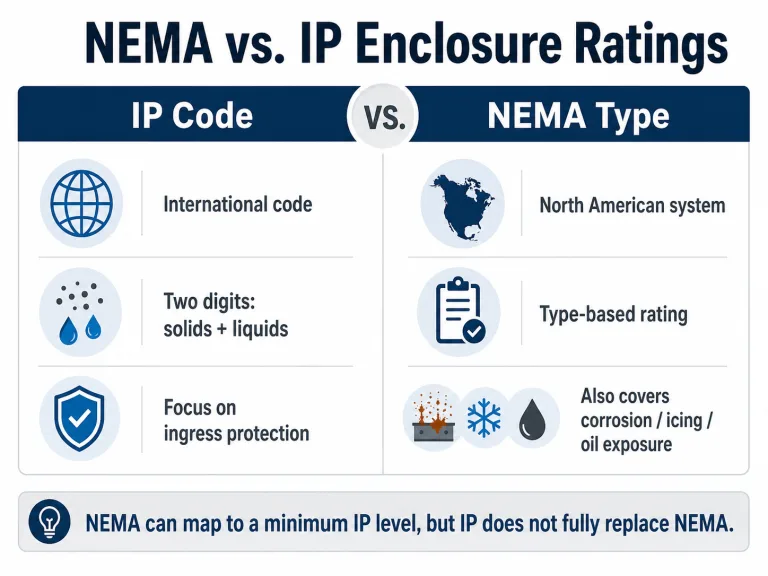
Control cabinets may need to maintain NEMA or IP enclosure ratings, and the latch must not weaken dust or water protection. Both locking and non-locking cam latches can be supplied with gaskets, sealing washers, and appropriate finishes. The difference is that a locking latch often has a keyway, which can become a leakage or contamination point if it is not protected.
For higher-ingress-protection applications, consider sealed lock cylinders, dust covers over keyways, gasketed latch bodies, sealing washers, stainless steel latch materials, smooth non-locking knobs for washdown areas, and avoiding exposed keyways in dirty or wet environments.
Environment and Material Selection
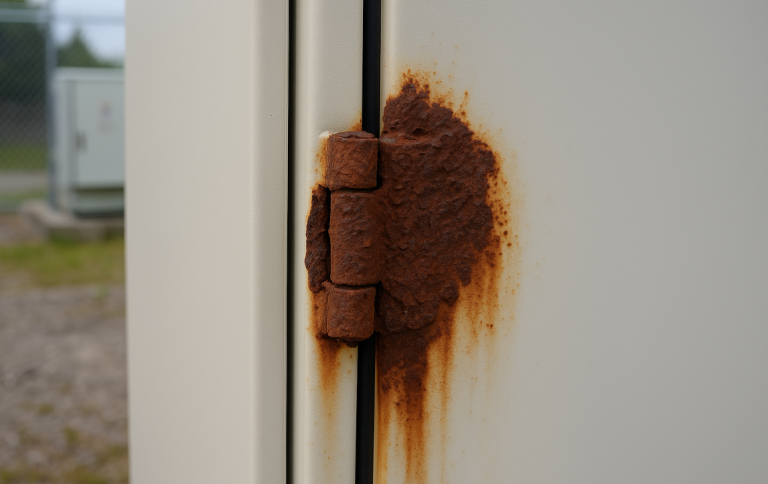
The locking decision is separate from the material decision, but the two interact. A locking latch in a dusty, wet, corrosive, or washdown environment may fail at the keyway even if the latch body is strong, while a non-locking latch has fewer small internal parts and may be more durable in the same environment.
A dry indoor cabinet may accept zinc alloy or coated steel. A washdown cabinet is better served by stainless steel or a sealed polymer design. A dusty plant should avoid exposed keyways where possible. For outdoor control cabinets where corrosion is the main concern, the comparison of stainless steel vs coated zinc latches for roadside enclosures covers the material decision in detail.
Lockout/Tagout and Padlockable Hasps
A cabinet lock is not the same thing as a lockout/tagout system. A locking cam latch controls who can open the cabinet door. A lockout/tagout device controls hazardous energy and prevents unexpected energization during service. That is the scope of OSHA standard 1910.147, the Control of Hazardous Energy (Lockout/Tagout), which covers servicing and maintenance where unexpected energization or stored-energy release could injure workers.
In many facilities, the best solution is a non-locking cam latch for fast routine access, a separate padlockable hasp or disconnect lockout point for maintenance safety, and a documented lockout procedure for authorized personnel. This prevents the cabinet key from being confused with personal lockout control. If the cabinet contains disconnects, drives, or hazardous energy sources, confirm the lockout method with the site safety program rather than assuming the cam latch lock is sufficient.
Convertible Latches: When the Answer Is Not Either/Or
Some cabinets need both fast access and occasional security. A convertible cam latch may allow normal non-locking operation during staffed production, locked operation after hours, temporary restriction during shutdown, shared use across multiple shifts, and reduced key use during high-access periods. This works well for cabinets that are normally supervised but occasionally left unattended.
The trade-off is added cost and complexity, and convertible latches should still be evaluated for sealing, durability, material, and key management. They are useful when the cabinet context changes during the day or across shifts.
Common Specification Mistakes
Mistake 1: Locking Every Cabinet “To Be Safe”
This can create unnecessary key-management problems and slow maintenance. Locking should be based on actual access risk, not blanket policy alone.
Mistake 2: Using Non-Locking Latches in Unsecured Areas
If unqualified people can open a cabinet containing energized or safety-critical equipment, a non-locking latch may create unnecessary risk.
Mistake 3: Leaving the Key in the Lock
This defeats the purpose of a locking latch. If the key is always left in place, the cabinet may need a non-locking or convertible latch instead.
Mistake 4: Treating All Locking Cam Latches as High Security
Standard cam locks usually prevent casual access, not determined forced entry. Use supplementary hasps, reinforced doors, or higher-security locks where real security is required.
Mistake 5: Mixing Access Control with Lockout/Tagout
A cabinet key should not be treated as a personal lockout device. Use proper lockout points where hazardous energy control is required.
What to Send a Supplier Before Choosing
To recommend the correct latch, a supplier needs the cabinet context, not just a latch photo. Send the cabinet location and whether it is indoor or outdoor; who can physically reach it and whether the area is secured; the voltage or hazard level; access frequency; whether keys are already standardized; the required enclosure rating; door thickness and cutout size; cam length or grip range; material and corrosion exposure; and whether lockout/tagout hasps are required.
If panel fit, cam length, or grip range is the main issue, the cam latch fit guide for electrical cabinets covers that separately. With that context, HTAN can recommend locking, non-locking, or convertible options from its cam latches range to match the cabinet’s actual operating conditions.
FAQ
Is a locking cam latch required for every control cabinet?
No. A locking latch is usually preferred in public, semi-public, or unsecured areas, especially when unqualified people could access energized parts. But a non-locking latch may be acceptable inside a locked electrical room or secured control area where access is already controlled by the room or perimeter.
When is a non-locking cam latch better?
A non-locking latch is better when trained personnel need frequent access, the cabinet is already protected by room or perimeter access control, key management causes delays, or a separate lockout method provides the required maintenance safety. It gives fast access without the friction of a key.
Does a locking cam latch replace lockout/tagout?
No. A cabinet lock controls access to the door, while lockout/tagout controls hazardous energy during service. Under OSHA 1910.147, if hazardous energy is present, you must follow the site lockout procedure and use proper lockout devices — the cam latch lock does not satisfy that requirement.
Can a locking cam latch maintain a NEMA or IP rating?
Yes, if it is designed with proper sealing features such as a gasketed body, sealing washer, sealed lock cylinder, or covered keyway. Do not assume any locking latch automatically preserves the enclosure rating, because an unprotected keyway can become a dust or water entry point.
Are non-locking cam latches more durable?
They can be more durable in dusty, wet, or corrosive environments because they have fewer small lock components and no keyway to seize or corrode. However, material, sealing, and latch design still matter, so durability should be evaluated alongside the environment, not assumed.
What if I need both fast access and security?
Consider a convertible cam latch, a non-locking latch with a separate padlockable hasp, or a keyed-alike locking system. The best choice depends on access frequency, security risk, and maintenance workflow — a convertible or hasp approach often balances daily speed with after-hours restriction.
Final Recommendation
For control cabinets, the locking decision should start with access risk. Use a locking cam latch when the cabinet is accessible to unqualified personnel, contains hazardous or sensitive equipment, is located in an unsecured area, or is opened infrequently. Use a non-locking cam latch when the cabinet is inside a secured area, opened frequently by trained personnel, or protected by a separate access-control or lockout method. Use a convertible latch when the cabinet needs fast access during normal operation but temporary security after hours or during shutdown.
The best question is not “should every control cabinet be locked?” but “who needs to open this cabinet, how often, and what happens if the wrong person opens it — or if the right person cannot?” If you are specifying cam latches for control cabinets, send the cabinet location, access frequency, voltage level, enclosure rating, cutout size, material environment, and key-management requirements, and HTAN can recommend locking, non-locking, or convertible cam latch options that match the cabinet’s actual operating conditions.