HTAN is one of the leading manufacturers of industrial hinges, handles and latches in China.


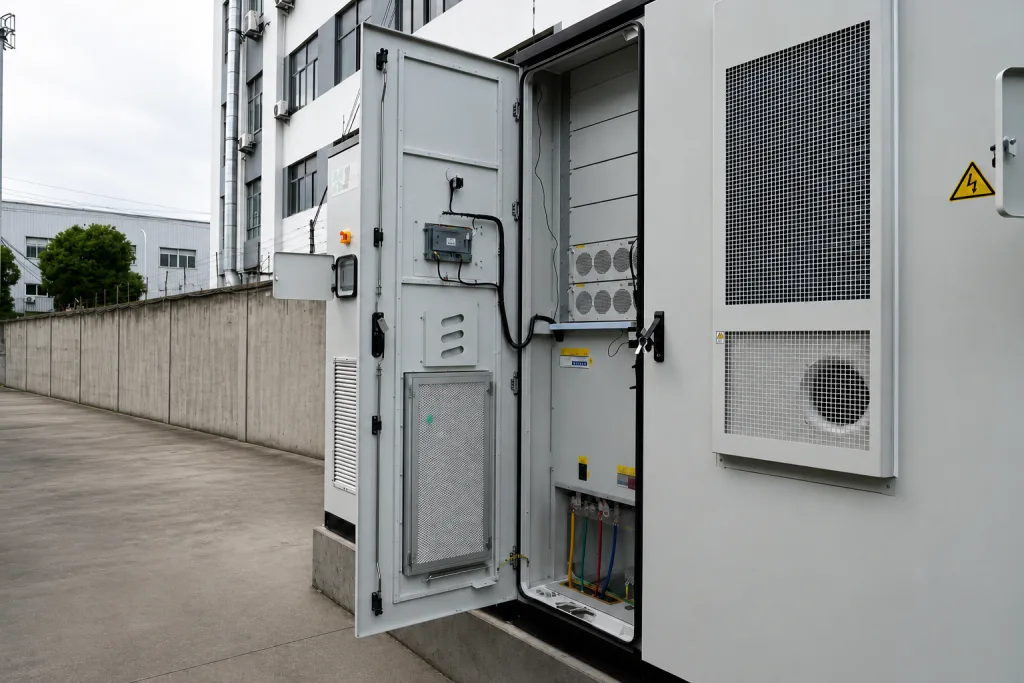
Solar inverter cabinets, battery storage enclosures, and other outdoor equipment cabinets sit in some of the harshest conditions a hinge will ever face: full-day sun, wide day-to-night temperature swings, wind-driven rain, and years of service with little maintenance. The hinge on one of these cabinets has to keep the door sealed against weather while surviving thermal cycling that expands and contracts every component daily. Choose the wrong hinge and the door gradually loses its seal, letting moisture reach live electronics in a cabinet that may sit in a remote field for a decade.
This guide covers what matters when selecting hinges specifically for solar and outdoor equipment cabinets: thermal cycling, UV exposure, wind load, and long-term weather sealing in low-maintenance installations. It focuses on this application rather than the full selection method — for the complete step-by-step path, see how to choose hinges for outdoor electrical enclosures. Here, the focus is the specific demands of solar and unattended outdoor equipment.
What Makes Solar Cabinet Hinges Different
Hinges for solar and outdoor equipment cabinets face four demands beyond a typical indoor enclosure:
| Demand | Why It Matters for Solar/Outdoor Cabinets |
|---|---|
| Thermal cycling | Daily heating and cooling expands and contracts the door, stressing the hinge and the seal |
| UV and weather | Years of direct sun and rain degrade weak materials and finishes |
| Wind load | Field-mounted cabinets face wind on large doors with little shelter |
| Low maintenance | Remote installations may go years without service, so the hinge must not need adjustment |
The common thread is durability without much intervention: the hinge must hold the seal through thousands of thermal cycles and years of weather without anyone tightening or replacing it. For most solar inverter cabinets, start with a stainless steel hinge, verify the full temperature range, add capacity for wind and door weight, and use mounting that will not loosen or create leak paths over years of largely unattended service.
Thermal Cycling: The Defining Challenge
A solar cabinet in the field can swing from below freezing at dawn to significantly hotter than the surrounding air by mid-afternoon when the sun hits a dark enclosure. That daily cycle, repeated for years, is the defining challenge for an outdoor equipment hinge. Metal expands and contracts with each cycle, and if the hinge and the door expand at different rates or bind at the pivot, the gasket compression changes through the day — sealing well when cool and gapping when hot, or the reverse.
Two things help. First, choose a hinge material and a door material with compatible thermal behavior, so they move together rather than against each other. Second, avoid a hinge that binds or stiffens at temperature extremes — a pivot that runs smoothly at 20°C but seizes at -20°C will fight the seal. For cabinets in cold climates, confirm the hinge and any internal lubricant or bushing are rated for the low-temperature end of the range, not just the average.
UV, Corrosion, and Material Choice
Outdoor equipment cabinets live under direct UV and weather for their entire service life. UV itself does not attack stainless steel, but it degrades weak coatings and any plastic hinge components, and it combines with moisture and airborne contaminants to accelerate coating failure and corrosion. For most solar and outdoor equipment cabinets, stainless steel is the practical baseline, with the grade chosen for the local environment.
The material decision follows the same logic as any outdoor hinge: 304 stainless for general outdoor exposure, and 316 where the site adds chlorides — coastal solar farms, or installations near roads treated with salt. The full grade comparison is in the guide to outdoor stainless steel hinge selection: 304 vs 316, and the broader range of finishes and treatments is covered in the guide to corrosion-resistant hinges. If the cabinet sits where salt is in the air, the way salt spray attacks hinges is worth understanding before settling on a grade.
Wind Load on Field-Mounted Cabinets
Solar and outdoor equipment cabinets are often mounted in open ground with no surrounding buildings to break the wind. A large door catches wind like a sail, and a gust on an open door shock-loads the hinge well beyond the door’s static weight. Over years of service, repeated wind loading wears a hinge that was sized only for the door’s weight.
For exposed sites, size the hinge with margin above the static door weight and consider adding a hinge to spread the load across the door edge. Large doors also benefit from even closing force so the gasket stays compressed across the full span in wind — a single latch on a wide door can leave corners under-compressed. The full treatment of load, hinge count, and wind is part of the broader outdoor enclosure hinge selection path; for solar cabinets, the point is that open-field mounting raises the load class you should specify.
Sealing for Low-Maintenance Installations
Many solar and outdoor equipment cabinets are installed in remote or hard-to-reach locations and may go years between service visits. That makes the seal a design-once, last-for-years requirement: the hinge has to keep the door compressing the gasket evenly without periodic adjustment. A hinge that sags slightly over time, or that loosens at its mounting under thermal cycling and vibration, will quietly break the seal long before anyone visits to notice.
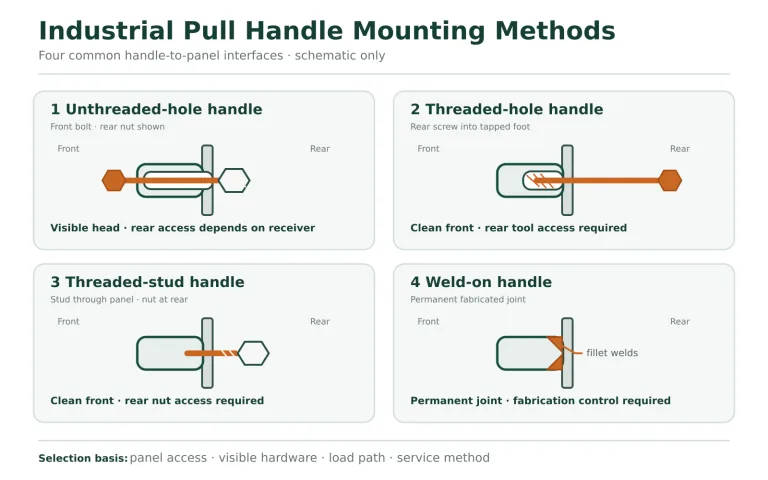
Two choices support low-maintenance sealing. Use a hinge stiff enough that it will not sag over years of load, and mount it so the fasteners will not loosen — sealed studs or welded mounting also avoid creating leak paths through the enclosure wall. For cabinets where the required ingress protection is high, the engineering of how the hinge maintains gasket compression is covered in the deep dive on hinge selection for IP65/IP67 cabinets. The goal for a largely unattended solar cabinet is a seal that holds with minimal field adjustment.
Solar and Outdoor Equipment Cabinet Hinge Checklist
Before specifying a hinge for a solar or outdoor equipment cabinet, confirm each of these:
| Factor | What to Confirm |
|---|---|
| Temperature range | Hinge and lubricant rated for the lowest and highest site temperatures |
| Thermal compatibility | Hinge and door materials move together through daily cycles |
| Material grade | 304 for general outdoor, 316 for coastal or salt-exposed sites |
| UV-stable components | No weak coatings or UV-sensitive plastic parts in the load path |
| Wind margin | Hinge sized above static door weight for open-field mounting |
| Hinge count | Enough hinges to spread load on large doors and hold the seal |
| Maintenance-free mounting | Sealed or welded mounting that will not loosen or leak over years |
FAQ
What hinge material is best for solar inverter cabinets?
Stainless steel is the practical baseline for solar inverter and outdoor equipment cabinets, with 304 for general outdoor exposure and 316 where the site adds chlorides such as coastal or road-salt locations. The grade should match the local environment rather than defaulting to one choice.
How does thermal cycling affect an outdoor cabinet hinge?
Daily heating and cooling expands and contracts the door and hinge, which can change gasket compression through the day and stress the pivot. Choosing materials with compatible thermal behavior and a hinge that does not bind at temperature extremes helps the seal stay consistent across thousands of cycles.
Do solar cabinet hinges need to be low-maintenance?
In practice, yes, because many solar and outdoor equipment cabinets are remote and may go years between service visits. The hinge should hold gasket compression without periodic adjustment, which means specifying a stiff hinge that will not sag and mounting that will not loosen over time.
Does UV exposure damage hinges?
UV does not attack stainless steel, but it degrades weak coatings and UV-sensitive plastic hinge components and works with moisture to drive corrosion over time. For outdoor equipment cabinets, avoid plastic parts in the load path and rely on a corrosion-resistant metal hinge with a UV-stable finish.
Why do field-mounted solar cabinets need stronger hinges?
Open-field cabinets face wind with no surrounding shelter, and a gust on a large open door shock-loads the hinge well beyond the door’s static weight. Sizing the hinge with margin above the door weight and adding hinges to spread the load helps the door and seal survive years of wind exposure.
Is a telecom cabinet hinge the same as a solar cabinet hinge?
They overlap because both are outdoor enclosures, but the priorities differ. Solar and battery cabinets often emphasize thermal cycling from heat-generating equipment and long unattended service, while telecom cabinets have their own access and security needs. Match the hinge to the specific cabinet’s environment and service pattern.
Bottom Line
Hinges for solar and outdoor equipment cabinets are defined by one thing: holding the seal for years with no maintenance, through daily thermal cycling, UV, and wind. Specify a stainless steel hinge in the grade that matches the site, size it with margin for open-field wind, confirm it works across the full temperature range, and mount it to minimize sag, loosening, and leak paths over long-term outdoor service. Get those right and the cabinet stays sealed long after installation.
If you can describe the site — temperature range, coastal or inland, door size, and required ingress protection — HTAN can recommend a hinge built to survive a solar or outdoor equipment cabinet’s full service life. Send those details for an application-matched recommendation.