HTAN is one of the leading manufacturers of industrial hinges, handles and latches in China.


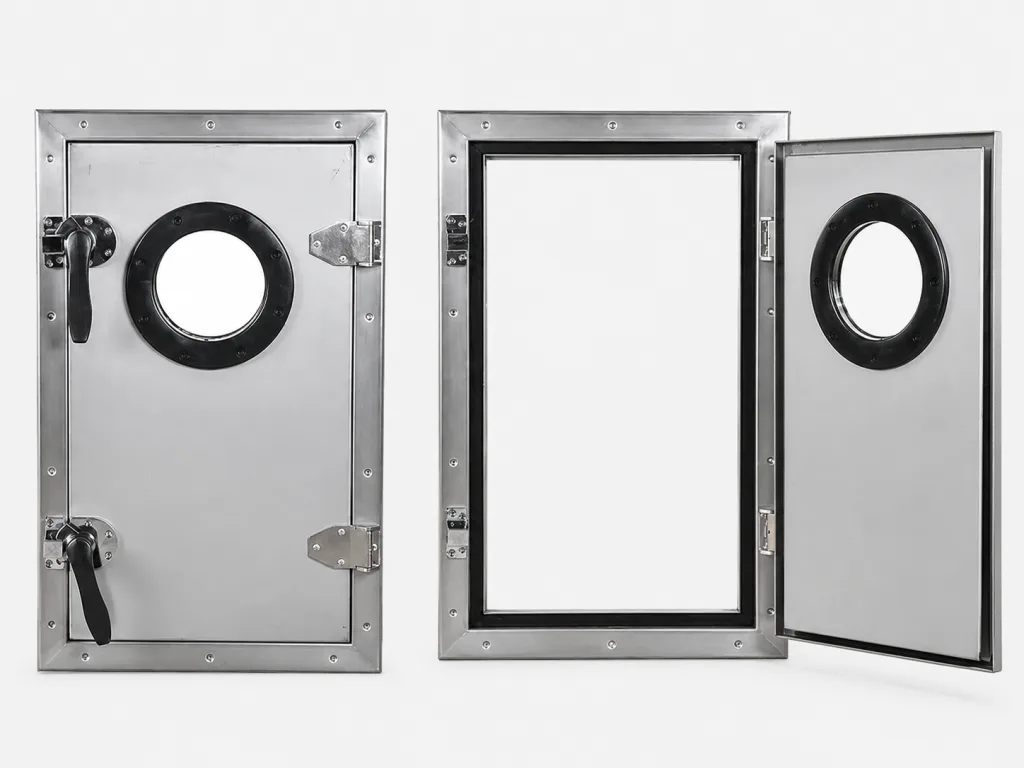
When an AHU access door is difficult to open, starts to sag, or fails to compress the gasket evenly, the problem is often not only the door panel itself. In many cases, hinge selection, hinge position, and hinge load capacity directly affect service access, air leakage, door alignment, and long-term maintenance cost.
For HVAC equipment manufacturers, enclosure builders, facility maintenance teams, and mechanical contractors, choosing the right hinges for AHU access doors is a practical engineering decision. The hinge must support insulated door weight, allow enough opening clearance in a crowded mechanical room, and help maintain stable gasket compression after repeated service cycles.
This guide explains how to select AHU access door hinges based on three real project problems: limited maintenance space, heavy insulated door load, and uneven gasket pressure. For AHU manufacturers and maintenance teams, the goal is not simply to choose a hinge that fits the door, but to choose a hinge solution that supports safe access, stable alignment, and long-term sealing performance.
Common AHU Access Door Problems Caused by Poor Hinge Selection
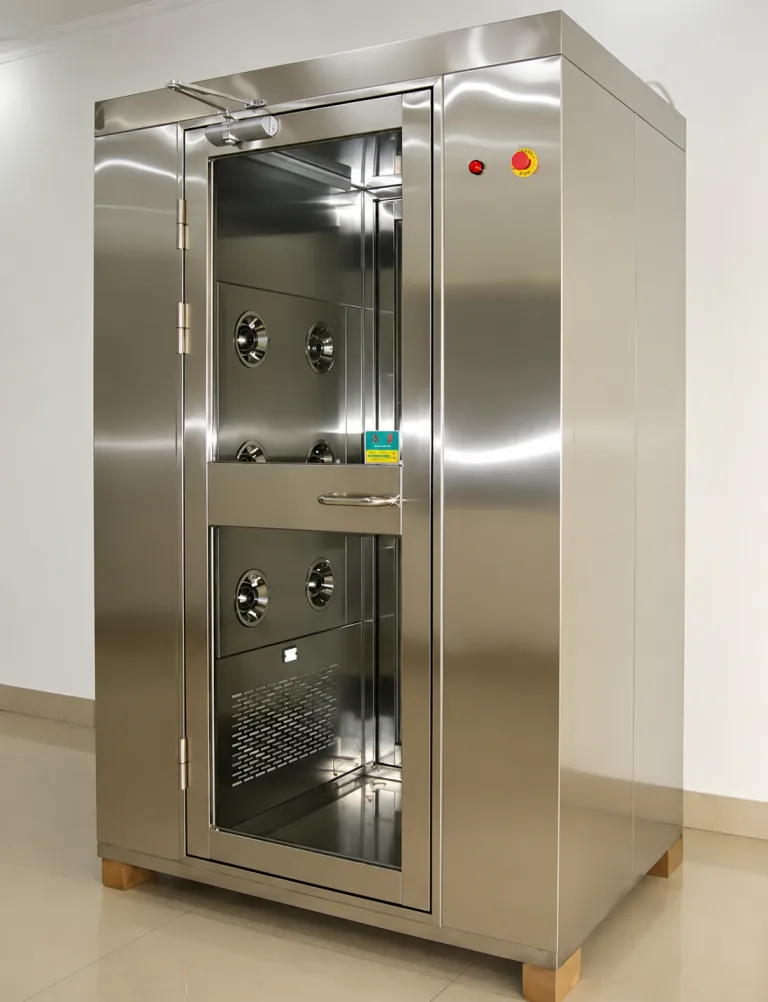
AHU access doors are used for filter replacement, coil inspection, fan section maintenance, cleaning, and routine equipment service. Because these doors are opened repeatedly during the service life of the unit, hinge performance has a direct impact on maintenance efficiency, safety, and seal stability.
A poorly selected hinge may still hold the door at first, but problems often appear after repeated operation. The door may sag, scrape the frame, lose gasket compression, or become difficult to open in a tight mechanical room. In rooftop AHUs or humid cooling sections, corrosion can also increase hinge friction and make emergency access more difficult.
For AHU doors, the hinge is not a decorative accessory. It is part of the access door hardware system and should be selected according to load, opening angle, frame structure, and environment. When standard cabinet hardware cannot meet these requirements, the hinge should be treated as an industrial access hardware component designed for repeated service cycles, equipment panels, and higher mechanical demands.
The most common hinge-related AHU access door problems include:
- The access door cannot open fully because nearby pipes, ducts, walls, or service equipment block the swing path.
- The door is too heavy for the hinge system and begins to sag over time.
- The gasket does not compress evenly, causing air leakage or unstable sealing performance.
- The hinge corrodes, binds, or becomes difficult to operate in humid or outdoor environments.
- The hinge and latch are selected separately, so the door cannot maintain stable closing pressure.
- The hinge hole pattern or mounting structure is not suitable for the AHU frame or insulated panel.
A better approach is to treat the hinge as part of the complete access door hardware system. The hinge, latch, gasket, frame, and door panel must work together to provide reliable service access and long-term sealing performance.
1: The AHU Door Cannot Open Fully in a Tight Maintenance Space
Many AHUs are installed in mechanical rooms, rooftop platforms, equipment corridors, or plant areas where available service space is limited. Nearby pipes, ducts, walls, cable trays, valves, and service equipment may prevent the access door from opening fully. If the door cannot open wide enough, filter replacement, coil cleaning, fan inspection, or internal repair work becomes slower and less safe.
In this situation, hinge selection should start with the real service clearance around the AHU, not only the door size. A hinge that works well on a standard cabinet may not be suitable for an AHU installed in a narrow maintenance corridor.
Before choosing a hinge, check these questions:
- How much clearance is available in front of the AHU access door?
- Can the door open at least 90 degrees without hitting nearby obstacles?
- Does the maintenance task require the door to open 120 degrees, 180 degrees, or be fully removed?
- Will the door interfere with filters, coils, tools, ladders, pipework, or adjacent equipment?
- Can one technician safely open and hold the door during service?
When an AHU is installed close to a wall, duct, pipe, or service platform, the access door may not have enough room to swing fully open. In this situation, the hinge should solve the access problem first. If the door needs to be removed during filter replacement, coil cleaning, or internal inspection, Removable Hinges
are often more practical than fixed hinges because they allow the panel to be lifted away instead of forcing it to swing into limited space.
Offset hinges or swing-clear hinge designs may also help move the door away from the frame and reduce interference with surrounding equipment. These hinge designs are useful when the door must clear a thick gasket, insulation layer, or projecting frame edge.
If limited maintenance space is the main problem in your project, we have a separate guide that focuses specifically on AHU access issues in tight spaces. That article explains when removable hinges are useful for restricted service areas.
Commercial guidance: If your AHU access door is blocked by ductwork, pipework, walls, or a narrow service corridor, send us the door size, panel thickness, opening direction, and available clearance. HTAN can help evaluate whether a removable, offset, or custom hinge design is more suitable for your access door layout.
2: Heavy Insulated AHU Doors Start to Sag Over Time
AHU access doors are often heavier than they look. A door may include insulation, double-wall sheet metal, gasket material, handles, latches, viewing windows, reinforcement plates, or internal acoustic treatment. If the hinge load rating is too low, the door may gradually sag, scrape the frame, or create an uneven seal gap near the top or bottom corner.
Door weight is only one part of hinge selection. Door width, center of gravity, opening frequency, hinge spacing, and frame strength also affect long-term performance. A wide AHU door creates more bending moment on the hinge side than a narrow door of the same weight.
For heavy insulated AHU access doors, the hinge system should be selected with a safety factor rather than matching the door weight exactly. If the hinge is rated too close to the actual door weight, repeated opening and closing may lead to wear, sagging, screw loosening, or hinge leaf deformation.
As a practical engineering approach, consider these factors together:
- Total door weight, including insulation and hardware.
- Door height and width.
- Center of gravity when the door is open.
- Number of hinges and hinge spacing.
- Mounting surface thickness and frame strength.
- Opening frequency during maintenance cycles.
- Whether the door needs support when fully open.
If the door is wide, insulated, or fitted with extra hardware, a light cabinet hinge may hold the door at first but still allow sagging after repeated service cycles. For these heavier AHU access doors, heavy-duty hinges provide stronger support and help reduce long-term door misalignment.
The number of hinges should also match the door design. Adding more hinges is not always the best solution if the hinge positions are not aligned correctly. Two or three properly selected and accurately installed hinges often perform better than four poorly aligned hinges.
For heavy insulated AHU doors: HTAN can help evaluate hinge load capacity, hinge spacing, mounting hole pattern, and mounting structure to reduce door sagging and improve long-term door alignment. When sending an inquiry, include door height, door width, estimated weight, panel thickness, frame material, and expected opening frequency.
3: Uneven Gasket Compression Causes Air Leakage
A hinge does not seal the AHU door by itself, but it strongly affects whether the door can press evenly against the gasket. If the hinge is weak, misaligned, or poorly positioned, the door may not compress the gasket evenly. One side of the door may press too tightly while the opposite side leaves a visible gap.
Uneven gasket compression can cause several problems:
- Air leakage around the AHU access door.
- Reduced pressure stability in filter, coil, or fan sections.
- Dust bypass or unfiltered air leakage.
- Condensation around poorly sealed door edges.
- Premature gasket wear due to uneven compression.
- More frequent maintenance and adjustment.
Seal performance is especially important in AHU sections where air pressure, filtration, temperature control, or moisture management must remain stable. In these applications, hinge selection should be considered together with gasket thickness, latch position, compression requirement, and door stiffness.
For better sealing performance, the hinge should allow the door to close squarely against the frame. The hinge side must remain stable after repeated opening and closing. If the door sags or shifts, the gasket compression pattern will change over time.
If the hinge side stays aligned but the opposite side of the door does not pull tightly against the gasket, the problem may not be the hinge alone. Many sealed AHU access doors need closing force from the latch side as well. In these cases, compression latches help pull the door toward the frame so the gasket can compress more evenly.
For wide or heavy doors, hinge placement becomes even more important. If the hinge line is too far from the gasket compression line, the door may twist slightly during closing. This can create a seal gap even when the latch feels tight.
Commercial guidance: If your project requires stable gasket compression, do not select the hinge and latch separately. Send us the gasket thickness, required compression amount, door size, latch position, and frame structure. HTAN can help match hinges and latches as a complete AHU access door hardware solution.
4: Corrosion or Dirt Makes the Hinge Hard to Operate
AHU access doors may be exposed to moisture, condensation, cleaning chemicals, outdoor weather, rooftop environments, or coastal air. In these conditions, hinge corrosion can increase friction, reduce movement, damage the hinge pin, or make the access door difficult to open during maintenance.
Material selection should be based on the AHU operating environment. A dry indoor mechanical room may not require the same hinge material as a rooftop AHU, cooling coil section, humid plant room, or coastal installation.
When an AHU is installed on a rooftop, near cooling coils, or in a humid mechanical room, moisture can increase hinge friction and shorten service life. In these environments, stainless steel hinges are usually a better choice than low-cost plated hinges because they offer stronger corrosion resistance for long-term service.
In many industrial and HVAC applications, 304 stainless steel provides good corrosion resistance for indoor and moderately humid environments. For more aggressive environments, such as coastal rooftops or areas exposed to salt, chemicals, or frequent condensation, 316 stainless steel may provide better long-term performance.
Surface finish also matters. Smooth hinge surfaces are easier to clean and less likely to trap dirt. For AHU access doors used in clean, controlled, or hygiene-sensitive areas, hinge geometry should avoid unnecessary recesses, exposed dirt traps, and difficult-to-clean shapes.
When specifying hinges for AHU access doors, consider:
- Indoor or outdoor installation.
- Humidity and condensation exposure.
- Rooftop weather exposure.
- Coastal or corrosive air conditions.
- Cleaning frequency and cleaning agents.
- Required service life and maintenance interval.
- Whether the hinge must remain smooth and easy to wipe.
Commercial guidance: For rooftop AHUs, coastal projects, cooling coil sections, or humid mechanical rooms, provide the installation environment and corrosion exposure level. HTAN can recommend suitable hinge material, surface finish, pin structure, and mounting design for longer service life.
How to Choose the Right Hinge Type for Different AHU Door Conditions
Different AHU access door problems require different hinge solutions. There is no single hinge type that is best for every AHU door. The right choice depends on the door size, weight, service clearance, sealing requirement, operating environment, and maintenance frequency.
Butt Hinges for Standard AHU Access Doors
Butt hinges are suitable for many standard AHU access doors where the door is not extremely heavy and there is enough service clearance. They are simple, compact, and cost-effective. However, they require accurate alignment during installation. If the hinge positions are not aligned, the door may bind or apply uneven pressure to the gasket.
Butt hinges are best for small to medium AHU access doors in indoor environments where maintenance space is not a major problem.
Continuous Hinges for Long or Lightweight Panels
Continuous hinges, often called piano hinges, distribute support along a longer section of the door edge. They can help with alignment on long lightweight panels, but they are not always the best choice for heavy insulated AHU doors. Load capacity, hinge thickness, pin size, and installation method must be checked carefully.
Continuous hinges may be useful for long service panels, filter access panels, and lightweight doors where even support along the hinge side is more important than high load capacity.
Lift-Off Hinges for Removable AHU Access Doors
Lift-off hinges are useful when the door needs to be removed for maintenance, cleaning, inspection, or equipment replacement. They are especially valuable when the AHU is installed in a tight space where the door cannot swing fully open.
However, lift-off hinges must be installed carefully. If the door is removed and reinstalled frequently, the hinge position and gasket compression should be checked during maintenance. For heavy doors, the removal process must also be safe for technicians.
Heavy-Duty Hinges for Large or Insulated AHU Doors
Heavy-duty hinges are suitable for large access doors, wide insulated panels, fan section doors, coil section doors, and doors that are opened frequently. These hinges typically use thicker leaves, stronger pins, reinforced knuckles, or more robust mounting structures.
They are recommended when standard hinges may lead to sagging, screw loosening, frame deformation, or poor long-term alignment.
Adjustable Hinges for Better Alignment and Seal Control
Adjustable hinges can help compensate for small installation tolerances, gasket compression changes, or door alignment issues. They are useful when the access door must maintain a consistent seal after repeated service cycles.
For AHU access doors that require stable sealing, adjustable hinges should be evaluated together with the latch and gasket system. A hinge that allows alignment correction can reduce maintenance problems over time.
Custom Hinges for Special AHU Door Requirements
Custom hinges may be needed when the AHU access door has unusual size, limited space, special frame geometry, high weight, special material requirements, or non-standard mounting holes. In these cases, selecting a catalog hinge without checking the door structure may lead to installation or performance problems.
HTAN can support custom hinge requirements such as material selection, hinge length, mounting hole position, opening angle, pin diameter, surface finish, and load-related design adjustments.
Recommended Hinge Solutions for AHU Access Doors
The table below summarizes common AHU access door problems and suitable hinge solutions. This can be used as a practical starting point during equipment design, retrofit, or maintenance planning.
| AHU Door Problem | Recommended Hinge Solution | Why It Works | Best For |
|---|---|---|---|
| Limited maintenance clearance | Lift-off hinge or offset hinge | Allows the door to be removed or opened away from nearby obstacles | Mechanical rooms, rooftop AHUs, narrow service corridors |
| Heavy insulated access door | Heavy-duty hinge or reinforced stainless steel hinge | Supports higher load and reduces long-term door sag | Large AHU panels, fan sections, coil sections |
| Uneven gasket compression | Adjustable hinge with compression latch system | Helps maintain better alignment and seal pressure | High-pressure AHU sections, filter doors, sealed panels |
| Humid or rooftop environment | 304 or 316 stainless steel hinge | Improves corrosion resistance against condensation and outdoor exposure | Rooftop units, coastal areas, cooling coil sections |
| Frequent inspection access | Hinge with bearing or low-friction pin design | Reduces wear during repeated opening and closing | Maintenance doors, filter access doors, inspection panels |
| Special frame or non-standard panel design | Custom hinge solution | Matches mounting holes, panel thickness, opening angle, and load requirements | OEM AHU projects, retrofit projects, custom HVAC equipment |
This table should not replace engineering review, but it helps narrow the selection direction. For AHU access doors, the best hinge is not always the strongest or most expensive option. The best hinge is the one that fits the door weight, service space, seal requirement, and installation environment.
AHU Access Door Hinge Selection Checklist
Before selecting hinges for an AHU access door, review the complete door system. This checklist can help reduce the risk of choosing a hinge that fits the drawing but fails in the field.
1. Door Size and Weight
- Measure the door height and width.
- Estimate total door weight, including insulation, gasket, handles, latches, and reinforcement.
- Check whether the door is narrow, wide, tall, or unusually heavy.
- Consider the bending moment created by wide doors.
2. Maintenance Clearance
- Measure the available space in front of and beside the AHU access door.
- Check for nearby pipes, ducts, walls, valves, electrical boxes, or service platforms.
- Determine whether the door needs to open 90 degrees, 120 degrees, 180 degrees, or be removed.
- Consider whether one technician can safely open and service the door.
3. Seal and Gasket Requirements
- Identify gasket type, thickness, and required compression.
- Check whether the hinge position supports even gasket compression.
- Confirm whether compression latches are needed.
- Check whether door sag would create seal gaps over time.
4. Material and Environment
- Determine whether the AHU is indoor, rooftop, coastal, humid, or condensation-prone.
- Select coated steel, 304 stainless steel, or 316 stainless steel based on corrosion risk.
- Consider smooth surface finishes for easier cleaning.
- Check whether the hinge pin and fasteners also need corrosion resistance.
5. Mounting Structure
- Check frame thickness and mounting surface strength.
- Confirm whether screws, bolts, rivets, or welding will be used.
- Make sure the hinge hole pattern matches the door and frame structure.
- For insulated panels, avoid mounting methods that damage insulation or reduce door strength.
6. Maintenance Frequency
- Determine how often the door will be opened.
- For frequent service doors, consider hinges with stronger wear resistance.
- Plan inspection intervals for hinge wear, corrosion, screw loosening, and alignment changes.
- Keep replacement hardware available for critical service doors.
Practical selection tip: If the AHU access door is heavy, frequently opened, or used in a high-humidity environment, do not select the hinge by appearance alone. Send the door details to HTAN so the hinge type, material, and mounting structure can be evaluated together.
When to Request a Custom Hinge Solution for AHU Access Doors
Standard hinges may be enough for small, lightweight AHU panels. However, a custom hinge solution is often more suitable when the access door has special size, load, sealing, or installation requirements.
You should consider a custom hinge design when:
- The AHU access door is unusually large, wide, or heavy.
- The door cannot open fully because of nearby pipes, ducts, walls, or service equipment.
- The gasket compression becomes uneven after repeated opening and closing.
- The hinge must fit a special panel thickness or frame structure.
- The AHU is used in a humid, rooftop, coastal, or corrosive environment.
- The hinge must work together with compression latches or sealing hardware.
- The project requires a specific material, finish, opening angle, pin diameter, or mounting hole pattern.
- The equipment manufacturer needs consistent hardware for a series of AHU models.
HTAN can provide hinge customization based on door weight, panel thickness, mounting structure, opening angle, material, surface finish, and application environment. For AHU access door projects, we recommend evaluating the hinge together with the latch, gasket, and frame design instead of treating it as a single isolated component.
For custom hinge evaluation, prepare these details before inquiry:
- Door height and width.
- Estimated door weight.
- Panel thickness and insulation structure.
- Frame material and mounting surface.
- Required opening angle.
- Gasket type and compression requirement.
- Indoor, rooftop, humid, coastal, or corrosive environment.
- Expected opening frequency.
- Preferred material and surface finish.
- Drawing, photo, or installation sketch if available.
Need a custom AHU access door hinge solution? Contact HTAN with your project requirements. We can help evaluate standard hinge options or develop a customized hinge design for your access door structure.
Common Mistakes to Avoid When Selecting AHU Access Door Hinges
Many AHU access door problems come from selecting hardware too late in the design process. If the hinge is chosen after the door, gasket, latch, and frame have already been finalized, the available options may be limited. This can lead to poor opening clearance, difficult installation, or weak sealing performance.
1: Selecting the Hinge Only by Door Weight
Door weight matters, but it is not the only factor. A wide insulated door can create higher stress on the hinge side than a narrow door with the same weight. Always consider door width, center of gravity, opening angle, and service frequency.
2: Ignoring the Actual Maintenance Space
A hinge may look suitable on a drawing but fail in the field if the door cannot open because of nearby equipment. Always check real clearance around the AHU before selecting the hinge type.
3: Treating the Hinge and Latch Separately
The hinge controls alignment, while the latch helps create closing pressure. If the hinge and latch are not selected as part of the same door hardware system, gasket compression may be uneven.
4: Using Low-Corrosion-Resistance Hinges in Humid AHUs
Cooling sections, rooftop units, and coastal installations can expose hinges to moisture and corrosion. A low-cost hinge may reduce initial cost but increase maintenance problems later.
5: Adding More Hinges Without Checking Alignment
More hinges do not automatically mean better performance. If multiple hinges are not aligned accurately, the door may bind, the gasket may compress unevenly, or the hinge pins may wear prematurely.
6: Using a Standard Cabinet Hinge for a Heavy AHU Door
AHU access doors often carry more load and require better sealing than ordinary cabinet doors. Standard light-duty cabinet hinges may not provide enough strength, corrosion resistance, or long-term alignment stability.
FAQ
What hinge type is best for AHU access doors with limited space?
Lift-off hinges, offset hinges, or swing-clear hinge designs are often better when nearby walls, pipes, ducts, or equipment limit the opening angle. The right choice depends on whether the door needs to be fully removed or simply opened wider for service access.
What hinges should I use for a heavy insulated AHU door?
Heavy insulated AHU doors usually require heavy-duty hinges with suitable load capacity, proper hinge spacing, and a safety factor. Door width, center of gravity, panel thickness, and opening frequency should be considered together with total door weight.
Can hinge selection affect AHU door gasket sealing?
Yes. If the hinge is weak, misaligned, or poorly positioned, the door may not compress the gasket evenly. This can create air leakage, uneven pressure, condensation issues, or reduced service life of the gasket.
Are stainless steel hinges necessary for AHU access doors?
Stainless steel hinges are recommended for rooftop AHUs, cooling coil sections, humid mechanical rooms, coastal areas, or applications exposed to condensation. For dry indoor environments, galvanized or coated steel may be acceptable depending on cost and service life requirements.
Are lift-off hinges good for AHU service doors?
Lift-off hinges are useful when the access door must be removed for maintenance, cleaning, filter replacement, or equipment service. They are especially helpful in tight mechanical rooms where a standard swing door cannot open fully.
Do AHU access doors need compression latches as well as hinges?
In many sealed AHU doors, compression latches are recommended because hinges alone do not provide complete gasket compression. The hinge maintains alignment, while the latch helps pull the door against the gasket. For better sealing performance, both components should be evaluated together.
When should I request a custom hinge for an AHU access door?
A custom hinge may be needed when the door is large, heavy, frequently opened, difficult to access, exposed to corrosion, or requires special gasket compression. Customization may include material, size, mounting hole pattern, opening angle, pin structure, or surface finish.
Final Thoughts
AHU access door hinges are small components, but they can strongly affect maintenance access, door alignment, gasket compression, safety, and long-term service cost. A hinge that is too light, poorly aligned, or unsuitable for the environment can lead to door sagging, air leakage, corrosion, and difficult maintenance.
The best hinge solution depends on the actual problem you need to solve. If the AHU door cannot open fully, consider removable or offset hinge designs. If the door is heavy or insulated, evaluate heavy-duty hinge structures and proper hinge spacing. If seal performance is critical, select the hinge together with the gasket and compression latch system. If the unit is installed in a humid, rooftop, or coastal environment, choose suitable corrosion-resistant materials.
If you are designing, manufacturing, or upgrading AHU access doors, HTAN can help you select or customize hinge solutions based on door dimensions, load requirements, panel thickness, gasket compression, opening angle, and installation environment.
Contact HTAN for AHU access door hinge support. Send us your door size, estimated weight, panel thickness, gasket requirement, opening direction, and working environment. We can help recommend standard hinges or develop a custom hinge solution for your AHU access door project.