






Industrial hinges, handles and latches for OEM equipment.
- +86 13720060320


Industrial Cam Locks Explained: Key Types and Cabinet Selection
Industrial cam locks are keyed cam-latch mechanisms used when a cabinet, enclosure, or access panel should require a managed key rather than a simple knob or tool. Turning the key rotates a rear cam into or out of engagement with a frame lip or strike, combining a compact closure with basic access control.
Use a keyed cam lock when the cabinet is accessible to the public, unqualified personnel may reach sensitive controls, stored items require restricted access, or the site has a formal key-management policy. Once that requirement is established, the practical selection questions are the cylinder and operator type, keying strategy, key-removal behavior, locking rotation, and realistic security level.
This guide focuses on selecting the keyed access configuration after the project has determined that the cabinet requires a lock. The separate decisions for locking versus non-locking hardware, environmental durability, physical fit, and installation are linked where they become relevant.
Cam Lock vs. Cam Latch: The Practical Difference
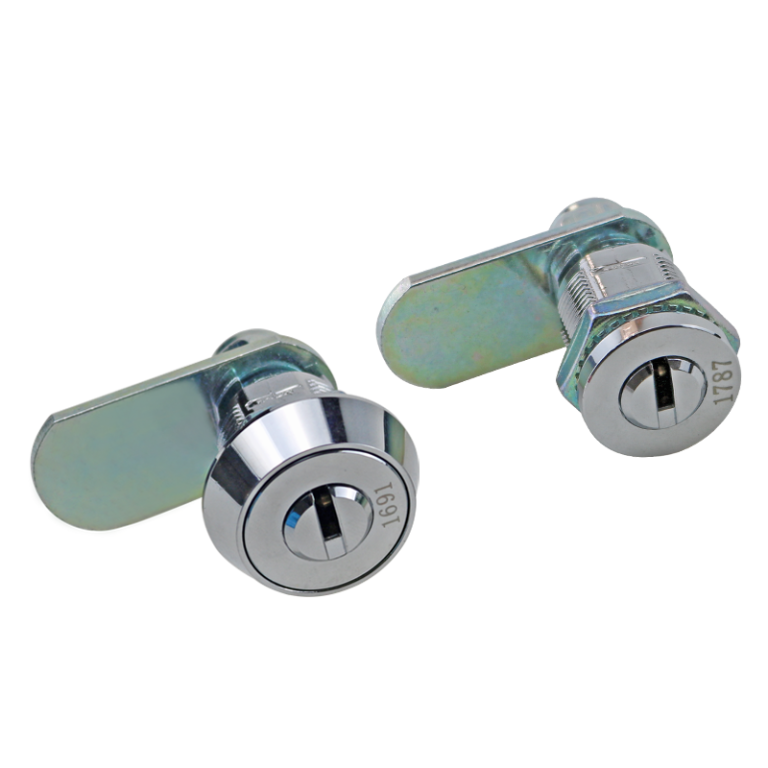
A cam latch is the broader mechanism. An operator on the front of the panel rotates a cam behind the door so that it engages or clears a frame lip or strike. The operator may be a knob, wing, tool recess, handle, or keyed cylinder.
A cam lock normally refers to the keyed version. The lock cylinder prevents the operator and cam from rotating until the correct key is used. The key therefore controls access, while the rear cam still performs the physical latching action.
| Feature | Cam Latch | Keyed Cam Lock |
|---|---|---|
| Primary function | Hold a door or panel closed. | Hold the door closed and restrict operation to a key holder. |
| Operator | Knob, wing, tool, handle, or key. | Keyed cylinder or keyed operator. |
| Access management | May be unrestricted or tool-restricted. | Managed through the selected key system. |
| Security meaning | Depends on operator and surrounding structure. | Adds access control but does not automatically create forced-entry resistance. |
When an Industrial Cabinet Needs a Keyed Cam Lock
A keyed cam lock is appropriate when cabinet access must be assigned to authorized users rather than merely slowed by a tool or closed by a knob. Typical triggers include public reach, sensitive controls, stored assets, or a documented site key policy.
- Public or uncontrolled reach: visitors, operators, or building occupants can reach the cabinet.
- Sensitive controls or components: unqualified access could change settings, disconnect equipment, or interrupt operation.
- Controlled tools, parts, or records: the contents must remain assigned to a team, area, or authorized individual.
- Formal key management: the site issues keys by role, cabinet group, department, or supervisory level.
If the unresolved question is whether the cabinet should be locking at all, use the separate comparison of locking vs. non-locking cam latches. This page begins after keyed access has been selected.

Choose the Key Cylinder and Credential Type
The visible key shape alone does not define a lock’s real suitability. Compare the credential format, duplication control, replacement process, user familiarity, supplier availability, and compatibility with the required keying plan.
| Cylinder or Keyway Option | Use It When | Confirm Before Ordering |
|---|---|---|
| Standard flat-key cylinder | Users need a familiar credential and straightforward day-to-day replacement. | Available key codes, duplication control, key-removal positions, and replacement-cylinder support. |
| Tubular-key cylinder | The site already manages tubular credentials or the model is specifically required by the equipment design. | Do not infer security from key shape alone; confirm the cylinder construction and project requirement. |
| Restricted or project-specific keyway | The site needs tighter control over unauthorized key duplication. | Authorization process, code ownership, lead time, replacement policy, and long-term availability. |
| Existing site or fleet key standard | New cabinets must work with a controlled credential already used across the facility or equipment fleet. | Exact keyway compatibility, code plan, supply continuity, and future replacement availability. |
A tubular key, unusual profile, or protected-looking front face should not be described as “high security” without evidence for the complete cylinder and cabinet system. Select the cylinder from the site’s credential policy and service process first, then evaluate the physical lock construction. A tool-operated quarter-turn latch is a separate option when a managed personal key is not required.
Choose Keyed Alike, Keyed Different, or Master Key
The keying strategy determines how many cabinets one credential can open. It often affects maintenance time and the consequence of a lost key more than the visible lock style does.
| Keying Strategy | Suitable Situation | Operational Tradeoff | Required Action |
|---|---|---|---|
| Keyed alike | One authorized team services many similar cabinets and rapid access is important. | A lost or copied key may affect every lock in that keyed-alike group. | Define the cabinet group and who is allowed to hold the common key. |
| Keyed different | Each cabinet, area, customer, or equipment group needs separate access. | More keys must be labeled, issued, stored, and replaced correctly. | Create a key-code map tied to cabinet identity. |
| Master key | Local personnel need limited keys while supervisors or service managers need broader access. | The coding plan, replacement process, and supplier coordination are more complex. | Confirm that the exact lock family supports the required hierarchy before ordering. |
| Mixed site plan | Different equipment groups require different levels of shared and restricted access. | Incorrect ordering can create unintended cross-access between cabinets. | Issue a controlled schedule showing each cabinet, cylinder code, and authorized key level. |
Do not use “same key” as the complete purchase requirement. State the number of locks, required groups, quantity of operating keys, spare-key policy, cabinet identifiers, and whether future replacement locks must match the original code.
Define Key Removal, Rotation, and Door Handing
Two cam locks with the same key code can behave differently during operation. The key-removal positions, locking rotation, operator index, and cam orientation must match the cabinet and access policy.
- Key removable only when locked: helps prevent the user from taking the key while the cabinet remains intentionally unlocked.
- Key removable in both positions: may suit frequent service where the key should not remain in the open door, but unlocked status can be less obvious.
- Captive key while unlocked: keeps the credential attached until the lock returns to its locked position, where supported by the selected model.
- Clockwise or counterclockwise locking: must match door handing, operator labeling, and the direction in which the rear cam reaches the strike.
- Rotation travel and stop position: must come from the model drawing rather than an assumed universal quarter-turn.
- Cam indexing: determines whether the cam is fully engaged in the locked position and fully clear when unlocked.
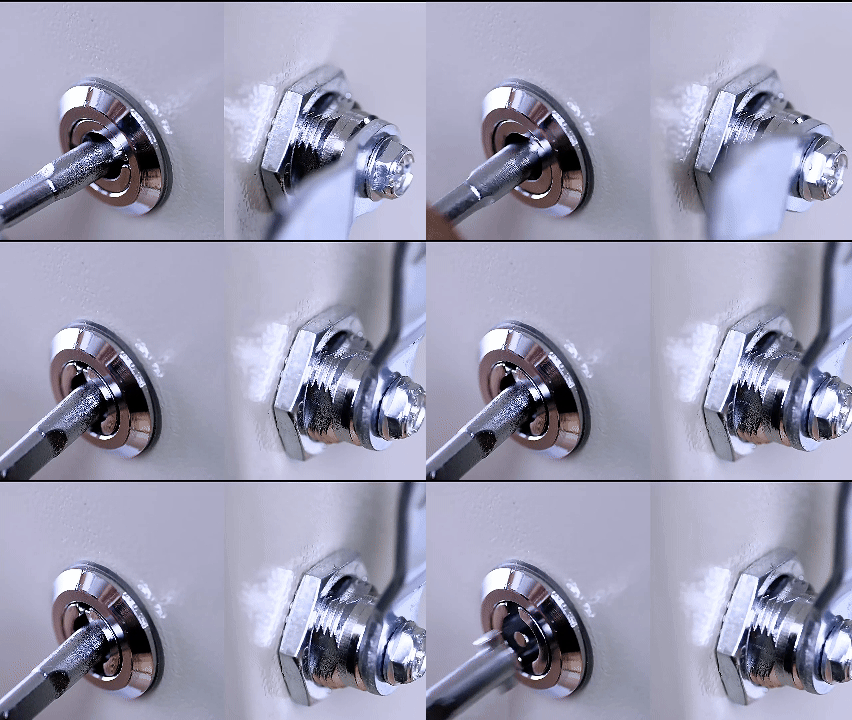
This section defines the required operating behavior. The cutout, housing orientation, cam installation, and strike position must still be verified from the model-specific installation drawing.
Understand the Security Limit of a Standard Cam Lock
A standard cam lock can control routine access and discourage casual tampering, but the cylinder is only one part of the security path. The rear cam, mounting nut or clip, panel cutout, door sheet, frame lip, strike, and surrounding cabinet structure all affect how easily the door can be forced, twisted, or pried.
Do not describe a cabinet as high-security merely because it uses a keyed or tubular cam lock. A project with defined forced-entry, vandalism, or attack-resistance requirements may need a protected cylinder, reinforced door and frame, guarded strike, padlock provision, higher-security locking system, or a different closure architecture.
Security boundary: the cam lock manages who is expected to operate the cabinet. It does not, by itself, define the forced-entry resistance of the complete enclosure.
Large doors or doors requiring several latching points may also need a swing handle or rod system rather than a single cam. That mechanism decision is separate from the choice of key cylinder.
Industrial Cam Lock Selection Checklist
- Confirm that the cabinet requires managed keyed access, rather than a non-locking or tool-operated closure.
- Identify who may open the cabinet and who is responsible for issuing, storing, and replacing keys.
- Select the operator or cylinder family from the required credential, duplication control, service process, and supplier availability.
- Choose keyed alike, keyed different, master key, or a controlled mixed plan and document each cabinet group.
- Define the required key-removal behavior in the locked and unlocked positions.
- Define locking rotation, door handing, operator index, and cam position for the selected cabinet.
- State the real security objective and do not treat the cylinder as the complete forced-entry system.
- Confirm the exact cylinder code, key quantities, spare-key policy, and future replacement requirement with the supplier.
- Verify panel fit, cam engagement, rear clearance, and installation from the model-specific drawing before production release.
After the access configuration is defined, use the cam latch fit and panel thickness guide to verify the cutout, panel stack, body length, cam geometry, and rear clearance. Then use the cam latch installation guide for housing orientation, cam indexing, strike positioning, and installed acceptance.
Review available cam lock and cam latch models only after the access requirements and physical interface are defined. A model list cannot replace the keying plan.
FAQ
What is the difference between a cam lock and a cam latch?
A cam latch is the broader closure mechanism: an operator rotates a rear cam into or out of engagement with a frame lip or strike. A cam lock is usually the keyed version, using a lock cylinder to control who can operate the cam. Tool-operated and knob-operated latches are not automatically keyed cam locks.
Can one master key open several cam locks?
Some cam lock families support a master-key hierarchy, but this is not universal. Confirm the cylinder family, keyway, code plan, order requirements, replacement policy, and supplier capability before specifying supervisory access.
Should the key be removable when the cabinet is unlocked?
That depends on the access policy. A captive-key arrangement can make an unlocked cabinet more visible, while key removal in both positions may be more convenient for frequent service. Define the required behavior before ordering because it is determined by the selected cylinder and mechanism.
Is a standard cam lock considered a high-security lock?
A standard industrial cam lock is generally an access-control and tamper-deterrence component, not a complete forced-entry system. Actual resistance depends on the cylinder, cam, housing retention, door stiffness, frame, strike, and surrounding enclosure.
Does changing the lock cylinder change the required cam fit?
It can. A different cylinder or lock body may change the panel cutout, body length, grip range, shaft geometry, cam mounting, rotation, or rear clearance. Confirm the complete model drawing rather than replacing only the visible front operator.
The correct industrial cam lock is not selected from cabinet type alone. Start with the access policy: who may open the door, whether one key should open several cabinets, whether supervisory access is required, when the key can be removed, and what security level the complete enclosure must provide.
Then confirm the exact cylinder, key code, operating rotation, cam arrangement, physical fit, and installation drawing. This keeps key management, mechanical closure, and cabinet security as connected requirements without confusing them as one specification.
Contact HTAN for an industrial cam lock review with the cabinet application, authorized-user groups, required keying strategy, key-removal behavior, rotation direction, door and frame drawing, expected environment, and replacement-key policy.