






Industrial hinges, handles and latches for OEM equipment.
- +86 13720060320


Outdoor Cabinet Cam Latch Selection: Fit, Sealing & Corrosion
A cabinet door can close, the key can turn, and the cam can sit behind the frame—yet moisture can still appear inside after a storm. The latch may be doing its basic mechanical job while the enclosure fails at the cutout, keyway, door gasket, or an uncompressed corner.
Outdoor cabinet cam latch selection therefore starts with the installed closure, not with a material label or a catalog photo. The useful question is not, “Is this an outdoor cam latch?” It is, “Can this exact latch, in this exact door stack, provide the required retention and access while the complete cabinet controls its defined water, dust, and corrosion exposure?”
The decision moves through six connected checks: exposure, physical fit, access method, water paths, closure behavior, and corrosion. A representative installed sample then has to show that those checks still agree. If the gasket requires a controlled axial draw, a standard rotating cam may be the wrong mechanism even when its dimensions fit.
Screening rule: keep a standard cam latch on the candidate list only when the door and gasket system can seal without a specified compression stroke from the latch. If controlled pull-in is part of the sealing requirement, stop the cam-latch selection and review a compression closure.
Outdoor Cabinet Cam Latch Selection Starts With Exposure
“Outdoor” is not one test condition. A latch under a rain hood sees a different problem from a roadside cabinet exposed to spray, a coastal box that stays wet with chloride deposits, or a food-processing enclosure cleaned on a defined wash cycle. Even within one cabinet, orientation changes the exposure: an upward-facing operator can retain water that would drain from the same latch on a vertical face.
Write the exposure as actions and contaminants before looking at models. Include where water arrives, whether it is driven by wind or a cleaning process, what can settle in the keyway, how long surfaces remain wet, and whether the latch can freeze before the next operation. “Weather resistant” is too broad to approve hardware.
| Exposure pattern | What it changes at the latch | Evidence to request or create |
|---|---|---|
| Sheltered exterior; condensation is possible | Moisture may form behind the operator or inside the door even without direct rain. Drainage and internal material pairs still matter. | Installed orientation, condensation path, full component material list, and evidence that water cannot collect against the cut edge. |
| Direct rain or wind-driven spray | The keyway, shaft interface, panel cutout, and door seam become separate entry paths. A face seal does not address all of them. | Defined cabinet-level water exposure, latch drawing, sealing features, door-gasket design, and post-exposure inspection points. |
| Dust, sand, mud, or airborne debris | Particles can obstruct the operator, damage a dynamic seal, hold moisture in a crevice, or prevent full cam rotation. | Contaminant description, operator protection, cleanability, required operating access, and complete-enclosure test requirement. |
| Project-defined washdown | Direction, duration, nozzle distance, flow, pressure, temperature, and cleaner can produce a more severe local path than rain. | The actual wash procedure and acceptance criteria. Do not replace them with the word “washdown.” |
| Coastal, roadside-salt, or chemical atmosphere | The least resistant part—not the visible face alone—may control service life. Crevices and dissimilar-metal contacts become important. | Contaminants, wet-time expectation, cleaning method, substrate/coating, materials and finishes for every wetted latch part. |
| Freeze, thermal cycling, or infrequent service | Trapped water may freeze at the keyway or housing. Seal stiffness and door alignment can change with temperature. | Operating temperature profile, cold-operation requirement, drainage, seal-material data, and an installed operating check at project conditions. |
| Public or unsupervised access | Access control becomes necessary, but a keyed cylinder also adds an exposed interface. Weather and access requirements must be reviewed together. | Authorized-user method, required deterrence level, keyway protection, service procedure, and site-specific security review. |
The table is a screening tool, not a catalog classification. It turns “outdoor cabinet” into conditions a supplier and enclosure designer can examine. If a condition has no corresponding evidence, keep it open rather than substituting a material assumption.
The Door Stack Sets the Fit
A cam latch passes through the door, carries an operator outside, and rotates a cam behind a frame lip or keeper inside. Those interfaces form one geometric chain. The visible sheet thickness is only one part of it.
Panel thickness is not the complete grip stack
The supplier drawing may define an allowable mounting or grip range for the latch housing. The installed stack can include the door sheet, paint or powder coating, a sealing washer, a reinforcement plate, an escutcheon, or another project-specific layer. Some layers sit under the head; others sit behind the panel. Their location matters because they can move the body and cam relative to the frame.
Do not add nominal values from unrelated drawings and call the fit complete. Use one closed-door section that shows the actual order of layers, the mounting face, the frame or keeper, and the available rear space. Then compare that section with the supplier’s drawing for the exact latch and cam revision.
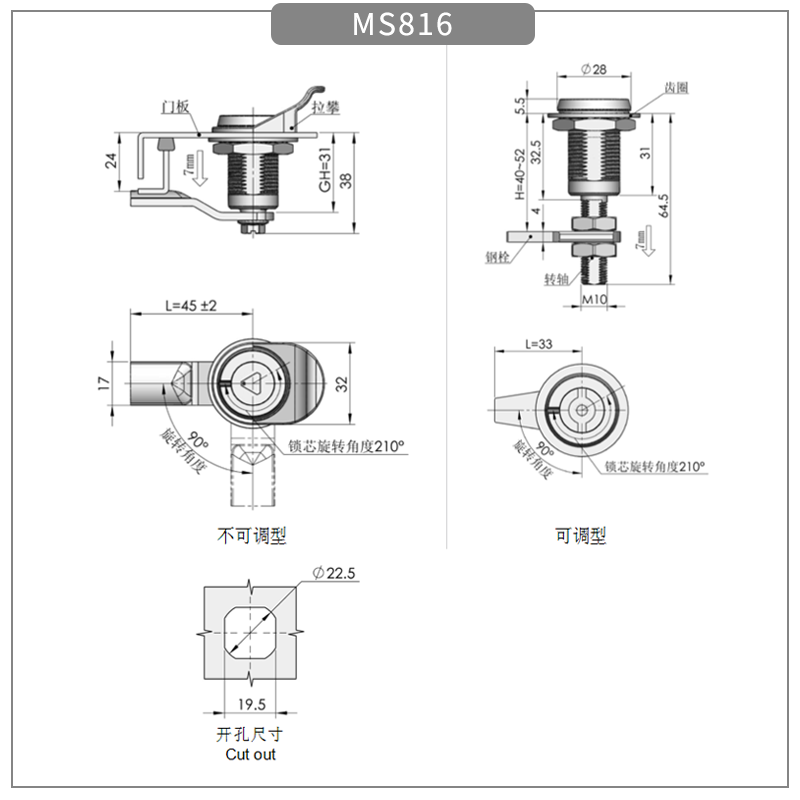
The panel cutout also has to match the model-specific housing geometry. A round opening, double-D profile, locating flat, or separate anti-rotation feature cannot be substituted without checking the supplier drawing. If the housing turns during tightening or later operation, the face seal can unload and the cam’s closed position can shift. Record the cutout size, shape, edge condition, anti-rotation feature, and supplier-specified retaining method or assembly torque with the installed stack. Do not transfer a torque value from another latch.
| Interface | What must be distinguished | Failure if it is treated as another parameter |
|---|---|---|
| Door panel thickness | The structural sheet at the latch cutout, before or after finish as the drawing specifies. | A housing may appear suitable from sheet gauge alone but run out of thread or clamp on added layers. |
| Installed mounting stack | Every layer captured by the latch head, washer, reinforcement, and retaining hardware. | The body position shifts, the seal is loaded incorrectly, or the retaining nut seats on the wrong surface. |
| Housing grip or mounting range | The model-specific range and reference faces shown by the latch supplier. | The latch may rotate or loosen even though the panel cutout accepts it. |
| Cam length | The distance from the shaft reference to the working part of the cam, according to the supplier drawing. | The cam can miss the keeper, collide with nearby hardware, or lack useful overlap. |
| Cam offset or formed geometry | The axial position and shape of the cam relative to the door and frame. | A nominally correct length can sit in front of or behind the required engagement plane. |
| Strike engagement | The overlap and contact condition with the frame lip or keeper while the door is fully closed. | The door can feel latched while vibration, tolerance, or deflection allows the cam to bypass the strike. |
| Rotation and rear clearance | The swept envelope of the cam, tool access, fasteners, wiring, insulation, and closed-door components. | The cam binds before its intended stop or damages an internal component. |
Cam length is checked with the door closed
Cam length should never be selected from the door skin alone. The useful geometry exists only when the door is seated against the frame and the intended gasket condition has been established. At that position, check the shaft reference, the working plane of the cam, the keeper surface, the amount and direction of overlap, and the full rotational envelope.
A longer cam is not an automatic correction for uncertain reach. It can increase interference or move contact to an unsupported edge. A formed or offset cam can solve one plane mismatch while creating another clearance problem. The supplier’s dimension symbols and datum faces control; product-family names do not.
A drawing can fit while the cabinet still fails. Consider an illustrative door whose latch body fits the nominal panel and whose cam reaches the frame. An added sealing washer moves the working plane outward. The cam still catches, but only near the edge of the keeper. Door flex during handling then reduces overlap, while a slightly longer cam would strike an internal bracket during rotation. The conflict is not “short versus long.” It is the closed-door chain of stack, offset, engagement, and swept clearance. This is an illustrative engineering scenario, not a customer project record or product test claim.
Use the dedicated guide to cam latch fit for electrical cabinets when you need to work through housing grip, cam geometry, strike engagement, and rear clearance in detail. This page keeps those dimensions at the level needed to screen an outdoor application.
Locking Changes Access, Not Weather Resistance
A key cylinder, tool-operated insert, wing knob, or hand knob answers an access question: who should be able to operate the latch, and what should they carry to do it? It does not establish rain resistance, gasket compression, or forced-entry performance.
A locking model can also introduce a keyway, shutter, drain path, moving plug, or cap that is absent from a solid operator. Those features may improve or reduce exposure resistance depending on the exact construction and orientation. Ask for model-specific drawings and evidence. Do not infer sealing from the presence of a lock, and do not infer security from the fact that the cam cannot be turned by hand.
- Define whether the cabinet needs casual access control, tool restriction, or a separate project security solution.
- Describe how the operator will be used when wet, dirty, gloved, or cold.
- Check whether a keyway cover or cap can drain, remain attached, and be serviced in the installed orientation.
Keying strategy and the full access-control decision belong in the guide to locking and non-locking cam latches. For this outdoor selection, record the chosen operator as one input to the water-path and service review.
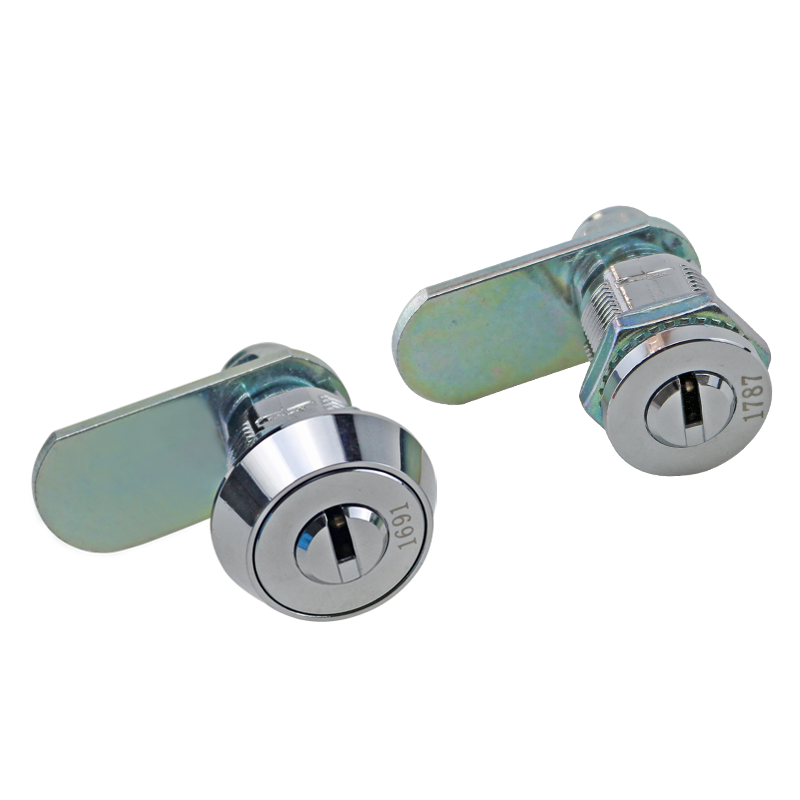
Map Every Water Path
Water does not recognize the product boundary shown in a catalog. It follows interfaces. Around a cam latch, there may be a path through the operator, between the shaft and body, between the housing and panel, along an exposed cut edge, or past the door gasket because the closure force is uneven. Water can also enter elsewhere and collect at the latch, creating a false diagnosis.
| Possible path | What may reduce the risk | What evidence closes the question |
|---|---|---|
| Keyway or external operator | A model-specific shutter, cap, labyrinth, internal drain, or sealed operator construction. | Section drawing, installed orientation, material compatibility, operating test after the defined exposure, and supplier evidence for the exact model. |
| Shaft-to-housing interface | A dynamic seal or protected internal geometry designed for the operating motion. | Seal material and location, permitted motion, supplier test basis, and inspection after cycling and exposure. |
| Housing-to-panel cutout | A compatible face seal or sealing washer compressed against a flat, supported surface. | Cutout geometry, surface flatness, coating condition, washer specification, assembly method, and installed leak inspection. |
| Cut edge and retaining hardware | Continuous coating repair, compatible fasteners, controlled clamping, and drainage that avoids a wet crevice. | Production finish specification, assembly section, material pair, and visual inspection criteria. |
| Door gasket near the latch | Correct frame contact and compression within the gasket designer’s project-specific range. | Closed-door section, contact evidence around the perimeter, door stiffness, closure-point layout, and cabinet-level exposure test. |
| Corners, hinge side, seams, and penetrations | Enclosure details independent of the latch component. | Complete-cabinet inspection and testing. A dry latch area does not clear another entry path. |
| Internal collection or drainage point | Orientation and drainage that prevent retained water from reaching sensitive equipment. | Installed cabinet orientation, drainage route, internal witness marks, and post-test inspection before the cabinet is moved. |
A sealing washer can address the housing-to-panel interface. It cannot seal a keyway, correct a lifted door corner, repair a discontinuous gasket, or establish the rating of the complete enclosure. Likewise, a supplier test on a latch body is useful evidence for that component and test setup, but it is not automatically evidence for your cutout, coating, mounting stack, and door.
Keep three statements separate:
- The latch includes a sealing feature.
- The latch model was tested under stated component conditions.
- The complete cabinet achieved a required ingress-protection result in its installed configuration.
Only the third statement addresses the finished enclosure, and it is valid only with its configuration, test method, and acceptance record.
IEC 60529 classifies degrees of protection provided by complete enclosures for electrical equipment under defined test conditions. It does not turn “stainless,” “sealed,” or “outdoor” into an IP rating, and it does not specify which cam latch your cabinet must use. The target code, test setup, specimen condition, and pass criteria still have to be defined for the project and applied to the assembled enclosure.
Cam Engagement Is Not Gasket Compression
A standard cam latch normally rotates a cam behind a frame lip or keeper. Any pull-in comes from the particular cam shape, offset, contact angle, clearances, and deflection of the door system. Unless the manufacturer defines and supports a compression stroke for that exact mechanism, do not treat the final quarter turn as controlled gasket compression.
This distinction matters because a gasket usually has a project-specific operating range. Too little compression can leave a path; too much can raise operating force, damage the gasket, distort a light door, or accelerate compression set. The gasket supplier and enclosure designer—not the latch name—must define the acceptable condition.
A cam that feels tight is not proof. The resistance may come from metal interference, a misaligned keeper, housing rotation, a swollen gasket, or a contact point that loads only one short part of the perimeter. A single latch can pull the edge near its mounting point while a long corner remains lifted. Door stiffness, hinge-side support, gasket continuity, and the number and location of closure points all affect the result.
When a standard cam latch remains credible
- The door and frame establish the gasket position without requiring a specified axial draw from the latch.
- The cam provides retention and appropriate strike engagement throughout the production tolerance range.
- The latch-area interfaces have model-specific sealing features and can be inspected in the installed stack.
- The door is stiff enough, and closure points are arranged so the perimeter condition does not depend on one local contact.
- The required access method, operating force, and rear clearance remain acceptable after exposure.
When the closure question has changed
If the design needs a defined compression stroke, repeatable gasket pull-down, distributed loading on a large door, or a closure intended for a demanding wash or contamination condition, the project is no longer selecting only a cam length and operator. It is selecting a compression system and closure-point layout.
Use the dedicated cam latch or compression latch comparison for that mechanism decision. The outdoor page should not hide the boundary by listing compression latches as another generic “advantage.”
Corrosion Is a Full-Assembly Decision
A polished or stainless-looking face can sit in front of a very different assembly. Review the operator, housing, cylinder or shaft, internal pins and springs, cam, retaining nut, sealing washer, mounting fasteners, keeper, and nearby cabinet substrate. Any of them can become the limiting part.
Solar exposure is a separate material check. UV primarily affects exposed polymer caps, shutters, handles, gaskets, and sealants; it is not a performance property created by specifying a stainless-steel latch face. Ask for material-specific outdoor evidence where those nonmetallic parts remain exposed.
The likely failure is also not limited to red rust on a visible surface. Deposits can hold moisture in a crevice. A plated cam can lose coating at its contact line. Dissimilar metals can create a galvanic couple when an electrolyte is present. Corrosion product can raise operating torque, prevent full rotation, cut a seal, reduce keeper overlap, or lock a fastener in place. These are closure failures even when the outer face remains presentable.
Do not approve “stainless steel” as a one-line material requirement. It does not identify the alloy, every component, the cam finish, the fasteners, the keeper, or the compatibility of the complete material pair. It also says nothing about crevice geometry, retained water, coating damage, or the actual contaminants.
Start with the exposure description. Then request the material and finish of each wetted or function-critical part. Review the cabinet coating and cut edge, because a corrosion-resistant latch does not protect an unsealed panel cutout. Where dissimilar metals meet, evaluate the contact area, electrical path, electrolyte, drainage, and any isolating layer. If a cap, washer, or lubricant is part of the protection concept, its material and service condition must be included as well.
Salt-spray hours should not be invented as a universal outdoor threshold. A supplier report can compare a defined specimen and coating under its stated method, duration, orientation, and acceptance criteria. It does not by itself predict field life in coastal air, road salt, fertilizer, cleaning chemistry, or persistent condensation. Use such a report as one controlled piece of evidence, not as a substitute for the project environment.
The result may be a stainless assembly, a coated assembly, a mixed-material design with isolation, or a different enclosure detail. The correct answer is project- and model-specific. What matters is that the bill of materials, finishes, contact pairs, and drainage agree with the contaminants and required service behavior.
The Installed Cabinet Is the Approval Specimen
A catalog sample on a bench cannot reproduce the cut edge, coating thickness, reinforcement, washer seating, keeper position, door stiffness, gasket continuity, or drainage of the finished cabinet. Those details decide whether the selected cam latch remains only a plausible candidate or becomes an approved component for the application.
Build the representative sample with the intended part revision and production process. Where tolerances can move the result, examine the relevant ends of the stack rather than a single nominal assembly. The objective is not to make the sample survive an undefined splash. It is to test the installed risks already identified in the exposure and water-path review.
| Installed evidence | Question it answers | Record needed before approval |
|---|---|---|
| Exact latch, cam, seal, and drawing revision | Is the tested item the same construction that purchasing will order? | Part number, revision, supplier drawing, approved deviations, and controlled bill of materials. |
| Representative minimum and maximum mounting stack | Will the housing clamp correctly and keep the cam in the required working plane? | Measured stack, cutout size and shape, anti-rotation feature, layer order, section photo or drawing, retaining method, supplier-specified assembly torque, and observed seating. |
| Closed-door cam and keeper condition | Is there sufficient, stable engagement without edge contact or metal interference? | Overlap evidence, contact location, tolerance condition, door position, and inspection method. |
| Full operating envelope | Can the operator and cam complete their motion without striking wiring, insulation, fasteners, or brackets? | Open and closed photos, swept-clearance check, tool access, and abnormal resistance noted by position. |
| Perimeter gasket condition | Does the complete door establish the required contact without relying on an assumed cam pull-in? | Gasket specification, closed-door evidence around corners and hinge side, door flatness, and closure-point arrangement. |
| Defined enclosure exposure | Do the identified latch and door paths remain acceptable under the project requirement? | Method, specimen orientation, preconditioning, exposure settings, pass criteria, observations, and dated result. |
| Operation after exposure | Can the latch still turn, lock, unlock, drain, and retain the door after water, debris, cold, or contaminants? | Operating observations, key or tool condition, visible deposits, seal condition, and any change from baseline. |
| Complete material and finish review | Has the least resistant functional part been identified? | Materials, coatings, contact pairs, cut-edge protection, supplier evidence, and unresolved exceptions. |
A concise sample review can follow the physical water path:
- Record the dry baseline. Photograph the installed stack, cam engagement, gasket perimeter, orientation, and drainage before exposure.
- Apply the defined cabinet condition. Use the project test or applicable enclosure method with its actual setup and acceptance criteria; do not improvise a substitute and call it equivalent.
- Inspect before moving the specimen. Look at the keyway, shaft, cutout, retaining hardware, gasket, corners, hinge side, and internal collection points so handling does not erase the path.
- Operate and document the same assembly. Record abnormal torque, incomplete rotation, key or tool problems, corrosion products, seal displacement, keeper marks, and any loss of retention.
Approval still belongs to the cabinet manufacturer and the applicable project authority. A latch supplier can provide drawings, material information, model-specific test evidence, and samples; that input cannot certify an enclosure configuration the supplier did not control.
If the cabinet is already in service and has begun leaking after initially acceptable performance, the task has changed from selection to diagnosis. Use the separate guide to outdoor enclosure seal loss to investigate gasket aging, preload change, distortion, contamination, and maintenance evidence.
Questions Before Model Approval
Can a standard cam latch make an outdoor cabinet waterproof?
No latch should be treated as a stand-alone waterproof claim. A standard cam latch may include model-specific seals at the operator or panel interface, but the complete cabinet also depends on the cutout, mounting stack, door gasket, corners, seams, hinges, penetrations, drainage, and closure behavior. Define the enclosure requirement and verify the assembled configuration under the applicable project test.
How do I choose cam length for an outdoor cabinet?
Use the closed-door section and the exact supplier drawing. Cam length has to be reviewed with housing position, cam offset, keeper plane, required overlap, production tolerances, and the full rotational envelope. Outdoor sealing layers can shift the working plane, so selecting from panel thickness alone is not sufficient.
Does panel thickness determine the complete cam latch fit?
No. Panel thickness is one input. The installed mounting stack, housing grip range, sealing washer, reinforcement, cam geometry, keeper position, engagement, and rear clearance can all change the result. Record the layer order and reference faces instead of sending only the sheet gauge.
Should an outdoor cabinet use a locking cam latch?
Use a locking model when the access plan requires it, not as a weather-sealing upgrade. The keyway and cylinder are additional exposed interfaces and need their own drainage, contamination, and cold-operation review. Security against forced entry is a separate cabinet-level requirement.
Is stainless steel always required for an outdoor cam latch?
Not as a universal rule. Material selection depends on contaminants, wet time, cleaning chemistry, temperature, contact pairs, coating damage, drainage, and the required service behavior. Review every function-critical part and the cabinet substrate. A stainless face does not define the material or finish of the internal cam, fasteners, keeper, or cut edge.
When should a cam latch be replaced by a compression latch?
Review a compression mechanism when the gasket needs a defined axial pull-in or repeatable compression, when a large or flexible door needs distributed closure points, or when the environmental requirement cannot be supported by simple cam engagement. The final choice still depends on the door structure, gasket, access, operating force, and complete-enclosure validation.
Send the Closed-Door Section and Exposure
For an outdoor cabinet cam latch selection review, prepare the cabinet orientation, exposure description, target enclosure requirement, panel and finish stack, closed-door frame section, available rear clearance, access method, and the material or corrosion constraints. Include the candidate drawing if one already exists.
HTAN can compare those inputs with available models and identify which dimensions, sealing features, materials, or installed tests still require confirmation. The review is a model-screening step; it is not a certification of the finished enclosure.
Request a Model Review