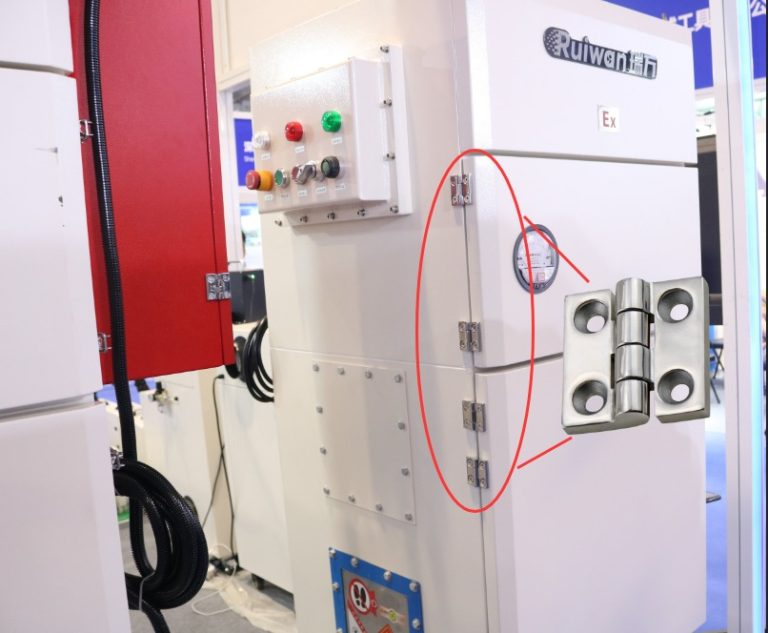
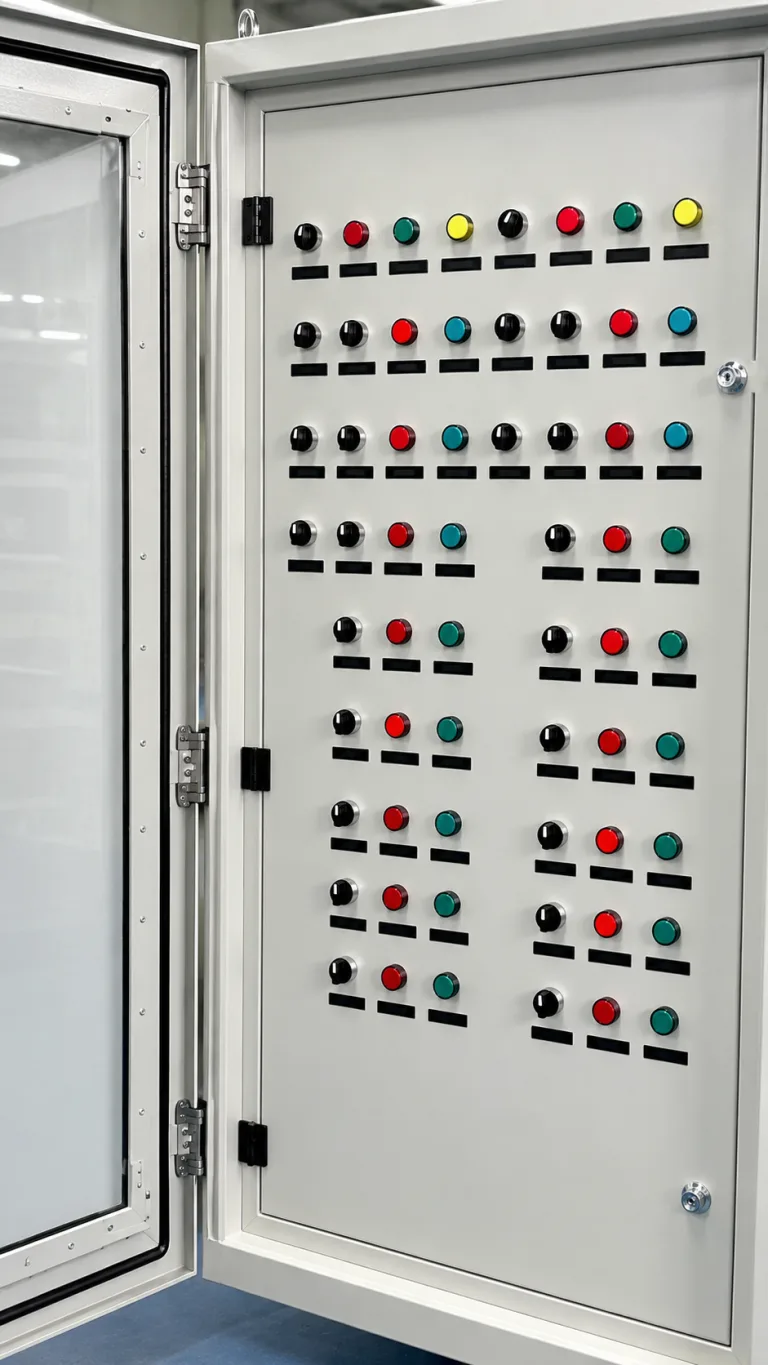
HTAN is one of the leading manufacturers of industrial hinges, handles and latches in China.


Outdoor enclosure seal loss usually does not happen on day one. A cabinet can pass inspection at installation, stay dry for a season, and then start letting in water, dust, or humidity months later. The metal cabinet has not failed. The gasket has not split. But somewhere between the door, the gasket, and the latch, the pressure that kept the seal tight has quietly faded.
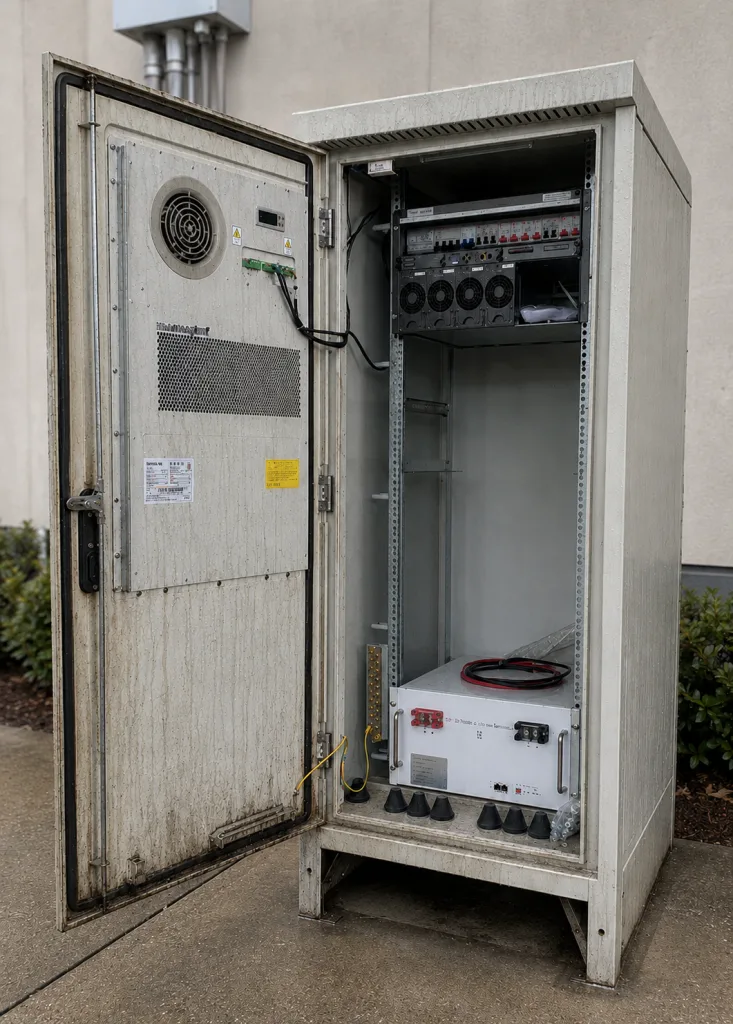
This guide is not about how to select a compression latch — that is covered in the compression latch engineering guide for IP65/IP66 enclosures. Instead, this article focuses on what happens after installation: how outdoor enclosure seals degrade over time, why the latch and gasket lose pressure, how to diagnose the root cause when leaking starts, and how to maintain the door system so the seal lasts.
How an Outdoor Seal Degrades Over Time
A sealed outdoor enclosure relies on continuous pressure between the door and the gasket. At installation, the latch pulls the door in, the gasket compresses, and the seal is tight. Over months and years, several slow processes reduce that pressure — often at the same time, which makes the leak harder to diagnose later.
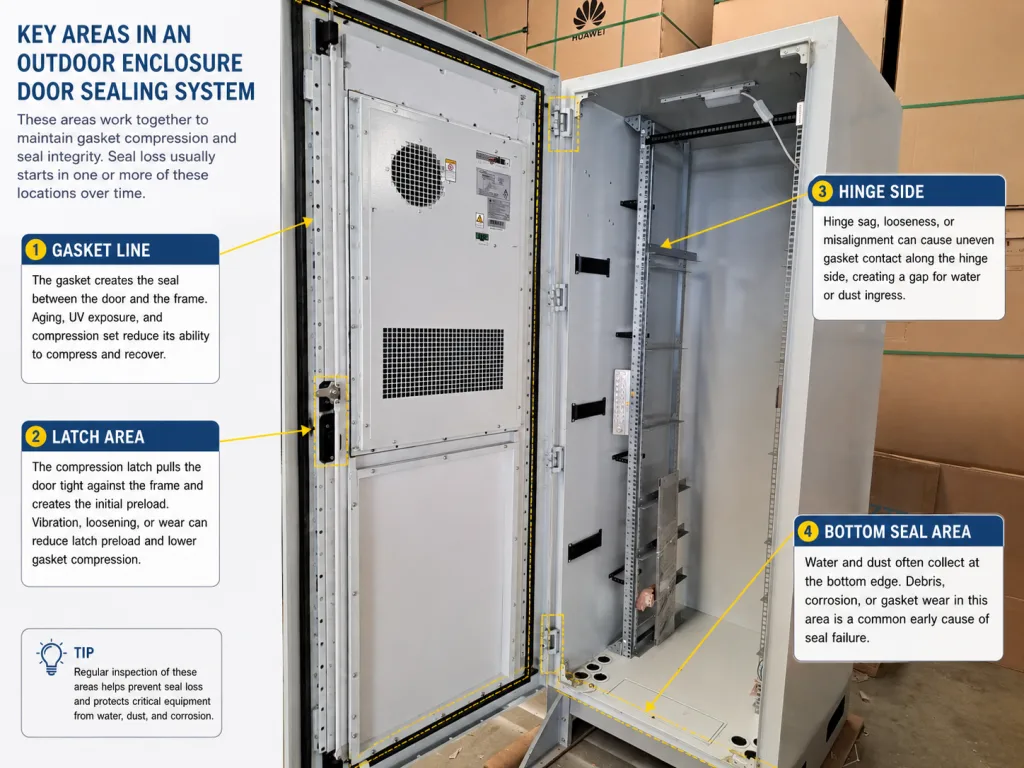
The important point for maintenance teams is that none of these failures are sudden. The seal does not break; it fades. By the time water appears inside the cabinet, the underlying pressure loss has usually been developing for a long time.
| Degradation Process | What Happens Over Time | Typical Timescale |
|---|---|---|
| Gasket compression set | The gasket stays flattened and stops rebounding, so it no longer fills the gap | Months to years, faster in heat |
| Latch preload loss | Vibration slowly reduces the clamping force the latch first applied | Weeks to months under vibration |
| UV and weather aging | Sunlight, ozone, and temperature cycling harden or crack the gasket surface | 1–5 years depending on material |
| Thermal cycling | Repeated expansion and contraction loosens fasteners and shifts alignment | Seasonal, cumulative |
| Corrosion | Cam, keeper, and fasteners bind or wear, changing how the door pulls in | Months to years by environment |
| Repeated access | Each opening slightly changes gasket contact and fastener tension | Proportional to access frequency |
Why Vibration Quietly Destroys the Seal
Vibration is the most underestimated cause of outdoor enclosure seal loss. Cabinets installed near roads, rail lines, generators, pumps, compressors, or on vehicles experience continuous low-level movement that the latch was never tested against in a static lab check.
Under vibration, the latch can slowly lose preload — the clamping force it applied at installation gradually relaxes. As preload drops, the gasket pressure drops with it. The door may still look closed and the handle may still feel locked, but the seal is no longer being held at its original pressure. This is the same self-loosening behaviour that affects latch hardware on draw latches for vibration equipment, and it applies equally to compression latches on sealed outdoor doors.
For vibration-prone installations, locking, tool-operated, detent, or screw-down latch designs hold preload better than a simple lever handle. But even the best latch needs periodic inspection — vibration-related preload loss is gradual and invisible until the seal already leaks.
Diagnosing the Root Cause When Leaking Starts
When an outdoor enclosure starts leaking, the latch is often blamed first — but it is frequently not the root cause. Water entry is a symptom; the real source can be the gasket, the hinge side, the door panel, or the latch. Diagnosing correctly saves the cost of replacing the wrong part.
The location and pattern of the leak usually point to the cause. Use the following diagnostic map before deciding what to repair or replace.
| Symptom | Most Likely Cause | What to Check First |
|---|---|---|
| Handle suddenly feels much easier to close | Gasket has taken a compression set (permanently flattened) | Gasket rebound and thickness; consider gasket replacement |
| Leak only at the corners | Latch spacing, door flex, or gasket layout — not the latch body | Latch point spacing and corner gasket contact |
| Leak on the hinge side, not the latch side | Hinge sag or misalignment, not a latch problem | Hinge alignment and door droop |
| Leak develops only after vibration exposure | Latch preload loss | Latch tightness, locking feature, fastener torque |
| Even leak along one full edge | Door panel flex or warped frame | Panel stiffness and frame straightness |
| Rust trails or binding handle | Corrosion of cam, keeper, or fasteners | Material condition and corrosion at moving parts |
A key diagnostic signal: if the latch handle suddenly closes much more easily than it used to, the gasket has likely taken a compression set and is no longer pushing back. In that case, re-tightening the latch will not restore the seal — the gasket itself needs attention. Conversely, if the leak appears only on the hinge side, even a perfect latch cannot fix it; the issue is hinge alignment, which is covered in the guide to hinge selection errors that cause seal failure.
What a Latch Can and Cannot Restore
When seal loss appears, adjusting or upgrading the latch is a common first response. It helps in some cases and is useless in others. Setting the right expectation prevents wasted maintenance effort.
| Latch Adjustment Can Restore | Latch Adjustment Cannot Fix | |
|---|---|---|
| Pressure lost to mild preload relaxation | A gasket that has taken a permanent compression set | |
| Minor closure inconsistency | A warped or flexing door panel | |
| Seal loss from a slightly loosened latch | A sagging or misaligned hinge side | |
| Compression on an adjustable-design latch | An aged, hardened, or cracked gasket | |
| Even closing on a stiff, true door | A frame that has corroded or distorted |
The practical rule: a latch can restore pressure that was lost, but it cannot compensate for a component that has physically changed shape — a flattened gasket, a warped door, or a sagging hinge. When the geometry has changed, the changed part must be addressed, not the latch.
Outdoor Aging Factors by Environment
How fast a seal degrades depends heavily on where the enclosure is installed. The same cabinet and latch will age very differently in a mild inland location versus a coastal or high-vibration site. Maintenance intervals should reflect the actual environment, not a fixed calendar.
| Environment | Dominant Aging Factor | Maintenance Implication |
|---|---|---|
| Hot, high-UV climate | Gasket hardening and UV cracking | Inspect gasket condition more often; expect earlier gasket replacement |
| Coastal or marine | Corrosion of cam, keeper, and fasteners | Check moving parts for binding; favour higher corrosion-resistant materials |
| Roadside or rail | Vibration-induced preload loss | Check latch tightness and locking features regularly |
| Cold or freeze-thaw | Thermal cycling, gasket stiffening, fastener movement | Inspect after seasonal transitions; check fastener torque |
| Industrial / chemical | Chemical attack on gasket and finish | Confirm gasket and latch material compatibility; shorten intervals |
| Mild inland | Slow compression set and normal aging | Standard periodic inspection is usually sufficient |
Maintenance Checklist for Outdoor Enclosure Seals
Outdoor enclosure seals should be inspected on a schedule matched to the environment severity. The goal is to catch fading pressure before it becomes water entry. The following checks take only a few minutes per cabinet and prevent the much higher cost of water damage to internal equipment.
Periodic Inspection Points
- Handle resistance during closing — note if it has become noticeably easier over time (a sign of gasket compression set)
- Gasket condition — look for flattening, hardening, cracking, or shiny worn areas
- Even gasket contact — check that all corners and edges still touch the frame
- Latch and fastener tightness — confirm nothing has loosened under vibration
- Corrosion at moving parts — inspect cam, keeper, and fasteners for binding or rust
- Hinge-side alignment — confirm the door has not begun to sag
- Water marks or dust trails inside — these reveal where the seal is already failing
- Door closing feel — the door should close cleanly without forcing or rattling
When to Adjust vs. When to Replace
If the latch has simply loosened or the design allows compression adjustment, adjusting it may restore the seal. If the gasket has flattened, hardened, or cracked, the gasket should be replaced — adjusting the latch tighter will only stress a gasket that can no longer rebound. If the door or hinge geometry has changed, that structural issue must be corrected before any latch or gasket work will hold.
When to Upgrade the Latch or Material
Repeated seal loss in the same cabinet is a signal that the original hardware may not match the environment. If a latch keeps loosening under vibration, a locking or screw-down design may be needed. If corrosion keeps binding the cam and keeper, a higher corrosion-resistant material is worth considering.
For coastal, marine, washdown, or chemical environments, stainless steel latch hardware generally lasts longer than coated zinc alloy, with 316 stainless steel preferred over 304 where chloride exposure is high. The selection logic for the replacement latch — grip range, cam, gasket compression, and IP considerations per IEC 60529 — belongs to the engineering selection stage, and the choice between a simple cam latch and a compression latch is covered in the cam latch vs compression latch comparison.
Common Maintenance Mistakes
Mistake 1: Tightening the Latch to Fix a Flattened Gasket
When the seal fades, the instinct is to tighten the latch. But if the gasket has taken a compression set, more latch pressure will not restore sealing — it only stresses the door and frame. A flattened gasket needs replacement, not more force.
Mistake 2: Blaming the Latch for a Hinge-Side Leak
If water enters on the hinge side, the latch cannot fix it. A sagging or misaligned hinge keeps the latch side closed while the gasket contact becomes uneven across the door. The hinge side must be corrected first.
Mistake 3: Using a Fixed Calendar in Every Environment
A coastal, high-vibration cabinet ages far faster than a mild inland one. Using the same inspection interval everywhere means some cabinets are checked too late. Maintenance intervals should reflect the actual environmental severity.
Mistake 4: Ignoring the Early Warning Signs
An easier-closing handle, faint dust trails inside, or a slightly hardened gasket are early signals that pressure is fading. Acting at this stage is cheap. Waiting until water damages internal equipment is not.
Mistake 5: Replacing the Latch Without Finding the Root Cause
Swapping the latch without diagnosing the leak often repeats the failure. If the real cause is gasket aging, door flex, or hinge sag, a new latch will fade the same way. Diagnose first, then repair the actual cause.
FAQ
Why does my outdoor enclosure leak after months of use when it was sealed at installation?
The seal fades rather than breaks. Over time the gasket can take a compression set, vibration can reduce the latch preload, UV and temperature cycling can harden the gasket, and fasteners can loosen. By the time water appears, the pressure that held the seal has usually been declining for a long time. The full door system — gasket, latch, hinge, and panel — should be checked, not just the latch.
What does it mean when the latch handle suddenly becomes easier to close?
It usually means the gasket has taken a compression set and is no longer pushing back against the door. Because the gasket has permanently flattened, tightening the latch further will not restore the seal — the gasket itself needs to be inspected and likely replaced.
Can adjusting the latch fix an outdoor enclosure that has started leaking?
Sometimes. If the seal loss came from mild preload relaxation or a slightly loosened latch, adjusting or re-tightening can restore pressure. But if the gasket has flattened, the door has warped, or the hinge side has sagged, the latch cannot compensate for a part that has physically changed shape. Diagnose the root cause before adjusting.
How often should outdoor enclosure seals be inspected?
The interval should match the environment, not a fixed calendar. Coastal, high-vibration, or high-UV sites age faster and need more frequent checks, while mild inland cabinets can be inspected on a standard periodic schedule. Inspect after seasonal transitions in freeze-thaw climates and after any major vibration exposure.
Why does vibration cause outdoor enclosures to lose their seal?
Vibration gradually reduces the latch preload — the clamping force applied at installation slowly relaxes. As preload drops, gasket pressure drops with it. The door can still look closed and feel locked while the seal is no longer held at its original pressure. Locking, detent, or screw-down latch designs hold preload better, but periodic inspection is still needed because the loss is gradual and invisible until leaking starts.
Final Takeaway
Outdoor enclosure seal loss is a slow, system-level process, not a single-part failure. The gasket flattens, the latch loses preload, the hinge may sag, and the environment accelerates all of it. The most cost-effective approach is regular inspection matched to the site’s severity, correct diagnosis of where the seal is fading, and repair of the part that actually changed — not reflexively tightening or replacing the latch.
If you are specifying hardware for a new sealed outdoor enclosure, the latch selection and gasket compression engineering should be planned up front. If you are maintaining existing outdoor cabinets and want to reduce repeat seal failures, HTAN can help review the door system — latch type, material, gasket condition, and hinge alignment — and recommend a maintenance approach matched to your operating environment.If the seal loss may not be time-related, the [complete seal failure diagnostic guide] helps separate all five root causes