HTAN is one of the leading manufacturers of industrial hinges, handles and latches in China.


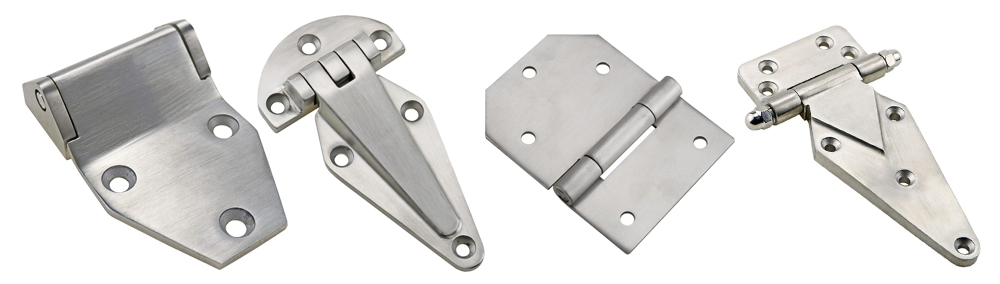
In modern industry, from warehousing and logistics to data centers, cold chain facilities to offshore platforms, heavy-duty hinges play a critical role. These robust hinges must handle not only door weight, but also frequent operation, vibration, impact, harsh environments, and long-term alignment stability.
When correctly specified, heavy-duty hinges help reduce maintenance frequency, minimize door sagging, improve sealing performance, and lower the lifecycle cost of industrial doors and equipment enclosures. This guide provides a systematic heavy-duty hinge selection methodology focused on engineering requirements, practical specification logic, and real industrial use cases.
Defining Heavy-Duty Hinges & Key Performance Indicators
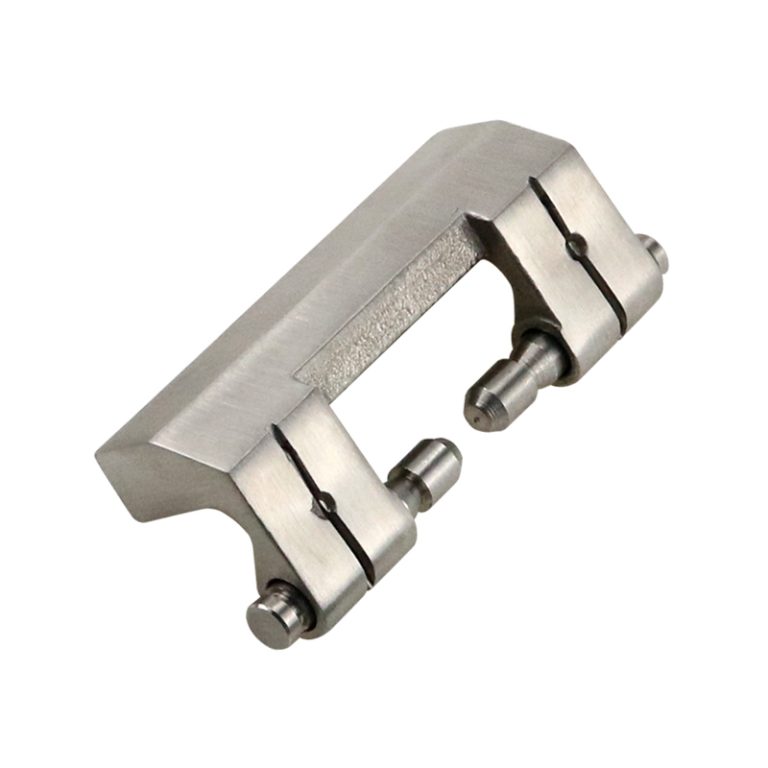
Heavy-duty hinges are engineered for doors, covers, and access panels that exceed the load, cycle, and environmental limits of standard hinges. Compared with general-purpose butt hinges, they typically use stronger materials, thicker leaves, reinforced pins, bearing-assisted structures, or full-length support designs to reduce stress concentration, sagging, and premature wear.
In industrial applications, heavy-duty hinges are often used on equipment cabinets, electrical enclosures, industrial refrigerators, server racks, oven doors, machine guards, and maintenance access doors. The right hinge must be selected not just by size, but by load path, operating cycles, environmental exposure, opening angle, and required service life.
Industry benchmarks commonly referenced during specification include cycle testing, corrosion testing, and structural load performance. For example, designers often review standards such as ANSI/BHMA A156.1 for cycle performance and ASTM B117 for corrosion testing when comparing industrial-grade hinge options.
Key Performance Dimensions
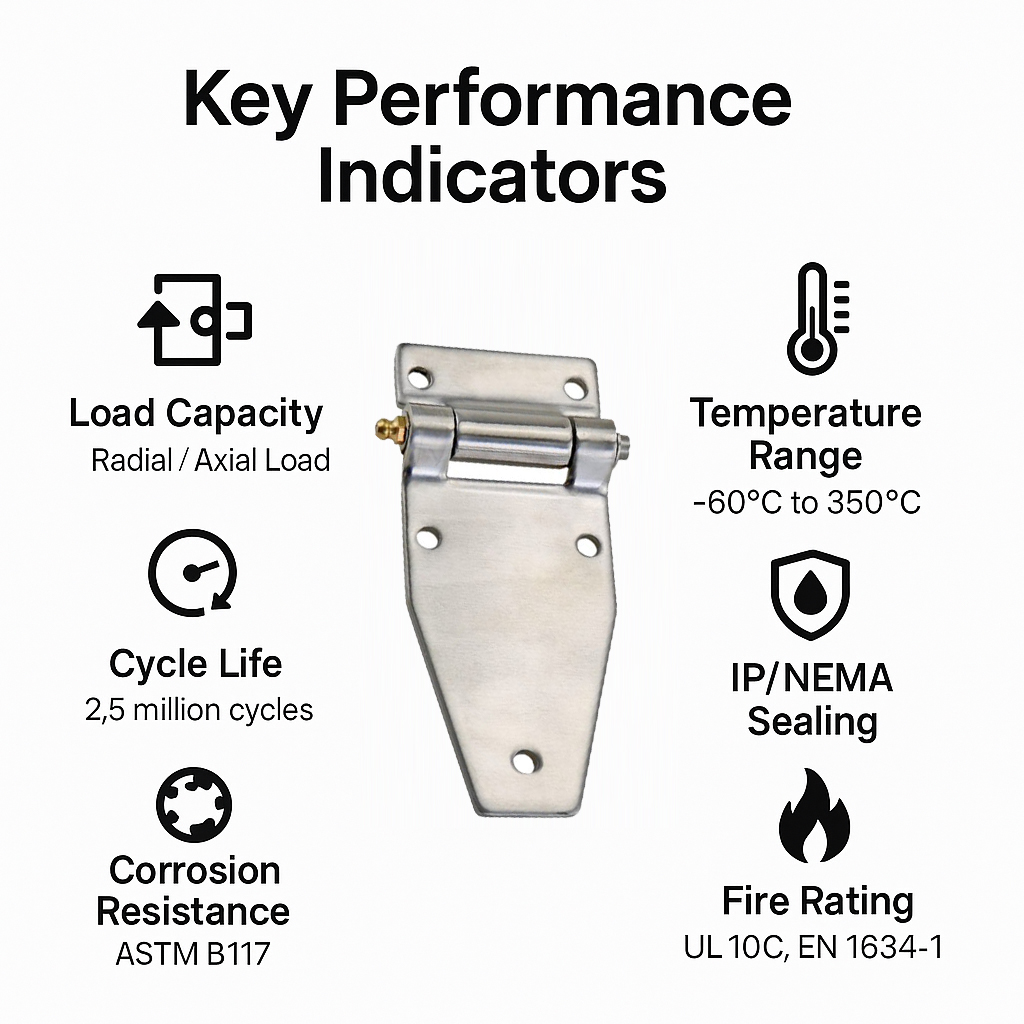
- Load Capacity: Static load, dynamic load, and combined load resistance
- Cycle Life: Expected durability under real operating frequency
- Corrosion Resistance: Suitability for humid, outdoor, washdown, or marine use
- Temperature Range: Stable performance in hot, cold, or fluctuating environments
- Alignment Stability: Resistance to sagging, deformation, and fastening loosening
- Compliance Requirements: Fire, hygiene, EMI, safety, or hazardous-area demands when relevant
Always verify the supplier’s quality system, material traceability, and relevant test reports before finalizing heavy-duty hinge selection for safety-critical or high-cycle applications.
Heavy-Duty Hinges vs. Standard Hinges
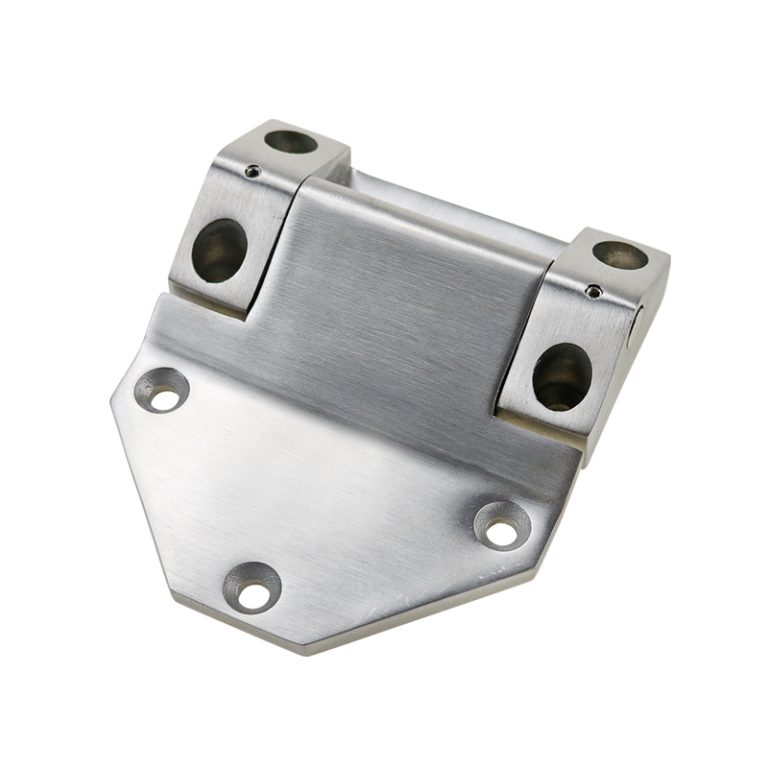
Support and Load Distribution
Heavy-duty hinges distribute load more effectively than standard hinges. Continuous hinges spread weight across a longer edge, while reinforced butt and bearing hinges reduce stress at the pivot point. Standard hinges typically have fewer support points and are more likely to deform, loosen, or wear unevenly under heavier doors.
Load-Bearing Capacity
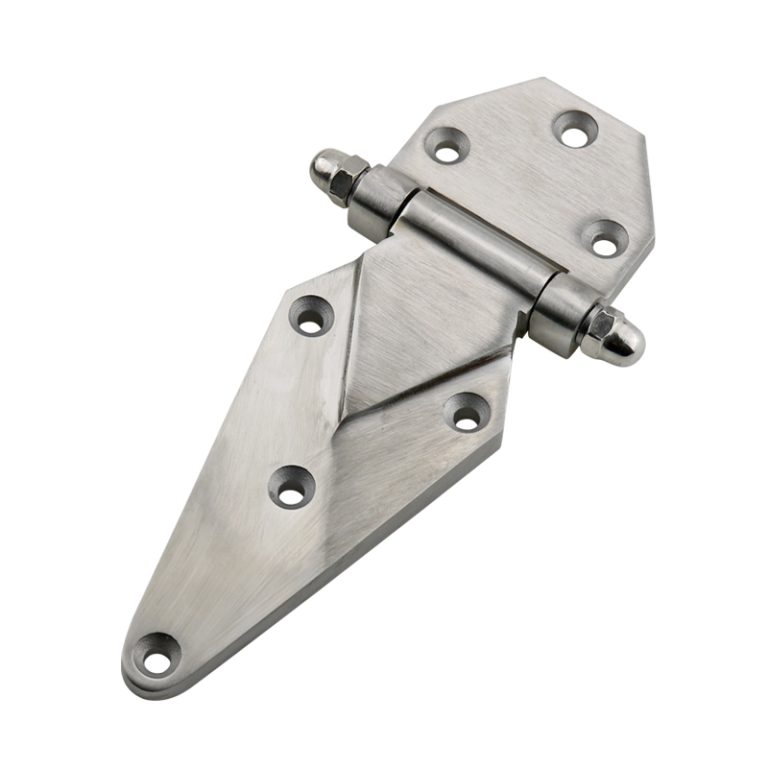
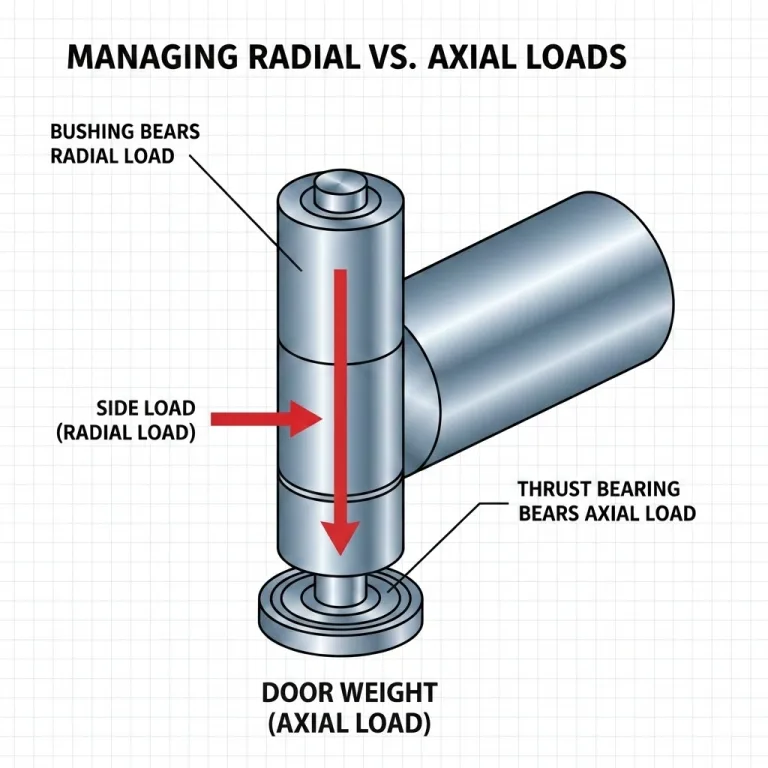
Heavy-duty hinges are designed for doors and covers that create much higher structural demand. This includes thicker steel cabinet doors, insulated cold-room doors, machine access panels, and large enclosure doors where load is not only vertical, but also affected by opening angle, vibration, and repeated maintenance access.
Maintenance Requirements
When load is distributed properly and materials are matched to the environment, heavy-duty hinges usually require less corrective maintenance than standard hinges. In contrast, underspecified hinges often show loosening, sagging, corrosion, or bushing wear much earlier. For common premature failure causes, see our analysis: Heavy-Duty Hinge Defects: 5 Hidden Causes of Premature Failure.
Industrial & Commercial Application Profiles
High-Frequency Use Cases
Logistics: Loading Dock Doors
- Must withstand frequent cycling, collision risk, and long-term alignment stress
- Poor hinge selection increases downtime, maintenance calls, and safety risk
Pharma / Semiconductor: Cleanroom Air-Lock Doors
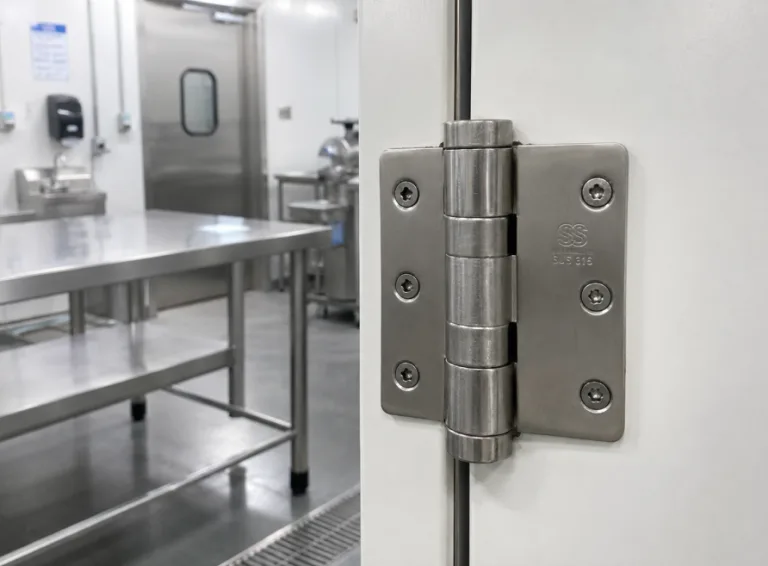
- Require sealing stability, corrosion resistance, and cleanable surfaces
- Material choice and hardware geometry directly affect hygiene and pressure performance
Offshore Wind Turbine Access Doors
- Face salt spray, UV exposure, and constant vibration
- Need higher corrosion resistance and better fatigue performance than standard industrial doors
Data Center Cabinet Doors
- Need quiet high-cycle operation, alignment stability, and in some cases electrical continuity
Freezer / Cold Storage Doors
- Require low-temperature toughness, corrosion resistance, and stable operation under condensation and frost exposure
- For low-temperature door selection logic, see our cold storage hinge selection guide.
Equipment Cabinets and Electrical Enclosures
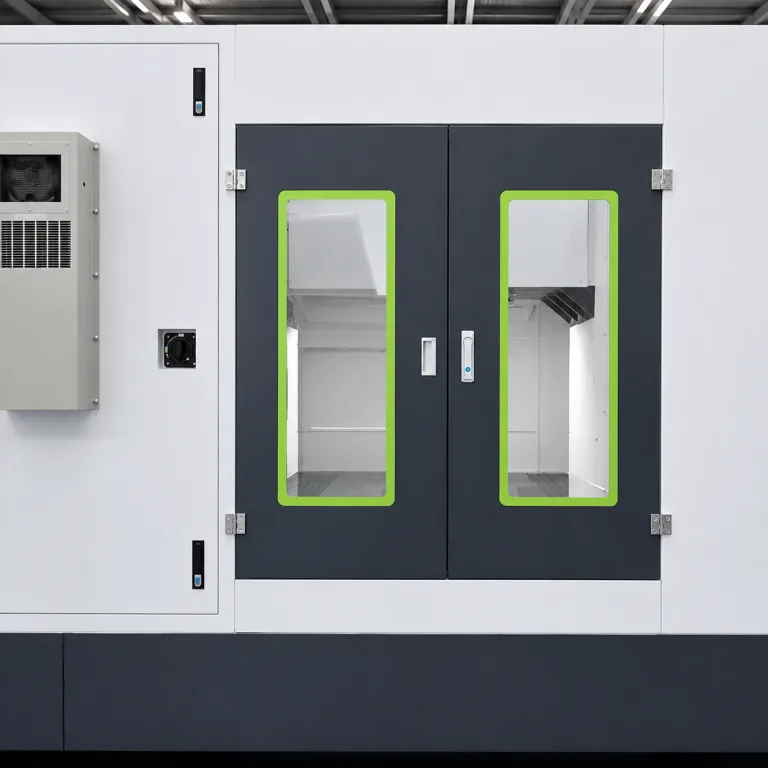
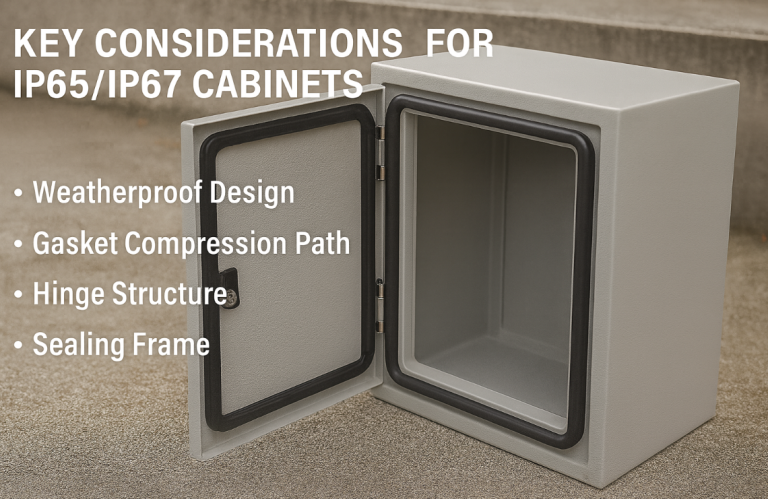
Heavy-duty hinges are especially important on equipment cabinet doors, electrical enclosures, and industrial control cabinets. These doors are often made from steel or reinforced sheet materials, which are much heavier than general access panels. They may also be opened repeatedly for maintenance, inspection, cable work, or component replacement.
In this type of application, the hinge must do more than carry door weight. It must maintain door alignment, prevent sagging over time, support consistent latch engagement, and help preserve sealing performance where dustproof or waterproof enclosure integrity matters. In humid, outdoor, or corrosive environments, material mismatch can quickly turn hinge wear into enclosure reliability problems.
Where enclosures require removable access for maintenance, designers may also compare removable hinges against fixed heavy-duty structures depending on service frequency and access requirements.
Why Hinge Reliability Matters in Safety-Critical Enclosures
In high-voltage cabinets, control systems, machinery housings, and other safety-critical enclosures, hinge failure can become more than a maintenance issue. If the door drops, twists, or loses alignment, operators may face unsafe door movement, compromised latch retention, or reduced protection of internal components. This is especially important where equipment must remain closed securely under vibration, pressure fluctuation, or frequent service access.
For these applications, engineers should pay close attention to hinge structure, fastening stability, reinforcement around mounting points, and whether the selected hinge type truly matches the door’s mass and opening duty. Where sealing failure is a concern, also review our article: 3 Heavy-Duty Hinge Selection Errors That Cause Seal Failure.
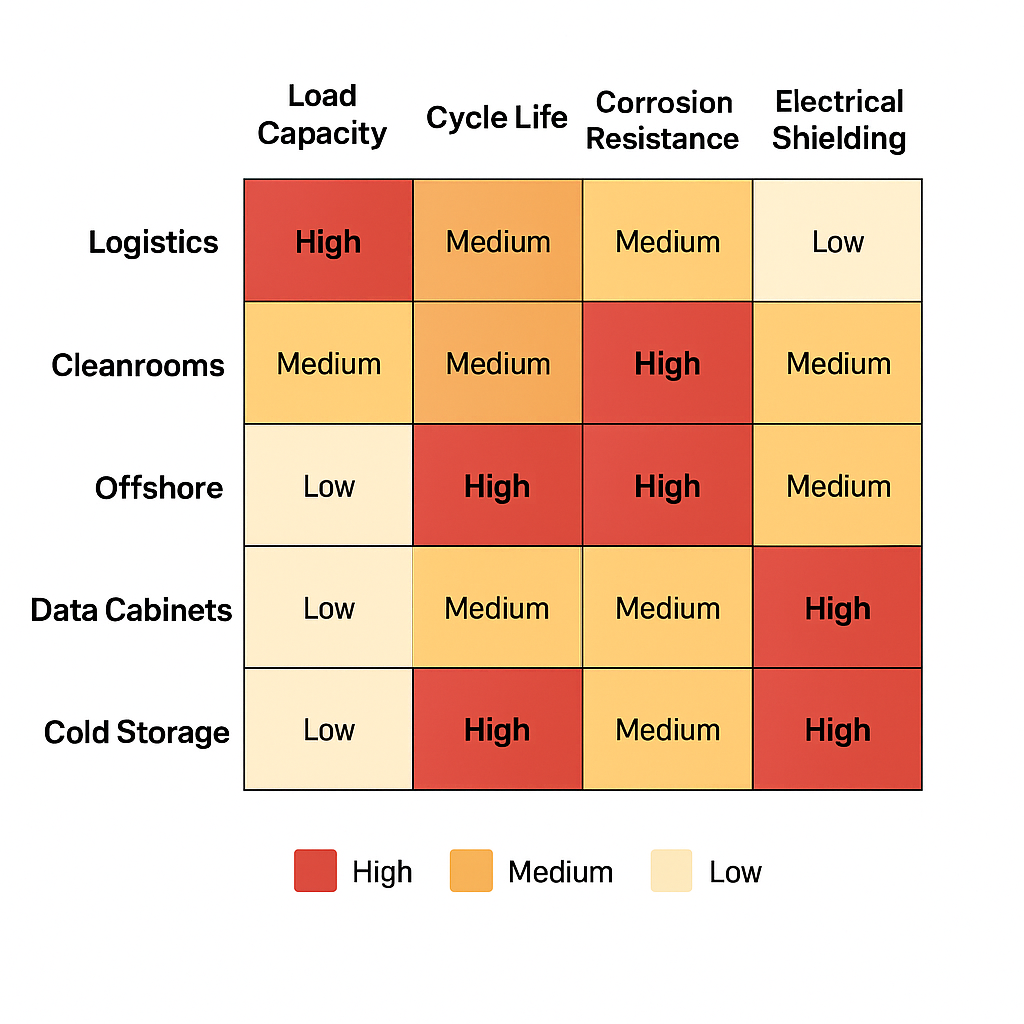
Industry Requirements Summary
| Industry | Primary Hinge Requirement |
|---|---|
| Logistics | Load capacity & cycle life |
| Cleanrooms | Sealing & corrosion resistance |
| Offshore | Salt spray & fatigue resistance |
| Data Centers | Electrical continuity & high-cycle operation |
| Cold Storage | Low-temperature toughness |
| Electrical Cabinets | Alignment stability & enclosure protection |
Material & Manufacturing Deep Dive
Metal Options
- C1045 Carbon Steel: High strength but typically requires surface protection
- 304 Stainless Steel: Reliable corrosion resistance for many industrial applications
- 316L Stainless Steel: Better chloride resistance for marine and washdown environments
- 2205 Duplex Stainless Steel: Higher strength and strong resistance in chloride-rich conditions
- 7075-T6 Aluminum: Lower weight where structural mass reduction matters
Non-Metals & Composites
- PEEK Bushings: Low-friction and stable in low-temperature or clean environments
- Composite Structures: Useful in selected lightweight or transport applications where mass reduction is critical
Surface Engineering
- Dacromet + PTFE: Cost-effective corrosion protection for outdoor exposure
- DLC Coating: Lower friction and better dry-running stability in specialized environments
For a closer look at corrosion-driven failure, see: How Salt Spray Destroys Heavy-Duty Hinges — And How to Stop It.
Hinge Types & Installation
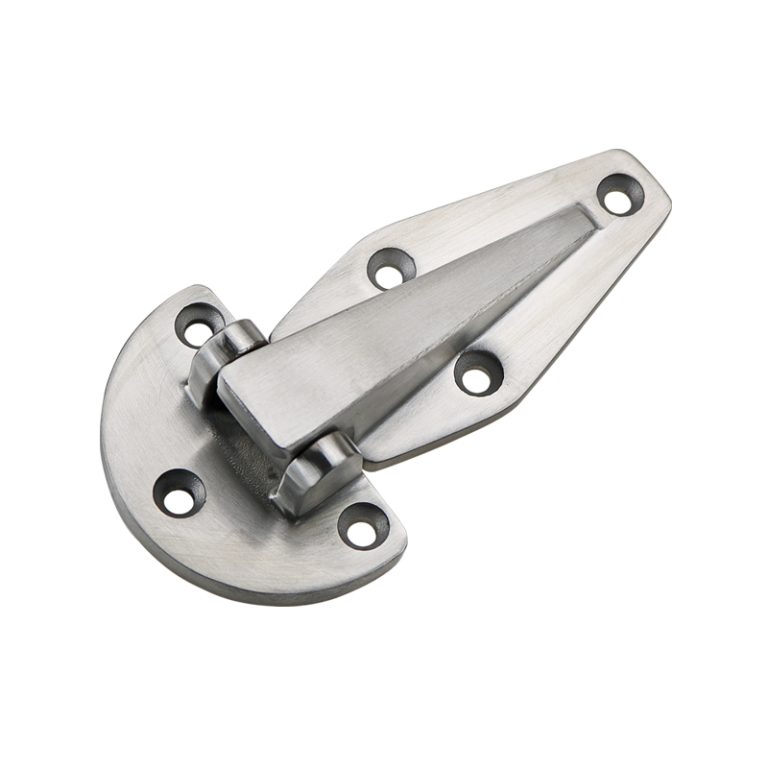
| Hinge Type | Key Feature | Best Application |
|---|---|---|
| Butt Hinges | High point-load capacity | Heavy industrial doors |
| Piano / Continuous Hinges | Full-length support | Even weight distribution along door edge |
| Weld-On Hinges | Maximum fixing strength | Permanent, vibration-resistant installation |
| Lift-Off / Bolt-On | Fast door removal | Maintenance-intensive access panels |
| Adjustable Hinges | Post-install alignment correction | Precision enclosures requiring fine fit |
Installation Accessories
- Reinforcement plates for thin panel substrates
- EPDM or silicone seals for IP-rated enclosures
- Grounding straps for EMI / ESD protection when required
Pre-Installation Compatibility Checks
- Confirm panel and frame thickness: The hinge must match the actual substrate strength and mounting depth.
- Verify hole pattern and leaf geometry: Check whether the hinge aligns with existing mounting holes, edge clearances, and opening path.
- Assess reinforcement needs: Thin sheet-metal doors or flexible panels may require backing plates or local reinforcement to prevent deformation.
- Use anti-loosening hardware where needed: In vibration-prone environments, locking nuts, washers, or thread retention measures help maintain stability over time.
Common Installation Mistakes to Avoid
- Using too few hinges: This creates uneven stress distribution and accelerates door sagging and fastener wear.
- Choosing the wrong material for the environment: Humid, outdoor, or corrosive settings often require stainless steel or better corrosion protection.
- Ignoring substrate strength: Even a high-quality hinge can fail early if mounted on an inadequately reinforced panel.
Load Calculation & Life Prediction
Static Load Calculation
- Base hinge selection on total door mass, width, center of gravity, and hinge spacing — not just nominal door weight
- Use a practical safety factor suitable for the application, then verify against real mounting conditions and opening cycles
Dynamic & Impact Loads
- Doors exposed to impact, vibration, or frequent slamming need a stronger margin than static calculations alone suggest
- High-cycle industrial use should consider fatigue, not only single-event strength
Environment & Regulatory Compliance
Harsh Environment Mitigations
- Salt spray: Use appropriate coating systems or higher-grade materials
- Dust ingress: Consider sealing strategy where enclosure integrity matters
- High temperature: Match material and lubrication to the service range
- Sub-zero: Use low-temperature suitable grease and bushing systems
Key Regulatory Standards
- OSHA: Equipment and guarding safety may affect door and hinge design
- NFPA 80: Relevant where fire-rated door assemblies are involved
- ATEX: Material and spark risk matter in hazardous-area equipment
Cost & Supply Chain Strategy
Total Cost of Ownership (TCO) includes purchase price, installation effort, maintenance labor, replacement frequency, and downtime impact. In many industrial applications, the better-specified hinge costs more upfront but reduces total expense across the equipment’s service life.
- Modular design: Can reduce spare-part complexity
- Global sourcing strategy: Should balance precision, lead time, and supply consistency
- Procurement specification: Define tolerances, material grade, finish, compliance, and test documentation clearly before quoting
Case Studies
Cold Storage Logistics Center
- Environment: Sub-zero room with frequent door cycling and frost risk
- Solution: Corrosion-resistant body, suitable bushings, and low-temperature-compatible movement system
- Result: Lower annual failure rate and reduced service interruption
Offshore Wind O&M Platform
- Environment: Salt spray, UV exposure, and long-term vibration
- Solution: Higher corrosion-resistant material and stronger installation method
- Result: Longer maintenance intervals and better service reliability
Semiconductor Cleanroom
- Environment: Pressure control, cleanliness, and electrostatic considerations
- Solution: Cleanable hinge surfaces with stable alignment and sealing performance
- Result: Reduced contamination risk and more reliable enclosure operation
Maintenance & Troubleshooting
Preventive Maintenance Schedule
- General industrial: Periodic inspection based on operating frequency
- Cleanrooms and hygiene-sensitive environments: More frequent inspection and cleaning review
- Marine or corrosive environments: Shorter inspection interval due to exposure risk
Common Issues & Solutions
- Noise or squeaking: Check lubrication and pivot wear
- Door sagging: Inspect alignment, substrate reinforcement, and hinge quantity
- Surface corrosion: Review coating suitability and material grade
- Bushing wear: Replace worn internal components before operating under continued load
3-Step Selection Methodology
- Profile the application: Define load, environment, cycle frequency, opening angle, and any regulatory constraints.
- Quantify the key requirements: Match hinge structure, material, corrosion resistance, and service life expectations to the application.
- Validate before production or rollout: Confirm dimensions, mounting conditions, and relevant test documentation before final selection.
FAQ
When are heavy-duty hinges required?
Heavy-duty hinges are typically required when doors or access panels exceed the practical range of standard hinges in terms of weight, frequency of use, environmental exposure, or safety importance. This includes heavy cabinet doors, machine covers, cold-room doors, and industrial enclosure doors.
What are the key specifications for selection?
Focus on load capacity, material grade, corrosion resistance, alignment stability, operating temperature range, and expected cycle life. Also review the mounting substrate and whether the hinge type fits the actual door geometry.
How do I calculate the required load capacity?
Start with real door mass, then account for width, center of gravity, opening behavior, and cycle frequency. The required specification should include a suitable engineering safety margin rather than relying on nominal weight alone.
What are the industry-specific requirements?
Cold storage requires low-temperature stability. Cleanrooms require cleanable corrosion-resistant hardware. Data centers may require electrical continuity. Outdoor and marine applications need stronger corrosion protection. Electrical cabinets often require better alignment retention and reliable enclosure sealing.
How can I reduce long-term maintenance costs?
Choose a hinge that matches the real environment and operating duty from the start, reinforce weak mounting substrates, inspect hinges on a preventive schedule, and avoid underspecification in high-cycle or corrosive applications.
Browse HTAN’s full range of heavy-duty hinges or contact our engineering team for load-rated selection support and technical specifications.